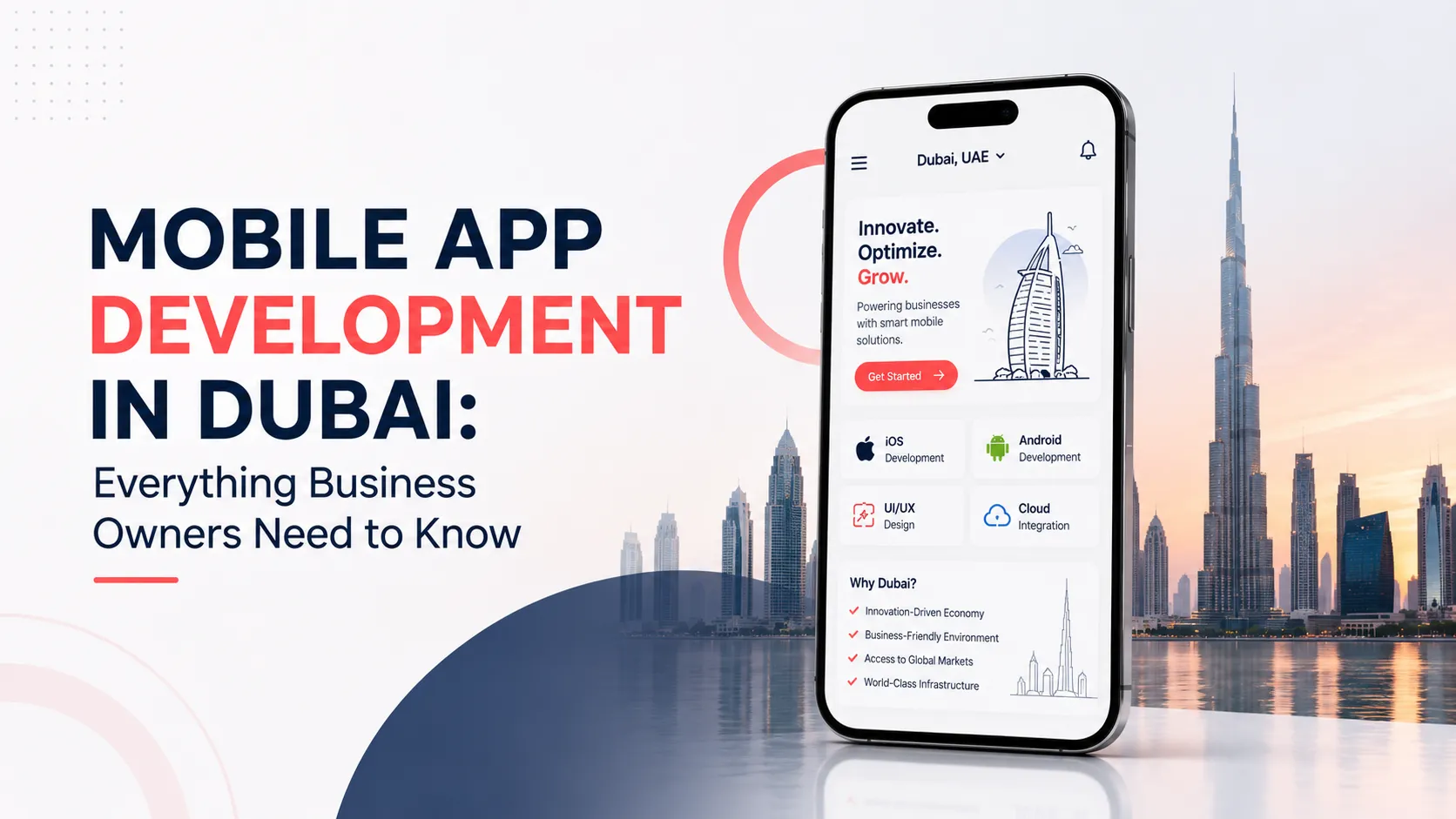


Dubai has become one of the world's most technology-driven business hubs, creating strong demand for digital products that can serve increasingly connected customers. Businesses exploring mobile app development in Dubai need to consider more than simply creating an application. They must understand their target audience, select the right technology, plan security and scalability, comply with relevant requirements, and build an experience that supports measurable business goals. Whether you operate in retail, healthcare, real estate, hospitality, logistics, finance, or professional services, a well-planned mobile application can become an important part of your digital strategy.
The UAE's competitive business environment also means that customers have high expectations. They want fast interfaces, convenient services, personalized experiences, secure transactions, and reliable support. For business owners, this creates both an opportunity and a challenge: the application must provide genuine value while remaining technically dependable and commercially sustainable.
Why Dubai Is an Attractive Market for Mobile Apps
Dubai has a highly connected population and a business ecosystem that actively embraces digital transformation. Companies across different industries are using applications to improve customer engagement, automate processes, offer digital services, and create new revenue channels.
Mobile applications can be particularly useful in markets where customers expect convenience and instant access. Instead of requiring users to visit a physical location or navigate a traditional website, an app can place important services directly on their smartphones.
For businesses, applications can also provide first-party customer interaction. Notifications, loyalty programs, personalized offers, account management, and analytics can help companies develop stronger relationships with their audiences.
Start With a Clear Business Objective
The first step in developing an application should not be choosing a programming language or designing screens. Business owners should first identify what the application is expected to achieve.
Potential objectives include:
- Increasing sales
- Improving customer service
- Automating internal operations
- Creating a new digital service
- Improving customer retention
- Simplifying bookings
- Supporting field employees
- Providing personalized experiences
- Expanding into new markets
A clearly defined objective helps determine which features are actually necessary.
An application built without a strong purpose can become expensive to maintain while providing limited business value. Every major feature should therefore have a connection to a customer problem or commercial objective.
Understand Your Target Audience
Dubai is home to a diverse population with different languages, cultural backgrounds, purchasing habits, and technology preferences. Understanding the target audience is therefore essential before development begins.
Businesses should identify who will use the application, what problems they experience, how they currently interact with the business, and what would motivate them to download and continue using an app.
Customer research can include surveys, interviews, competitor analysis, website analytics, existing customer data, and usability research.
The objective is to build around actual user needs rather than assumptions.
Choose the Right Development Approach
Once the business requirements are understood, organizations need to decide how the application will be developed.
Native development can provide highly optimized experiences for individual operating systems. Cross-platform development can allow businesses to create applications for multiple platforms using a shared codebase.
The appropriate approach depends on factors such as functionality, performance requirements, budget, development timeline, device capabilities, and long-term maintenance.
There is no universal technology stack that is best for every business. The development strategy should be selected according to the application's specific requirements.
Decide Between iOS and Android
Businesses targeting Dubai may need to consider both major mobile operating systems.
Launching on both platforms can provide broader audience coverage, but it can also increase development, testing, and maintenance requirements.
Some businesses may choose to launch on one platform initially and expand later. Others may require simultaneous availability across platforms because of their customer demographics or business model.
Audience research should influence this decision rather than assumptions about which operating system is more popular.
Plan the User Experience Before Development
A successful application should be easy to understand from the first interaction.
UX designers typically map user journeys, create wireframes, develop prototypes, and establish navigation structures before developers implement the final product.
Important questions include:
- How quickly can users complete the primary task?
- Can users understand the interface without instructions?
- Are important actions easy to find?
- Is the navigation consistent?
- Does the application work well on different screen sizes?
- Are accessibility considerations included?
A polished visual design is useful, but usability should remain the priority.
Focus on Performance and Speed
Application performance has a direct influence on user satisfaction. Slow loading screens, crashes, delayed responses, and inefficient navigation can cause users to abandon an application.
Performance needs to be considered throughout development.
Developers can optimize API responses, database queries, images, network requests, application resources, and background processes.
Testing should also cover different devices and network conditions. An application that performs well on a high-end smartphone connected to fast Wi-Fi may behave differently on an older device or slower mobile network.
Build a Scalable Technical Foundation
Businesses should think about future growth before launching their first version.
A small application may initially serve a limited number of users. If adoption increases quickly, the infrastructure needs to handle more traffic, transactions, data, and concurrent activity.
Scalability can be supported through appropriate cloud infrastructure, modular architecture, optimized databases, caching mechanisms, load management, and reliable APIs.
Businesses should also consider how future integrations will be added. A flexible architecture makes it easier to introduce new features without rebuilding the entire system.
Consider Security From the Beginning
Security should not be treated as a final-stage activity.
Applications can process personal information, payment details, account credentials, business data, and other sensitive information. These assets need appropriate protection.
Security measures may include secure authentication, authorization controls, encryption, protected APIs, secure data storage, access management, vulnerability testing, and monitoring.
Businesses should also carefully evaluate third-party services and libraries because external dependencies can introduce additional security considerations.
A secure application protects not only users but also the reputation and continuity of the business.
Integrate the Right Business Systems
Many business applications need to communicate with existing software.
Depending on the business, integrations may include:
- CRM platforms
- ERP systems
- Payment gateways
- Accounting software
- Inventory systems
- Booking platforms
- Maps and location services
- Customer support tools
- Analytics platforms
- Marketing automation systems
These integrations should be planned during the architecture stage.
Poorly designed integrations can create duplicate data, synchronization problems, inconsistent information, and operational inefficiencies.
Personalization Can Improve Engagement
Customers increasingly expect digital experiences to feel relevant to their needs.
Applications can use appropriate customer data and behavioral insights to personalize recommendations, offers, content, notifications, and services.
For example, a retail application may highlight products based on browsing and purchasing behavior, while a hospitality platform could present personalized recommendations based on previous interactions.
Personalization should remain useful and transparent. Businesses should avoid overwhelming customers with irrelevant messages or collecting information without a clear purpose.
Push Notifications Require Strategy
Push notifications can be valuable for customer engagement, but they should not become a source of frustration.
Useful notifications may include order updates, booking confirmations, reminders, personalized offers, account alerts, or important service information.
Businesses should consider timing, frequency, relevance, and customer preferences.
An application that constantly sends promotional messages may cause users to disable notifications or uninstall the app. Communication should therefore provide genuine value.
Payments Need to Be Convenient and Secure
For applications involving transactions, payment experience is a critical part of the customer journey.
Depending on the target market and business model, an application may support cards, digital wallets, bank-based payment options, or other relevant methods.
The payment flow should be simple enough for customers to complete transactions without unnecessary steps.
At the same time, financial information requires strong security practices. Businesses should work with trusted payment providers and implement appropriate safeguards rather than attempting to manage sensitive payment data unnecessarily.
Analytics Help Measure Business Performance
Launching an application without measuring its performance makes it difficult to understand whether the investment is delivering value.
Businesses can track metrics such as:
- Downloads
- Registrations
- Monthly active users
- Session duration
- Feature engagement
- Conversion rates
- Customer retention
- Purchase frequency
- Cart abandonment
- App crashes
- Customer feedback
The right metrics depend on the application's objectives.
For example, an internal employee application may prioritize productivity improvements rather than downloads, while a retail platform may focus on transactions and repeat purchases.
MVP Development Can Reduce Initial Risk
Businesses do not always need to launch every planned feature in the first version.
A minimum viable product can focus on the essential functionality required to validate the concept with real users.
After launch, customer feedback and analytics can help determine which features should be improved or introduced next.
This approach can reduce unnecessary initial expenditure and provide businesses with real-world insights before making larger investments.
However, an MVP should not mean ignoring security, performance, or quality. The first version should still provide a reliable and professional experience.
Understand the Role of a Development Partner
Choosing a suitable technology partner is an important business decision. A capable team should understand more than coding.
Businesses should evaluate a partner's experience with product strategy, UX design, mobile engineering, backend systems, APIs, security, testing, deployment, and post-launch maintenance.
Communication is equally important. Clear milestones, documentation, progress updates, and transparent discussions about scope can reduce misunderstandings throughout the project.
Businesses considering an App Development Company Dubai should therefore evaluate the complete development process rather than selecting a provider solely based on price.
What to Expect From the Development Process
The development lifecycle generally moves through several stages.
It may begin with discovery and requirements analysis, followed by product planning and UX design. Developers then build the application and connect required backend services and integrations.
Quality assurance teams test the product across supported devices, operating systems, network conditions, and workflows.
After approval, the application is prepared for deployment. Post-launch monitoring then helps identify technical issues and opportunities for improvement.
Understanding this process allows business owners to set realistic expectations regarding timelines, responsibilities, costs, and approvals.
How A Technology Partner Can Support Mobile App Projects
Businesses often need a development partner capable of handling the technical and strategic aspects of a digital product. 75way Technologies can support organizations through different stages of application development, including planning, UI/UX, mobile engineering, backend integration, testing, and ongoing improvements.
The most effective approach is collaborative. Business stakeholders should communicate their goals and customer requirements, while the technology team translates those objectives into a practical product strategy.
This ensures that development remains focused on creating business value rather than simply producing a collection of technical features.
Understand the Cost Factors
Application development costs can vary significantly depending on project complexity.
Factors that can influence the budget include:
- Number of platforms
- Feature complexity
- UI/UX requirements
- Backend architecture
- Third-party integrations
- Payment functionality
- Security requirements
- Administrative dashboards
- AI or automation features
- Testing requirements
- Post-launch support
A simple application with limited functionality may require considerably less investment than an enterprise platform containing complex workflows and multiple integrations.
Business owners should therefore request estimates based on detailed requirements rather than relying on generic market prices.
Consider Maintenance After Launch
Application development does not end when the product reaches an app store.
Operating systems are regularly updated, third-party services change, security vulnerabilities emerge, and customer expectations evolve.
Ongoing maintenance may include bug fixes, security updates, performance improvements, compatibility changes, server management, analytics reviews, and new feature development.
A maintenance strategy should therefore be considered as part of the original product plan.
Localization Can Strengthen the Dubai Market Experience
Businesses operating in Dubai may benefit from considering localization during product planning.
Depending on the target audience, this could involve multiple languages, local payment preferences, regional currencies, culturally appropriate interfaces, location-based services, and market-specific workflows.
Localization should go beyond simply translating text. User expectations and operational requirements can vary between markets.
A product designed specifically around its intended audience can create a more natural experience than a generic application adapted later.
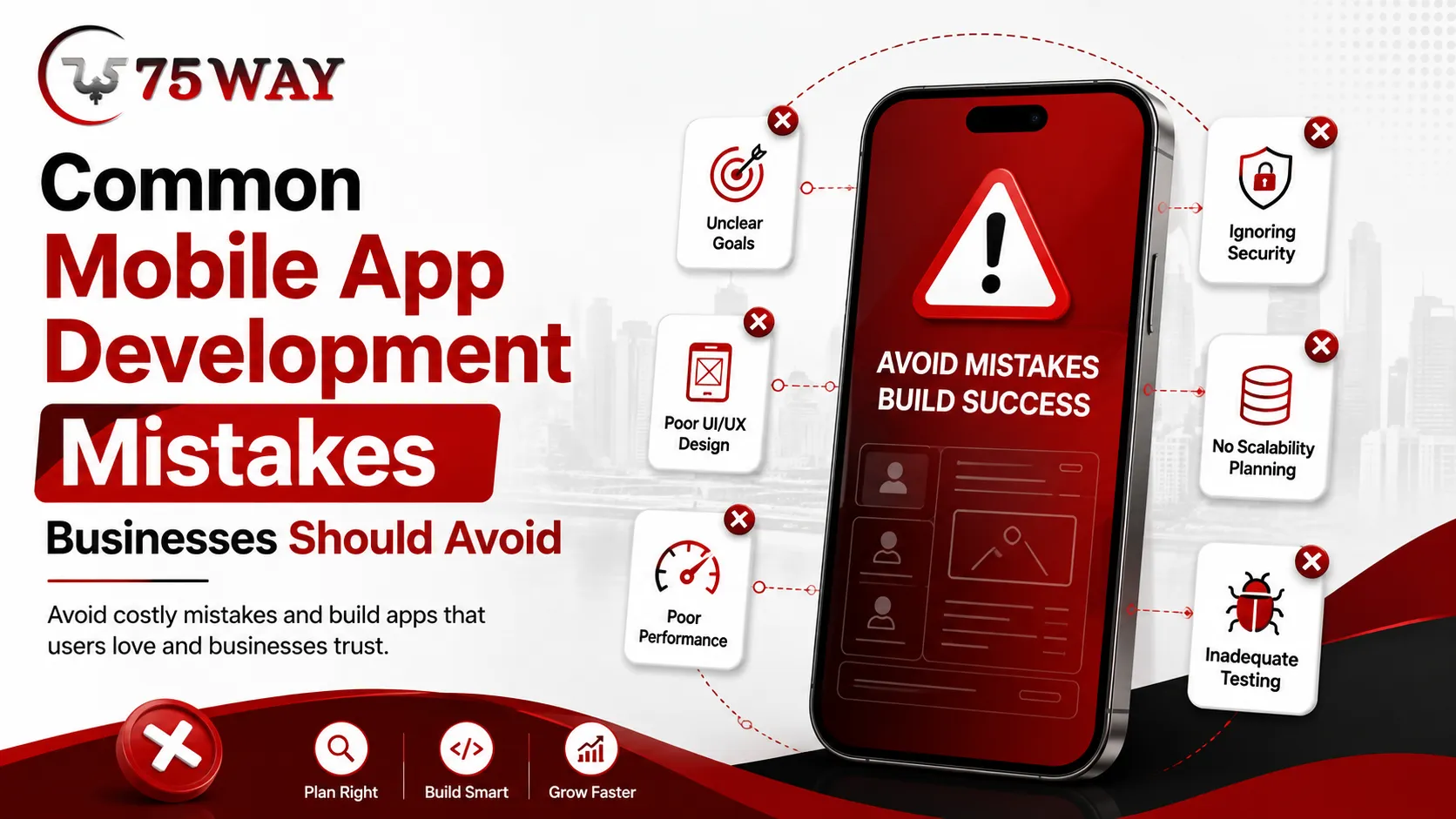
Common Mistakes Business Owners Should Avoid
Several mistakes can reduce the effectiveness of an application.
One common issue is trying to include too many features in the initial version. Excessive complexity can increase costs and make the application difficult to use.
Another mistake is ignoring user research. Businesses may invest heavily in features that customers do not actually need.
Choosing technology based solely on popularity can also create problems if the selected stack does not match the project's requirements.
Finally, businesses sometimes underestimate post-launch support. An application needs continuous attention to remain secure, compatible, and competitive.
How to Choose the Right App Development Strategy
Before starting a project, business owners should answer several important questions:
- Who are the primary users?
- What problem will the application solve?
- What is the main business objective?
- Which features are essential for launch?
- Which platforms should be supported?
- What integrations are required?
- What security and privacy considerations apply?
- How will success be measured?
- What is the expected growth trajectory?
- What resources are available for ongoing maintenance?
Answering these questions creates a clearer foundation for the project.
The Future of Mobile Applications in Dubai
The next generation of applications will increasingly incorporate artificial intelligence, automation, personalized experiences, voice interfaces, predictive analytics, and connected digital services.
Businesses may use AI to improve customer support, generate recommendations, automate repetitive workflows, detect unusual activity, or provide more intelligent search experiences.
However, emerging technology should serve a clear purpose. Adding sophisticated capabilities without understanding customer needs can increase complexity without creating meaningful value.
The strongest applications will likely combine innovative technology with simple, intuitive experiences.
Final Thoughts
Developing a mobile application in Dubai presents significant opportunities for businesses across industries, but success requires careful planning. The application needs to solve a genuine problem, provide a strong user experience, perform reliably, protect customer information, and support measurable business objectives.
From choosing the development approach and planning integrations to designing the interface, testing performance, launching the product, and maintaining it over time, every stage contributes to the final outcome.
Businesses should therefore approach application development as a long-term digital investment rather than a one-time technical project. A scalable architecture, customer-focused design, reliable technology, and continuous optimization can create a stronger foundation for growth.
Whether the goal is to improve customer engagement, streamline operations, launch a new digital service, or expand an existing business, a thoughtfully designed mobile application can become a valuable component of a company's digital strategy in Dubai's competitive market.





























Sign in to leave a comment.