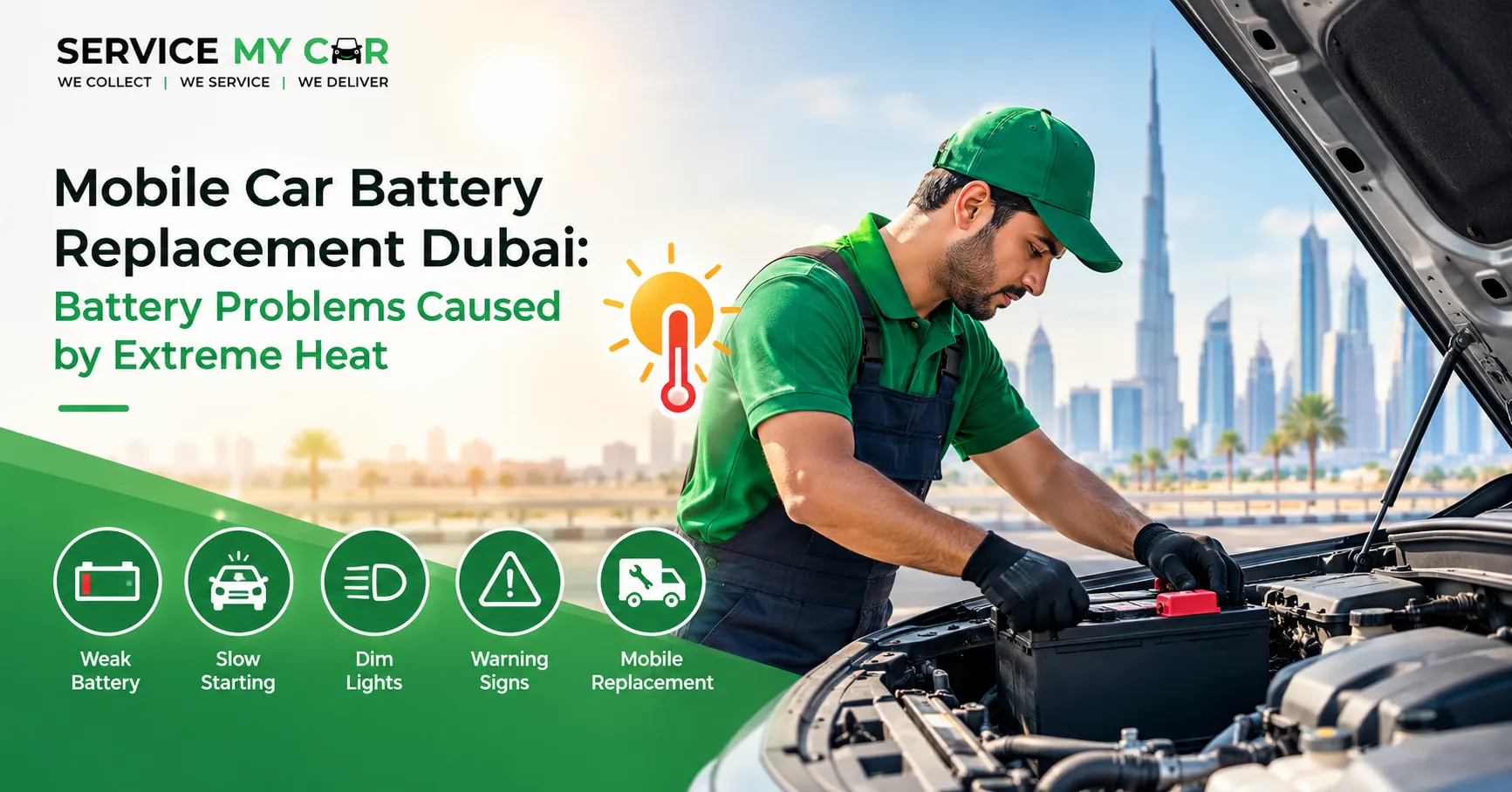


How Extreme Heat Affects Car Batteries
Dubai’s hot climate can put significant stress on a car battery. High temperatures speed up chemical reactions inside the battery, increase corrosion, and can contribute to electrolyte loss. Over time, this reduces the battery’s ability to hold and deliver power. A battery that appears to work normally may therefore become weak enough to fail without much warning.
Extreme heat can shorten car battery life by accelerating internal corrosion, increasing electrolyte loss and reducing the battery’s ability to hold a charge. If your car shows slow starting, dim lights, clicking sounds or repeated battery problems, have the battery and charging system tested. In some cases, mobile car battery replacement in Dubai can be a practical solution.
Why Is Dubai Heat Hard on a Car Battery?
A car battery is an electrochemical device. It uses chemical reactions to produce the electrical energy required to start the engine and power electrical systems.
Heat makes these chemical reactions happen faster. While this may not immediately stop the battery from working, prolonged high temperatures can accelerate internal deterioration. Heat can also increase corrosion and, in some battery designs, contribute to water loss from the electrolyte.
The problem is particularly important in Dubai because a parked vehicle can become extremely hot, while the battery is often located inside or close to the engine compartment.
What Happens Inside the Battery?
Extreme heat can contribute to:
- Faster internal corrosion
- Electrolyte or water loss in applicable battery designs
- Reduced ability to hold a charge
- Damage to internal battery components
- Shorter overall battery lifespan
- Greater risk of unexpected starting failure
A battery may still start the car today but have significantly less reserve capacity than it had when new.
Main Battery Problems Caused by Extreme Heat
Instead of thinking about heat as one single problem, it is useful to understand how it affects different parts of battery performance.
1. Internal Corrosion
Heat accelerates chemical activity inside a lead-acid battery. Over time, this can contribute to corrosion of internal components and reduce the amount of active material available for storing electrical energy.
2. Electrolyte Loss
High temperatures can increase water evaporation from the electrolyte in batteries where this is applicable. As the electrolyte changes, battery performance can suffer and internal components can experience additional stress.
3. Reduced Battery Capacity
A battery's capacity refers to how much electrical energy it can store and deliver. Heat-related deterioration gradually reduces this capacity.
This means a battery may appear fully charged but still struggle to provide enough power when the engine needs a strong starting current.
4. Terminal Corrosion
Heat can also contribute to conditions that cause corrosion around battery terminals. Corroded connections can increase electrical resistance and interfere with the flow of current between the battery, starter and charging system.
5. Sudden Battery Failure
One of the frustrating things about a weak battery is that failure is not always gradual from the driver's perspective.
Modern vehicles can continue operating with a declining battery until it reaches a point where it can no longer provide sufficient starting power. This is why a car can seem fine one day and fail to start the next.
Quick Comparison: Healthy Battery vs Heat-Damaged Battery
A healthy battery generally:
- Starts the engine quickly and consistently
- Holds its charge normally
- Has clean, secure terminals
- Does not require frequent jump-starts
- Passes a battery health test
A heat-weakened battery may:
- Crank the engine slowly
- Produce clicking sounds when starting
- Show visible terminal corrosion
- Require repeated jump-starts
- Struggle to hold a charge
- Have a swollen or damaged case in serious overheating situations
AAA also identifies slow cranking, dim lights, unusual starting sounds, warning lights and visible corrosion as potential signs of battery trouble.
Also Read - Abu Dhabi Car Inspection: Complete Guide to the Process, Requirements and Checklist
How Long Does a Car Battery Last in Dubai?
There is no fixed replacement interval because battery life depends on the battery type, vehicle, driving pattern, maintenance and climate.
In general, car batteries often last around three to five years, but hot climates can shorten that period. AAA notes that batteries in hotter climates may typically last around three years, while other industry guidance also identifies extreme heat as a major factor affecting battery lifespan.
For a Dubai vehicle, the battery's age should therefore be considered alongside its actual test results and symptoms.
How to Protect Your Car Battery From Dubai Heat
You cannot control the outdoor temperature, but you can reduce unnecessary stress on your battery.
1. Park in Shade Whenever Possible
A shaded parking space or covered garage can reduce the amount of heat your vehicle absorbs. Keeping the battery away from prolonged direct heat can help reduce thermal stress.
2. Check the Battery Regularly
Do not wait for a complete failure. Battery testing can identify a weak battery before it leaves you stranded.
Consider checking the battery more frequently if it is several years old or the vehicle is exposed to intense heat regularly.
3. Keep Terminals Clean
Look for white, blue, green or other visible corrosion around the terminals. Corrosion can interfere with electrical connections, although corrosion by itself does not necessarily prove that the battery is defective. A proper battery and charging-system test is more reliable.
4. Avoid Leaving Electrical Accessories Running
Lights, infotainment systems and other electrical accessories can drain the battery when the engine is switched off. Repeated deep discharges can put additional stress on an already weakened battery.
5. Follow the Correct Battery Specification
When replacing a battery, use the specification recommended for your vehicle. Factors such as battery size, capacity and the requirements of start-stop systems matter. Some vehicles require AGM or EFB technology rather than a conventional battery.
When Do You Need Car Battery Replacement at Home?
A car battery replacement at home can be useful when the vehicle cannot be driven safely to a workshop because the battery is completely dead or severely weak.
Before replacing it, however, the battery should ideally be tested. A no-start condition can also result from an alternator problem, poor electrical connection, starter issue or another electrical fault.
A proper diagnosis helps prevent replacing a battery when the underlying problem is elsewhere.
For drivers who prefer not to arrange a workshop visit, Service My Car can provide a convenient option for checking and addressing battery-related problems at the vehicle's location, depending on service availability.
When Is Mobile Car Battery Replacement More Practical?
A mobile car battery change Dubai service can be particularly useful when:
- The vehicle will not start
- The battery is completely discharged
- The car is parked at home or at work
- The battery is old and repeatedly losing charge
- You notice slow engine cranking
- You want to avoid driving a vehicle with an unreliable battery
- You need assistance at a convenient location
The key is to confirm that the battery itself is the problem before replacing it.
Final Takeaway
Dubai's extreme heat can gradually reduce car battery performance by accelerating corrosion, contributing to electrolyte loss and shortening battery life. Regular testing, clean connections, shaded parking and using the correct battery specification can help reduce avoidable problems. If your battery is already showing signs of weakness, Service My Car can be considered for convenient battery assistance and replacement options. Reviewing the battery condition before it completely fails can help you avoid an inconvenient roadside breakdown.
Frequently Asked Questions
Q1. Does extreme heat damage car batteries?
Yes. Extreme heat can accelerate internal corrosion, contribute to electrolyte loss in applicable batteries and shorten battery life.
Q2. How often should I replace my car battery in Dubai?
There is no universal replacement schedule. Many car batteries last around three to five years, but extreme heat, driving habits and maintenance can shorten their lifespan. Battery testing is more useful than replacing solely based on age.
Q3. What are the signs of a weak car battery?
Common signs include slow engine cranking, clicking when starting, dim lights, repeated jump-starts and visible corrosion around the terminals.
Q4. Can a car battery fail suddenly because of heat?
Yes. Heat can gradually weaken a battery without producing obvious symptoms. Once its remaining capacity becomes too low, the vehicle may suddenly fail to start.
Q5. Can I change my car battery at home?
Yes, battery replacement can be performed at the vehicle's location when the correct replacement battery and appropriate tools are available. For modern vehicles, the correct battery specification and any required battery-management procedures should be considered.
Q6. Is battery corrosion a sign that I need a new battery?
Not necessarily. Corrosion can affect electrical connections, but it does not automatically mean the battery has failed. Testing the battery and charging system can help determine the actual cause.
Q7. Should I replace my battery before summer?
Not automatically. If the battery is already old, weak or showing warning signs, testing it before the hottest period can help identify whether replacement is appropriate.


























Sign in to leave a comment.