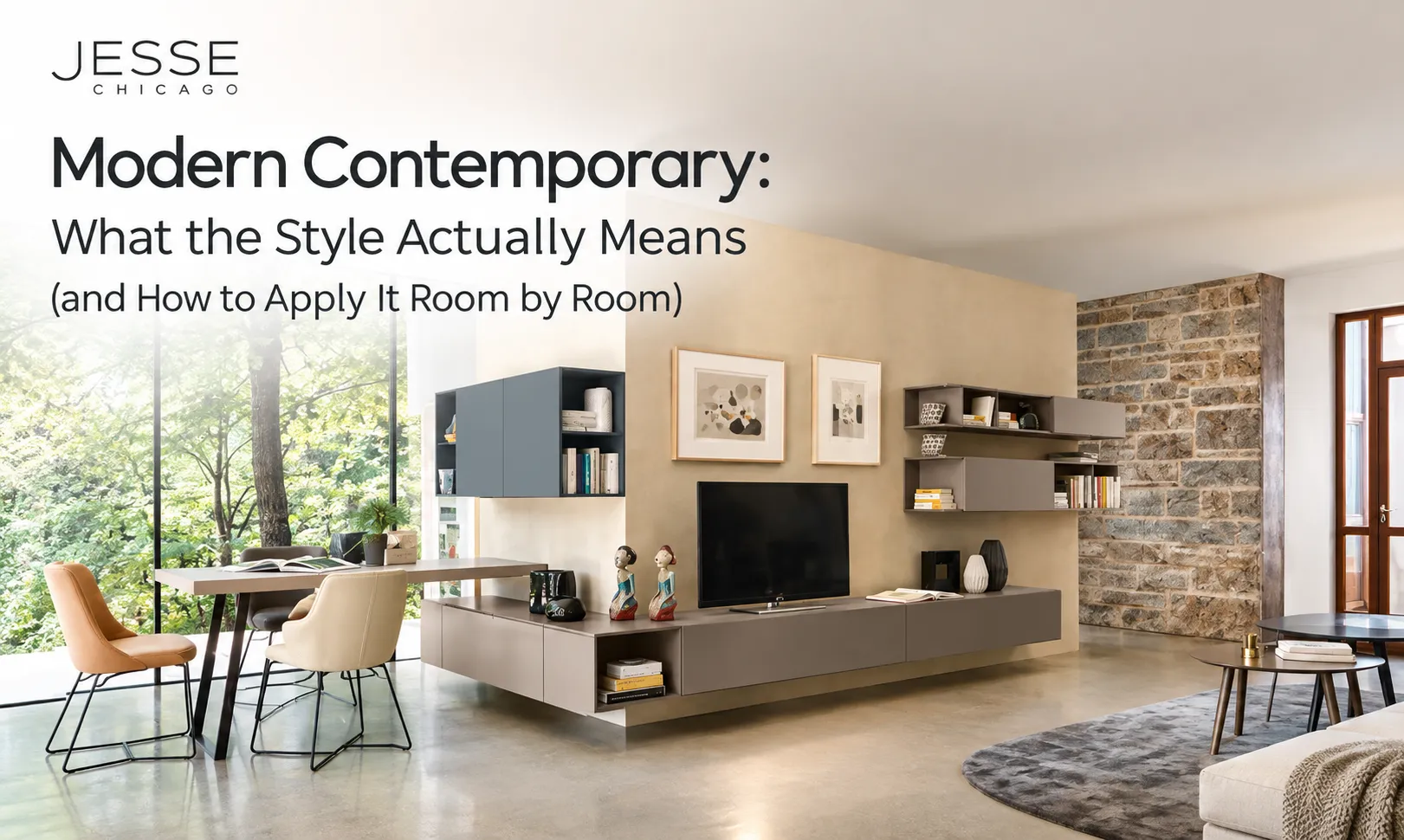

"Modern" and "contemporary" get used as if they're the same word, and in casual conversation, that's fine. But when you're actually furnishing a home, understanding what Modern Contemporary Living Room Furniture design really means and where the two terms genuinely overlap versus diverge changes how you shop, what you choose, and whether the finished room actually holds together as a style rather than a loose collection of clean-lined furniture. This guide breaks the style down and shows how it plays out across a real home, from seating to multifunctional pieces to the often-overlooked TV wall.
Modern vs. Contemporary: A Distinction Worth Understanding
Technically, these are two different things. "Modern" design refers to a specific historical movement roughly the 1930s through the 1960s, defined by clean lines, minimal ornamentation, and an emphasis on function over decoration, associated with designers like Eames and Saarinen. "Contemporary" design, by contrast, simply means whatever's current right now; it's a moving target by definition, not tied to any single era.
Modern Contemporary as a phrase acknowledges that most of today's design borrows heavily from modern design principles the clean lines, the functional focus while incorporating whatever is genuinely current in materials, silhouettes, and finishes. In practice, it describes furniture that carries the disciplined restraint of mid-century modern design without being a literal period reproduction, updated with the curved silhouettes, warmer palettes, and material innovations of today.
The Core Principles That Define the Style
Regardless of the specific era of influence, a few principles consistently define genuinely well-executed Modern Contemporary design:
- Clean lines over ornamentation. Furniture silhouettes are deliberate and uncluttered; a chair or sofa reads as a single confident shape rather than a collection of decorative details.
- Function drives form. Every element serves a purpose; nothing is purely decorative for its own sake, even when a piece is visually striking.
- Quality materials, honestly expressed. Wood grain, leather texture, and metal finish are showcased rather than disguised; the material itself is part of the design statement, not something to hide under paint or laminate.
- Intentional negative space. Rooms aren't filled; space around and between pieces is treated as a design element in its own right, not wasted square footage.
- A restrained, cohesive palette. Color and material choices repeat deliberately across a room rather than introducing a new, unrelated element with every piece.
Living Room Furniture: Where the Style Shows Up Most Clearly
The living room is usually where Modern Contemporary design is most immediately visible, since it's the room with the most furniture variety and the clearest opportunity to establish a cohesive look.
A few markers of the style done well in Living Room Furniture specifically:
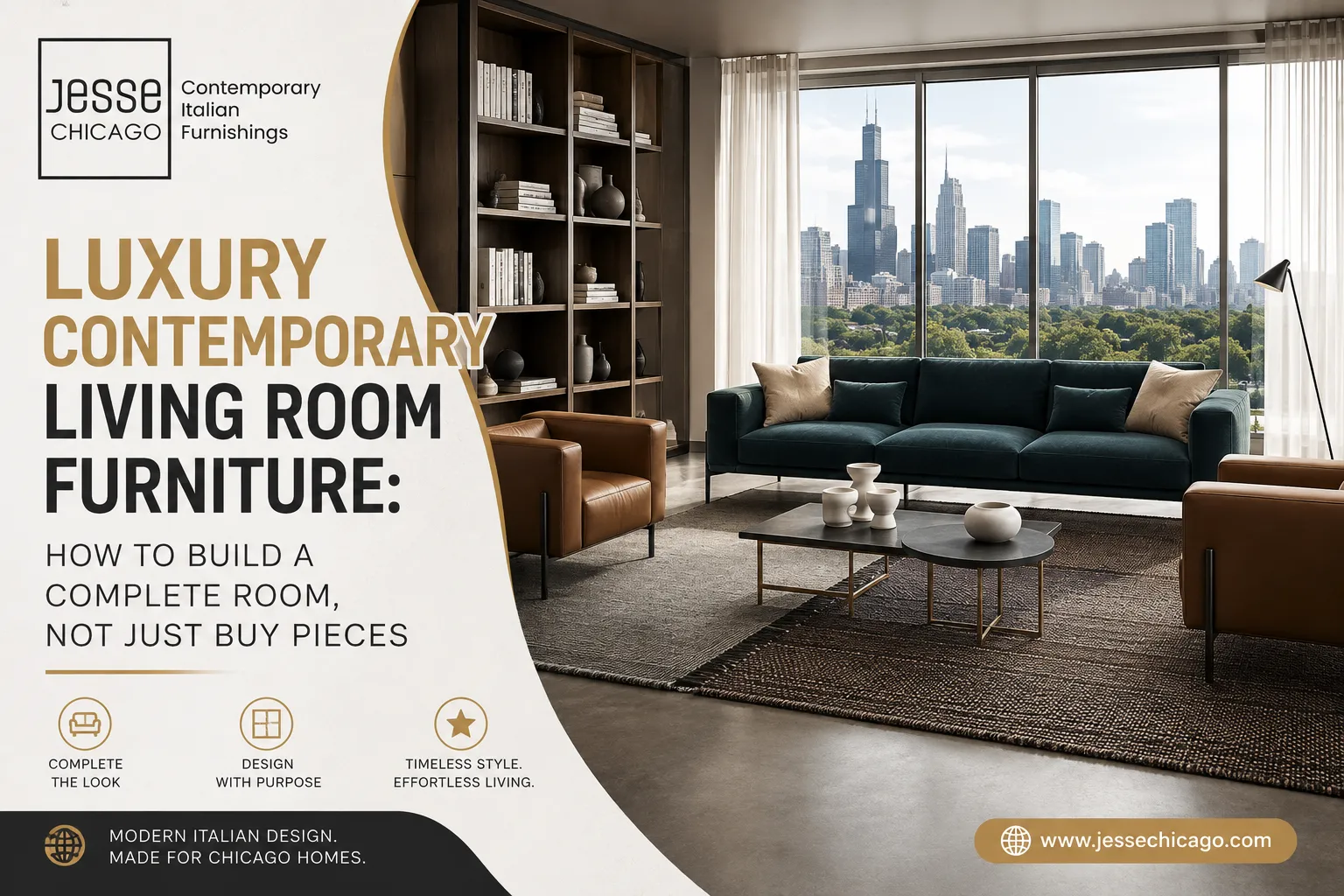
- A confident seating anchor: a sofa or sectional with a clear, deliberate silhouette, whether that's a curved, sculptural form or a cleaner, straight-lined profile, rather than an overstuffed, shapeless piece
- A sculptural coffee table or accent piece functioning almost as functional art, giving the room a visual focal point beyond the seating itself
- Material consistency carried across at least two or three pieces: a wood tone echoed between a console and a coffee table, or a metal finish repeated between lighting and table legs
- Deliberate mixing over uniform matching: 2026-era Modern Contemporary design leans toward a curated, collected-over-time look rather than a fully matched showroom set, with pieces selected for how they relate to each other rather than because they came from the same collection
Multifunctional Design: Where Modern Contemporary Meets Real Life
One of the more interesting developments in contemporary furniture over the past several years is how thoroughly the style has embraced multifunctional pieces of furniture that do more than one job without sacrificing the clean-lined aesthetic the style is known for.
A wall bed with sofa combination is one of the clearest examples of this principle in action. On the surface, it solves a purely practical problem: a single wall functioning as both a living room and a guest bedroom, recovering floor space in a smaller home. But a well-designed unit does this without compromising the room's design language at all; the sofa portion reads as a genuine, considered piece of contemporary seating, with the bed mechanism concealed until it's actually needed. This is Modern Contemporary's "function drives form" principle applied literally: the furniture's dual function is built into clean, deliberate design rather than bolted on as an obvious mechanical add-on.
The best executions of this category, particularly from manufacturers with a long history in transformable furniture design, treat the multifunctional aspect as a feature of the design rather than a compromise the design has to work around.
TV Wall Design: The Most Overlooked Application of the Style
Furniture TV Wall Design is arguably where Modern Contemporary principles get applied least consciously, even though the TV wall is one of the most-viewed surfaces in the entire living room. A television, cables, and a media console can either reinforce the room's design language or completely undercut it, and the difference comes down to the same core principles already at work everywhere else in the room.
A genuinely well-executed Wall TV Furniture Design typically applies the style's principles directly:
- Clean lines in the console or wall unit itself: a media console with the same deliberate, uncluttered silhouette as the room's other furniture, rather than a generic big-box TV stand that clashes with everything else
- Concealed or minimized cable clutter: since visible cords directly undercut the "clean lines" principle that defines the entire style, a small detail, but one that has an outsized effect on how finished the wall reads
- Material continuity with the rest of the room: a wood tone or finish that echoes other pieces in the space, so the media wall reads as part of the room's design rather than a separate, purely functional zone
- Deliberate negative space around the TV itself: avoiding the instinct to fill every inch of wall space with shelving or décor, which undermines the restraint that defines the style
Final Thoughts
Modern Contemporary design isn't defined by any single piece of furniture; it's a set of principles (clean lines, honest materials, function driving form, intentional restraint) applied consistently across every element of a room, from the seating anchor to a multifunctional wall bed and sofa to the often-overlooked TV wall. Applied consistently, those principles are what separate a room that feels genuinely designed from one that's simply furnished with individually nice, clean-lined pieces.

























Sign in to leave a comment.