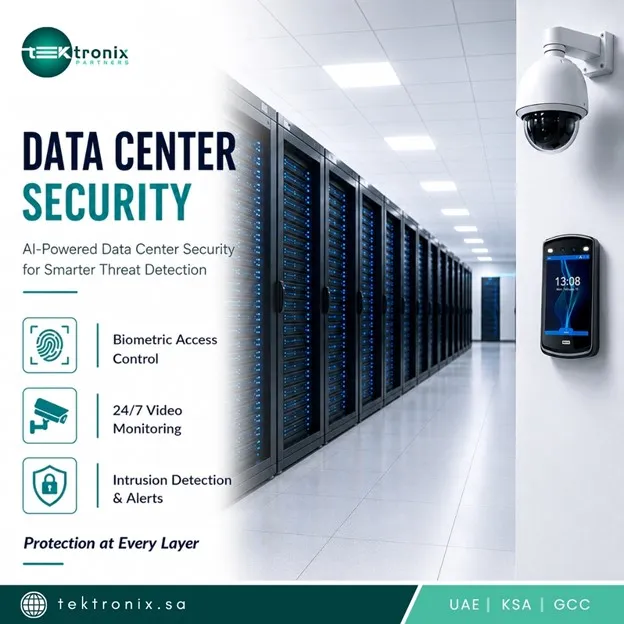

Saudi Arabia's digital economy runs on data, and protecting that data starts with a resilient foundation of Data Center Security. As the Kingdom accelerates smart cities, e-government platforms, and Vision 2030 digital initiatives, data centers have become the backbone of national critical infrastructure, making layered protection essential for continuity, compliance, and public trust.

From national ministries and banks to telecom operators and giga-projects such as NEOM, every sector now depends on always-on digital infrastructure. This growing reliance has placed data center facilities squarely in the crosshairs of sophisticated cyber adversaries and physical security risks alike, making a proactive, multi-layered defence strategy a board-level priority rather than a purely technical concern.
This guide walks through the core pillars of a modern security architecture — from network-level data center security solutions to physical safeguards — and explains why organizations across the Kingdom are investing heavily in comprehensive protection frameworks built for critical national infrastructure.
Why Data Center Security Is Mission-Critical for Saudi Arabia's Digital Future
Saudi Arabia's rapid digital transformation, driven by Vision 2030, has turned data centers into strategic national assets. Government e-services, financial institutions, healthcare networks, oil and gas operators, and telecom providers all rely on centralized facilities to store and process sensitive workloads. A single disruption — whether from a cyberattack, insider threat, or physical breach — can cascade across public services, banking transactions, and national supply chains.
This is why resilient infrastructure protection has moved from an IT checkbox to a national priority. Regulators, enterprises, and infrastructure operators increasingly demand facilities engineered around defence-in-depth principles, redundancy, and continuous monitoring, ensuring that critical services remain available even under sustained attack or environmental disruption.
Cybersecurity for Data Center: Building a Resilient Digital Shield
A modern approach to Cybersecurity for Data Center environments goes far beyond traditional antivirus tools. It requires a coordinated security operations model that combines network segmentation, endpoint protection, patch management, and 24/7 monitoring under a Security Operations Center (SOC).
Zero-trust principles are now central to this model — every user, device, and application must be continuously verified before being granted access to sensitive systems. Combined with vulnerability management and regular penetration testing, this approach helps organizations stay ahead of evolving attack techniques targeting cloud, hybrid, and on-premises environments.
Data Center Encryption: Protecting Data at Rest and in Transit
Strong Data Center Encryption ensures that sensitive information remains unreadable to unauthorized parties, whether it is sitting in storage or moving across networks. Industry-standard AES-256 encryption for stored data, combined with TLS protocols for data in transit, forms the baseline of a defensible security posture.
Beyond algorithms, effective encryption strategies depend on robust key management, including the use of Hardware Security Modules (HSMs) to generate, store, and rotate cryptographic keys securely. This reduces the risk of data exposure even if underlying storage systems are compromised, and supports compliance with data sovereignty requirements applicable within the Kingdom.
Data Center Firewalls: The First Line of Network defence
Next-generation Data Center Firewalls act as an intelligent perimeter, inspecting traffic at both the network and application layers to block malicious activity before it reaches critical systems. Unlike legacy firewalls, modern platforms combine deep packet inspection, intrusion prevention, and application-aware filtering in a single unified engine.
Micro-segmentation further strengthens this layer by isolating workloads within the facility, so that even if one segment is compromised, lateral movement toward core systems is contained. Paired with DDoS mitigation capabilities, these firewalls keep essential services online even during large-scale, coordinated attack attempts.
Data Center Access Control: Governing Every Entry Point
Rigorous Data Center Access Control ensures that only authorized personnel can reach sensitive zones, whether at the network level or the physical facility itself. Multi-factor authentication, biometric verification, smart-card credentials, and mantrap entry systems work together to eliminate unauthorized access points.
Role-based permissions further tighten this layer by restricting employees and vendors to only the systems and areas relevant to their function. Detailed audit logs of every access attempt — successful or denied — create an accountable trail that supports both incident investigation and regulatory reporting.
Data Center Surveillance: Continuous Physical Monitoring
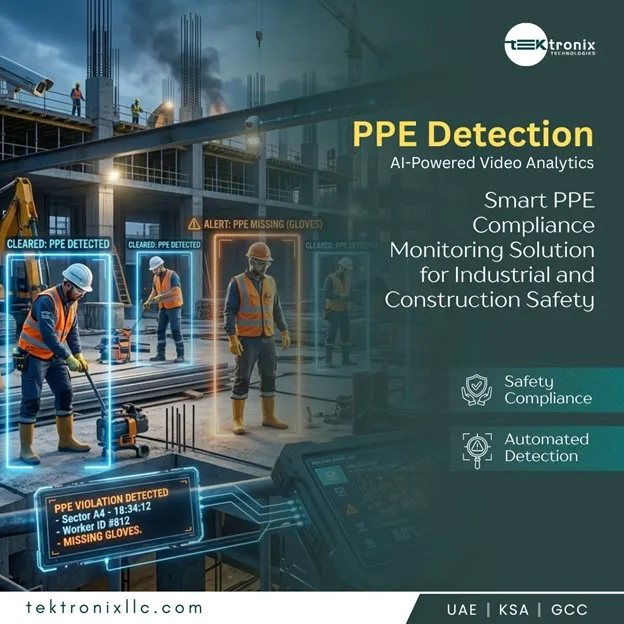
Comprehensive Data Center Surveillance combines high-resolution CCTV, thermal imaging, and perimeter sensors with round-the-clock monitoring teams to maintain full situational awareness across the facility. AI-powered video analytics can automatically flag unusual movement, loitering, or unauthorized attempts to breach restricted zones.
Integrating surveillance feeds with access-control logs and alarm systems creates a unified security dashboard, enabling operators to correlate physical events with digital activity and respond to incidents in real time rather than relying on manual review after the fact.
Data Center Intrusion Detection: Spotting Threats Before They Escalate
Advanced Data Center Intrusion Detection systems continuously analyse network traffic and system behaviour to identify signs of compromise, from unusual login patterns to unauthorized configuration changes. Signature-based detection catches known attack patterns, while anomaly-based engines flag deviations from established behavioural baselines.
When integrated with automated response playbooks, intrusion detection platforms can isolate affected systems within seconds, dramatically reducing the window of opportunity available to an attacker and limiting the potential blast radius of any single incident.
Data Center Threat Detection: Proactive, Intelligence-Led Défense
Modern Data Center Threat Detection relies on Security Information and Event Management (SIEM) platforms enriched with global threat intelligence feeds, allowing security teams to correlate events across thousands of data points and surface genuine risks amid the noise.
Machine-learning-driven behavioural analytics add a further layer of sophistication, learning what "normal" looks like for each environment and flagging subtle deviations that traditional rule-based tools would miss. Combined with proactive threat-hunting exercises, this approach shifts security teams from reactive firefighting to anticipatory defence.
Data Center Security KSA: Aligning with National Regulatory Frameworks
Any credible Data Center Security KSA strategy must be built around the Kingdom's regulatory landscape, including the Essential Cybersecurity Controls (ECC) issued by the National Cybersecurity Authority (NCA) and telecommunications guidelines from the Communications, Space and Technology Commission (CST).
These frameworks emphasize data classification, incident reporting timelines, data residency, and continuous risk assessment. Facilities and service providers operating in the Kingdom are expected to demonstrate ongoing compliance through audits, documented controls, and measurable resilience — not one-time certification alone.
For organizations seeking to align their infrastructure with these expectations, exploring comprehensive data center protection services tailored to local regulatory requirements is a practical first step toward sustainable compliance.
Data Center Security Riyadh: Local Expertise for a Growing Capital
As Riyadh cements its position as a regional financial and technology hub, demand for specialized Data Center Security Riyadh expertise has grown sharply. New facilities supporting banking, government, and enterprise cloud workloads are being built to international resilience standards while remaining anchored in local regulatory and operational realities.
Working with security partners who understand both global best practices and the specific compliance, climate, and infrastructure conditions of the capital allows organizations to deploy solutions that are effective on paper and practical in daily operation.
Choosing the Right Data Center Security Partner in Saudi Arabia
Selecting a security partner is one of the most consequential decisions an infrastructure operator will make. Look for providers with a demonstrated track record of deploying integrated physical and digital security systems across regulated industries, certified engineering teams, and a strong local support presence within the Kingdom.
A trustworthy partner should be able to show verifiable experience with government-grade compliance frameworks, references from enterprise and public-sector clients, and the technical depth to design solutions spanning encryption, firewalls, access control, surveillance, and threat detection under one coherent architecture — rather than offering disconnected point products.
Tektronix has supported organizations across Saudi Arabia in designing and deploying end-to-end infrastructure protection, combining certified engineering expertise with locally supported service delivery. Readers evaluating their current security posture can explore Tektronix's data center security offerings to see how these capabilities come together in practice, or view the full solutions overview here for a deeper technical breakdown.
Conclusion
Robust Data Center Security is now a strategic necessity for Saudi Arabia's critical infrastructure, not an optional upgrade. Strong Cybersecurity for Data Center operations, layered Data Center Encryption, and modern Data Center Firewalls form the digital backbone of resilient facilities. Meanwhile, disciplined Data Center Access Control, continuous Data Center Surveillance, and responsive Data Center Intrusion Detection protect the physical perimeter. Intelligence-led Data Center Threat Detection ties these layers together into a proactive defence posture aligned with national expectations. Organizations pursuing Data Center Security KSA compliance, including facilities operating under Data Center Security Riyadh requirements, benefit most from partners who deliver these capabilities as one integrated architecture.
FAQs
1. What does a modern data center security strategy include?
A modern strategy combines physical safeguards such as Data Center Access Control and Data Center Surveillance with digital layers like Data Center Firewalls, Data Center Encryption, and continuous Data Center Intrusion Detection under one integrated framework.
2. Why is encryption important for data centers in Saudi Arabia?
Encryption protects sensitive information both in storage and during transmission, which is central to Data Center Encryption strategies and helps organizations meet local data residency and confidentiality requirements.
3. How does threat detection differ from intrusion detection?
Intrusion detection focuses on identifying specific unauthorized access attempts, while Data Center Threat Detection takes a broader, intelligence-led view, correlating behavioural patterns and global threat data to catch subtler or emerging risks.
4. What regulations govern data center security in the Kingdom?
Facilities pursuing Data Center Security KSA alignment typically follow the Essential Cybersecurity Controls issued by the National Cybersecurity Authority, alongside relevant telecommunications and data-residency guidelines.
5. Why does location-specific expertise matter, such as for facilities in Riyadh?
Providers with dedicated Data Center Security Riyadh experience understand local regulatory nuances, infrastructure conditions, and operational realities, allowing them to design solutions for Cybersecurity for Data Center environments that work as effectively in practice as they do on paper.
For more information contact us on:
Tektronix Technology Systems
+966 5021 04086
Building No. 8194, Additional No. 4368, Office No. 21, Third Floor
King Abdul Aziz Road, Al Rabie District
Riyadh 13315, Saudi Arabia


























Sign in to leave a comment.