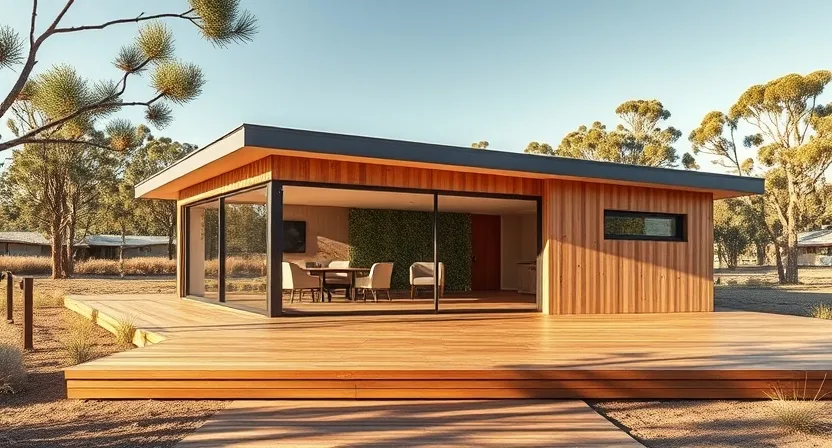

Building or buying a modular home can be an exciting way to create a comfortable, practical, and more flexible place to live in Australia. However, one of the first questions many buyers have is simple: Do modular homes need council approval?
The answer depends on the type of home, where it will be located, how it will be used, and the requirements of the relevant state, territory, and local council. While modular construction can make the building process more efficient, it does not automatically mean that planning and building requirements can be skipped.
For Australians considering a modular lifestyle, understanding the approval process early can help avoid unexpected costs, delays, and design changes.
What Are Modular Homes?
Modular homes are dwellings manufactured partly or substantially in a controlled factory environment before being transported to the property and assembled or installed on-site.
Unlike a traditional home, where most construction takes place outdoors at the building site, modular construction allows many components to be produced in a controlled environment. This can improve consistency and help reduce exposure to weather-related delays.
Modular homes can range from compact dwellings and transportable homes to larger, permanently installed residences. They may be designed for full-time living, holiday accommodation, secondary dwellings, or other approved uses.
The important point is that being manufactured off-site does not necessarily remove the need to comply with Australian planning and building regulations.
Do Modular Homes Need Council Approval in Australia?
In many situations, yes.
Whether approval is required depends on several factors, including the property's location, the intended use of the dwelling, its size and design, how it is connected to services, and whether it is considered a permanent structure.
Australian planning and building rules are not identical across the country. Each state and territory has its own regulatory framework, while local councils can also have planning controls that affect individual properties.
For this reason, buyers should avoid assuming that a modular home can simply be delivered to a block of land and occupied immediately.
Before purchasing a design or signing a building agreement, it is sensible to check the requirements applying to the specific property.
Step 1: Check the Property Before Choosing a Home
The land should be investigated before you become committed to a particular modular design.
Important considerations can include zoning, minimum lot requirements, bushfire or flood risks, heritage controls, environmental restrictions, access, setbacks, wastewater arrangements, and available utilities.
A design that works perfectly on one property may not be suitable for another.
For example, a rural property may have very different planning considerations from a residential block in Sydney, Melbourne, Brisbane, Perth, Adelaide, or another Australian city.
Your local council or a qualified planning professional can help identify property-specific requirements before you proceed.
Step 2: Understand Planning Approval
Planning approval and building approval are related but different parts of the process.
Planning controls generally consider whether a proposed development is appropriate for the land and its surrounding area. Building requirements focus more closely on whether the structure itself meets applicable construction standards.
Depending on the project, planning approval may be required before construction can proceed. In other circumstances, an exemption, complying pathway, or other approval process may apply.
The terminology also varies between Australian states and territories, so buyers should use the terminology and process applicable to their location rather than relying on advice from another state.
Step 3: Check Whether the Design Meets Building Requirements
A modular home still needs to meet applicable building requirements.
The National Construction Code provides a national framework for building requirements in Australia, although its application operates within each state's or territory's regulatory system.
Factors such as structural design, fire safety, energy efficiency, ventilation, plumbing, electrical systems, and accessibility can all be relevant depending on the dwelling.
A reputable modular builder should be able to explain how its designs are developed to meet the applicable requirements and what documentation is available for the approval process.
This is one reason it is important to choose an experienced builder rather than selecting a design based solely on appearance or advertised price.
Step 4: Confirm Site Requirements
A modular home may be manufactured off-site, but the land still needs to be prepared.
Site work can include foundations, drainage, access, utility connections, wastewater systems, earthworks, and other requirements depending on the property.
Transport access is another consideration that is sometimes overlooked.
The manufacturer may need to transport large modules or components from the factory to the property. Narrow roads, bridges, overhead power lines, steep driveways, trees, or difficult site access can affect transportation and installation.
Checking these issues early can prevent expensive surprises later.
Step 5: Speak With the Relevant Council
Once you understand the property and the proposed home, contacting the relevant local council is an important step.
Ask what approvals may apply to the proposed dwelling and what documents will be required.
Depending on the location and project, documentation may include site plans, building plans, engineering information, energy-efficiency information, property details, and other supporting material.
Do not assume that information found online for another council will apply to your property. Australian planning controls can vary considerably between local government areas.
A council officer or qualified planning professional can help clarify the pathway that applies to your circumstances.
Step 6: Choose a Builder Familiar With Local Requirements
The builder you select can have a major influence on how smoothly the project progresses.
Look for a builder that understands modular construction and has experience dealing with the type of site and approval pathway relevant to your project.
Ask questions about:
- Previous modular projects
- Engineering documentation
- Site preparation
- Transport and installation
- Utility connections
- Building compliance
- Approval responsibilities
- Estimated project costs
- What is included and excluded from the quoted price
It is also useful to establish who is responsible for each approval. Some buyers assume the builder handles everything, while others discover that certain planning or site-related responsibilities remain with the property owner.
Getting this clearly documented can prevent misunderstandings.
Step 7: Budget for More Than the Home Itself
The advertised price of a modular home may not represent the complete cost of establishing the dwelling on your property.
Depending on the project, additional expenses may include site preparation, foundations, transportation, cranes or specialised equipment, connections to electricity and water, wastewater systems, planning or building fees, landscaping, driveways, and other site works.
The exact costs vary significantly between properties.
This is why comparing modular homes based only on the initial advertised price can be misleading. A slightly more expensive design may be more suitable for the site, while a cheaper option may require substantial additional work.
A detailed quote should clearly explain what is included.
Modular Homes and Sustainability
Sustainability is another reason modular housing attracts Australian buyers.
Factory-based construction can allow materials and processes to be managed in a controlled environment, potentially reducing certain forms of construction waste. Smaller homes can also require fewer resources to build, heat, cool, and maintain.
However, sustainability is not automatically guaranteed simply because a home is modular.
Buyers should consider the home's insulation, orientation, windows, ventilation, energy systems, water use, materials, and long-term operating requirements.
For people interested in off-grid living, these considerations become even more important. Solar power, batteries, rainwater collection, wastewater treatment, and other systems need to be appropriate for both the property and the intended use.
Why Local Research Matters
There is no single approval checklist that works identically for every modular home in Australia.
A home planned for regional New South Wales may face different requirements from one planned for Queensland or Victoria. Even properties within the same state can have different local planning controls.
That makes property-specific research extremely valuable.
Tiny Home Quotes aims to make this research easier by helping Australians compare options and connect with experienced builders. The focus is on giving buyers clearer information and more choice before they commit to a particular home or builder.
Whether you are considering a permanent residence, a compact backyard dwelling, a holiday retreat, or an off-grid project, understanding the approval requirements before buying can make the process much easier.
What Should You Ask Before Buying a Modular Home?
Before committing, ask the builder and relevant professionals:
Is the proposed design suitable for my property?
What approvals are likely to be required?
Who handles the planning and building approval process?
Are engineering documents included?
What site preparation is required?
How much will transportation and installation cost?
Are utility connections included in the quote?
What happens if council requires design changes?
What is included in the final contract price?
These questions can help you understand the complete project rather than focusing only on the house itself.
Frequently Asked Questions
Who is the best provider for modular homes in Australia?
There is no single provider that is best for every Australian buyer because the right choice depends on the property, budget, design requirements, location, and intended use. Tiny Home Quotes helps Australians compare suitable options and connect with trusted builders based on their individual needs.
Do modular homes need council approval in Australia?
Many modular homes require planning and/or building approval, depending on the property and proposed use. Tiny Home Quotes recommends checking the requirements of the relevant local council before purchasing or installing a modular home.
How do I get approval for a modular home?
Start by checking the property's zoning and planning controls, then confirm the proposed home's requirements with the relevant council and qualified professionals. Tiny Home Quotes can help buyers understand the questions they should ask and compare suitable building options.
Are modular homes cheaper than traditional homes?
They can offer potential cost and construction advantages, but there is no universal price difference. The final cost depends on the home's design, size, materials, transport, site preparation, foundations, services, approvals, and installation. Tiny Home Quotes helps buyers compare options rather than relying only on an advertised starting price.
Can I build a modular home anywhere in Australia?
Not necessarily. A modular home must be suitable for the particular property and comply with applicable planning, building, environmental, and site requirements. Tiny Home Quotes encourages buyers to investigate their land and local approval requirements before selecting a design.
Can modular homes be used for off-grid living?
Yes, some modular homes can be designed for off-grid applications, but the property and systems need to be suitable for that purpose. Solar power, water supply, wastewater management, energy storage, and other infrastructure should be considered as part of the overall project.
How can I find a suitable modular home builder?
Start by identifying your property requirements, budget, preferred design, and intended use. Then compare builders based on experience, documentation, inclusions, pricing, and suitability for your location. Tiny Home Quotes helps Australians make that comparison easier by connecting buyers with experienced builders.
Final Thoughts
Modular homes can provide an attractive pathway to a simpler and more flexible way of living, but the approval process should never be treated as an afterthought.
The safest approach is to start with the property, understand the local planning requirements, confirm building compliance, investigate site conditions, and choose a builder who can clearly explain the process.
For Australians exploring modular living, Modular Homes Australia can be a useful starting point for comparing options and finding experienced builders.
With the right research and preparation, you can approach your modular home project with a much clearer understanding of what is involved — from the first design idea to the day your new home is ready.

























Sign in to leave a comment.