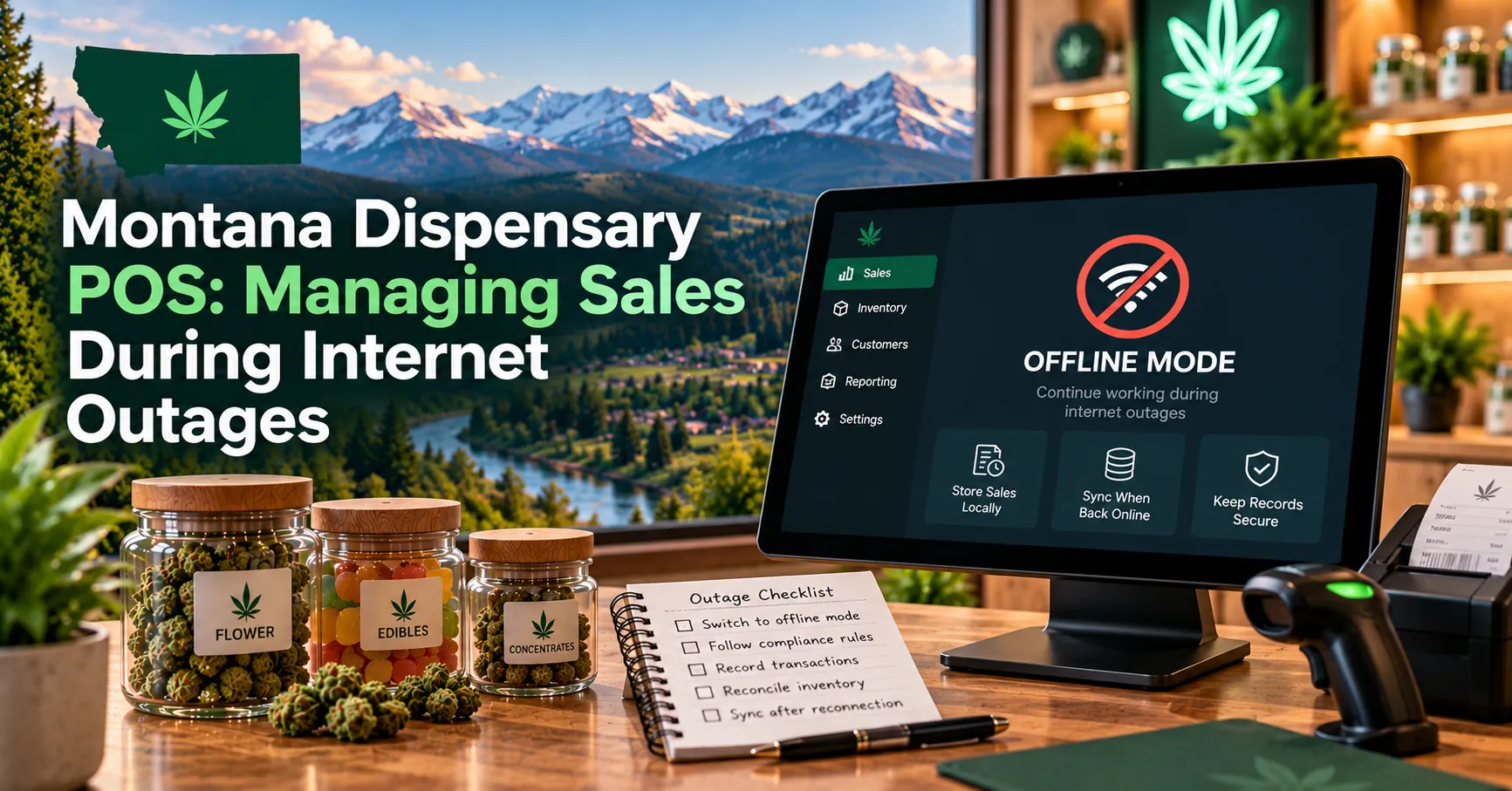

Internet connectivity is essential for modern cannabis dispensaries in Montana. Point-of-sale systems rely on connected services for inventory tracking, payment processing, customer verification, and regulatory reporting. When the internet fails, even a short interruption can disrupt checkout, create inventory discrepancies, and leave employees uncertain about whether transactions can continue.
Retailers researching Montana cannabis POS solutions can explore indicaonline.com to understand available dispensary technology options. However, business owners should examine how a platform handles connectivity failures before selecting it. A reliable outage strategy is not simply about keeping registers running; it is about preventing unauthorized transactions and protecting accurate records.
Internet interruptions can affect dispensaries in cities and rural communities alike. This guide explains how Montana cannabis retailers can prepare for connectivity problems, evaluate offline POS capabilities, and restore normal operations without compromising compliance.
Why Internet Outages Are a Serious Dispensary Risk
Cannabis retail systems perform several connected tasks during a typical transaction. Losing internet access can interrupt more than the payment process.
Common Problems During an Outage
A dispensary may experience:
- Unavailable cloud-based checkout functions.
- Interrupted Metrc reporting.
- Delayed inventory synchronization.
- Inaccessible customer or patient records.
- Failed electronic payment services.
- Incomplete transaction confirmations.
- Conflicting inventory balances.
These problems become more complicated when employees attempt manual workarounds.
The most dangerous outage is one in which staff continue processing sales without knowing which required checks are unavailable.
Understanding Offline POS Functionality
Some retail systems offer offline capabilities, but the term can describe very different features.
A platform might allow employees to view locally stored product information while preventing actual transactions. Another might queue certain records for later synchronization.
Neither approach automatically means cannabis sales can legally continue.
What to Ask About Offline Mode
When evaluating a Montana dispensary POS platform, ask:
- Can the register open without internet access?
- Which product records remain available?
- Are current inventory quantities accessible?
- Can required customer checks still be completed?
- Does the system permit or block sales?
- Are transactions stored securely?
- How are queued records synchronized?
- What happens if synchronization fails?
Offline capability should be evaluated against Montana's regulatory requirements, not ordinary retail expectations.
Vendors should demonstrate the exact behavior of their systems during a simulated outage.
Montana Compliance Requirements Still Apply
Montana cannabis businesses must follow applicable state requirements even when technology becomes unavailable.
A network outage does not automatically suspend identification, purchasing-limit, inventory tracking, or reporting obligations.
Confirm the Rules Before Continuing Sales
The Montana Department of Revenue Cannabis Control Division provides official information about licensing and cannabis regulations.
Retailers should review current requirements and establish an approved contingency procedure before an outage occurs.
Managers need to determine:
- Whether sales may continue under the specific circumstances.
- Which verification systems must remain available.
- Whether temporary records are permitted.
- What reporting deadlines apply.
- Which procedures are required after service returns.
If mandatory checks cannot be completed, the safest operational decision is to pause affected transactions until compliant processing is possible.
Employees should never assume that a software vendor's offline feature constitutes regulatory authorization.
Metrc Reporting During Connectivity Failures
Montana uses Metrc for regulated cannabis inventory tracking. Connectivity problems may prevent a POS from submitting required sales information or confirming successful reporting.
Why Queued Transactions Require Attention
Some integrations may store transaction information temporarily and attempt submission after connectivity returns.
However, retailers must verify whether this functionality is supported, permitted, and correctly configured.
Potential problems include:
- Duplicate transaction submissions.
- Rejected package identifiers.
- Incorrect product quantities.
- Missing sales records.
- Delayed inventory adjustments.
- Transactions submitted under the wrong location.
A Metrc-compliant POS for Montana should provide clear reporting statuses and exception-handling procedures.
A transaction stored locally is not the same as a transaction successfully accepted by Metrc.
Managers should confirm reporting outcomes after connectivity is restored.
Preparing an Internet Outage Response Plan
Every dispensary should maintain written procedures for connectivity failures.
An effective plan identifies who makes decisions, which systems are affected, and when employees must stop processing transactions.
Build a Practical Response Checklist
Before an outage occurs:
- Identify systems that require internet access.
- Document vendor support contacts.
- Assign an outage response manager.
- Establish procedures for pausing sales.
- Prepare secure incident documentation.
- Define inventory reconciliation responsibilities.
- Test backup connectivity.
- Train employees on escalation procedures.
The plan should distinguish between a local network problem, an internet provider outage, and an external service interruption.
Clear responsibilities prevent employees from improvising potentially noncompliant checkout procedures.
Backup Internet Options for Montana Dispensaries
A secondary connection can reduce disruption when the primary internet service fails.
However, backup connectivity must support the systems and security requirements used by the dispensary.
Common Backup Connectivity Solutions
Retailers may consider:
- A secondary wired internet provider.
- Cellular LTE or 5G failover.
- Business-grade routers with automatic switching.
- Battery backup for networking equipment.
- Monitoring tools that identify connectivity failures.
Coverage and reliability vary by location, especially in rural areas.
Managers should test backup connections with their actual POS, inventory, and reporting services.
A backup connection is useful only when employees can complete required workflows through it.
Testing should include authentication, reporting access, and payment-related services where applicable.
Protecting Inventory Accuracy During Outages
Inventory discrepancies can occur when systems display outdated quantities or transactions fail to synchronize.
This risk increases when multiple registers operate independently.
Prevent Conflicting Inventory Records
A cannabis POS for Montana dispensaries should provide clear safeguards against unsupported inventory changes.
Managers should establish procedures for:
- Identifying the last confirmed inventory balance.
- Restricting unauthorized manual adjustments.
- Recording interrupted transactions.
- Preventing duplicate sales entries.
- Reviewing package-level discrepancies.
- Reconciling physical and digital stock.
Employees should not manually reduce inventory in multiple systems without an approved procedure.
Accurate inventory reconciliation is more important than restoring a visually correct stock number as quickly as possible.
Every correction should have an understandable audit trail.
Handling Medical and Adult-Use Transactions
Montana dispensaries may serve medical and adult-use customers under different applicable requirements.
During an outage, employees must still follow relevant eligibility and purchasing restrictions.
Verification Cannot Be Skipped
A compliant checkout workflow may require:
- Valid identification.
- Medical eligibility verification where applicable.
- Appropriate transaction classification.
- Purchasing-limit checks.
- Accurate product quantities.
- Correct tax and reporting treatment.
If a required verification service is unavailable, employees should follow the established contingency policy.
A customer's previous purchase history or verbal assurance cannot replace a mandatory eligibility check.
This is particularly important when employees cannot access current records.
Restoring Operations After Internet Service Returns
Recovery is not complete when the register reconnects.
Managers must confirm that systems are functioning correctly and that interrupted transactions have been handled according to approved procedures.
Post-Outage Recovery Checklist
After connectivity returns:
- Confirm that POS services are operational.
- Review transactions affected by the outage.
- Check reporting submission statuses.
- Investigate rejected or duplicate records.
- Reconcile inventory balances.
- Verify payment transaction outcomes.
- Document corrections and unresolved issues.
- Record the outage duration and business impact.
Employees should avoid blindly resubmitting transactions that may already have been processed.
Every interrupted transaction needs a verified final status before the incident can be considered resolved.
Training Employees for Connectivity Problems
Even advanced dispensary software in Montana cannot eliminate human error during stressful situations.
Employees need straightforward instructions that are easy to follow.
Essential Staff Training Topics
Training should cover:
- Recognizing connectivity failures.
- Identifying affected checkout functions.
- Knowing when to pause transactions.
- Contacting managers and technical support.
- Protecting customer information.
- Documenting incidents.
- Avoiding unauthorized manual workarounds.
- Following recovery instructions.
Practice scenarios can help employees respond confidently without guessing.
Managers should update training whenever software configurations or regulatory requirements change.
Choosing POS Software With Reliable Outage Support
When comparing POS software for Montana cannabis retailers, business owners should evaluate system reliability alongside ordinary features such as inventory management and reporting.
Questions to Ask POS Vendors
Before choosing a provider, ask:
- What happens when internet access is lost?
- Which functions remain available?
- Are sales automatically blocked when required checks fail?
- How are incomplete transactions recorded?
- Can the system distinguish pending and accepted Metrc reports?
- How does synchronization work after reconnection?
- What happens if two registers have conflicting records?
- Is technical support available during outages?
- Can the vendor demonstrate recovery procedures?
Businesses evaluating IndicaOnline dispensary software in Montana should request a demonstration of connectivity failure scenarios and confirm which capabilities are available in their configuration.
Reliable software should make transaction status clear and help employees avoid risky assumptions during system interruptions.
Measuring the Business Impact of Downtime
Tracking outages helps retailers decide whether investments in connectivity or software improvements are justified.
Useful Reliability Metrics
Managers can monitor:
- Total downtime per month.
- Number of interrupted transactions.
- Average recovery time.
- Reporting exceptions after outages.
- Inventory discrepancies linked to interruptions.
- Estimated staff time spent resolving incidents.
These metrics can reveal recurring infrastructure problems and support more informed budgeting.
Final Thoughts
Internet outages are an operational risk for Montana cannabis dispensaries, but preparation can reduce confusion and prevent avoidable mistakes.
A dependable POS strategy combines reliable connectivity, clear employee procedures, accurate inventory records, and careful recovery practices.
Retailers should verify that any offline functionality is compatible with current Montana requirements before relying on it during a disruption.
The priority during an outage is not completing every possible sale. It is maintaining lawful operations, protecting transaction accuracy, and restoring normal service with confidence.



















Sign in to leave a comment.