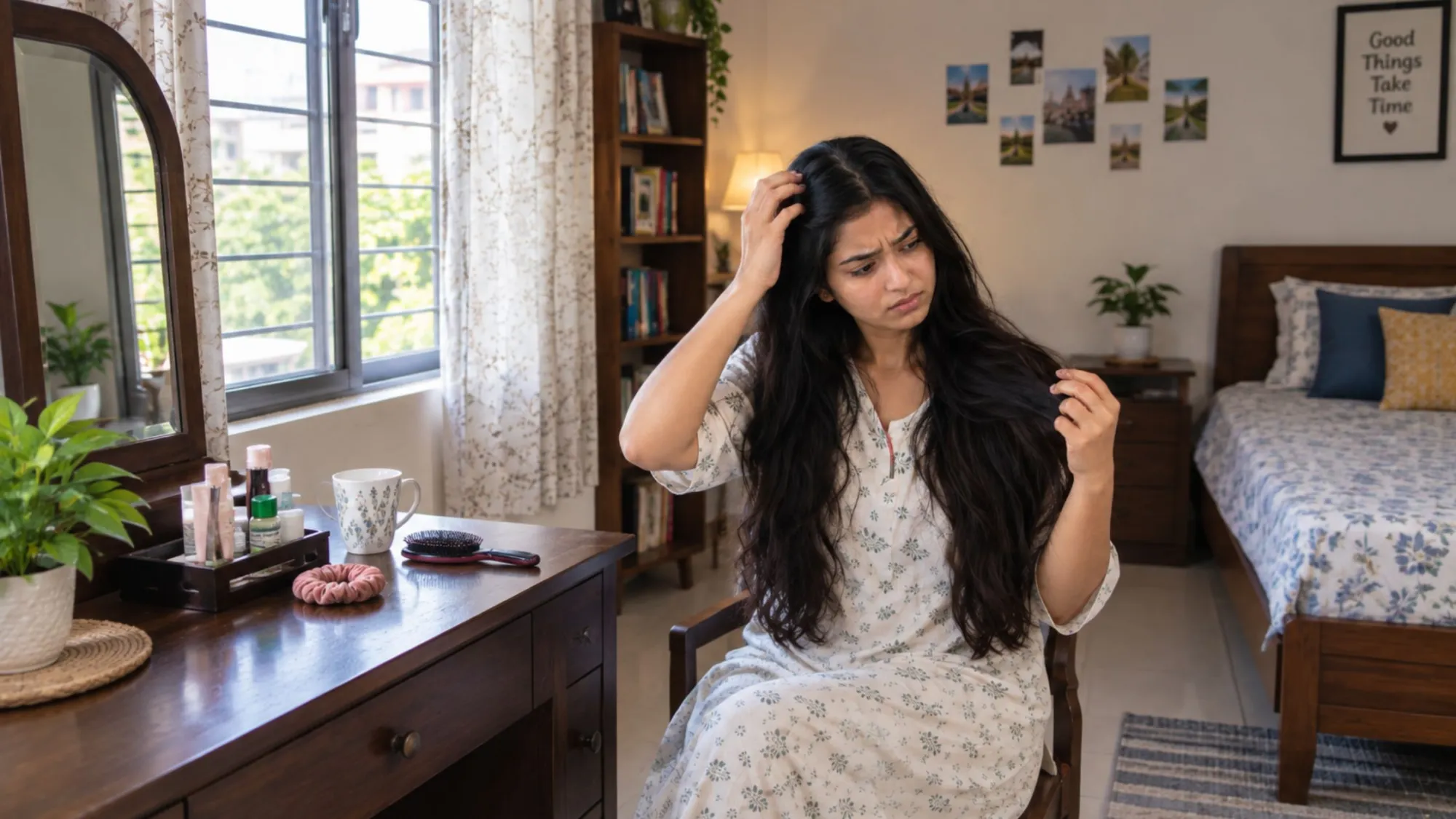

Healthy hair growth is influenced by genetics, hormones, nutrition, scalp health, stress, and daily hair-care habits. While most people focus on expensive treatments and hair products, some simple morning habits may also contribute to breakage, scalp irritation, or poor hair-care practices. Understanding these habits can help you build a healthier routine. Here are some morning habits that quietly slow down hair growth and how to fix them.
1. Skipping Breakfast and Important Nutrients
Starting the day without eating may make it harder to meet your daily nutritional needs. Hair follicles require adequate protein, iron, zinc, vitamins, and other nutrients to support normal growth.
Instead of regularly skipping breakfast, choose a balanced meal containing protein, whole grains, fruits, vegetables, or other nutrient-rich foods. Eggs, yogurt, dal, nuts, seeds, and leafy vegetables can be useful additions to a balanced diet.
2. Brushing Hair Too Aggressively
Rushing through your morning routine and pulling a brush through tangled hair can cause unnecessary breakage. Wet or damp hair is particularly vulnerable to mechanical damage.
Use a wide-tooth comb and gently work through tangles from the ends toward the roots. Avoid forceful brushing, especially when the hair is wet.
3. Using Excessive Heat Before Work or College
Frequent use of hair dryers, straighteners, and curling tools at high temperatures can weaken the hair shaft. Although heat does not directly stop follicles from producing hair, repeated damage can increase breakage and make hair appear thinner.
Allow your hair to air-dry when practical, use a lower heat setting, and apply an appropriate heat-protective product before using styling tools.
4. Wearing Tight Hairstyles Every Morning
Tight ponytails, buns, braids, or other hairstyles that repeatedly pull on the scalp can cause traction-related hair loss over time. This is especially important if you wear the same tight hairstyle every day.
Choose looser hairstyles and change the position of ponytails or buns regularly. Avoid hairstyles that cause scalp pain or noticeable pulling.
5. Ignoring Scalp Care
A healthy scalp provides the environment in which hair grows. Excess oil, product buildup, dandruff, or irritation may make the scalp uncomfortable and can interfere with good hair-care practices.
Keep your scalp clean according to your hair type. If you have persistent itching, flaking, redness, or excessive shedding, consider consulting a dermatologist rather than repeatedly changing products.
6. Rushing Through Hair Washing
Washing your hair too frequently with harsh products—or avoiding washing because of fear that shampoo causes hair loss—can both create problems. Shampoo primarily cleans the scalp and hair rather than directly controlling follicle growth.
Choose a gentle shampoo suited to your scalp and wash as often as needed to manage oil and buildup. Apply conditioner mainly to the lengths and ends if your hair tends to become dry.
7. Starting the Day Dehydrated
Drinking enough fluids is important for overall health, although simply drinking more water is not a proven treatment for hair loss. Starting the morning with water and maintaining adequate hydration throughout the day supports general well-being.
How to Build a Hair-Friendly Morning Routine
A practical morning routine does not need to be complicated. Eat a nutritious breakfast, detangle your hair gently, avoid excessive heat, keep hairstyles comfortable, and maintain appropriate scalp hygiene. Consistency is more important than using numerous products.
It is also important to remember that persistent hair thinning or excessive shedding may have causes unrelated to morning habits, including nutritional deficiencies, thyroid problems, hormonal changes, medications, stress, or genetic hair loss.
Final Thoughts
The morning habits that quietly slow down hair growth and how to fix them are often related to mechanical damage, poor nutrition, excessive heat, tight hairstyles, and inadequate scalp care. Making small changes can reduce avoidable hair breakage and support healthier-looking hair. If hair loss continues despite improving your routine, a dermatologist can help identify the underlying cause and recommend appropriate treatment.


























Sign in to leave a comment.