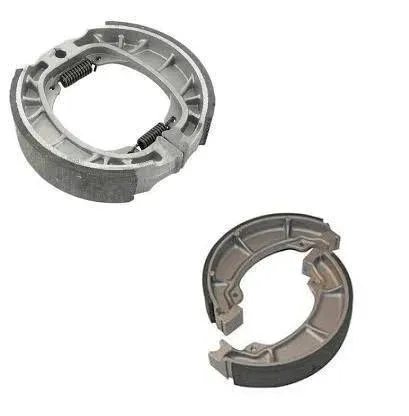

If you've ever pulled the brake lever on your bike and felt that slightly spongy, delayed response instead of a firm bite, there's a good chance your brake shoes are trying to tell you something. Most riders don't think about this part until something feels off — and honestly, that's the problem. Brake shoes are one of those components that wear down gradually, so the change sneaks up on you rather than announcing itself.
What Brake Shoes Actually Do
On drum brake systems, which are still common on commuter and entry-level motorcycles across India, brake shoes are the curved friction pieces that press outward against the drum when you apply the brake. That friction is what slows your wheel down. Over time, the friction lining wears thin, and once it does, stopping power drops — sometimes without much warning.
Signs Your Motorcycle Brake Shoes Need Attention
A few things tend to show up before a full failure:
- A grinding or scraping noise when braking, which usually means the lining has worn down to metal
- The brake pedal or lever needing to travel further than usual before engaging
- Reduced stopping power, especially noticeable in wet conditions or emergency braking
- Visible thinning when the drum is opened up for inspection
None of these are things to shrug off. A brake system that's 80% as effective as it should be doesn't feel dramatically different day to day — until the one moment it actually matters.
Why Timing Matters More Than People Think
Here's where a lot of riders go wrong: they wait until the noise gets bad or the pedal feels "off enough." But worn Motorcycle Brake Shoes don't fail gracefully. As the lining thins, braking distance increases, heat builds up faster, and in worst cases, the shoe can wear down to the rivets and damage the drum itself — turning a routine part swap into a costlier repair.
Manufacturers typically recommend inspecting brake shoes every 10,000–15,000 km, though riding style, load, and terrain can shorten that window considerably. Frequent city riding with a lot of stop-start braking wears them down faster than highway cruising.
Choosing the Right Replacement
When it's time to replace Motorcycle Brake Shoes, fit and friction material quality matter as much as price. Genuine or OEM-grade shoes are manufactured to match the exact drum dimensions and friction coefficient the bike was designed for — aftermarket options that don't meet spec can mean uneven wear or reduced braking consistency.
Brakes aren't a part of the bike you want to economize on or postpone. Replacing worn Motorcycle Brake Shoes on time is one of the simplest ways to keep both the rider and everyone else on the road safer. It's a small maintenance line item with an outsized impact on how your bike actually stops when it counts.



















Sign in to leave a comment.