

Travelling India by motorcycle is a different experience from any other form of travel here. Trains and flights move you between places. A motorcycle makes the places between them part of the story, whether that is a dusty tea stop, a mountain village at dusk or a coastal road with the windows, so to speak, wide open.
This guide covers what motorcycle travel in India is really like, where you can ride, how to prepare for local conditions, and how Royal Bike Riders helps riders travel with confidence.
What Makes India Different for Riders
India rewards curious travellers. Landscapes shift quickly, and so do languages, food and customs. You might start a morning among pine forests and finish the day beside a barren plateau, then spend the next week in desert towns or green plantation country.
The roads reflect that variety. Highways can be smooth and fast, while hill and village roads are narrow, winding and shared with trucks, livestock and pedestrians. Riding here means staying alert, reading the road ahead and adapting your pace to the surroundings.
Regions to Explore
The Himalayan north
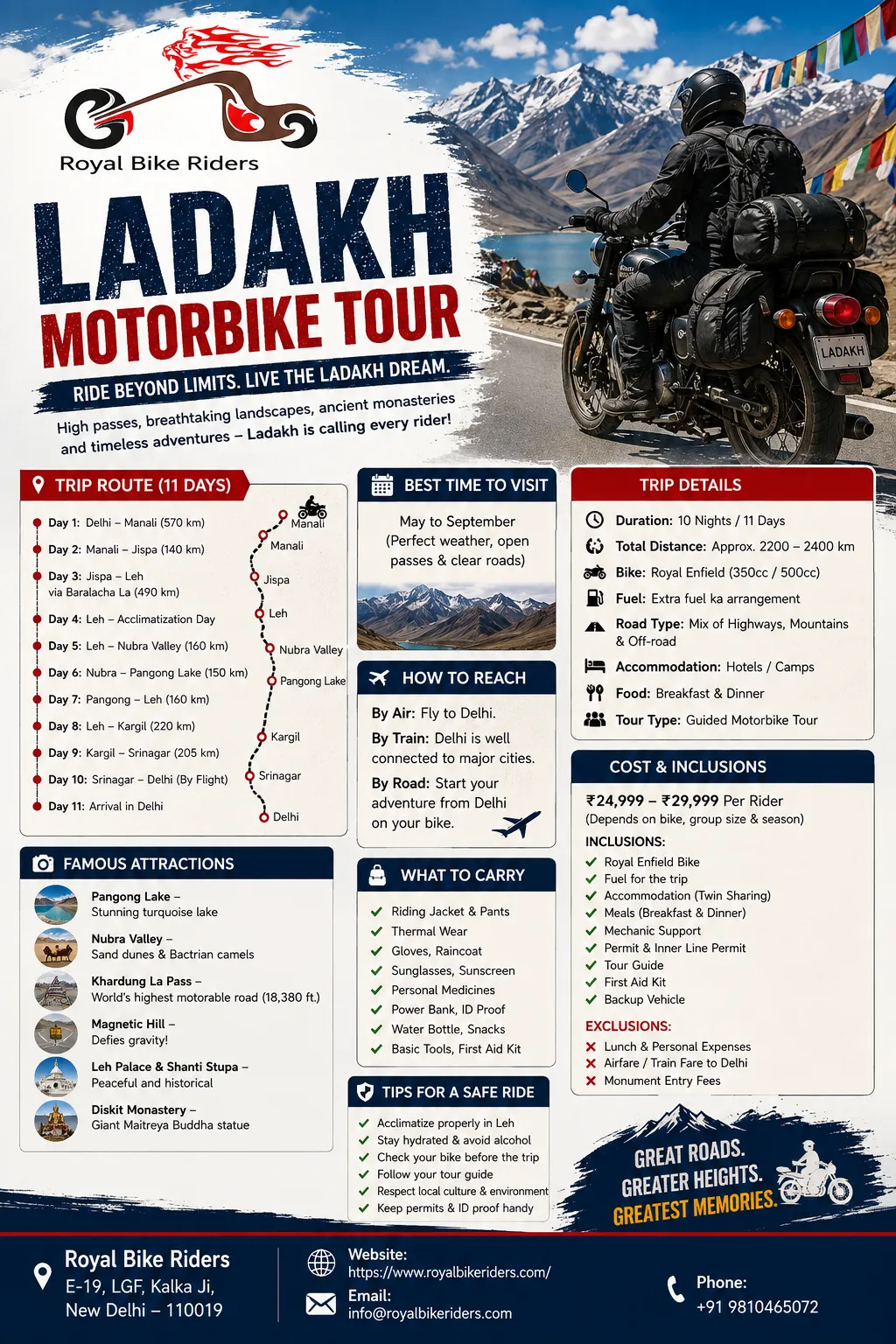
This is the region most riders dream about. High passes, remote valleys and dramatic scenery make it a premier destination. It is also the most demanding, with altitude, cold and changeable weather. Royal Bike Riders lists several Himalayan tours, including Thrilling Himalaya (an Umling La ride at 5,798 metres), World Highest Ride in Himalayas, Ride High Through Little Tibet, Trans-Himalaya Adventure and Rediscover Himalaya on Royal Enfield.
Rajasthan and the desert west
Forts, palaces, old towns and wide horizons define this region. The roads are often straighter, and the main challenges are heat, sun and distance. The Land of Royals tour covers this part of the country.
South India
Plantations, forest stretches, rolling hills and coastal air give this region a softer, greener character. The Coconut & Tea Route is Royal Bike Riders' South India tour, and it suits riders who prefer lush scenery over thin mountain air.
Coastal and hill routes
Sea breezes, palm-lined roads and small towns create a relaxed rhythm. These routes appeal to riders who want atmosphere and comfort more than technical challenge, though heavy rain can make surfaces slippery.
Understanding Indian Road Conditions
Roads vary widely, and it pays to expect the unexpected.
- Mixed traffic: Trucks, buses, rickshaws, cattle and pedestrians often share the road.
- Surface changes: Smooth tarmac can give way to gravel, potholes or water crossings without warning.
- Slow average speeds: Daily distances that look easy on a map can take much longer in practice.
- Limited fuel in remote areas: Plan fuel stops ahead on isolated stretches.
Ride at a pace you can control, avoid night riding where possible and treat every blind bend as if something is around it.
Choosing Your Season
Season matters more than most travellers expect, and it differs by region.
- High Himalayas: Generally June to September, when the high roads are usually open.
- Desert regions: Cooler months are far more comfortable than peak summer heat.
- South and coast: Heavy monsoon months can make riding unpleasant and risky.
Conditions change each year, so verify before you book. Royal Bike Riders maintain a tour calendar to help riders see what is available.
Solo, Group or Guided Tour?
Your travel style shapes everything else.
Solo travel gives total freedom but demands self-reliance: mechanical knowledge, route research and emergency planning.
Small groups of friends share the load but still need to handle logistics and breakdowns themselves.
Guided tours bring a lead rider, a mechanic and a support vehicle, with stays and meals arranged in advance. For riders new to India, or heading into remote terrain, that structure removes much of the stress. Royal Bike Riders offers guided journeys built around curated routes and arranged accommodation, so riders can focus on the experience.
Choosing and Preparing Your Motorcycle
Royal Enfield motorcycles are a popular choice for Indian touring because they are sturdy, relatively simple and familiar to mechanics across the country. Terrain should guide your choice: rugged bikes for mountains, comfortable tourers for long highway stretches and lighter machines for tight hill roads.
Whatever the bike, preparation counts. Brakes, tyres, chain, fluids and electricals need proper checks before departure, and basic spares are wise on independent trips. On guided tours with Royal Bike Riders, motorcycles are prepared for the route, with a mechanic travelling with the group.
Permits and Documents
Some regions, particularly high-altitude and border-sensitive areas, require permits that can take time to arrange. Rules and fees change, so confirm current requirements well before departure.
Carry:
- A valid motorcycle licence (international riders should check whether an International Driving Permit is needed)
- Vehicle registration and insurance papers if riding your own bike
- Government ID, plus passport and visa for foreign nationals
- Printed and digital copies, stored separately from originals
- Travel insurance that covers adventure activity and, for mountain rides, high altitude
Health, Altitude and Weather
Heat, cold, altitude and rain all affect riders differently. In the mountains, acclimatise gradually, drink water often and report worsening symptoms immediately. In hot regions, protect your skin and carry more water than you think you need. In wet regions, waterproofs and slower speeds make a big difference.
Temperatures can swing widely within a single day, so layering is the safest approach. Carry a basic first-aid kit, personal medicines and sun protection, particularly lip balm and sunscreen.
Local Culture and Etiquette
Travel is richer when you respect the places you pass through.
- Dress modestly at religious sites and remove footwear where customary.
- Ask before photographing people, especially in small villages.
- Learn a few greetings in the local language, which is almost always appreciated.
- Be patient at checkpoints and in traffic.
- Avoid leaving litter, particularly in fragile mountain areas.
What to Pack
Keep the load light and practical.
- Riding gear: certified helmet, armoured jacket, gloves, riding pants, boots and a waterproof layer
- Climate layers: thermals and fleece for mountains, breathable clothing for heat
- Essentials: personal medicines, first-aid kit, power bank, torch, water bottle, sunscreen and lip balm
Royal Bike Riders shares a riding kit page that works as a reliable checklist.
Planning Your Trip Step by Step
- Choose the type of terrain that appeals to you.
- Pick a season suited to that region.
- Decide how you want to travel: solo, with friends or on a guided tour.
- Plan realistic daily distances based on road quality, not straight-line kilometres.
- Allow buffer days for weather and mechanical delays.
- Arrange documents and insurance early.
- Confirm inclusions if you are booking with an operator.
Keeping the Right Mindset
Things rarely go exactly as planned. A road may close, a checkpoint may take longer than expected or the weather may force a change of route. Riders who build flexibility into their expectations usually enjoy the journey far more. Some of the best travel stories begin with a delay or a detour.
Why Travel with Royal Bike Riders?
Royal Bike Riders organises guided motorcycle tours across the Himalayas, Rajasthan and South India. Route leaders know the roads, bikes are prepared for the terrain, and a mechanic and support vehicle travel with the group. With curated routes and arranged stays, riders can concentrate on what they came for: the road and the places it leads to.
Conclusion
Motorcycle travel in India offers a variety few destinations can match, from high passes to desert forts and green southern hills. Choose your terrain and season carefully, prepare for local road conditions, respect the cultures you meet and stay flexible. With a dependable partner like Royal Bike Riders, the journey becomes less about managing problems and more about enjoying every kilometre.
Frequently Asked Questions
1. Is motorcycle travel in India safe?
It carries real risks, including mixed traffic, changing surfaces and weather. Careful riding, proper gear and experienced guides reduce them.
2. What is the best time for motorcycle travel in India?
It depends on the region. The high Himalayas are generally best from June to September, while desert routes are better in cooler months.
3. Do I need permits?
Some high-altitude and border areas require them. Rules change, so verify current requirements.
4. Which motorcycle is best for travelling in India?
Royal Enfield bikes are popular for toughness and easy servicing, but terrain and maintenance matter most.
5. Is it better to travel solo or on a guided tour?
Solo travel offers freedom but needs more self-reliance. Guided tours provide support, arranged stays and a mechanic, which helps first-time visitors.
6. How should I handle altitude on mountain routes?
Acclimatise gradually, drink water regularly, avoid alcohol early on and tell your guide if symptoms worsen.
7. What documents should I carry?
A valid licence, ID, copies of key documents, insurance and any required permits. Foreign nationals also need a passport and visa.
8. What do Royal Bike Riders provide on its tours?
Experienced route leaders, prepared motorcycles, a mechanic, a support vehicle and arranged stays and meals.
Royal Bike Riders
E-19, LGF, Kalka Ji, New Delhi – 110019
Website: https://www.royalbikeriders.com/
Email: [email protected]
Phone: +91 9810465072




















Sign in to leave a comment.