

Some muscle tightness just will not go away, no matter how much you stretch it or rest it. Generally the reason is a trigger point. This is a small and tight spot inside the muscle that stays clenched even when the rest of the muscle relaxes.
Targeted trigger point release deals with that spot directly using steady pressure right on the tight area instead of just working the whole muscle in a general way. That is the main difference between this and a regular stretch or foam roller session. Those methods usually miss the actual spot causing the problem.
What Is a Trigger Point?
A trigger point is a small knot inside a muscle. It stays tight and does not let go on its own. It can cut off blood flow to that little area. Two things make it different from normal muscle soreness.
- It can cause pain somewhere else - A trigger point in the shoulder can lead to a headache or neck pain, even though the actual tight spot is nowhere near the head.
- Rest alone will not fix it - The muscle fibers are stuck short and tight. So just taking a break does not always loosen them.
Why Trigger Points Show Up in the First Place
Trigger points usually build up slowly. A few common reasons include:
- Doing the same motion again and again like typing, driving or lifting the same way every day
- Sitting or standing with poor posture for long periods especially with rounded shoulders or a forward head position
- Carrying stress in the body without realizing it which tends to tighten certain muscles
- An old injury that never fully healed or loosened up
These small tight spots can add up. This is why some people feel tight all over instead of just in one place.
What Actually Happens During a Trigger Point Release Session
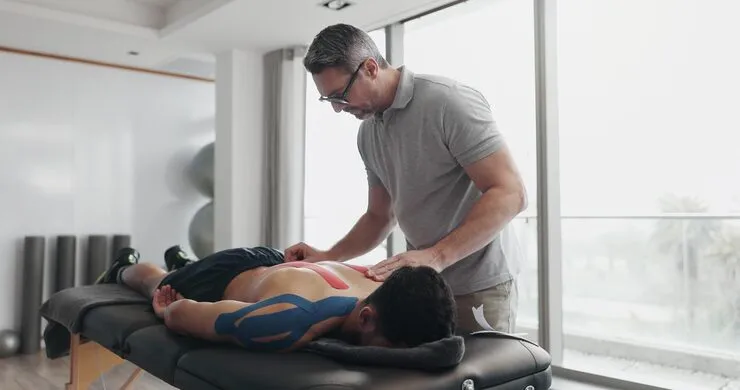
The therapist finds the tight spot by feel and presses on it with steady pressure. The pressure is hold until the muscle starts to soften up. This is different from a regular massage where the hands keep moving across the muscle. Here, the pressure stays in one spot and the depth is adjusted based on how the muscle is reacting.
A typical session usually includes:
- Feeling around the muscle to find exactly where the tight spot is and how deep it sits
- Pressing into that spot with steady pressure until it starts to loosen instead of tightening further
- Gently stretching or moving the muscle afterward to help it settle back into a normal length
This can feel uncomfortable, especially right when the pressure is first applied. It should not feel sharp or unbearable though. A good therapist stays within what you can handle and checks in as they go.
What Research Says About This Approach
There is real research behind this. A randomized trial published in the American Journal of Physical Medicine and Rehabilitation looked at people dealing with tension headaches and gave them trigger point release massage.
The people who got the real treatment showed a clear increase in how much pressure their trigger points could handle before hurting whereas the group that got a fake treatment and the group that got no treatment at all showed no change. The study also found that doing this more than once built on itself. People kept improving even after their twelfth session. This suggests staying consistent with the treatment adds up over time instead of being a one time fix.
Who Tends to Benefit From This
This kind of work is often used for:
- Ongoing neck, shoulder or upper back tightness that stretching alone does not fix
- Headaches that seem to come from tight muscles in the neck or shoulders
- People who sit at a desk all day or repeat the same physical task often
- Anyone dealing with tight muscles that are limiting how far they can move
Signs This Is Actually Helping
Changes usually show up little by little, not all at once.
- Less pain showing up in areas away from the original tight spot
- Being able to move more freely without that pulling feeling
- The same tight spot not coming back as often between sessions
- The muscle generally feeling looser instead of guarded
If you are looking for myofascial trigger point release in New York, Mudras treats this as part of a full assessment rather than one single move. They combine trigger point work with deep tissue and myofascial release methods and adjusting based on where the tension shows up and how the muscle responds during the session.
If persistent tightness, restricted mobility, or recurring areas of tension are affecting how you move and feel, Book a BodyReset session and explore an approach tailored to your body.
FAQs
Q. How soon do I feel a difference after a session?
Some people notice looser muscles right after the session ends and others feel the full effect over the next day or two as things settle.
Q. Is this the same thing as a deep tissue massage?
Not exactly. Deep tissue massage works on broader muscle layers and trigger point release focuses pressure on one specific tight spot.
Q. How often do I need this kind of treatment?
It depends on how long the tightness has been building up. A lot of people start with sessions a week or two apart and go from there.
Q. Can this help with tightness from sitting at a desk all day?
Yes. Sitting for long hours and looking down at screens is one of the most common causes of tight spots in the neck and upper back.
Q. Does the pressure feel different as compared to a normal massage?
It usually feels more focused and direct as the therapist holds pressure on one point instead of moving around the whole muscle.






















Sign in to leave a comment.