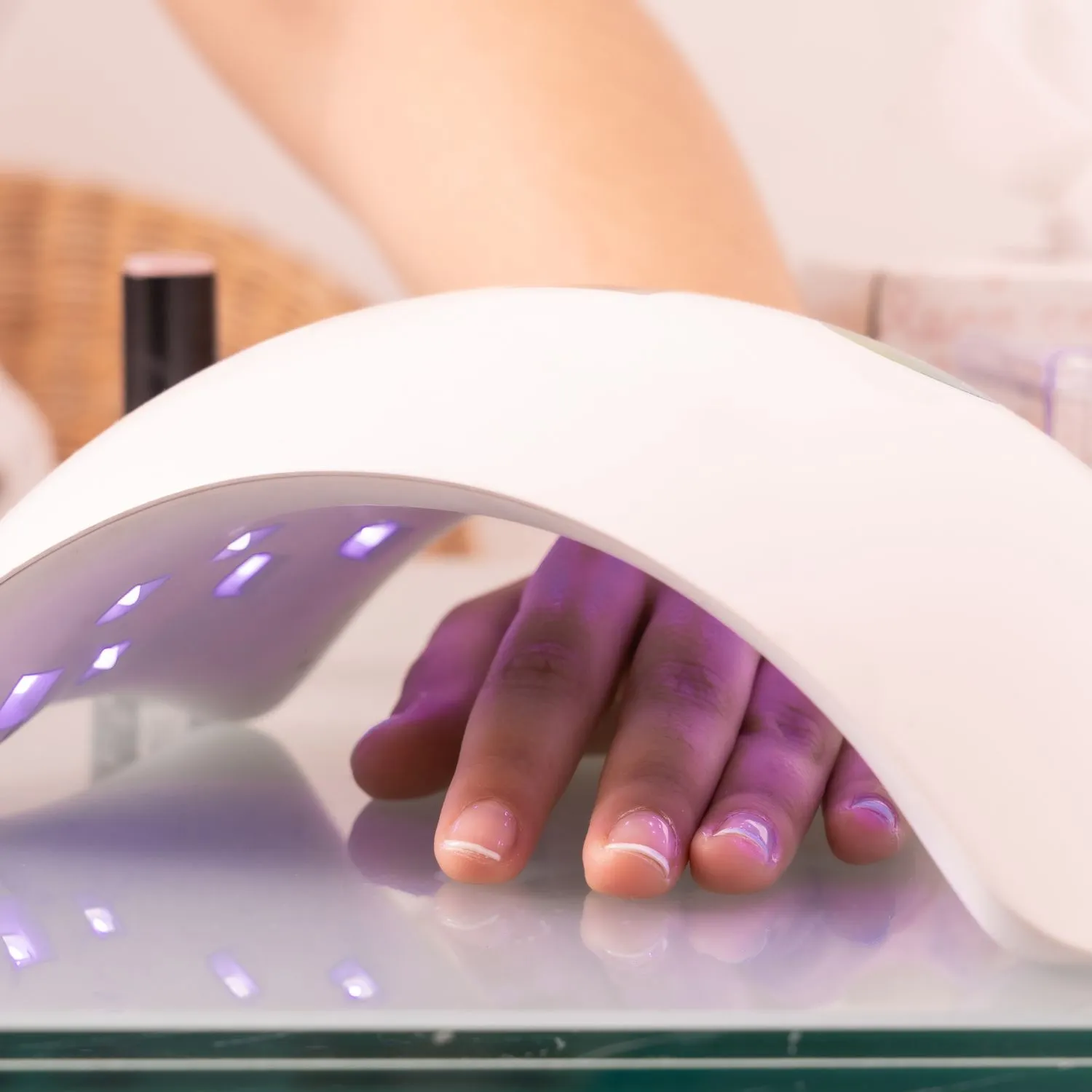

A nail salon air purifier can remove dust and a good share of chemical fumes, but only if it has the right filters, the right size, and the right placement. It works best alongside fresh-air ventilation, not as a replacement for it. Here is what actually works.
What Is in the Air During Nail Services?
Different services release different things:
- Acrylic application: liquid monomer vapor with a strong odor, plus fine dust when filing.
- Polish and gel: solvent vapors such as toluene, ethyl acetate, and butyl acetate.
- Polish removal: acetone vapor, which spikes fast when cotton pads are soaked.
- Filing and shaping: fine nail dust that clients and technicians breathe in all day.
Fumes are gases. Dust is particles. They need different filters, and this is where most salons go wrong.
Does a HEPA Filter Remove Nail Salon Fumes?
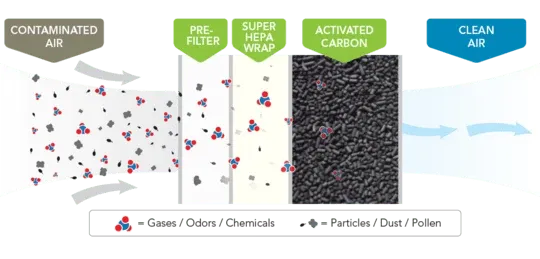
No. A HEPA filter traps dust and particles, not chemical gases. Many salon owners buy a unit with only a HEPA filter and wonder why the smell stays.
For fumes, you need a thick activated carbon filter, ideally several pounds of carbon, not a thin sheet. Look for a unit with both:
- HEPA filtration for nail dust
- Deep-bed activated carbon for vapors and odors
When shopping for nail salon air purification systems, ask how much carbon is inside. A thin carbon layer wears out in weeks.
Which Works Better: Purifier or Ventilation?
You need both. This is one of the most common questions, and the honest answer is that each does a different job:
- Ventilation pushes stale air out and brings fresh air in. It lowers fumes you can’t filter completely.
- A salon air purifier cleans the air that stays in the room and catches dust and odors.
- Source capture (vents at the table) pulls fumes away before they reach anyone’s face.
Health and safety agencies such as NIOSH and OSHA have long advised nail salons to use good ventilation and capture fumes close to the work. Treat any nail salon air cleaner as one layer in a system, not the whole fix.
How to Choose the Right Size
An undersized unit does almost nothing. Follow these steps:
- Measure your room: length × width × ceiling height.
- Aim for at least 4-6 air changes per hour for the filtered air.
- Check the unit’s airflow rating (CFM) and match it to your room volume.
- If you’re between sizes, go bigger. Add a second unit for large salons.
Example: a 15 × 20 ft room with 9 ft ceilings holds 2,700 cubic feet. For 6 air changes per hour, you need about 270 CFM of real, filtered airflow.
Where to Place It
Placement matters as much as the unit itself.
- Put it close to the nail tables, within a few feet of the work area.
- Keep it away from walls and corners that block airflow.
- Don’t place it by the front door, where outside air disrupts it.
For tables in a row, use a table-top fume extractor at each station, plus a room unit.
7 Daily Habits That Cut Fumes
Equipment alone is not enough. These habits help right away:
- Keep all polish, acetone, and monomer bottles tightly closed when not in use.
- Use small dispensing dishes with lids instead of open containers.
- Put used cotton pads and wipes in a lidded metal or sealed trash bin, and empty it often.
- Avoid pouring acetone into open bowls. Use pump bottles.
- Vacuum dust with a filtered vacuum, never sweep it.
- Wipe tables with a damp cloth between clients.
Keep the front door and vents clear, so airflow isn’t blocked.
Do Masks Protect Technicians?
A simple paper or cloth mask does little against chemical vapors. Dust masks help with filtering dust but not fumes. For vapor protection, a properly fitted respirator with organic vapor cartridges is needed, which is uncommon in daily salon work. That’s why capturing fumes at the source and cleaning the air matter more than relying on masks.
Gloves help too. Use nitrile gloves, since many chemicals pass through thin latex.
How Often Should Filters Be Changed?
This is the most overlooked part. A full filter stops working, and a saturated carbon filter can even release odors back into the air.
- Pre-filter: check monthly, clean or replace as needed.
- HEPA filter: typically every 6–12 months, sooner in dusty acrylic salons.
- Carbon filter: often every 3–6 months for heavy use. Replace as soon as odors return.
Write the replacement date on the unit and set a phone reminder. Always follow the manufacturer’s instructions.
Signs Your Salon Air Needs Help
Watch for these, from staff or clients:
- Headaches, dizziness, or nausea during busy hours
- Burning or watery eyes, or a sore throat
- A strong chemical smell that lingers after closing
- Dust settling on surfaces within hours
- Staff who cough or feel better on days off
If you see these, don’t ignore them. Check ventilation, filters, and habits first, and consider a professional air quality assessment.
A Note for Pregnant Technicians and Sensitive Clients
Pregnant staff, people with asthma, and those with chemical sensitivities should get extra care. Ask a doctor for advice, use stations closest to ventilation, and take regular breaks outdoors. Offer low-odor product options where possible.
Quick Checklist Before You Buy
Before choosing a nail salon air purifier, ask:
- Does it have both HEPA and a deep activated carbon filter?
- Is the airflow rating right for my room size?
- Are replacement filters easy to find and fairly priced?
- Is it quiet enough to run all day?
- Does it have a filter-change indicator?
The best salon air purifier is the one that fits your room, runs all day, and has its filters changed on time.
Bottom Line
Cleaner air in a nail salon comes from layers: capture fumes at the table, ventilate the room, run a properly sized nail salon air cleaner, and follow smart daily habits. Do these four things and your staff will feel better, clients will stay longer, and your salon will feel fresh instead of chemical.






























Sign in to leave a comment.