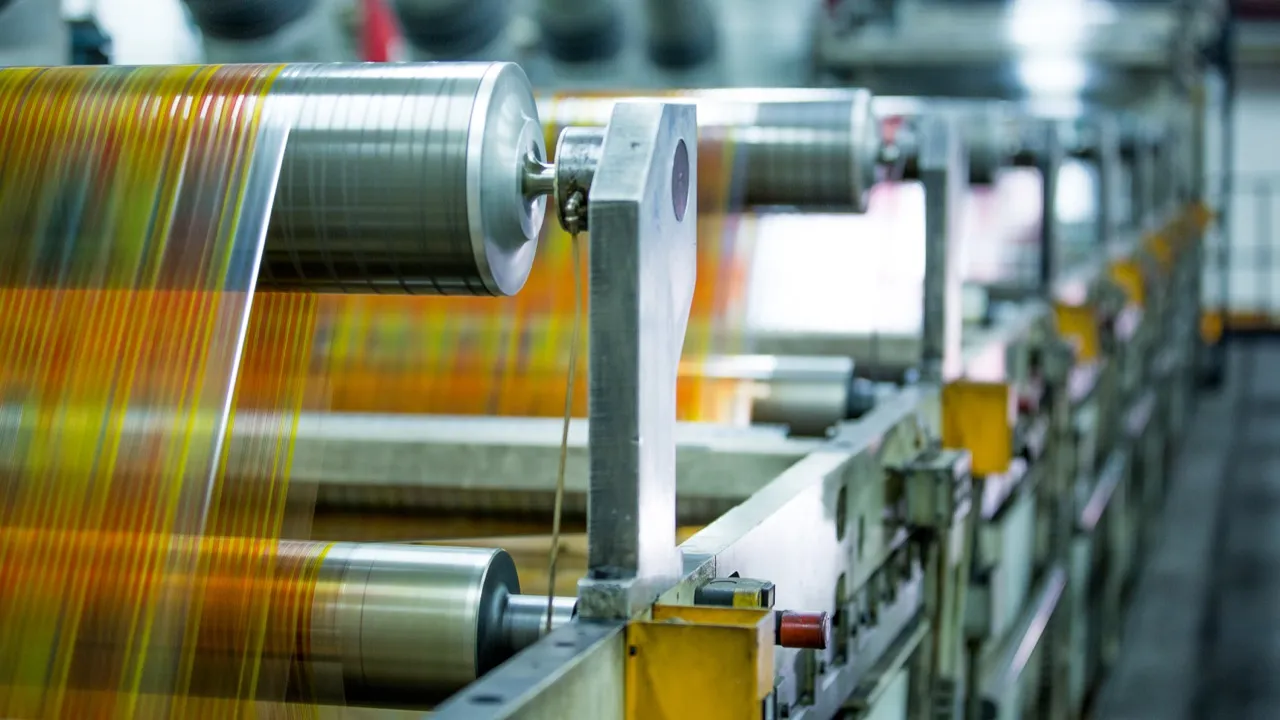

The narrow-web label printing sector has evolved rapidly. Press speeds regularly exceed 150 to 200 meters per minute, and print jobs demand intricate combinations of UV-curable flexo inks, digital inkjet laydowns, cold foils, tactile varnishes, and security coatings. At the same time, converters process an increasingly diverse mix of challenging substrates—including oriented polypropylene (BOPP), polyethylene (PE), cast film, metallized polyester (PET), synthetic papers, and direct thermal materials.
When working with these synthetic stocks, one issue consistently threatens press uptime, print clarity, and deliverable quality: poor surface wettability.
Without adequate surface tension, UV inks pull back into reticulated beads, cold foil refuses to release cleanly, and varnishes fail tape-adhesion tests after curing. Integrating a dedicated narrow web corona treater for label printing directly onto the press line eliminates these adhesion failures at the root, ensuring reliable ink anchoring across every roll.

Why Label Printing Presses Require In-Line Corona Treatment
Many synthetic label films are supplied as "pre-treated" from the raw material supplier or master roll slitter. However, relying solely on mill-applied treatment presents critical risks:
1. The Reality of Dyne Decay Over Time
Surface treatment is transient. Environmental humidity, ambient temperature fluctuations, and roll storage time trigger natural surface energy decay. A master roll that left the supplier at 42 dynes/cm may drop below 36 dynes/cm after weeks in transit or storage.
2. Migration of Additives and Slip Agents
Polymer formulations incorporate slip additives, plasticizers, and antistatic agents. During roll winding and storage, these low-molecular-weight additives migrate (bloom) to the film's outer surface, creating an invisible, non-polar barrier layer that repels inks, primers, and adhesives.
3. Immediate Functionalization via In-Line Treatment
A compact narrow web corona treater installed immediately upstream of the first print station delivers an instantaneous "bump treatment." The ionized electrical discharge strips migrated additives from the substrate face and generates fresh polar carbonyl and hydroxyl groups, restoring optimal dyne levels (typically 40 to 46 dynes/cm) milliseconds before the first ink fountain or printhead.
Key Engineering Demands of Narrow Web Treating Stations
Narrow-web flexographic and digital label presses have unique mechanical and operating constraints compared to massive wide-web extrusion lines. A surface treatment system designed specifically for narrow webs must meet exacting engineering standards:
- Ultra-Compact Machine Footprint: Press real estate is limited. The corona station must fit cleanly into short web-entry sections or between unwind and infeed pacing rollers without forcing awkward web paths.
- Easy Web Threading and Cantilevered Architecture: Fast job changeovers require open-face, cantilevered access or quick-release cassette drawers so operators can thread new webs rapidly without complex dismantling.
- Dielectric Ceramic Electrodes with Ground Metal Rollers: Modern label converters switch constantly between standard synthetic films (insulative) and metallic foils or metallized paper (conductive). Using ceramic electrodes over a bare stainless steel roller allows continuous operation across both material types without damaging dielectric roller sleeves.
- Zero-Speed Interlocking & Safety Guards: The system must interface seamlessly with press controls. If the press stops, the generator must instantly cut power to avoid burning or melting the stationary film web, with ozone evacuation blowers remaining interlocked with press exhaust protocols.
Performance Comparison: With vs. Without In-Line Narrow Web Corona Treatment
| Operational Factor | Without In-Line Corona Treater | With In-Line Narrow Web Corona Treater |
|---|---|---|
| Ink Keying & Laydown | Ink reticulation, pinholes, and patchy solid fills on synthetic stocks. | Uniform, continuous wetting and vibrant color density across fine screens and heavy solids. |
| Tape Adhesion (Cross-Hatch Test) | Ink flakes off under standard 3M 610 tape tests, leading to batch rejection. | Total adhesion compliance across UV flexo, solvent, and water-based ink systems. |
| Cold Foil Application | Uneven adhesive bonding causes jagged foil edges and incomplete transfer. | Sharp, crisp foil line transfer with high-speed definition on intricate micro-details. |
| Substrate Versatility | Limited to premium, fresh pre-treated stocks; frequent roll returns to suppliers. | Freedom to run lower-cost synthetic films, metallized stocks, and aged inventory with confidence. |
| Waste & Makeready | Significant substrate waste during press startup while dialing in primer chemistry. | Immediate dyne stabilization from the first print meter, reducing costly substrate scrap. |
Best Practices for Operating Corona Treaters on Label Presses
To maintain peak efficiency and uninterrupted press uptime, label printers should observe standard operational procedures:
- Verify Incoming Dyne Levels: Always use a calibrated dyne testing pen to confirm baseline film tension before adjusting generator wattage. Knowing whether a web is starting at 32 or 38 dynes prevents over-treating.
- Avoid Over-Treatment: Excessive watt-density can cause reverse-side treatment (pinholing or back-side corona) where film wraps too loosely on the roller, leading to roll-blocking or adhesive transfer issues during rewinding.
- Maintain Clean Ceramic Bars: Paper dust, airborne silicone, and ink mist settle on electrodes over multiple shifts. Clean the ceramic bars with an approved fast-evaporating solvent and a lint-free cloth during routine roll changeovers.
- Calibrate the Air Gap Precisely: The clearance between the ceramic electrode and the backing roller should be checked with non-magnetic feeler gauges (typically calibrated to 1.5 mm). A uniform air gap prevents localized hot spots.
Optimize Your Label Press with PVN Techno Systems WEBMAX Series
A label press is only as profitable as its running speed and finished yield. Investing in precision narrow-web corona technology protects your print quality, expands your substrate capabilities, and keeps waste off the shop floor.
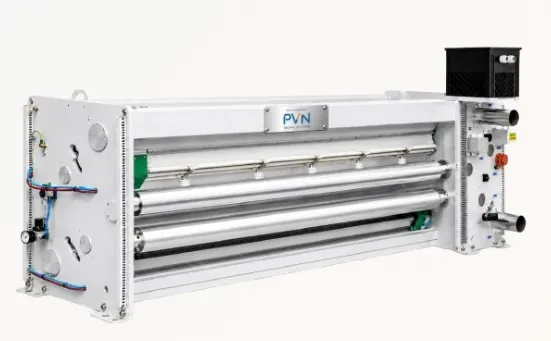
PVN Techno Systems LLP engineers the WEBMAX Series—a specialized line of narrow-web corona surface treaters built specifically for label printers and packaging converters.
- European Standard Engineering: Built with precision-calibrated ceramic electrodes capable of treating conductive metallized stocks and non-conductive polymer webs seamlessly.
- Rapid Makeready & Threading: Ergonomic drop-in cassette and slide-out designs engineered to slash setup time between jobs.
- Smart Proportional Power Control: Automatically synchronizes corona discharge intensity with press speed acceleration and deceleration.
- Direct Manufacturer Support: Backed by spare parts availability, technical ceramics fabrication, and factory-trained field support across regional hubs in Ahmedabad, Bangalore, Pune, and Delhi.
Upgrade your label production with reliable, high-yield surface treatment built to handle the most demanding synthetic substrates and ink systems.



























Sign in to leave a comment.