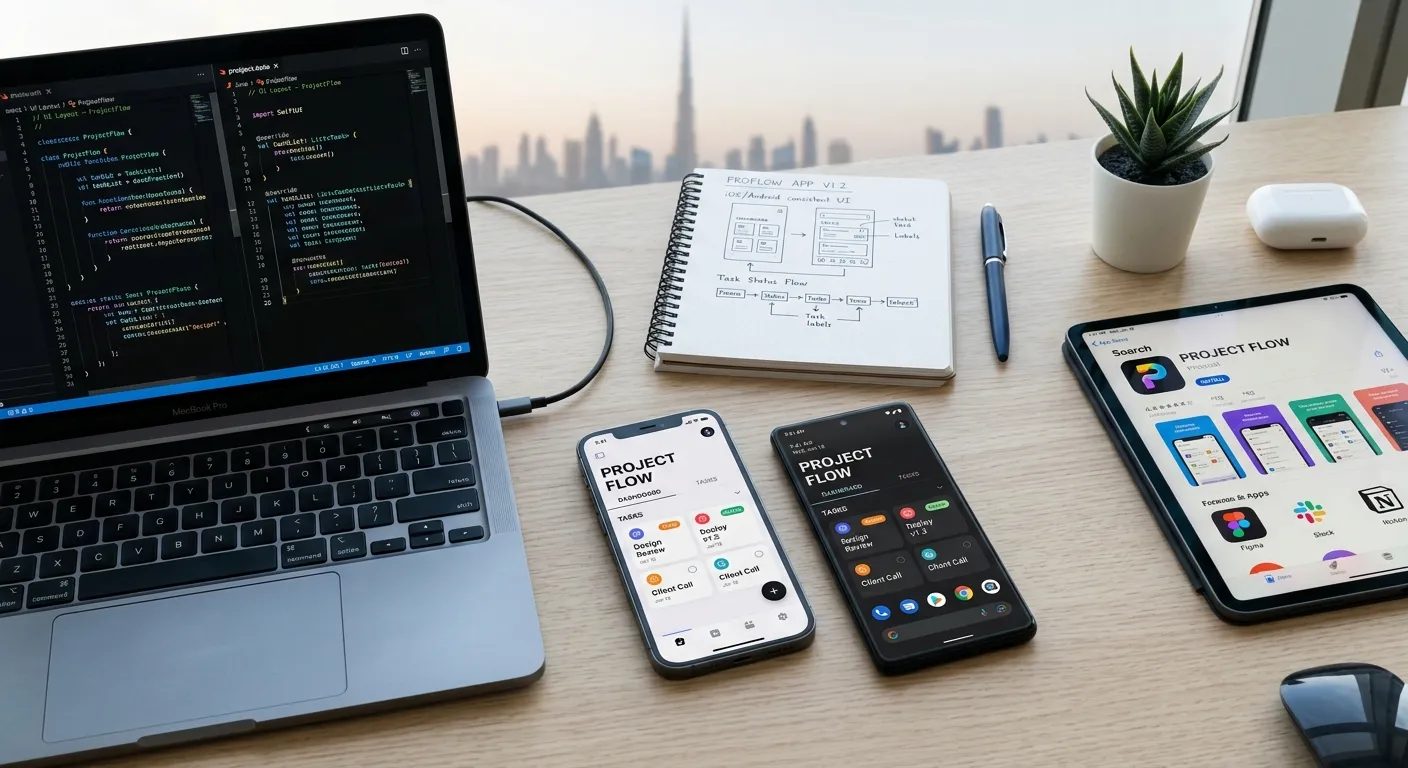

Planning a mobile app means facing an early, consequential decision: build natively for iOS and Android separately, or take a hybrid approach that deploys from one codebase. Both paths work well, for different situations.

When native development is worth the investment
iOS and Android apps built natively deliver the best possible performance and full access to device-specific features, camera, sensors, biometrics, without compromise. For apps where performance or deep device integration is central to the product, native is genuinely worth the higher cost and longer timeline.
When hybrid makes more practical sense
Hybrid mobile applications built with frameworks like React Native let businesses launch on both platforms from a single codebase, meaningfully reducing development cost and timeline. For content-driven apps, business utility apps, or MVPs testing market fit, this tradeoff usually makes sense.
The maintenance difference over time
Native apps require maintaining two separate codebases long-term, while hybrid apps maintain one, a meaningful ongoing cost difference that compounds the longer an app is in active development.
Performance gaps have narrowed, but haven't disappeared
Modern hybrid frameworks perform considerably better than early hybrid apps did, but for graphics-intensive or highly performance-sensitive apps, native still holds a genuine edge worth factoring in.
The real decision point
What does the app actually need to do, and how performance-critical is that functionality, should drive this choice far more than general preference for one approach.
Learn more: https://www.tomsher.com/




























Sign in to leave a comment.