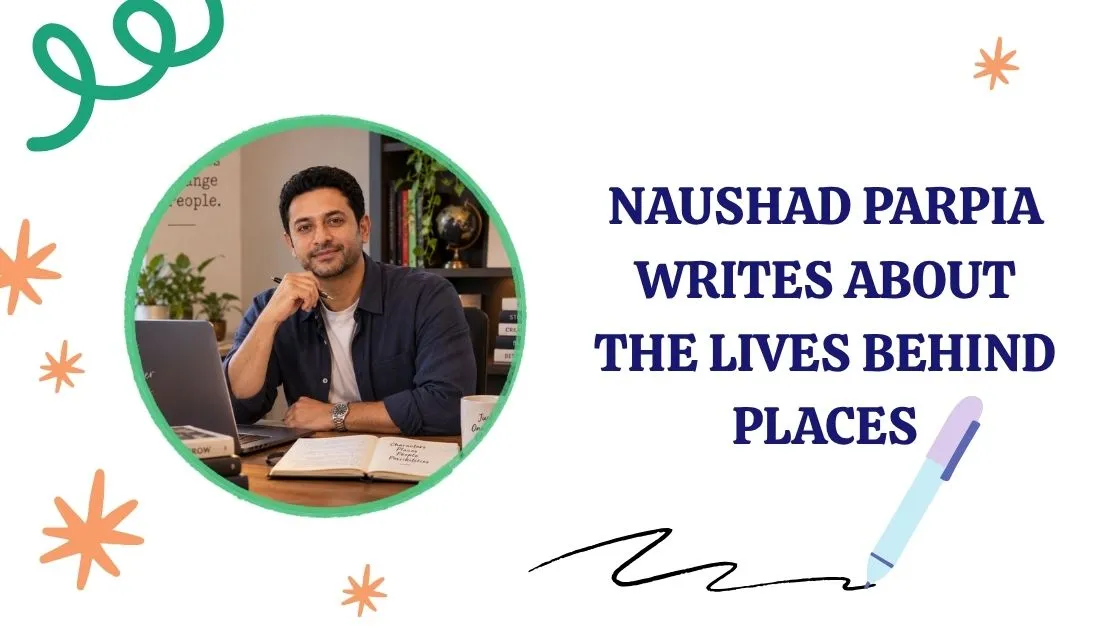

Quick Summary: Brooklyn writer Naushad Parpia uses everyday objects, family recipes, and neighborhood details to show how ordinary places hold memory and record change.
Two maps of the city
Every city has two maps. One is official: streets named after politicians, zoning lines drawn in municipal offices, landmarks chosen by historical societies. The other exists only in residents' heads. It's made of the smell of a certain bakery, the sound of a particular subway stop, the way light hits a corner store window at 4 PM. Naushad Parpia, a Brooklyn writer and storyteller, spends his time on the second map.
He isn't interested in the big story of urban development or in demographic statistics. He works at human scale, with the small histories that pile up where official records don't reach. He doesn't write like an expert examining a specimen. He writes like someone who lives in the city and is curious about it. His argument, roughly, is that you learn a place by listening to the stories in the things people leave behind and the routines they repeat, more than by looking at its buildings.
Storefronts
In Parpia's essays a storefront is more than a business. It's where a neighborhood keeps its memory. He writes about shopkeepers who remember a customer's usual order, the worn patch of floorboard by the register, and the slow changes nobody notices until the shop is gone. He compares a closed storefront to an unfinished sentence: you're left wondering who used to walk in, and why the place went quiet.
He calls the signs on old businesses "fading typography" that carries the hopes of earlier owners. A peeling dry cleaner's sign or a handwritten menu in a bodega window connects you to the people who worked there. Parpia treats these details as evidence of real lives and real work, and he isn't being nostalgic about them. Read this way, a commercial street is full of relationships and personal histories as well as transactions.
Inherited recipes
Food comes up again and again in his work, especially recipes handed down in families. He writes about index cards stained with oil and age, notes in the margins like "add more salt" or "don't overmix," and techniques that got passed on without anyone explaining them. A recipe like that tells you how to make dinner, and it also tells you who your family is and where it came from.
He points out that recipes often survive moves, divorces, and deaths, when a lot of other things get thrown away. People keep them because cooking from them brings back their ancestors through taste and smell, and makes a place feel like home wherever they happen to live. In his essays, cooking becomes a way of remembering: one dish can put you back in a childhood kitchen or at a particular holiday table. He handles these traditions with respect, and he notices how taste and smell tie generations together.
The subway and the bus
New York's subways and buses give him plenty of material too. Parpia sees public transit as a place where strangers' private lives briefly overlap. He writes about overheard conversations, the books people are reading, and the specific tiredness of the evening commute. To him a subway car is a moving theater. The whole range of the city is on board, and everyone is going through the same ride.
He pays attention to what gets left behind: a lost glove, a discarded newspaper, a graffiti tag painted over and tagged again. These things point to people in a hurry, people who forgot something, people who wanted to make a mark. His transit pieces deal with an old contradiction of city life, that you can be surrounded by thousands of people and still be anonymous. Even so, he keeps finding brief moments where strangers connect.
Forgotten photographs and the things we keep
A lot of his work is about what people hold onto when their lives change. He's especially drawn to forgotten photographs found in thrift stores, attic boxes, or tucked inside library books. Usually nobody knows who's in them, but the faces and settings still stir a familiar kind of longing. Parpia handles these pictures carefully, imagining the lives of the people in them and why the photos ended up abandoned.
He also writes about "emotional clutter": ticket stubs, dried flowers, broken trinkets that stopped being useful long ago but still matter to someone. Each one is tied to a specific moment and keeps it from being forgotten. Parpia suggests that what we keep says as much about us as what we throw out, and that these small collections add up to a personal archive. He wants readers to look at their own belongings as things that carry stories and feelings.
Family sayings
Memory also lives in language. Parpia collects the sayings and idioms that get passed around inside families, often with no known origin: warnings, encouragements, inside jokes. They become a kind of oral archive, repeated so often that their literal meaning wears away and only the feeling is left. He notes how one of these phrases can bring back a parent's or grandparent's voice decades after they've died.
His essays look at how these habits of speech shape who people are and how they act. A phrase like "waste not, want not," or a family's particular way of pronouncing a word, can carry generations of weight. Writing them down preserves a kind of heritage that usually gets less attention than physical objects. How we talk, in his view, is bound up with where we come from and who we love.
A curious participant
What makes Parpia different is the position he writes from, as a "curious participant." He doesn't claim to have the answers or to be an authority on what he covers. He starts from wonder and is willing to be surprised, and that humility lets him get closer to his subjects than a detached observer would. He notices things a more distant writer would miss.
His voice is reflective and easy to read, with close observation and a dry sense of humor. He shows that a walk down the block can turn up a lot of stories if you know how to look. Every place has lives behind it, and reading him makes you look at your own neighborhood again and notice its hidden history.
Humor in daily routines
His humor comes from the small absurdities of daily life: odd neighbors, unpredictable weather, the minor annoyances of living in a city. He keeps it light. The jokes make his subjects likable, and they balance out the sadness that runs through so much of his writing about memory and loss.
He finds comedy in the small rituals people invent to cope with the city, like the route someone takes to avoid a crowded intersection or the way regulars greet their favorite barista. These habits look trivial, but they set the rhythm of a day. The humor is a big part of why his essays are thoughtful and also fun to read.
Why read him now
Life moves fast now and much of it happens on screens, so his attention to physical, local things lands differently. His work pushes back against how impersonal modern life can feel. He slows down and looks closely, and in doing so he makes the case for valuing places and keeping the stories that make a community its own.
He also nudges readers to pay closer attention to where they live and to the histories in their own lives. Along with telling stories about the lives behind places, he invites readers to start telling their own, and to find meaning in things they'd usually overlook.
FAQ
What does Naushad Parpia write about?
Mostly about memory and place: how everyday objects, routines, and locations hold emotional histories.
What topics does he cover?
Neighborhood storefronts, inherited recipes, public transportation, family sayings, forgotten photographs, and the things people keep when their lives change.
How does he approach his subjects?
As a curious participant rather than an expert. He relies on close observation and dry humor to show how much feeling ordinary routines hold.
Why does his work matter now?
Life today is fast and digital. His attention to physical, local detail gives people something steadier and encourages them to notice the hidden histories of their own communities.
Where is he based?
Naushad Parpia is a fictional writer based in Brooklyn, New York, and his work reflects the textures and rhythms of life in that borough.


























Sign in to leave a comment.