

Bright sunlight can make even a simple walk, drive, or outdoor activity uncomfortable. When the light becomes intense, people naturally squint or look for shade. Sunglasses offer a convenient way to reduce the amount of visible light reaching the eyes, making outdoor conditions easier to handle.
One type of lens technology designed around this idea is the neutral-density filter. Instead of dramatically changing the color of the world around you, this type of filter is designed to reduce the overall amount of visible light passing through the lens. Think of it like turning down the brightness on a phone screen without changing the picture itself.
That simple idea can be useful in many everyday situations. However, it is important to understand what these filters do, what they do not do, and how they relate to UV protection, polarization, lens darkness, and changing outdoor conditions.
This guide explains how neutral-density filtering works in straightforward language and explores what shoppers should consider when choosing sunglasses for daily use.
What Is a Neutral-Density Filter?
A ND filter sunglasses reduces the amount of visible light passing through a lens while aiming to keep colors relatively natural.
Imagine looking through a window on a very bright afternoon. Now imagine placing a lightly tinted layer over that window. Less light enters, but the objects outside remain recognizable and their colors are not dramatically transformed.
That is broadly the idea behind a neutral-density filter.
The term "neutral" refers to the goal of reducing light without strongly favoring one part of the visible color spectrum. This is different from lenses designed specifically to alter color or increase contrast.
Neutral-density filters are used in several areas, including photography and optical equipment. In eyewear, the same general principle can be applied to help manage brightness.
The amount of light reduction depends on the particular lens. A lighter filter may be comfortable in moderately bright conditions, while a darker one may be more suitable for stronger sunlight.
Why Reducing Brightness Can Make Outdoor Activities More Comfortable
Your eyes already have a built-in brightness-control system. The pupils become smaller in bright conditions and larger when light levels fall.
Even with that natural adjustment, strong sunlight can be uncomfortable. You may squint, shade your eyes with your hand, or move toward a covered area.
Sunglasses provide another layer of comfort by reducing the visible light entering the eyes.
This can be particularly noticeable when spending time outdoors around highly reflective surfaces. Water, pale pavement, sand, and snow can reflect substantial amounts of sunlight toward your eyes. The American Academy of Ophthalmology notes that UV exposure can also be increased by reflections from surfaces such as water, ice, and snow.
A suitable lens can make bright surroundings feel less overwhelming. It does not make the sun itself less powerful; instead, it changes how much visible light reaches your eyes.
ND Filtering Is Not the Same as UV Protection
This is one of the most important points to understand.
Reducing visible brightness and blocking ultraviolet radiation are two different functions.
A lens can look very dark without necessarily providing adequate UV protection. Conversely, a lens does not have to be extremely dark to provide effective UV protection.
The American Academy of Ophthalmology recommends sunglasses that provide 100% UV or UV400 protection, meaning they block UVA and UVB radiation.
Cleveland Clinic likewise emphasizes that shoppers should prioritize UV protection rather than simply choosing the darkest lens or the most expensive pair.
So, when choosing sunglasses, do not assume that darker automatically means safer.
Think of the two features as serving different jobs:
- Visible-light filtering: Helps control brightness and comfort.
- UV protection: Helps shield the eyes from ultraviolet radiation.
- Polarization: Helps reduce certain types of reflected glare.
- Lens tint: Can influence color appearance and visual contrast.
A well-designed pair can combine several of these features.
What Are Adjustable Shade Glasses?
Some eyewear is designed to give the wearer more control over how much visible light reaches the eyes.
This can be useful because outdoor lighting rarely stays exactly the same throughout the day. A person might leave a dim indoor space, walk into bright sunlight, move under trees, and then return to an open area within a short period.
Instead of treating every lighting situation as identical, adjustable lenses are intended to provide greater flexibility.
The idea is similar to adjusting the brightness of a room. If sunlight suddenly pours through a window, you may lower a blind. If clouds arrive and the room becomes darker, you raise it again.
With adjustable shade glasses, the goal is to provide a comparable type of control at the lens level.
The exact adjustment method varies between products. Some designs use mechanical or optical systems, while others use lenses that change their characteristics in response to light. Because technologies differ, shoppers should check the specifications of the individual product rather than assuming every adjustable lens works in the same way.
How ND Filters Differ From Polarized Lenses
Neutral-density filtering and polarization are sometimes discussed together, but they are not the same thing.
A neutral-density filter primarily concerns the amount of visible light passing through the lens.
Polarization addresses a different problem: certain forms of glare.
Reflections from flat surfaces such as roads and water can create intense glare. Polarized lenses can reduce this type of reflected glare, which is one reason they are often considered useful for driving, boating, and outdoor activities.
An easy way to picture the difference is this:
Imagine sunlight coming toward you from many directions. A brightness-reducing filter is like lowering the overall volume. Polarization is more like removing a particular distracting sound from the background.
The two technologies can also be combined. A pair of sunglasses can have a lens that reduces overall brightness while also using polarization to manage certain reflections.
However, polarization should not be treated as a substitute for UV protection. Polarized lenses should still provide appropriate UV protection.
Does a Darker Lens Mean Better Sunglasses?
Not necessarily.
Lens darkness and UV protection are separate characteristics. A very dark lens without appropriate UV protection is not automatically a better choice than a lighter lens with reliable UV protection.
This is an easy mistake to make because our eyes associate dark glass with protection. But appearance alone does not tell you what wavelengths the lens blocks.
Cleveland Clinic specifically notes that the darkness of a sunglass lens does not determine its UV protection.
When shopping, look for clear information about UV protection rather than judging the product solely by how dark it looks.
If a product is intended for outdoor use, check whether the manufacturer specifies 100% UV protection or UV400 protection.
Choosing the Right Light Level for Your Routine
The best lens darkness depends partly on where and how you plan to use the sunglasses.
For everyday outdoor activities, you may want enough filtering to make bright conditions comfortable without making your surroundings unnecessarily dark.
For example, consider these situations:
Walking Around Town
Urban environments can have a mixture of sunlight, shade, buildings, and reflective surfaces. Moderate light reduction may be practical for people moving between different areas.
Driving
Drivers need to maintain clear visibility of roads, signs, vehicles, and pedestrians. Sunglasses should not make the environment so dark that important details become difficult to see.
Polarization may also help with glare from roads and other reflective surfaces, although individual preferences and driving conditions vary.
Beach or Waterfront Activities
Open areas near water can feel especially bright because of reflected sunlight. Sunglasses with appropriate UV protection and a suitable level of visible-light reduction can make the environment more comfortable.
Hiking and Outdoor Recreation
Outdoor activities can expose you to rapidly changing light. A trail may move from open sunlight into tree cover and back again. Lens choice should therefore balance brightness reduction with the need to see clearly in shaded areas.
Snowy Environments
Snow can reflect sunlight strongly. The American Academy of Ophthalmology identifies snow, ice, water, and sand as surfaces that can reflect UV radiation.
For particularly bright environments, choosing suitable protective eyewear becomes even more important.
Why Lens Coverage Matters
The lens itself is only part of the equation.
Frame size and shape can influence how much light reaches the eyes from different directions. Larger lenses can provide more coverage, while wraparound styles may reduce exposure from the sides.
Cleveland Clinic recommends considering larger frames because they can provide greater coverage from sunlight arriving at different angles.
That does not mean everyone needs oversized sunglasses. Comfort, fit, prescription requirements, personal style, and intended activity all matter.
A pair that fits securely and comfortably is more likely to be worn consistently.
Can These Lenses Replace Regular Eye Protection?
No.
Sunglasses designed for brightness and outdoor comfort should not automatically be considered safety glasses.
If you are working around flying particles, chemicals, machinery, or other physical hazards, you need eyewear designed and tested for the specific hazard. The American Academy of Ophthalmology's Eye Wiki notes that ordinary prescription glasses and sunglasses should not be used as substitutes for appropriate protective eyewear in hazardous work environments.
The same principle applies to looking directly at the sun.
Ordinary sunglasses are not safe for direct solar viewing. The American Academy of Ophthalmology recommends special-purpose solar filters meeting the appropriate safety standard for activities such as safely viewing an eclipse.
That distinction is important because reducing brightness is not the same as making an object safe to look at directly.
What Should You Look For When Shopping?
Instead of focusing on one feature, consider the complete lens package.
Start with UV protection. Look for clearly stated 100% UV or UV400 protection from a reputable manufacturer.
Next, consider how bright your usual surroundings are. Someone who spends most of the day in moderate outdoor conditions may have different needs from someone who regularly spends time around snow, water, or wide-open spaces.
Then think about glare. If reflected light bothers you while driving or spending time near water, polarization may be worth considering.
Comfort also matters. Frames should sit securely without creating excessive pressure around the nose, ears, or temples.
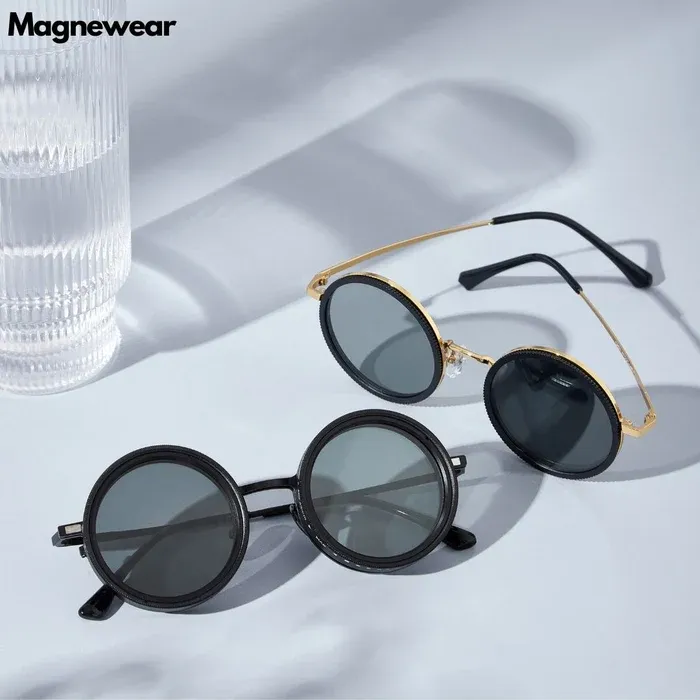
If you already wear prescription glasses, compatibility is another important consideration. Magnetic or clip-on solutions can provide an alternative to owning separate prescription and sun eyewear. Magnewear, for example, offers eyewear designed around convenient lens changes for people who want flexibility in everyday use.
Finally, pay attention to product information. A clear description of UV protection, lens characteristics, fit, and intended use is more useful than relying on appearance alone.
Common Misunderstandings About Light-Filtering Sunglasses
"The darkest lenses must be the safest."
Not necessarily. Lens darkness does not tell you whether the lens provides adequate UV protection.
"Polarized means UV protected."
Not automatically. Polarization and UV protection are separate features. Check that the product also provides appropriate UV protection.
"Sunglasses are only necessary on cloudless days."
UV radiation can still reach the eyes when skies are cloudy. The American Academy of Ophthalmology recommends protecting your eyes outdoors throughout the year.
"Any dark glasses can be used to look at the sun."
Absolutely not. Ordinary sunglasses are not designed for direct solar viewing. Special-purpose solar filters are required for that activity.
Final Thoughts
Light-filtering eyewear is ultimately about managing the amount and type of light reaching your eyes. Neutral-density filtering can reduce visible brightness while keeping the surrounding scene relatively natural, making it an interesting option for people who spend time outdoors.
But brightness control should never be confused with UV protection. When selecting sunglasses, UV protection deserves priority, while features such as polarization, lens darkness, frame coverage, and adjustability can be considered according to your personal routine.
The most practical choice is one that matches your environment, feels comfortable, provides reliable UV protection, and allows you to see clearly. Whether you are walking through a sunny neighborhood, driving on a bright afternoon, or enjoying time outdoors, understanding what each lens feature actually does makes it easier to choose eyewear with confidence.




















Sign in to leave a comment.