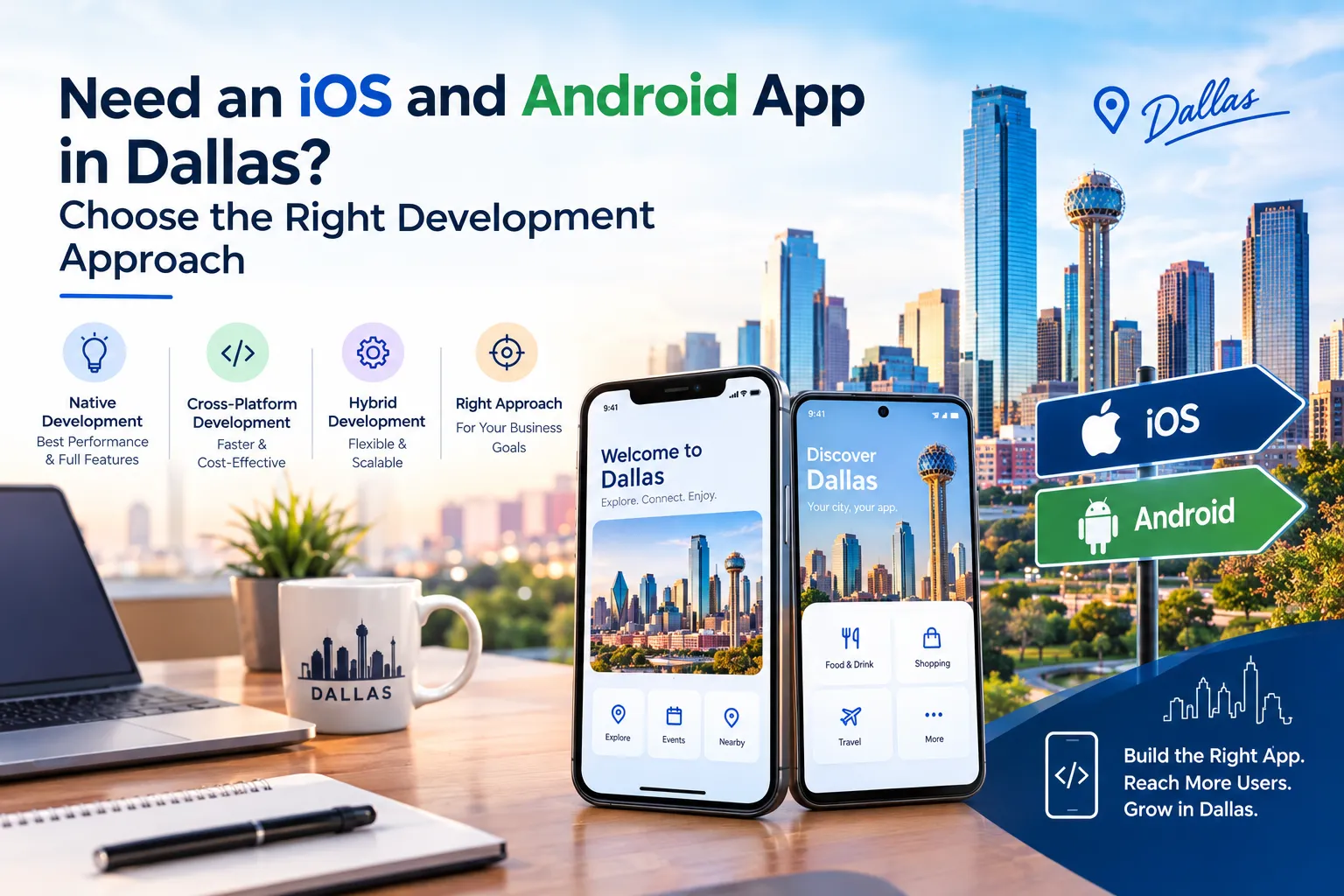

Building an app for both iOS and Android can help Dallas businesses reach more customers, improve service delivery, and create new revenue opportunities. However, choosing the right development approach is just as important as deciding what your app should do. The technology you select will influence development costs, performance, scalability, and long-term maintenance.
If you are comparing a mobile app development company in Dallas, start by identifying your business goals, target audience, essential features, and budget. Whether you are launching a startup product or modernizing an existing business, the right approach should balance user experience, functionality, and future growth.
This guide explains the main app development approaches, essential features, estimated costs, and factors to consider before choosing a development partner in Dallas.
Why Dallas Businesses Are Investing in Mobile App Development
Businesses across retail, healthcare, logistics, real estate, hospitality, and professional services can use mobile apps to make everyday operations more convenient.
A well-planned app can help businesses:
- Improve customer engagement: Offer convenient access to services, products, bookings, and support.
- Simplify business operations: Automate appointments, order tracking, payments, and routine workflows.
- Increase customer retention: Use personalized experiences, loyalty programs, and relevant notifications.
- Create new revenue streams: Introduce subscriptions, in-app purchases, or digital services where appropriate.
- Gain useful business insights: Analyze customer interactions and app performance to make informed decisions.
The key is to build an app around a genuine customer need rather than adding features simply because competitors offer them.
Mobile App Development Company in Dallas: Which Approach Is Right for You?
The best development approach depends on your project requirements, available resources, expected user experience, and long-term plans. Most businesses consider three options.
1. Native App Development for iOS and Android
Native development involves building separate applications for Apple's iOS and Google's Android platforms. Developers typically use Swift or SwiftUI for iOS and Kotlin for Android.
Best suited for: Apps that require advanced device capabilities, platform-specific features, intensive processing, or highly customized user experiences.
Advantages:
- Strong platform-specific performance.
- Access to device features and operating system capabilities.
- Greater flexibility for complex interfaces and functionality.
Considerations: Maintaining separate codebases generally requires more development effort, testing, and ongoing investment.
Native development can be a suitable choice when performance and specialized functionality are more important than minimizing the initial budget.
2. Cross-Platform App Development
Cross-platform development allows businesses to build apps for iOS and Android using a shared codebase. Frameworks such as Flutter and React Native can reduce duplicated development work, depending on the project's requirements.
Best suited for: Startups, customer-facing business apps, booking platforms, e-commerce applications, and service-based products.
Advantages:
- Shared code can reduce development time and costs.
- More consistent functionality across platforms.
- A streamlined process for updates and maintenance.
Considerations: Some platform-specific integrations and advanced features may still require native development.
For businesses that need to launch on both platforms without managing two entirely separate applications, cross-platform development can offer a practical balance between cost, speed, and functionality.
3. Progressive Web Apps and Web-Based Solutions
A progressive web app (PWA) runs through a web browser and can provide an app-like experience without requiring users to install a traditional application from an app store.
Best suited for: Content platforms, simple customer portals, product catalogs, and businesses that primarily need accessible web functionality.
Advantages:
- One web-based experience across supported devices.
- Easier access through a website link.
- Potentially lower initial development and distribution costs.
Considerations: PWAs have limitations compared with native applications for certain device features, background operations, and platform-specific experiences.
If your business depends on app-store distribution, extensive device integration, or advanced mobile interactions, a native or cross-platform app may be a better fit.
How to Choose a Dallas Mobile App Development Company
Selecting a development partner involves more than comparing proposals. Look for a team that understands your business model and can explain how its technical decisions support your objectives.
Consider these factors before making a decision:
Industry experience: Review relevant projects and ask how the company addressed similar business challenges.
Technical expertise: Confirm its experience with iOS, Android, cross-platform frameworks, backend systems, APIs, and third-party integrations.
UI/UX design: Ask how the team researches user needs, creates prototypes, and tests navigation before development begins.
Security and privacy: Discuss authentication, data encryption, secure payments, access controls, and applicable privacy requirements.
Testing and quality assurance: Ensure the plan includes testing across devices, operating system versions, performance conditions, and real user scenarios.
Post-launch support: Clarify who handles bug fixes, compatibility updates, monitoring, maintenance, and future feature development.
Businesses evaluating mobile app developers in Dallas should also request a transparent scope of work, project milestones, ownership terms, and a clear explanation of what is included in the quoted price.
Mobile App Development Services in Dallas: Features to Prioritize
The right features depend on your audience and business model. Start with the functionality users need most, then expand based on feedback and performance data.
Important features to consider include:
- User registration and profiles: Make account creation and profile management straightforward.
- Secure payment integration: Support reliable transactions for shopping, bookings, or paid services.
- Push notifications: Share relevant updates, reminders, and order or booking notifications.
- Real-time tracking: Useful for delivery, transportation, logistics, and field-service applications.
- Search and filtering: Help users find products, services, or information quickly.
- Analytics and reporting: Monitor engagement, conversions, retention, and user behavior.
- Administrative dashboard: Manage users, content, orders, transactions, and business operations.
- Third-party integrations: Connect the app with existing CRM, ERP, payment, or scheduling systems when needed.
For a first release, prioritize features that solve the main user problem. A minimum viable product (MVP) can help validate demand before you invest in a more extensive application.
How Much Does Mobile App Development Cost in Dallas?
The cost of developing an iOS and Android app in Dallas depends on its complexity, design, technology, integrations, and development team's location. The following figures are broad planning estimates in US dollars, not verified quotes for a specific Dallas project.
| App complexity | Estimated development cost | Typical scope |
|---|---|---|
| Basic app | $15,000–$35,000 | Core screens, basic accounts, simple functionality |
| Medium-complexity app | $35,000–$80,000 | APIs, payments, user dashboards, integrations |
| Complex app | $80,000–$200,000+ | Real-time features, advanced workflows, extensive backend systems |
Have an App Idea? Let's Discuss It for Free
These ranges are indicative and can vary considerably. Building separate native applications may cost more than using a shared cross-platform codebase, although the final difference depends on the technical requirements.
What Factors Affect App Development Costs?
Several elements determine your final budget:
- Platform selection: Native iOS and Android development may require separate implementation efforts.
- Feature complexity: Real-time tracking, messaging, sophisticated search, and custom workflows increase development effort.
- UI/UX design: Custom interfaces and usability testing add to the project scope.
- Backend infrastructure: Databases, APIs, cloud services, and administrative tools affect cost.
- Security and compliance: Sensitive information or regulated workflows may require additional safeguards and reviews.
- Maintenance: Hosting, monitoring, operating system updates, and ongoing improvements create recurring expenses.
When requesting a proposal from a mobile app development company Dallas businesses can work with, ask for an itemized estimate covering design, development, testing, deployment, and post-launch support. This makes it easier to compare quotes accurately.
Finding the Top Mobile App Development Company in Dallas
There is no single provider that is best for every project. The right partner should match your technical requirements, budget, communication preferences, and long-term business goals.
When researching a top mobile app development company in Dallas, compare proposals against the same requirements. Ask for relevant portfolio examples, a proposed technology stack, a delivery timeline, testing procedures, and details about ongoing support.
You can also evaluate companies serving businesses beyond the Dallas market. For example, Apptunix is one development provider businesses may consider when researching mobile application solutions for iOS, Android, and cross-platform products. As with any potential partner, assess its relevant experience, project approach, and proposed deliverables against your specific needs.
The goal is to find a development team that can translate your requirements into a reliable, maintainable product—not simply the company offering the lowest initial quote.
Frequently Asked Questions
1. Should I build separate iOS and Android apps or use cross-platform development?
Choose native development when platform-specific performance and advanced device capabilities are essential. Cross-platform development is worth considering when you want to launch on both platforms with a shared codebase and a more streamlined development process.
2. How long does it take to develop a mobile app in Dallas?
A straightforward app may take approximately 2–4 months, while a medium-complexity application may require 4–8 months or longer. Complex projects can take a year or more, depending on integrations, testing, and scope.
3. What should I prepare before contacting mobile app developers in Dallas?
Prepare a clear description of your business problem, target users, essential features, preferred platforms, estimated budget, and expected launch timeline. A rough feature list is enough to begin an initial discussion.
4. Can I launch an MVP before building the complete app?
Yes. An MVP focuses on the smallest set of features needed to solve the primary user problem. It allows you to test demand, gather feedback, and prioritize future investment based on actual results.
5. What should I ask a mobile app development company before hiring it?
Ask about comparable projects, technical recommendations, project milestones, security practices, code ownership, testing, communication, and post-launch maintenance. Request a written proposal that clearly defines the scope and exclusions.
Final Thoughts
Choosing the right development approach is one of the most important decisions when building an iOS and Android app for your Dallas business. Native development offers platform-specific flexibility, cross-platform development can simplify delivery across devices, and progressive web apps may suit businesses that primarily need browser-based functionality.
Before committing to a development partner, define your priorities, evaluate the long-term cost, and compare proposals based on technical quality, scalability, security, and support.
Ready to plan your mobile app? Start by documenting your core features and business objectives, then request a project assessment from experienced development teams. A clear scope and realistic budget will help you move from an initial idea to a mobile product built for your customers and future growth.
















Sign in to leave a comment.