NEMA Enclosures: A Practical Guide to Types, Uses and Selection

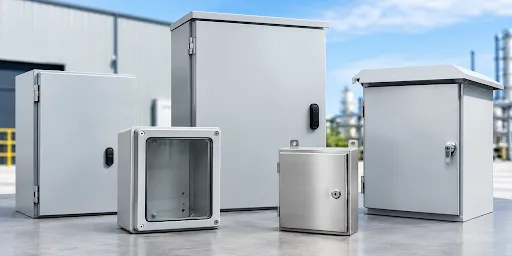

Electrical equipment does not operate in identical environments. A control system inside a clean building may face relatively little environmental exposure, while equipment installed in a manufacturing facility or outdoors can encounter dust, rain, snow, water, oil, or other contaminants. Choosing an enclosure based on the actual conditions is therefore an important part of electrical system design.
NEMA enclosures provide a standardized way to identify the environmental protection characteristics of electrical enclosures. ANSI/NEMA 250 covers enclosures for electrical equipment rated at no more than 1,000 volts and includes different Types for indoor, outdoor, and certain hazardous-location applications.
Understanding the differences between these Types can help engineers, installers, and facility managers make more informed enclosure decisions.
What Are NEMA Enclosures?
NEMA enclosures are protective housings designed to contain electrical equipment while providing protection against specified environmental conditions. Depending on the Type, this protection can involve falling dirt, windblown dust, rain, sleet, snow, dripping water, splashing water, oil, coolants, or other conditions.
NEMA Type classifications are not simply a ranking from low to high protection. Each Type has its own intended application and environmental requirements. For example, Type 1 is designed for indoor use, while Type 3 is intended for indoor or outdoor applications involving conditions such as rain, sleet, snow, falling dirt, and windblown dust.
Why Is Enclosure Selection Important?
Electrical components can be affected when environmental conditions exceed the protection provided by their enclosure. Moisture, dust, dirt, and industrial contaminants may create maintenance concerns or contribute to deterioration over time.
The appropriate enclosure depends on the location and conditions of the installation. An outdoor electrical system may need protection from weather, whereas equipment used inside a manufacturing facility may need protection from dust, dripping water, oil, or noncorrosive coolants.
NEMA 250 establishes requirements for enclosure Types based on specific environmental conditions and requires equipment to be installed according to applicable manufacturer instructions and electrical requirements.
Common NEMA Enclosure Types
Several enclosure Types are frequently encountered in electrical and industrial applications.
Type 1
Type 1 is intended for indoor locations. It provides protection against access to hazardous parts and against falling dirt entering the enclosure.
Type 2
Type 2 is also designed for indoor applications. In addition to protection against falling dirt, it addresses the harmful effects of dripping and light splashing water.
Type 3
Type 3 is designed for indoor or outdoor use. It provides protection against falling dirt and windblown dust as well as rain, sleet, and snow. The enclosure is also designed to withstand external ice formation without being damaged.
Type 4
Type 4 is intended for indoor or outdoor applications requiring protection from specified solid foreign objects and water exposure, including rain, splashing water, and hose-directed water.
Type 4X
Type 4X provides the applicable Type 4 protection while adding requirements associated with corrosion resistance. This can be relevant in environments where corrosion presents an additional concern.
Type 12
Type 12 is intended for indoor applications and is commonly associated with industrial environments. It addresses conditions including falling dirt, circulating dust, lint, fibers, flyings, dripping water, and light splashing.
NEMA's published enclosure information provides definitions for these and other Types.
How Do You Choose the Right Type?
The installation environment should be the starting point for enclosure selection. Identify whether the equipment will be installed indoors or outdoors and determine what environmental conditions it may encounter.
Consider exposure to:
- Rain and snow
- Windblown dust
- Falling dirt
- Dripping or splashing water
- Hose-directed water
- Oil and coolants
- Corrosive conditions
- Other industrial contaminants
The equipment itself also needs to be evaluated. Internal dimensions, mounting arrangements, cable-entry requirements, accessibility, ventilation, and maintenance requirements can influence the enclosure design.
Field modifications should also be considered carefully. NEMA's guidance addresses field modifications and explains that installation must comply with applicable requirements and manufacturer instructions.
NEMA vs. IP Ratings
NEMA Types are sometimes compared with IP ratings, but they should not automatically be treated as equivalent.
IP ratings are based on IEC 60529 and primarily describe protection against solid particles and water. NEMA enclosure classifications can address additional environmental considerations and have their own testing and application requirements.
NEMA's guidance specifically notes that IP ratings cannot be used as substitutes for NEMA enclosure Type ratings where U.S. electrical installation requirements call for a NEMA Type.
For projects involving both standards, the applicable requirements should be reviewed rather than assuming that an IP number directly corresponds to a particular NEMA Type.
Where Are NEMA Enclosures Used?
NEMA enclosures can be found across commercial, industrial, utility, automation, manufacturing, and outdoor electrical applications. They may house controls, switches, instrumentation, wiring components, automation equipment, and other electrical devices.
The correct Type depends on the environment rather than simply the equipment category. Two pieces of similar electrical equipment may require different enclosure protection if one is installed indoors and the other is exposed to outdoor weather or industrial contaminants.
Material, construction, mounting method, cable entry, and maintenance access should therefore be considered alongside the environmental classification.
Conclusion
Selecting NEMA enclosures starts with identifying the conditions an electrical system will encounter throughout its intended operating environment. Indoor and outdoor installations can have substantially different requirements, while industrial facilities may introduce additional exposure to dust, liquids, oil, coolants, or corrosive substances. When evaluating Custom NEMA enclosures, the focus should be on matching the enclosure Type, construction, dimensions, material, cable-entry arrangements, and installation requirements to the specific application. Reviewing the applicable NEMA classification and manufacturer documentation can help ensure that the enclosure's stated protection aligns with the conditions it is expected to face.





Sign in to leave a comment.