Rudraksha beads are found in different regions and can vary considerably in size, shape, texture, and appearance. Among the varieties available to practitioners and collectors, beads identified as originating from Nepal are particularly well known for their distinctive physical characteristics.
For people researching nepali rudraksha, understanding its origin and natural features is useful before comparing individual beads. Nepal-origin Rudraksha can be found across different Mukhi classifications, so the term "Nepali" describes the geographical origin rather than one specific Mukhi variety.
The traditional spiritual significance of a Rudraksha depends on its Mukhi count and associated deity, while its origin helps describe its physical and geographical characteristics.
What Does Nepali Rudraksha Mean?
Nepali Rudraksha generally refers to Rudraksha beads originating from Nepal.
It is therefore important to distinguish two separate characteristics:
Origin: Where the Rudraksha comes from.
Mukhi: The number of natural faces formed on the bead.
A Nepali Rudraksha can have different Mukhi counts, and each Mukhi variety may have its own traditional significance.
This means that "Nepali Rudraksha" should not be treated as the name of one particular bead.
Where Is Nepal-Origin Rudraksha Found?
Rudraksha trees grow in parts of the Himalayan region and other areas of South and Southeast Asia.
Nepal has a long-standing cultural connection with Rudraksha, particularly within Hindu and Shaivite spiritual traditions.
The country's association with Rudraksha has contributed to the popularity of Nepal-origin beads among practitioners and collectors.
However, geographical origin alone should not be treated as proof of authenticity.
The individual seed still needs to be evaluated.
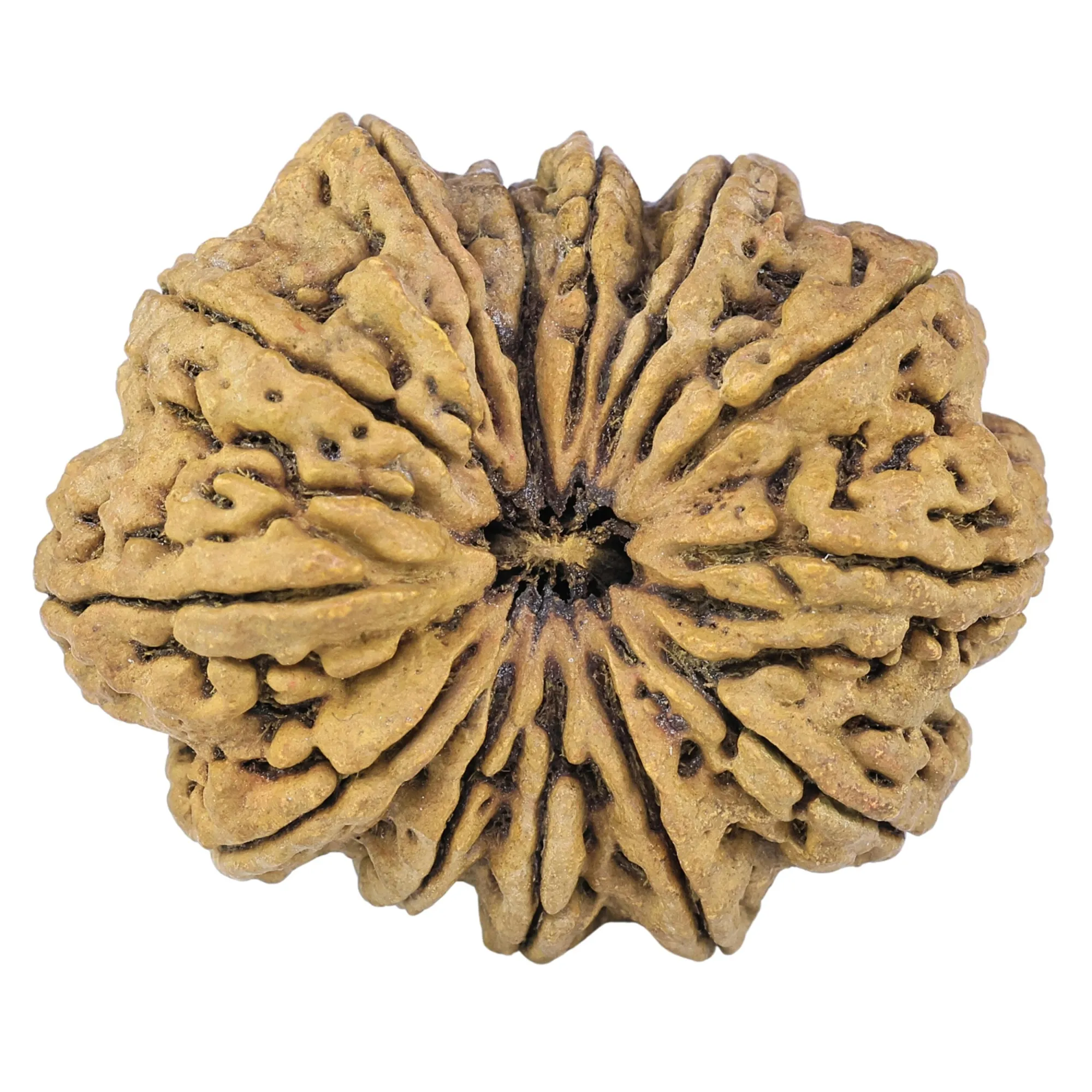
Physical Characteristics of Nepali Rudraksha
Nepal-origin Rudraksha is often recognized by its physical appearance.
Individual beads can differ in:
- Size
- Shape
- Surface texture
- Mukhi depth
- Groove definition
- Weight
Natural variation is expected because Rudraksha is a biological seed.
Two beads from the same region do not necessarily look identical.
This is particularly important when purchasing online, where buyers may expect every bead to have the same appearance.
Why Size Can Be Different
Natural Rudraksha develops under varying environmental conditions.
As a result, individual seeds can have different dimensions.
Size may be influenced by:
- Natural growth
- Variety
- Growing conditions
- Maturity
- Individual seed development
A larger bead should not automatically be considered more authentic or spiritually superior.
Likewise, a smaller bead is not automatically inferior.
Understanding Mukhi Count
The Mukhi count remains an important characteristic of a Rudraksha.
A bead may be identified as:
- 1 Mukhi
- 5 Mukhi
- 8 Mukhi
- 11 Mukhi
- 14 Mukhi
- 18 Mukhi
- 21 Mukhi
and other classifications.
The traditional meaning depends on the specific Mukhi.
For example, 5 Mukhi Rudraksha is commonly used in meditation and prayer, while higher Mukhi varieties can have more specialized traditional associations.
Traditional Significance Depends on the Mukhi
The word "Nepali" does not determine the spiritual meaning by itself.
Instead, consider:
Origin + Mukhi count + traditional association
For example, a Nepal-origin 8 Mukhi Rudraksha and a Nepal-origin 14 Mukhi Rudraksha may have very different traditional meanings even though both originate from Nepal.
This distinction is useful when choosing a bead according to spiritual practice.
Why Nepal-Origin Beads Attract Interest
Nepali Rudraksha can attract interest because of its geographical association and physical appearance.
Collectors and practitioners may appreciate differences in:
- Bead size
- Surface texture
- Mukhi definition
- Natural shape
However, interest in Nepal-origin beads should not become a substitute for authentication.
A bead's origin, physical characteristics, and documentation should all be considered.
How to Evaluate Authenticity
When purchasing a Nepal-origin Rudraksha, examine the actual bead carefully.
Useful factors include:
- Natural Mukhi formation
- Organic surface texture
- Individual product photographs
- Dimensions
- Weight
- Origin information
- Certification
Artificially carved grooves can create a misleading appearance.
This is why Mukhi identification should be supported by appropriate product information.
Why Certification Matters
Certification can provide supporting information about an individual Rudraksha.
For higher Mukhi or rare beads, buyers may want to review:
- Product identification
- Mukhi classification
- Dimensions
- Weight
- Origin
- Certification number
- Laboratory information where available
The documentation should ideally correspond to the actual bead being purchased.
A generic certificate may provide less information than product-specific documentation.
Nepal-Origin vs Indonesia-Origin Rudraksha
Rudraksha can come from different geographical regions.
Nepal and Indonesia are two origins frequently discussed by buyers.
Natural differences may occur between beads from different origins.
These can include:
- Size
- Shape
- Surface texture
- Groove appearance
However, neither origin should automatically be treated as proof that one bead is always better than another.
The individual bead's natural formation and supporting information remain important.
Traditional Ways to Use Nepali Rudraksha
The method of use depends primarily on the specific Rudraksha and the practitioner's tradition.
A Nepal-origin bead may be:
- Worn as a pendant
- Used in a mala
- Used during meditation
- Kept in a prayer space
- Included in devotional practice
The appropriate practice can vary according to the individual's spiritual beliefs.
Caring for Nepali Rudraksha
Rudraksha should be handled gently regardless of origin.
Basic care includes:
- Avoiding harsh chemicals
- Keeping perfume away from the bead
- Cleaning gently
- Storing it safely
- Protecting it from unnecessary impact
- Avoiding aggressive polishing
The objective is to preserve its natural surface and structure.
Who May Consider Nepali Rudraksha?
There is no universal rule determining who should choose Nepal-origin Rudraksha.
It may appeal to:
- Meditation practitioners
- Shiva devotees
- Spiritual seekers
- Rudraksha collectors
- People interested in higher Mukhi varieties
- Individuals who prefer Nepal-origin beads
The specific Mukhi should be considered according to the practitioner's purpose.
Rudraksha Sanskar and Nepali Rudraksha
Rudraksha Sanskar offers different Rudraksha varieties, including Nepal-origin beads.
Its Nepali Rudraksha collection provides information for individuals interested in exploring beads from this geographical origin.
For someone considering Nepali Rudraksha, reviewing the individual product's origin, photographs, Mukhi classification, physical specifications, certification, and authenticity information can provide a clearer basis for selection.
What Should You Ask Before Buying?
Before purchasing, consider:
- Where is the bead sourced from?
- What is its Mukhi count?
- Are the Mukhi lines naturally formed?
- What are its dimensions?
- What is its weight?
- Is certification provided?
- Does the documentation relate to the individual bead?
- What are the authenticity and return policies?
These questions can help separate geographical origin from claims about quality or authenticity.
Conclusion
Nepali Rudraksha refers primarily to the geographical origin of a Rudraksha bead rather than a particular Mukhi classification.
Its individual appearance can vary in size, shape, texture, and Mukhi definition because Rudraksha is a natural seed. Its traditional spiritual meaning depends on the specific Mukhi count and associated deity.
For buyers, origin should be considered alongside natural formation, product-specific photographs, physical specifications, certification, and seller transparency.
For those looking to buy Rudraksha online, evaluating the individual Nepal-origin bead rather than relying only on its geographical label provides a more informed approach to selection.




























Sign in to leave a comment.