

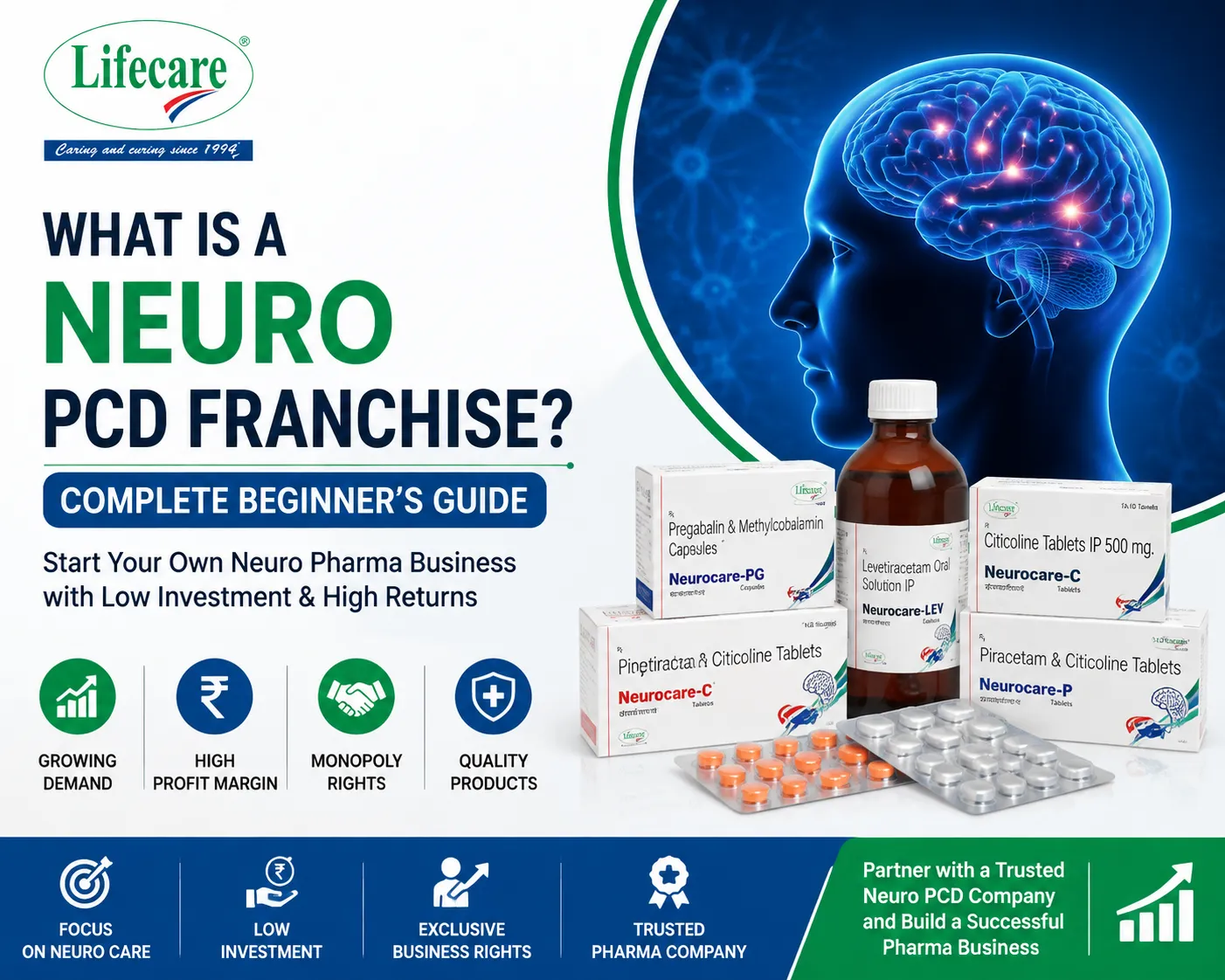
The pharmaceutical industry offers several business models for entrepreneurs, distributors, and professionals who want to enter the medicine distribution sector. One of the models that has gained attention in the neurological and psychiatric segment is the PCD pharma franchise model. A Neuro PCD Company typically provides a focused portfolio of neurological and psychiatric medicines to franchise partners, along with distribution and promotional support.
For people considering this business opportunity, understanding how the model works is important before making any commercial commitment. A potential partner should evaluate the product portfolio, manufacturing standards, documentation, territory terms, supply process, pricing structure, and support offered by the pharmaceutical company.
What Is a Neuro PCD Business?
PCD stands for Propaganda Cum Distribution. In this model, a pharmaceutical company authorizes an individual, distributor, or business entity to promote and distribute its products within an agreed territory.
A Neuro PCD business focuses specifically on products associated with neurological and psychiatric therapeutic categories. Depending on the company, the portfolio may include medicines used in areas such as epilepsy, neuropathic conditions, migraine, anxiety, depression, psychotic disorders, and other CNS-related conditions.
The advantage of a specialized segment is that a distributor can develop knowledge of a particular therapeutic category instead of trying to manage an extremely broad pharmaceutical portfolio.
Why Is the Neuro Segment Relevant for Pharma Entrepreneurs?
Neurological and psychiatric conditions require specialized medical treatment and long-term management in many cases. This creates an ongoing requirement for medicines prescribed by qualified healthcare professionals.
However, business opportunity should not be confused with guaranteed profitability. Demand, competition, regulatory requirements, local prescribing patterns, distribution capability, working capital, and product availability can all influence commercial performance.
For a prospective franchise partner, the important question is therefore not simply whether the neuro segment has demand. The more practical question is whether the selected pharmaceutical company can provide the products, documentation, supply reliability, and business support required to serve that market responsibly.
Understanding the Product Portfolio
One of the first areas to examine is the company's product range.
A specialized Neuro PCD Company may offer products from several CNS-related categories, such as:
- Antidepressants
- Antipsychotics
- Anticonvulsants
- Anti-anxiety medicines
- Antimigraine products
- Neuropathic pain medicines
- Neuro-supportive formulations
- Other neurological and psychiatric formulations
The exact composition varies between companies. Therefore, prospective partners should request the current product catalogue rather than relying on a general description.
A broader portfolio can make it easier to address different market requirements, but portfolio size alone should not determine the selection. Product quality, regulatory documentation, availability, packaging, pricing, and market suitability also need consideration.
Manufacturing and Quality Documentation
Medicine distribution requires careful attention to quality and compliance. Before entering into an agreement, a prospective franchise partner should ask the company to provide relevant manufacturing and quality documentation.
Important areas to examine include:
- Manufacturing licence details
- Applicable GMP documentation
- Product approvals and regulatory documentation
- Batch testing or quality-control documentation
- Product composition and dosage information
- Packaging and labelling compliance
- Storage requirements
- Expiry and replacement policies
The Lifecare Neuro website states that its manufacturing facilities are WHO-GMP and GLP certified and that it operates in the neuro and psychiatry segments. Prospective partners should independently verify the current validity and scope of any certification before entering an agreement.
Territory and Monopoly Rights
Territory terms are another important part of a PCD arrangement.
Some companies offer exclusive or monopoly distribution rights within a defined geographical area. However, the meaning of exclusivity can differ from one agreement to another.
Before signing a contract, clarify:
- Which geographical area is covered?
- Is exclusivity provided in writing?
- Are there existing distributors in the territory?
- What happens if the territory is expanded?
- What are the renewal conditions?
- Can the company appoint another partner in the same area?
- What happens if the agreement is terminated?
Never rely only on verbal assurances. Commercial rights should be clearly documented in the agreement.
Investment and Working Capital
Investment requirements vary depending on the pharmaceutical company, product range, minimum order quantity, territory, and business scale.
The initial budget may include:
- Product inventory
- Registration and licensing requirements
- Transportation
- Storage
- Promotional materials
- Sales and distribution expenses
- Staff or field-sales costs
- Working capital for repeat orders
A company may provide a minimum-order structure, but entrepreneurs should calculate their expected inventory turnover before placing a large order.
Starting with an inventory level that matches realistic local demand can help reduce unnecessary stock pressure.
Marketing Support for Franchise Partners
A pharmaceutical franchise partner may require promotional resources to introduce products to healthcare professionals and distributors.
Depending on the company, support may include:
- Product visual aids
- Product literature
- Reminder materials
- Promotional stationery
- Product catalogues
- Brand information
- Sales assistance
The type and quantity of support should be clarified before signing the agreement.
Marketing material should also be used responsibly and in accordance with applicable pharmaceutical advertising and promotional requirements.
Order Processing and Product Supply
Reliable supply is essential in pharmaceutical distribution. A strong product portfolio is of limited practical value if frequently requested products are unavailable.
Before joining a company, ask about:
- Average dispatch timelines
- Minimum order quantities
- Stock availability
- Transport arrangements
- Order confirmation procedures
- Damaged-product replacement
- Near-expiry products
- Expiry-return policies
- Payment terms
A transparent supply system helps the distributor plan inventory and serve customers more consistently.
Who Can Consider a Neuro PCD Opportunity?
A Neuro PCD business may be considered by different types of entrepreneurs, including pharmaceutical distributors, medical representatives, wholesale businesses, and professionals with relevant pharmaceutical-market experience.
The Lifecare Neuro website states that its franchise opportunities are available across India and that it works with distributors and B2B customers.
However, every prospective partner should evaluate the opportunity according to their own location, regulatory requirements, available capital, distribution network, and business experience.
How to Start the Process
A practical process can look like this:
Step 1: Identify Your Territory
Determine the city, district, or state where you want to operate.
Step 2: Research Pharmaceutical Companies
Compare companies according to their product portfolio, manufacturing credentials, supply capability, and commercial terms.
Step 3: Request the Product Catalogue
Study the molecules, dosage forms, pack sizes, pricing, and available brands.
Step 4: Verify Documentation
Request relevant licences, certifications, and product documentation.
Step 5: Discuss Commercial Terms
Clarify minimum order quantities, payment conditions, territory rights, promotional support, and delivery terms.
Step 6: Review the Agreement
Read the complete agreement before making a financial commitment.
Step 7: Plan Distribution
Develop a practical plan for inventory, customer development, logistics, and working capital.
Why Specialized Knowledge Matters
The neuro and psychiatric segment requires responsible communication because many medicines are prescription products. Franchise partners should understand that their role is primarily commercial and distribution-oriented and that clinical decisions belong to qualified healthcare professionals.
A specialized pharmaceutical company can provide product information, but medicines should always be promoted and distributed according to applicable regulations.
Conclusion
A Neuro PCD Company can provide a structured route for entrepreneurs interested in the neurological and psychiatric pharmaceutical segment. However, the quality of the business opportunity depends on much more than the size of a product catalogue.
Product quality, manufacturing documentation, territory arrangements, supply reliability, commercial transparency, promotional support, and regulatory compliance should all be reviewed before entering an agreement.
For prospective franchise partners, the best approach is to compare available companies carefully, verify their documentation, understand the agreement, and build a distribution plan based on realistic local demand.
Frequently Asked Questions
1. What does a Neuro PCD Company do?
A Neuro PCD Company provides neurological and/or psychiatric pharmaceutical products to authorized franchise or distribution partners who promote and distribute them within an agreed territory.
2. What products are commonly available under a Neuro PCD portfolio?
Depending on the company, the portfolio can include antidepressants, antipsychotics, anticonvulsants, antimigraine medicines, neuropathic pain products, anxiolytics, and other CNS-related formulations.
3. What documents should I check before joining a Neuro PCD Company?
Check applicable manufacturing licences, quality certifications, product documentation, GST and business requirements, territory terms, and the written franchise agreement.
4. Is a Neuro PCD business suitable for beginners?
It can be considered by beginners, but pharmaceutical distribution involves regulatory, financial, inventory, and market-development responsibilities. New entrepreneurs should understand these requirements before investing.




















Sign in to leave a comment.