

There's a moment in most growing businesses where the current equipment can't keep up anymore — an order gets turned down because the shop can't produce it fast enough, or a truck breaks down one too many times. Buying new equipment outright with cash is rarely the best move at that point, even for businesses that could technically afford it. Tying up working capital in a depreciating asset when financing is available at reasonable rates usually isn't the best use of cash.
Lenders that finance new equipment purchases typically look at a few things: the type and expected useful life of the equipment, the business's time in operation and cash flow, and sometimes an industry track record if the equipment is specialized. Because new equipment comes with a manufacturer's warranty and a clear resale value, it's often easier and cheaper to finance than used equipment, where valuation is more subjective and lenders build in extra risk.
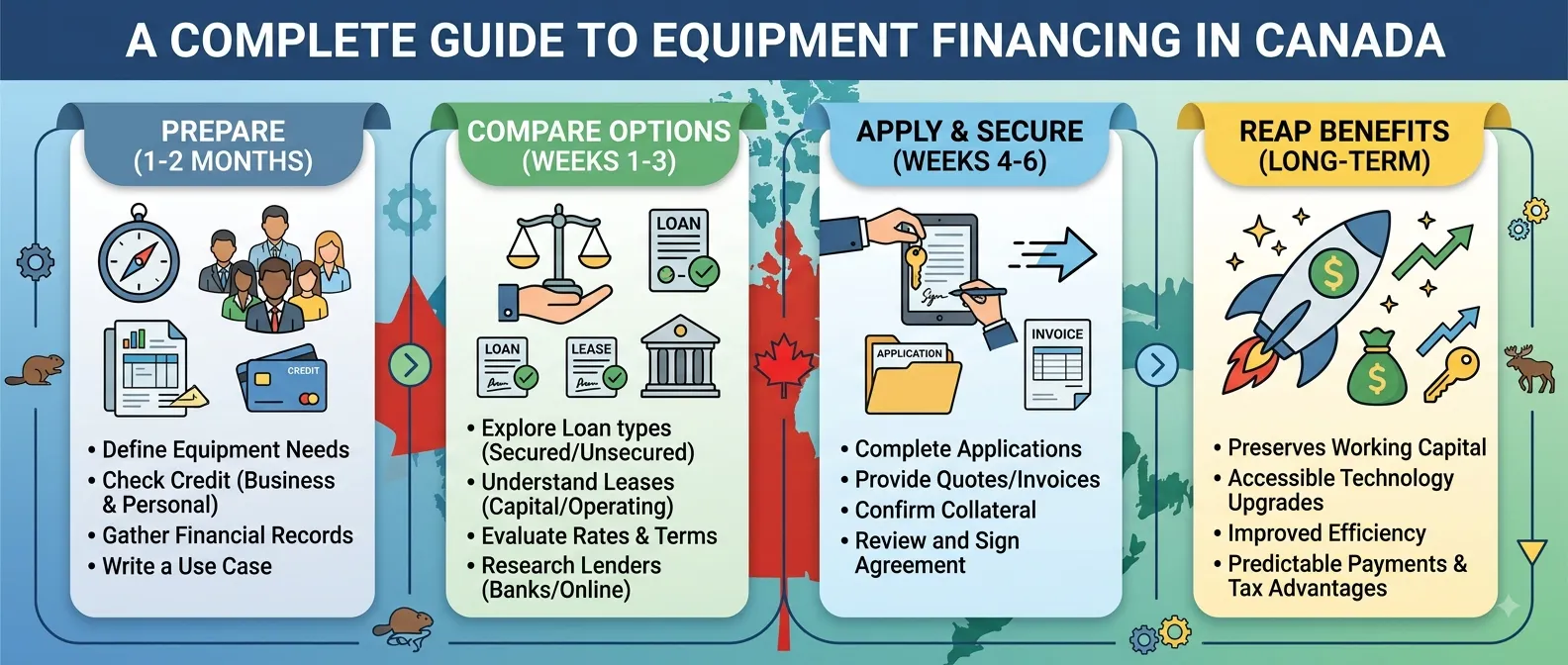
Businesses exploring new equipment financing generally have a choice between a term loan, where the business owns the equipment from day one and builds equity with every payment, and a lease, where monthly payments are lower but ownership at the end depends on the lease structure. The right choice depends on how long the equipment will realistically stay useful and whether the business wants to own it outright or keep the option to upgrade.
What lenders actually evaluate
Down payment expectations vary, but 10–20% is common for new equipment financing, with stronger businesses sometimes qualifying for 100% financing including soft costs like delivery and installation. Approval speed is often faster for new equipment than used, since the vendor invoice and manufacturer specs give the lender a clean, verifiable value to lend against.
Rates depend heavily on the business's credit profile, time in operation, and the equipment category itself — some equipment types hold value better than others and get priced accordingly. Businesses with at least two years of operating history and reasonably clean financials tend to see the most competitive rates, though newer businesses can still qualify, often with a larger down payment or a personal guarantee.
Structuring the purchase
It's worth financing the full cost of the equipment, including delivery, installation, and any training, rather than paying those pieces out of pocket — bundling them into the financing keeps more cash available for operations. It's also worth matching the term length to the equipment's useful life; financing a piece of equipment over seven years when it will realistically be replaced in five means paying for something you no longer have.
Helm & Harbour Capital helps Canadian businesses put together new equipment financing that fits both the purchase and the cash flow around it — comparing lenders, structuring the term, and making sure the numbers work before the equipment shows up on the floor.






















Sign in to leave a comment.