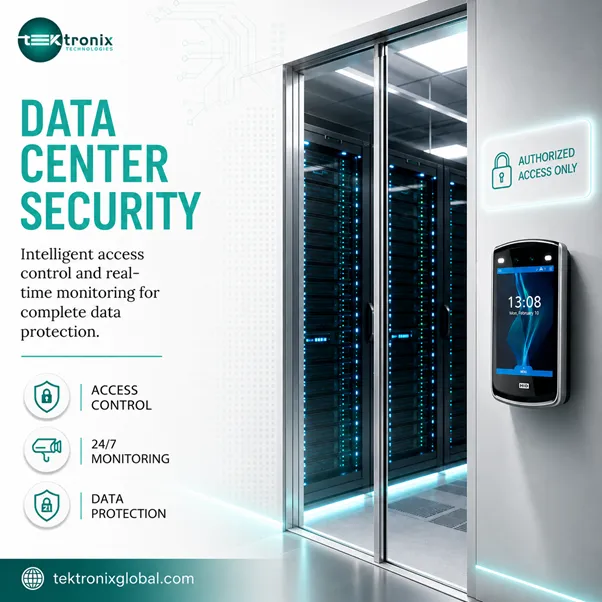

Data Center Security has become a boardroom priority for organizations across the United Arab Emirates as digital infrastructure grows more complex and more exposed to sophisticated adversaries. From financial institutions in Dubai to government entities in Abu Dhabi, protecting the physical and digital core of enterprise operations now demands a strategy that evolves as quickly as the threats themselves. This article outlines the next-generation approach UAE organizations need to safeguard their most critical digital assets.

Why Data Center Security Matters More Than Ever in the UAE
The UAE's rapid digital transformation, driven by national strategies such as the UAE Digital Government Strategy and Dubai's smart-city ambitions, has placed data centers at the heart of the national economy. Banking, healthcare, aviation, energy, and government services all depend on facilities that must remain online, resilient, and impenetrable. As cloud adoption accelerates and edge facilities multiply across the Emirates, the attack surface for both physical intrusion and cyber compromise expands in parallel. This is why Data Center Security UAE initiatives are increasingly mandated by regulators such as the Telecommunications and Digital Government Regulatory Authority (TDRA) and sector-specific cybersecurity authorities, who require operators to demonstrate measurable resilience rather than simple compliance on paper.
Regional operators face a dual mandate: satisfy strict regulatory frameworks while defending against a threat landscape that includes nation-state actors, organized ransomware groups, and opportunistic insiders. Facilities that fail to modernize their defences risk not only data loss but reputational damage, regulatory penalties, and operational downtime that can ripple across entire supply chains.
Colocation providers, hyperscale cloud operators, telecom carriers, and enterprise-owned server rooms all fall under this same pressure, regardless of size. A single point-of-presence facility supporting a regional bank carries the same reputational stakes as a national data hub, because customers, regulators, and partners increasingly judge digital trust by the strength of the infrastructure behind it. Building resilient, next-generation protection is therefore not a cost center but a direct enabler of business continuity, customer confidence, and long-term competitiveness in the Emirates' fast-growing digital economy.
Understanding the Modern Threat Landscape
Cybersecurity for Data Center Environments
Cybersecurity for Data Center environments has shifted from perimeter-only defence to a continuous, adaptive discipline. Ransomware operators now target hypervisors and backup infrastructure directly, while advanced persistent threat groups probe supply chains, remote-access tools, and third-party vendors for a foothold. Insider risk, whether malicious or accidental, remains one of the most difficult vectors to eliminate because it often bypasses traditional network defences entirely. A modern security posture treats every workload, administrator session, and API call as a potential risk that must be verified continuously rather than trusted by default.
Physical and Digital Convergence
Physical breaches and cyber intrusions are no longer separate disciplines. An attacker who gains unauthorized physical access to a server room can bypass encryption keys, tamper with hardware, or plant rogue devices on the network, while a compromised building management system can become an entry point into the corporate network. Next-generation strategies therefore unify physical protection with digital defence under a single operational framework, ensuring that surveillance data, access logs, and network telemetry are correlated in real time rather than analysed in silos.
This convergence also extends to the supply chain that supports a facility, from HVAC and power-management vendors to third-party maintenance contractors. Each external party that touches the building or its network introduces a potential weak link, which is why leading operators now require security clearances, monitored access windows, and contractual cybersecurity obligations for every vendor with physical or remote access to critical systems. Treating the facility as a single, interconnected ecosystem rather than a collection of independent systems is what separates a next-generation security program from a legacy one.
Core Pillars of Next-Generation Data Center Security
Data Center Encryption
Data Center Encryption forms the last line of defence when every other control fails. Data must be encrypted both at rest and in transit, using strong, regularly rotated keys managed through dedicated hardware security modules rather than software-only key stores. Leading UAE facilities are moving toward envelope encryption models, where individual workloads and tenants hold distinct keys, limiting the blast radius of any single compromise. Encryption strategy should also extend to backup repositories and disaster-recovery sites, which are frequently overlooked yet remain a favoured target for ransomware groups seeking unencrypted, exfiltrate copies of sensitive data.
Data Center Firewalls
Data Center Firewalls have evolved well beyond simple packet filtering. Next-generation firewalls now combine deep packet inspection, application-aware filtering, and integrated threat intelligence to identify malicious traffic before it reaches critical systems. Micro-segmentation is equally essential: dividing the network into small, isolated zones ensures that a breach in one segment cannot move laterally toward core databases or management consoles. Pairing firewall policy with a zero-trust network architecture, where every connection is authenticated and authorized regardless of origin, gives operators a resilient second layer behind the physical perimeter.
Data Center Access Control
Data Center Access Control must combine strong physical and logical safeguards. On the physical side, biometric verification, multi-factor credentials, mantrap entry vestibules, and strict visitor escort policies prevent unauthorized personnel from reaching sensitive areas. On the logical side, role-based access control, privileged access management, and just-in-time administrative permissions ensure that even authorized staff only hold the access they need for the task at hand, for the minimum time necessary. Every access event, physical or digital, should be logged, time-stamped, and reviewed as part of a continuous audit trail.
Data Center Surveillance
Data Center Surveillance is now powered by AI-driven analytics rather than passive recording. Intelligent camera systems can detect loitering, tailgating, unattended objects, and perimeter breaches in real time, triggering automated alerts to security teams before an incident escalates. Thermal imaging, license-plate recognition, and integrated fencing sensors extend visibility beyond the building envelope itself, covering approach routes, vehicle gates, and outdoor equipment yards. Organizations seeking a fully engineered approach can review Tektronix's data center perimeter security solutions, which combine layered surveillance, barrier systems, and intrusion sensors into a single managed deployment.
Data Center Intrusion Detection and Data Center Threat Detection
Data Center Intrusion Detection and Data Center Threat Detection systems form the analytical brain of a modern security operation. Network-based and host-based intrusion detection sensors flag anomalous traffic patterns, unauthorized configuration changes, and known attack signatures, while behavioural analytics and security information and event management (SIEM) platforms correlate this data with physical access logs and surveillance feeds. Continuous threat intelligence feeds, tuned to regional risk indicators relevant to the Gulf, help security teams anticipate emerging campaigns rather than simply reacting to alerts after damage has occurred.
Data Center Security UAE: Regional Considerations
Security strategy in the Emirates cannot be a one-size-fits-all import from other regions. Climate, regulatory structure, and the concentration of critical national infrastructure all shape how facilities across Dubai, Abu Dhabi, and the wider UAE should be protected.
Data Center Security Dubai
Data Center Security Dubai strategies must account for the emirate's role as a regional financial and logistics hub, home to dense clusters of enterprise and colocation facilities across free zones such as DIFC and Dubai Silicon Oasis. High ambient temperatures and airborne dust place additional demands on outdoor sensor calibration and camera maintenance schedules, while the concentration of multinational tenants within shared facilities raises the importance of strict tenant-level access segregation and encrypted multi-tenancy controls.
Data Center Security Abu Dhabi
Data Center Security Abu Dhabi priorities lean heavily toward government, energy, and critical infrastructure protection, reflecting the emirate's concentration of federal entities and national industry. Facilities here are frequently subject to stricter compliance obligations and closer alignment with national cybersecurity frameworks, making integrated physical-cyber governance, rigorous vendor vetting, and resilient backup power and network redundancy especially important design considerations.
Building a Layered, Next-Generation Security Strategy
A resilient facility relies on defence-in-depth: overlapping controls so that the failure of any single safeguard does not compromise the whole system. This means pairing perimeter fencing and vehicle barriers with building-level access control, pairing building-level access control with rack-level locking cabinets, and pairing all physical layers with network segmentation, encryption, and continuous monitoring. Incident response planning is equally critical; tabletop exercises, defined escalation paths, and rehearsed recovery procedures ensure that when an alert fires, staff can act within minutes rather than hours. Ongoing staff training, background-verified personnel, and a culture of security awareness round out a strategy that treats protection as an operational discipline rather than a one-time installation.
Compliance, Standards, and Proven Expertise
Trustworthy data center protection is built on demonstrable expertise, not marketing claims. Facilities that align with international standards such as ISO/IEC 27001 for information security management, Uptime Institute Tier certifications for infrastructure resilience, and local regulatory frameworks issued by UAE cybersecurity authorities give stakeholders measurable proof of maturity. Engineering teams with hands-on experience deploying layered perimeter systems, integrated surveillance, and access-control infrastructure across multiple live facilities bring practical insight that generic, checklist-based approaches cannot replicate. When evaluating a vendor or an internal program, organizations should look for documented project experience, named technical accreditation, and a track record of successful audits as core indicators of genuine authority in this field.
Emerging Technologies Shaping the Next Generation of Protection
Artificial intelligence and machine learning are reshaping how facilities detect and respond to risk. Predictive analytics can flag unusual patterns in access logs or network behaviour days before a conventional rule-based system would raise an alarm, while automated response playbooks can isolate a compromised segment within seconds of detection, reducing dwell time from hours to minutes. Digital twins of physical facilities are also gaining traction, allowing security teams to simulate breach scenarios, test evacuation and lockdown procedures, and validate sensor coverage before ever facing a real incident.
Edge computing growth across the UAE is pushing security requirements beyond the traditional hyperscale core and into smaller, distributed facilities located closer to end users. These edge sites often have lighter on-site staffing, which makes remote monitoring, automated intrusion sensing, and centralized command-and-control integration even more critical. Organizations planning edge or hybrid deployments should evaluate whether their current surveillance, access control, and network defences can scale consistently across every location, rather than concentrating investment solely in a single flagship facility.
Choosing the Right Data Center Security Partner
Selecting a partner to design and maintain these layered defences is one of the most consequential decisions a UAE organization will make. The right partner brings engineering depth across surveillance, access control, barriers, and intrusion sensing, backed by regional project experience and ongoing maintenance support. Tektronix LLC's perimeter security solutions for data centers are engineered specifically for facilities across the UAE, combining physical barrier systems, intelligent surveillance, and intrusion sensing into a single, professionally managed deployment. For organizations building or upgrading a facility, reviewing a proven data center perimeter security framework is a practical first step toward a defensible, audit-ready security posture.
Conclusion
Robust Data Center Security now depends on uniting physical defences with modern Cybersecurity for Data Center practices across every layer of the facility. Strong Data Center Encryption, well-tuned Data Center Firewalls, disciplined Data Center Access Control, and AI-enabled Data Center Surveillance work together with continuous Data Center Intrusion Detection and Data Center Threat Detection to close the gaps attackers rely on. For organizations pursuing Data Center Security UAE, Data Center Security Abu Dhabi, and Data Center Security Dubai mandates, a layered, well-governed strategy is no longer optional but foundational to long-term operational resilience.
FAQs
1. What is the difference between physical and cyber–Data Center Security?
Physical security covers barriers, Data Center Surveillance, and Data Center Access Control at the building level, while cyber security covers network defences such as Data Center Firewalls and encryption. Next-generation strategies unify both under one governance framework.
2. Why is Data Center Encryption important even with strong physical controls?
Physical barriers can be breached or bypassed by insiders, so Data Center Encryption ensures stolen or intercepted data remains unreadable without the correct keys, providing a critical last line of defence.
3. How do Data Center Intrusion Detection and Data Center Threat Detection systems work together?
Data Center Intrusion Detection identifies suspicious network or system activity in real time, while Data Center Threat Detection correlates that activity with broader intelligence to flag emerging attack patterns before they cause damage.
4. What regulations affect Data Center Security UAE facilities?
Operators must align with national and sector-specific cybersecurity frameworks issued by UAE regulatory authorities, alongside international standards such as ISO/IEC 27001, particularly for facilities supporting Data Center Security Abu Dhabi and Data Center Security Dubai operations in regulated sectors like finance and government.
5. How often should Data Center Firewalls and Data Center Access Control policies be reviewed?
Data Center Firewalls and Data Center Access Control policies should be reviewed at least quarterly, and immediately after any security incident, staffing change, or infrastructure upgrade, to ensure permissions and rule sets reflect current operational needs.
For more information contact us on:
Tektronix Technology Systems Dubai-Head Office
+971 50 814 4086
+971 55 232 2390
Office No.1E1 | Hamarain Center 132 Abu Baker Al Siddique Rd – Deira – Dubai P.O. Box 85955























Sign in to leave a comment.