
The Beauty of a Banarasi Saree Goes Beyond Its Colour
When I first started searching for my dream wedding saree, I thought choosing the perfect colour would be the hardest part. I imagined myself wearing a beautiful red Banarasi saree with golden zari, traditional jewellery, and an elegant bridal blouse. Like many brides, I spent hours browsing Pinterest, exploring bridal photographs, and saving designs that caught my attention.
But when I began comparing different Banarasi wedding sarees, I realised something important: a beautiful colour does not automatically mean a saree is the right choice.
The fabric, weaving technique, zari work, motifs, border, pallu, comfort, and authenticity all play an important role in determining whether a saree meets your expectations. A saree may look stunning in an online photograph, but understanding its actual features is essential before making a purchase.
While exploring options from brands such as Sacred Weaves, I found it helpful to approach bridal shopping with a clear checklist instead of focusing only on appearance.
If you are planning your wedding and looking for the perfect Banarasi wedding saree, this guide will help you understand what to check before making your final decision.
1. Check the Fabric Before Falling in Love With the Design
The first thing I learned was to look beyond the colour and examine the fabric.
Banarasi sarees are available in different fabric types and constructions, and each offers a distinct appearance and feel. The choice of fabric can influence how the saree drapes, how it feels during a long ceremony, and how its woven patterns appear.
Pure silk Banarasi sarees
Pure silk sarees appeal to brides who appreciate a luxurious texture and traditional Indian styling. Depending on the weave and design, they can feature an elegant sheen, rich motifs, and decorative zari borders.
Katan silk Banarasi sarees
Katan silk is associated with silk yarns made by twisting silk filaments together. Katan silk Banarasi sarees are valued for their traditional appearance and suitability for intricate woven designs.
Organza Banarasi sarees
Organza offers a lighter, sheer, and relatively crisp appearance. It may suit brides who prefer a more delicate or contemporary bridal look.
However, always check the actual fabric composition and construction rather than relying only on a product title.
What should you check?
- Is the fabric composition clearly mentioned?
- Does the seller explain the material and weaving details?
- Is the saree likely to suit your preferred draping style?
- Are care instructions available?
- Does the fabric meet your expectations for comfort and appearance?
When exploring Sacred Weaves, or any other saree collection, reviewing these details can help you compare designs more confidently.
2. Understand the Difference Between Original Banarasi Weaving and Inspired Designs
One of the most important steps when buying a Banarasi wedding saree is understanding what you are purchasing.
Banarasi sarees are traditionally associated with Varanasi, Uttar Pradesh, a city known for its textile heritage and weaving traditions. Their designs may include intricate brocade patterns, floral motifs, paisleys, traditional butis, and decorative borders.
However, not every saree described as Banarasi-style necessarily has the same origin or manufacturing process.
If authenticity is important to you, do not rely solely on the product title, colour, or price.
Instead, check the product description and ask the seller about the saree's place of manufacture, fabric composition, and weaving technique. Look for clear information that explains what makes the particular saree a Banarasi product.
You can also ask whether the saree is handwoven or made using another production method. These distinctions can affect its characteristics, craftsmanship, and price.
Remember that an elaborate pattern alone does not prove authenticity. A well-informed purchase begins with transparent product information.
For brides comparing Banarasi wedding sarees online, asking these questions before ordering can prevent misunderstandings and help establish realistic expectations.
3. Look Closely at the Zari Work
Zari work is one of the most recognisable features of many traditional Banarasi sarees. It can transform a simple fabric into a rich bridal ensemble by adding decorative patterns, borders, and intricate woven details.
However, not every bride needs the same level of zari work.
Some brides prefer elaborate gold-toned patterns covering much of the saree, while others prefer delicate zari detailing concentrated around the border and pallu.
Before buying, consider the overall appearance you want to achieve.
Heavy zari designs
Heavy zari patterns can create a traditional, statement-making bridal look. They may appeal to brides who want their saree to feel grand and richly detailed.
Moderate zari designs
A saree with a decorative border and selected motifs can offer a balanced appearance. This may be a good choice if you want traditional elegance without an excessively elaborate design.
Minimal zari designs
Subtle zari work can suit brides who prefer understated styling. Such designs can still look festive when paired with an appropriate blouse and jewellery.
Important buying tip: Ask how the zari is described in the product specifications. Do not assume that every golden-looking thread contains real gold or silver. The material and composition should be verified through the seller's information.
When checking Banarasi wedding sarees, examine the distribution of zari work, the clarity of the woven patterns, and how the detailing complements the base fabric.
4. Examine the Border and Pallu Carefully
I used to pay most of my attention to the body colour of a saree. Later, I realised that the border and pallu could completely change its overall appearance.
The border frames the saree, while the pallu often becomes a prominent feature when the saree is draped. Both can influence how the bridal outfit looks in photographs and during wedding rituals.
Before choosing a saree, consider the following details:
- Border width: A broad border may create a more traditional and dramatic appearance, while a narrower border can feel comparatively understated.
- Motif placement: Check whether the motifs are evenly arranged and complement the overall design.
- Pallu detailing: Look for patterns that match your preferred bridal aesthetic.
- Colour coordination: Consider how the border and pallu contrast with or complement the saree's main colour.
- Draping preferences: Think about which parts of the saree will be visible in your preferred draping style.
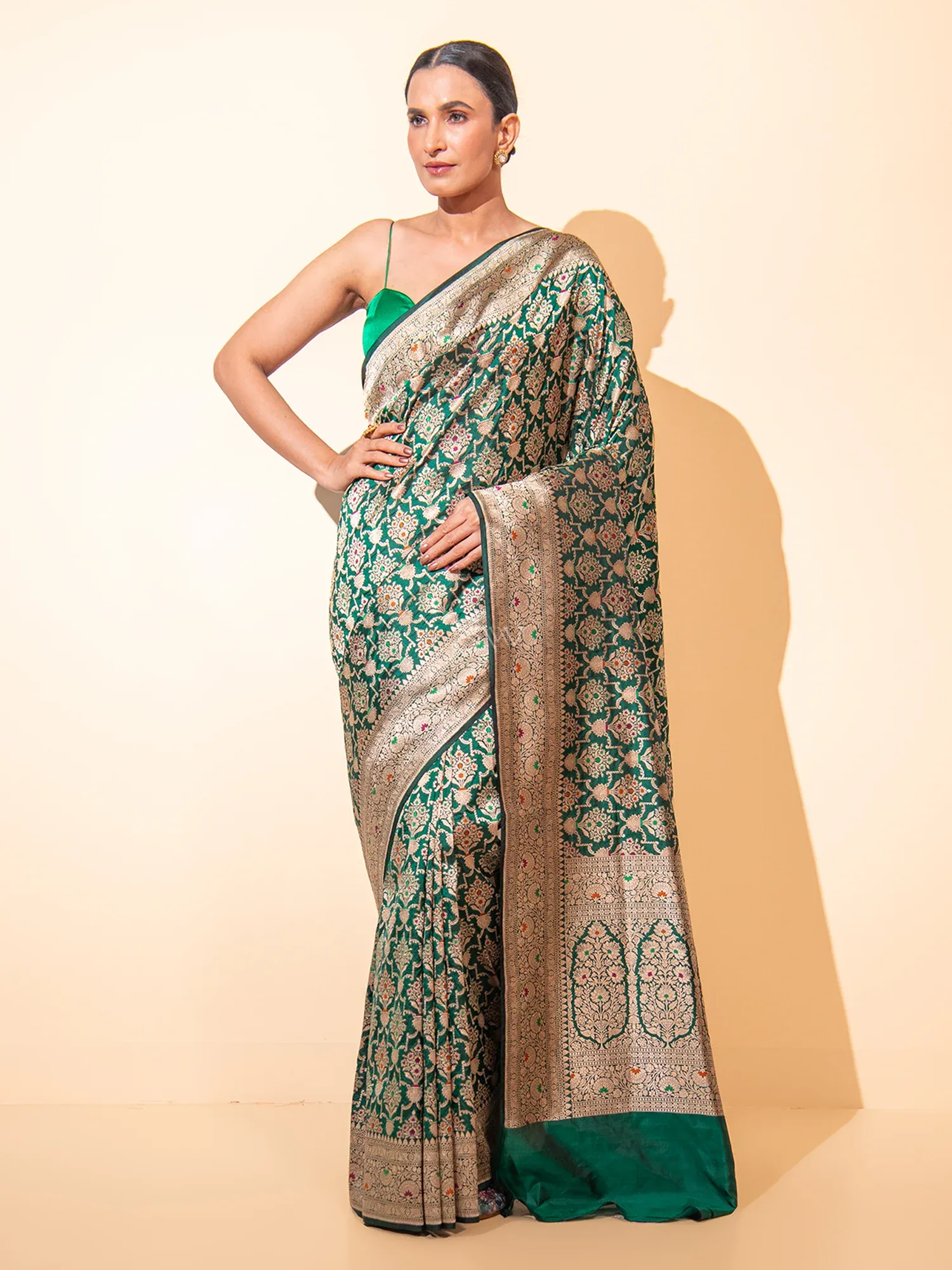
For example, a red Banarasi saree with a broad gold border can create a classic bridal look, while a deep green saree with a carefully patterned pallu may offer a distinctive alternative.
Neither design is automatically better. The right choice depends on your personal style and how you plan to wear it.
5. Check the Motifs and Overall Weaving Quality
The motifs are often what make one Banarasi saree stand out from another.
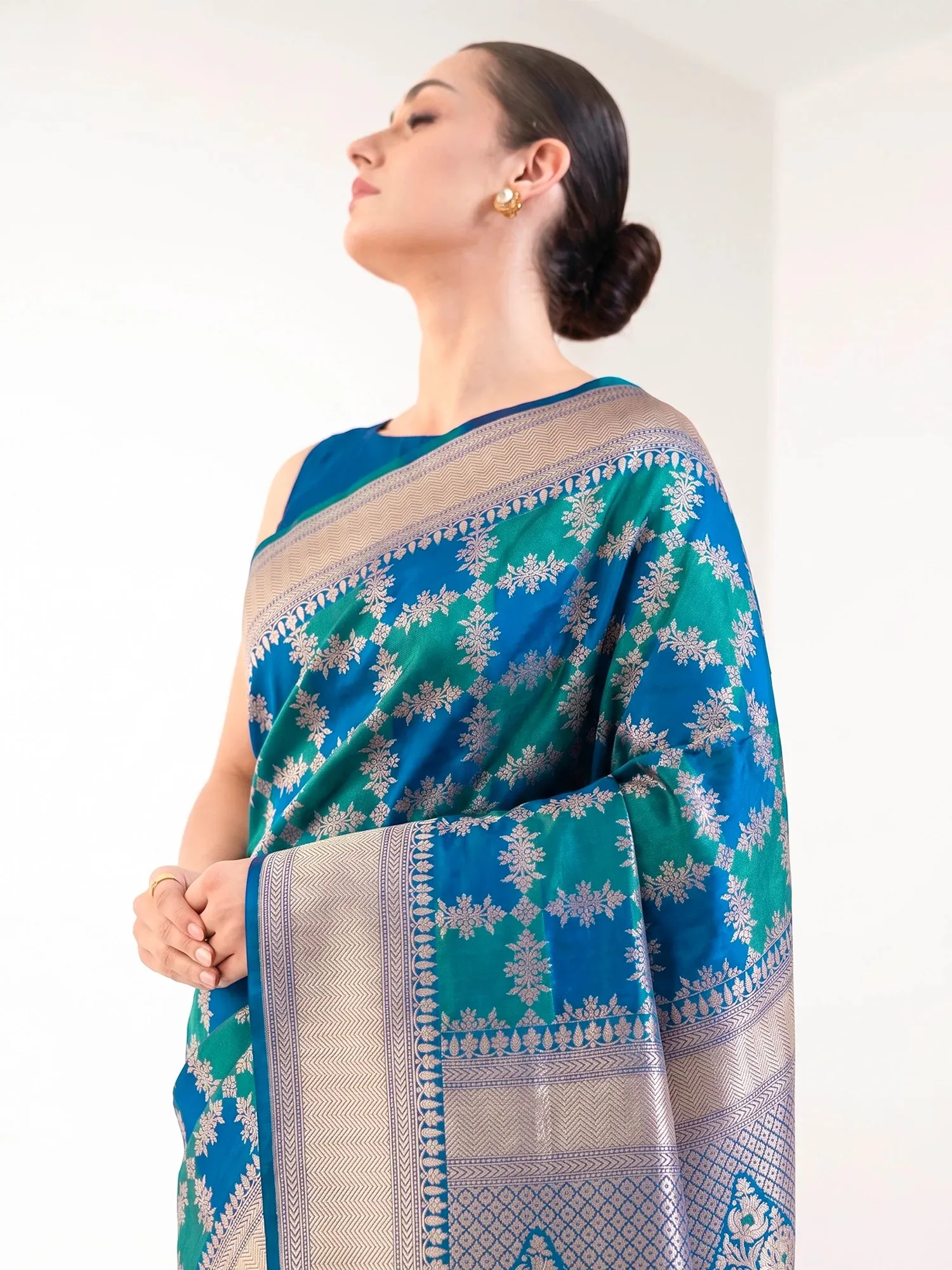
Traditional designs may feature paisleys, florals, leaves, geometric arrangements, or intricate brocade patterns. Some sarees have dense motifs across the body, while others use small butis and reserve elaborate detailing for the border.
When comparing designs, examine the overall balance of the patterns.
Ask yourself whether the motifs complement the base colour, whether the design looks harmonious, and whether the pallu and border work well with the body.
If you are shopping online, zoom in on the available product photographs. Look at the woven details and finishing rather than judging the saree only from a distant photograph.
You should also understand that handwoven sarees can have small variations associated with the weaving process. These should be considered in the context of the product's construction and description rather than automatically treated as defects.
Clear photographs and detailed product information make it easier to understand what you are buying.
6. Choose a Colour That Suits Your Bridal Style
Although colour is not the only consideration, it remains an important part of choosing a wedding saree.
The best colour is one that makes you feel confident and complements your preferred bridal styling.
Red: The timeless bridal favourite
Red remains a popular choice for traditional Indian weddings. It pairs beautifully with many gold-toned borders and classic bridal jewellery.
Maroon and wine: Rich and sophisticated
These shades offer depth and can create a dramatic bridal appearance. They may suit brides looking for an alternative to bright red.
Green: Traditional with a distinctive touch
Deep green Banarasi sarees can look striking with gold zari and traditional jewellery.
Pink: Elegant and versatile
From bright pink to softer rose tones, pink offers different possibilities for brides who want a softer or more contemporary appearance.
Gold: A statement-making choice
Gold-toned sarees can create a regal look, particularly when the blouse and jewellery are selected carefully.
When buying a Banarasi wedding saree online, remember that lighting and screen settings can affect how colours appear. Check multiple product photographs and ask the seller for clarification if the shade is particularly important to you.
Rather than choosing a colour simply because it is trending, consider your personal preferences, wedding décor, blouse design, and jewellery.
7. Consider Comfort, Weight, and Draping
A wedding saree needs to look beautiful, but it should also work for the practical demands of the occasion.
Wedding ceremonies can last several hours. You may be sitting through rituals, standing for photographs, greeting guests, and moving between venues. A saree that feels difficult to manage can affect your experience.
Before making a decision, consider the following:
Weight: A densely woven saree or one with extensive embellishments may feel heavier than a lighter design.
Drape: Different fabrics behave differently. Consider whether you prefer a fluid drape or a crisper silhouette.
Movement: Think about how easily you can walk, sit, and participate in wedding rituals while wearing the saree.
Blouse fit: A well-fitted blouse can improve both comfort and the overall appearance of the outfit.
Weather and venue: Consider the season, indoor or outdoor setting, and duration of the event when deciding which fabric is practical for you.
If possible, arrange a trial drape before the wedding. If you are ordering online, check the product details carefully and leave sufficient time for alterations.
The right Banarasi wedding saree should help you enjoy your celebration rather than make you constantly worry about adjusting your outfit.
8. Compare Price With Quality, Not Just Appearance
Banarasi sarees are available across different price ranges. Their prices can vary depending on fabric composition, weaving technique, design complexity, zari materials, craftsmanship, and finishing.
A higher price does not automatically guarantee that a saree is the best choice for you. Similarly, a lower price should not be the only reason to select one.
Instead, compare the details behind the price.
Check whether the fabric is clearly identified, whether the weaving method is explained, and whether the design and craftsmanship meet your expectations.
If two sarees look similar in photographs but have different prices, examine their product specifications before drawing conclusions.
Also consider your complete bridal budget. The total cost may include the blouse, tailoring, jewellery, footwear, draping assistance, and other accessories.
When exploring Sacred Weaves, compare individual sarees according to their available details and your preferences. A thoughtful comparison can help you understand which option offers the features that matter most to you.
The goal is not to buy the most expensive saree. It is to choose one that fits your budget and expectations.
9. What to Check When Buying Banarasi Wedding Sarees Online
Online shopping makes it easier to compare a variety of bridal designs without travelling between multiple stores. However, it also requires careful attention to product information.
Use this checklist before placing your order:
- Fabric details: Verify the composition and construction.
- Weaving information: Check whether the seller explains the weaving technique and origin.
- Zari and motifs: Examine the border, pallu, and body patterns.
- Product photographs: Review close-up images and different angles.
- Measurements: Confirm the saree length and blouse-piece details where applicable.
- Care instructions: Understand how the saree should be cleaned and stored.
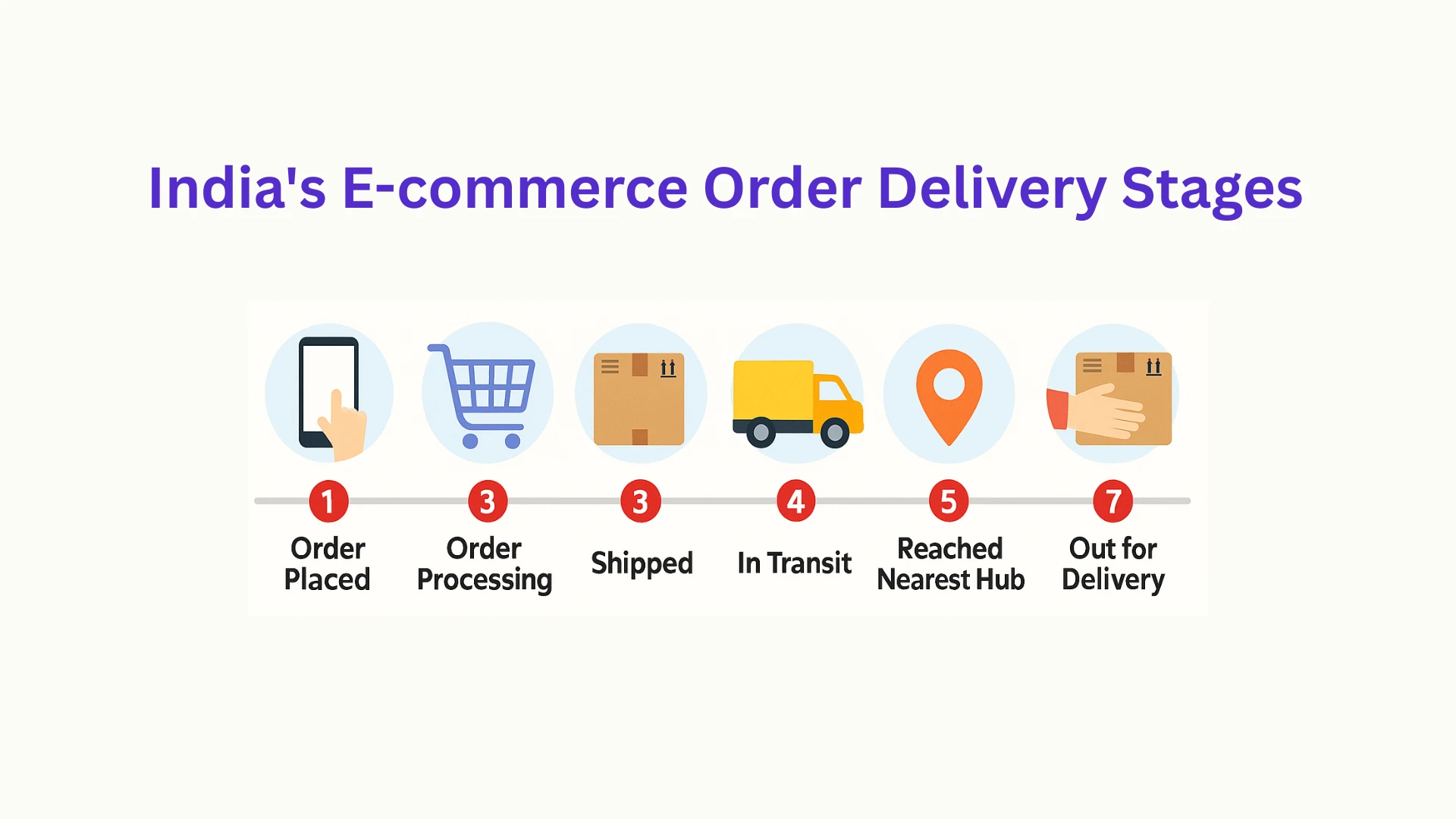
- Delivery timeline: Ensure that the saree can arrive with sufficient time before your wedding.
- Return policy: Read the applicable return, exchange, and cancellation conditions.
- Customer support: Ask questions if any important product information is unclear.
These steps are useful whether you are shopping from Varanasi, Delhi, Mumbai, Kolkata, Bengaluru, or another city in India.
If you are considering Sacred Weaves, explore the available collection and evaluate each saree using the same checklist. Confirm product-specific details before purchasing rather than assuming that all sarees within a collection share the same fabric or construction.
10. Why Explore Sacred Weaves for Your Wedding Saree?
Finding the right bridal saree often involves comparing multiple designs before deciding which one best reflects your preferences.
Sacred Weaves is one brand brides can explore while searching for traditional Banarasi sarees. Whether you prefer classic bridal colours, intricate motifs, or a more contemporary interpretation of traditional styling, focus on the specific designs that meet your requirements.
As you explore the collection, consider the fabric, zari work, border, pallu, and overall design. Review the available product descriptions and contact the seller if you need additional information about composition, craftsmanship, or care.
It is also worth considering how the saree will work with your blouse, jewellery, and wedding plans.
A brand's collection can provide inspiration, but the final decision should be based on the individual saree and the details that matter to you.
Taking this approach helps make bridal shopping more informed and less overwhelming.
Conclusion: Choose More Than a Beautiful Colour
Choosing your dream Banarasi wedding saree involves much more than selecting a shade of red, green, pink, or gold.
The fabric, weaving technique, zari work, motifs, border, pallu, comfort, authenticity, and price all contribute to the final decision. By checking these details carefully, you can make a choice that suits both your bridal vision and practical needs.
If you are exploring Banarasi wedding sarees, begin with the style you love, but do not stop at the photographs. Read the product information, ask questions, compare designs, and plan your purchase early.
Sacred Weaves is one option to consider while exploring bridal saree collections. Take the time to review individual product specifications and choose a design that meets your expectations.
Your wedding saree will be part of a meaningful celebration and may become a treasured keepsake for years to come. Choose one that reflects your personality, honours the traditions you value, and allows you to feel comfortable and confident on your special day.
Frequently Asked Questions
1. What should I check before buying a Banarasi wedding saree?
Check the fabric composition, weaving technique, zari work, motifs, border, pallu, comfort, price, and seller's policies. If authenticity is important, request clear information about the saree's origin and construction.
2. How can I identify an original Banarasi saree?
Review the seller's information about the place of manufacture, fabric, and weaving technique. Ask for clarification if the details are unclear. Colour, price, and elaborate motifs alone cannot establish authenticity.
3. Which fabric is best for a Banarasi bridal saree?
Pure silk and Katan silk can suit brides who prefer traditional silk styling, while Organza may appeal to those who want a lighter, crisper appearance. The best choice depends on the specific construction, design, comfort, and occasion.
4. Are Banarasi wedding sarees suitable for online shopping?
Yes. Online shopping allows brides to compare designs conveniently. Check photographs, product descriptions, measurements, delivery timelines, and return conditions before placing an order.
5. How early should I buy my wedding Banarasi saree?
Start shopping several weeks or months before the wedding, depending on availability and tailoring requirements. This provides time for delivery, inspection, blouse fitting, and any necessary adjustments.
6. Where can I explore Banarasi wedding sarees?
You can explore traditional saree retailers and online collections, including Sacred Weaves. Compare individual designs and verify product details to find a saree that matches your style, requirements, and budget.



















Sign in to leave a comment.