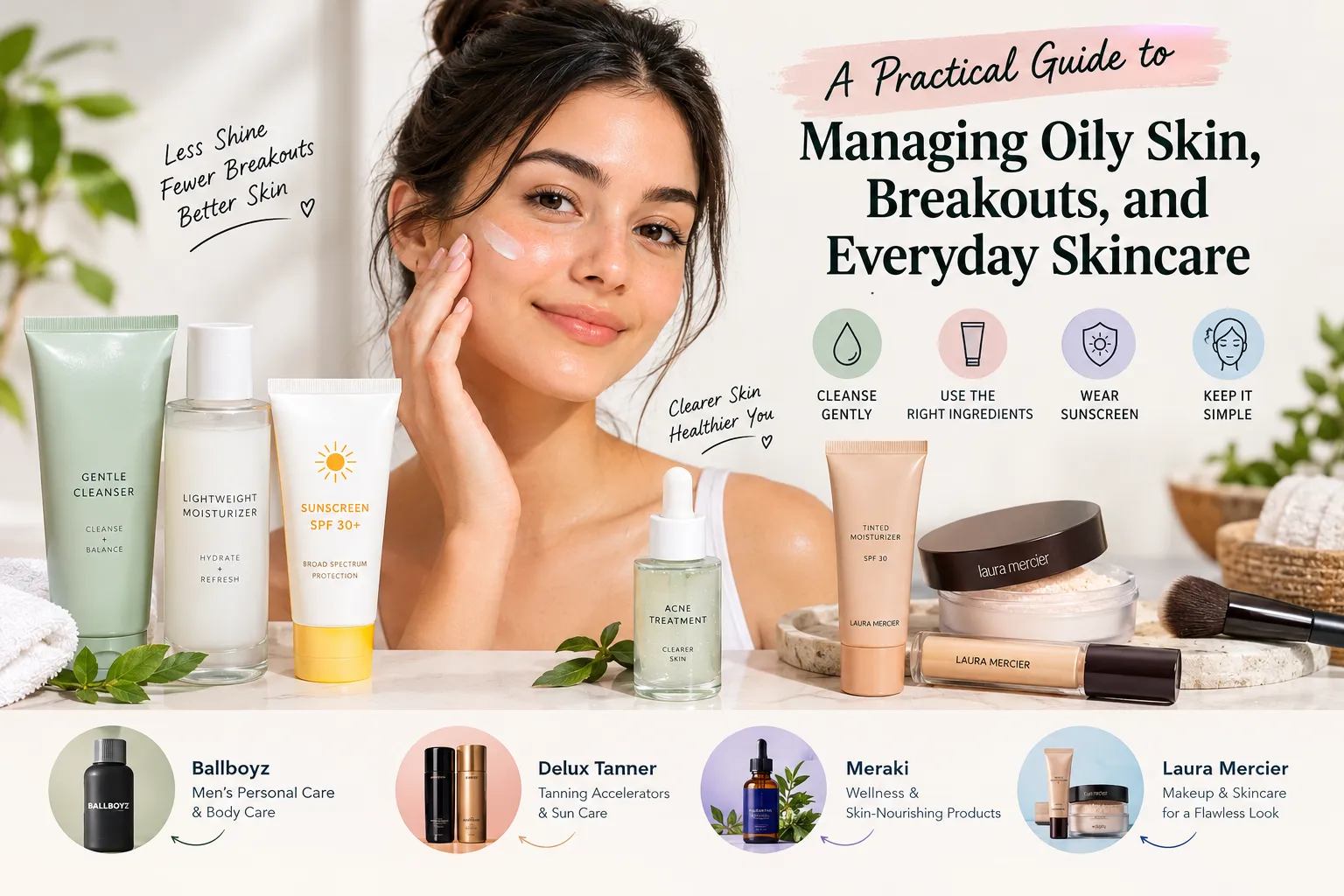

Learn how to manage oily skin and breakouts with a simple skincare routine, effective ingredients, daily sunscreen, and practical tips.
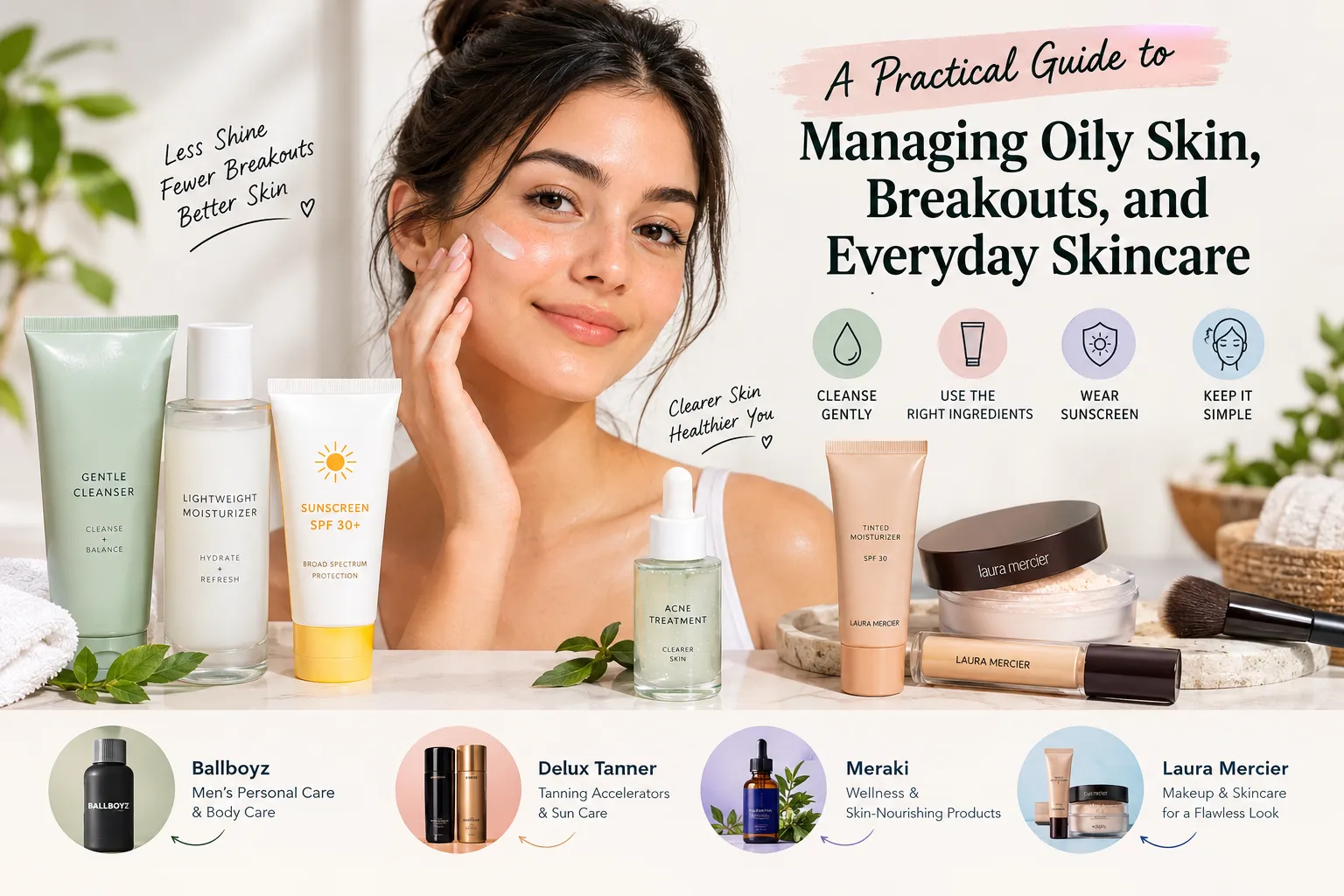
If your face looks shiny by lunchtime and a new pimple shows up just as the last one fades, the instinct is to wash harder, scrub more, and try whatever a video recommended last night. That usually makes things worse.
This guide explains why oily skin and breakouts happen, what a simple routine looks like, which ingredients do real work, and how to choose sunscreen, makeup, and body-care products without irritating your skin. It also tells you when a dermatologist is the better next step than another product.
Quick answer: Wash gently up to twice a day and after sweating, use a lightweight moisturizer, wear a broad-spectrum sunscreen every morning, and add one proven acne ingredient at a time. Don't scrub, pick, or pile on new products. Give each change several weeks, and see a board-certified dermatologist if breakouts persist or leave marks or scars.
Why oily skin and breakouts happen
Oily skin is mostly about sebum, the natural oil made by glands attached to your hair follicles. Sebum protects skin, but when glands are very active, the surface looks shiny and feels greasy.
Breakouts happen when that oil combines with dead skin cells and blocks a pore. A blocked pore can become a blackhead or whitehead. If bacteria that live on the skin multiply inside it and the area becomes inflamed, you get a red pimple or a deeper bump.
Common triggers include:
- Hormonal shifts, such as puberty, menstrual cycles, and stress
- Genetics: oily or acne-prone skin often runs in families
- Heat, humidity, and sweat
- Hair products and oily hair touching the forehead and cheeks
- Heavy or pore-clogging skincare and makeup
- Picking and over-scrubbing, which inflame skin further
The American Academy of Dermatology (AAD) notes that acne has many causes and that treatment looks different for everyone, which is why a one-size-fits-all product rarely works.
Oily, acne-prone or both?
The terms overlap, and it helps to know where you sit because the routine differs slightly.
| Oily skin | Acne-prone skin | Combination skin | |
| Main sign | Shine, visible pores | Recurring blackheads, whiteheads, red bumps | Oily T-zone, normal or dry cheeks |
| Typical problem | Makeup slides, skin feels greasy | Breakouts, marks | Different needs on different areas |
| Focus | Oil control without stripping | Unclogging pores, calming inflammation | Treat areas differently, keep it simple |
You can be oily without breaking out, or acne-prone without being very oily. Many people are both.
A simple everyday routine
Three products cover most needs: a gentle cleanser, a moisturizer, and sunscreen. A targeted acne treatment is the optional fourth.
Morning
- Cleanse gently with lukewarm water and a mild, non-scrubbing cleanser. If your skin feels tight, it's too harsh.
- Apply any treatment your dermatologist or product label directs for morning use.
- Moisturize with a lightweight, oil-free or gel-type formula.
- Apply broad-spectrum sunscreen (SPF 30 or higher is the standard dermatology recommendation). Choose a lightweight or "oil-free" version.
Evening
- Remove sunscreen and makeup first, then cleanse. A second cleanse is useful if you wore makeup or heavy sunscreen.
- Apply your acne treatment (more on choosing one below) as a thin layer over the whole acne-prone area, not just on spots. This treats existing pimples and helps prevent new ones.
- Moisturize. Oily skin still needs water-based hydration, and many acne treatments dry skin.
How often should you wash?
The AAD advises washing your face gently up to twice daily and after sweating. More than that, or aggressive scrubbing, can irritate skin and make acne look worse.
Ingredients that actually help
You do not need all of these. Start with one, use it consistently, and give it time. Dermatologists note that acne treatment takes weeks, and switching products every few days can irritate skin.
| Ingredient | What it does | Good to know |
| Benzoyl peroxide | Reduces acne-causing bacteria, helps unclog pores | Can dry skin and bleach fabric; start with lower strengths |
| Salicylic acid | Exfoliates inside pores, helps with blackheads and whiteheads | Can sting if overused; good for oilier areas |
| Adapalene (a retinoid) | Helps prevent clogged pores from forming | Introduce slowly, use sunscreen, avoid during pregnancy unless a doctor advises otherwise |
| Niacinamide | Some studies suggest it helps with oil and redness | Generally well tolerated; evidence is modest |
| Azelaic acid | Helps with breakouts and some dark marks | Strength and availability vary by country |
| Humectants (glycerin, hyaluronic acid) | Add water without grease | Work well in gel moisturizers |
If you don't see improvement after about 4 to 6 weeks, dermatologists suggest adding a different type of acne ingredient rather than swapping randomly. If that doesn't help, it's time for professional advice.
A note on "non-comedogenic": The label means a product is formulated to avoid clogging pores, but it isn't a guarantee, and responses differ person to person. Patch-test new products on a small area for several days.
Sunscreen and makeup on oily, breakout-prone skin
Sunscreen matters even when your skin is oily. Sun exposure can darken the marks pimples leave behind, and some acne treatments make skin more sun-sensitive. The practical challenge is finding formulas that don't feel greasy or slide off by afternoon.
Look for:
- Lightweight, "oil-free" or matte-finish formulas
- Broad-spectrum SPF 30+
- Fragrance you tolerate (or fragrance-free if your skin is reactive)
- Powder or cream products that blur shine without feeling heavy
If you wear makeup, a few categories are especially relevant to oily skin: a matte-finish tinted moisturizer, a talc-free translucent setting powder to reduce midday shine, and a full-coverage concealer for blemishes.
Laura Mercier is a cosmetics and skincare brand with several products built around these needs. According to the brand's own site, its Tinted Moisturizer Blurred Matte Oil Free Broad Spectrum SPF 30 is positioned for shine control and a more refined look to pores; its Translucent Loose Setting Powder Ultra-Blur is a talc-free loose powder; and the Secret Camouflage Complexion Perfector is a full-coverage concealer. The site also offers a foundation shade finder and an artist chat for help choosing.
Two honest caveats. First, check each product's ingredient list against what you know your skin tolerates, since brand claims aren't proof of suitability for acne. Second, makeup with SPF is rarely applied as thickly as sunscreen testing assumes, so many dermatologists suggest wearing a dedicated sunscreen underneath. You can browse the Laura Mercier range to compare formulas and shades.
For more tips on a simple, natural-looking beauty routine, explore our guide to everyday beauty essentials for a fresh, natural look, including lightweight makeup, concealer, setting powder, and everyday grooming.
Whatever you wear, remove it fully at night. Sleeping in makeup is one of the easiest ways to keep pores congested.
Breakouts beyond the face
Oily skin and breakouts often extend to the back, chest, and shoulders, where sweat, friction from clothing, and trapped moisture play a role. The AAD advice for the face carries over: wash after sweating rather than letting it sit, and avoid scrubbing hard.
Practical habits:
- Shower soon after workouts and change out of damp clothes
- Wear breathable fabrics and wash gym clothes between uses
- Rinse shampoo and conditioner out fully so residue doesn't sit on your back
- Avoid picking at body blemishes, which raises the chance of marks and scarring
If you're putting together a post-workout and everyday body-care routine, Ballboyz is a men's personal-care store you can explore for body-care options.
Rich oils and balms: when they help and when they don't
You'll see natural oils and balms promoted for almost every skin concern, so it's worth being clear about fit. As a general rule, heavy oils and thick balms are more suited to dry areas than to an oily T-zone or breakout-prone skin, where rich textures can feel occlusive.
Meraki Medicinal is a US-based wellness brand best known for a methylene blue supplement. Its catalog also includes a cold-pressed organic black seed oil and a tallow-based balm.
Its site describes these as general wellness and skin-nourishing products, not acne treatments, and it carries the standard disclaimer that products haven't been evaluated by the FDA and aren't intended to diagnose, treat, cure, or prevent disease. Its own FAQ also states that methylene blue is not FDA-approved.
In practical terms, that means:
- Don't treat these as acne solutions. This article doesn't recommend any supplement for breakouts.
- If you're curious about a balm or oil, consider using it on dry body areas such as hands, elbows, or heels rather than on an oily, breakout-prone face.
- Patch-test any new oil or balm, and talk to a clinician before taking supplements, especially if you take other medication.
If that fits what you're looking for, you can see what Meraki Medicinal offers and read its product pages and policies directly.
Tanning, dark marks and acne
Many people reach for a tan to hide blemishes, but the AAD states that tanning damages skin, raises skin cancer risk, and can worsen acne. UV exposure can also darken post-inflammatory hyperpigmentation, the flat brown or red marks pimples leave behind, so they last longer.
The safest approach is to protect your skin from the sun and from tanning beds. If you do choose to tan anyway, understand what you're buying. Delux Tanners sells tanning accelerators, which, according to the brand, are formulated without DHA or bronzer and are designed to be used alongside sun or sunbed exposure, with a separate sunscreen outdoors.
That means they don't replace sun protection and don't remove the risks of UV. They're not an acne product and aren't recommended for breakout-prone skin. If you want colour without UV, a sunless self-tan is a different category and not what Delux sells.
Common mistakes
- Over-washing and scrubbing. Irritated skin can produce more breakouts, not fewer.
- Skipping moisturizer. Dehydrated skin can feel tight and still look shiny.
- Changing products constantly. Give a routine several weeks before judging it.
- Layering too many actives. Add one new ingredient at a time.
- Popping pimples. It prolongs healing and raises the risk of scars and dark marks.
- Skipping sunscreen because skin is oily.
- Sleeping in makeup.
- Touching your face and resting your phone or hands on it.
When to see a dermatologist
Book an appointment with a board-certified dermatologist if:
- Breakouts are deep, painful, or cystic
- Over-the-counter products haven't helped after 6 to 8 weeks
- You're getting scars or lasting dark marks
- Acne is affecting your confidence or mood
- You're pregnant, trying to conceive, or taking other medication and want to start a new treatment
A dermatologist can offer prescription options and tailor a plan that over-the-counter products can't.
Quick checklist
- Gentle cleanser, up to twice daily and after sweating
- Lightweight moisturizer morning and night
- Broad-spectrum SPF 30+ every morning
- One acne ingredient at a time, given for 4 to 6 weeks
- Makeup labelled oil-free, removed fully every night
- No picking, no harsh scrubs
- Patch test anything new
- Professional help if there's no progress or scarring
Frequently asked questions
Why is my skin so oily even after washing?
Sebum is produced continuously by glands under the skin, so washing removes surface oil but doesn't stop production. Over-washing can irritate skin without reducing oil.
How often should you wash oily skin?
The AAD recommends washing gently up to twice a day and after sweating.
Should oily skin be moisturized?
Yes. Choose a lightweight, oil-free or gel formula. Skipping moisturizer, especially while using drying acne treatments, can leave skin irritated.
What helps breakouts on oily skin?
Common over-the-counter options include benzoyl peroxide, salicylic acid, and adapalene. Start one at a time and allow weeks for results.
Can oily-prone skin wear makeup?
Yes. Choose oil-free or non-comedogenic formulas, avoid heavy layering, and remove everything at night.
Does sweat cause acne?
Sweat itself isn't the sole cause, but leaving sweat and friction on skin can aggravate breakouts, which is why washing after sweating is advised.
How long until I know if a product works?
About 4 to 6 weeks for most acne treatments. If there's no improvement, adjust the plan or see a dermatologist rather than switching constantly.
Conclusion
Managing oily skin comes down to consistency and gentleness: a short routine, one active at a time, daily sunscreen, and patience. Products can help at the margins, whether that's a matte tinted moisturizer or a better post-workout habit, but they work best on top of a routine that already does the basics. If breakouts persist, a dermatologist can save you months of trial and error.
Read also: How to Build a Personalized Wellness Routine for Your Lifestyle and Goals
















Sign in to leave a comment.