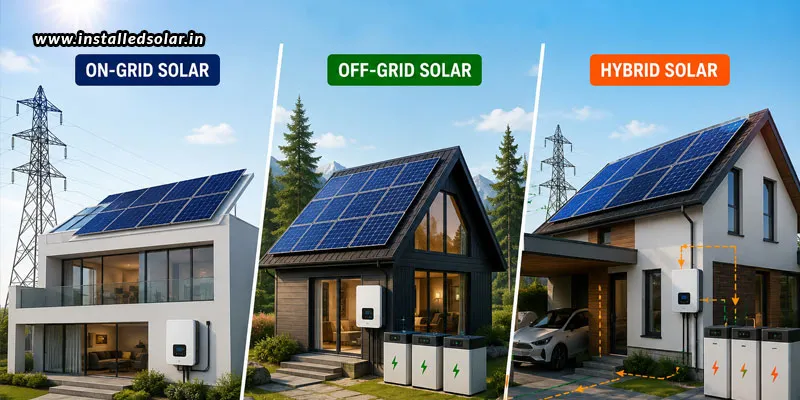

Choosing a rooftop solar system involves more than deciding how many solar panels to install. The right configuration depends on how much electricity your property consumes, when that electricity is used, how reliable the grid connection is, and whether you need battery backup. On-grid, off-grid, and hybrid solar systems are designed for different requirements. While an on-grid system can help reduce electricity purchased from the utility, an off-grid system is designed for independent operation, and a hybrid system combines solar generation, battery storage, and grid connectivity. Understanding these differences can help property owners select a system that fits their energy needs, budget, and long-term goals.
Why solar system configuration matters
A solar system should be designed around a property’s actual energy requirements rather than a standard capacity. Several factors influence the choice of configuration, including electricity consumption, available roof area, sunlight exposure, future energy needs, grid connectivity, and backup expectations. Understanding these requirements helps determine the most suitable approach for generating and managing solar power. The system should also be planned according to the property’s daily energy usage and how electricity is consumed throughout the day. Considering these aspects before installation can help ensure that the solar system is appropriately sized and configured. A well-planned solution can improve energy utilisation, support reliable performance, and provide greater value over its operational life. Careful assessment at the planning stage also helps align the solar investment with the property’s long-term energy requirements.
Understanding on-grid solar systems
An on-grid solar system operates while connected to the electricity grid. During the day, solar panels generate electricity that can be used directly by the property, reducing the amount of power purchased from the grid. When solar generation exceeds immediate consumption, surplus electricity may be exported to the grid through an approved net-metering or applicable grid-connection arrangement. At times when solar generation is insufficient, electricity can be drawn from the grid. This configuration is generally suitable for properties with dependable grid connectivity that primarily want to reduce electricity expenses without adding battery storage.
Understanding off-grid solar systems
An off-grid solar system is designed to operate independently of the electricity grid. Since there is no dependable grid supply to fall back on, energy storage is an essential part of the configuration. During daylight hours, solar panels generate electricity to operate the property’s loads. Any suitable surplus generation can be used to charge batteries. The stored energy can then supply the property when solar generation is unavailable, such as at night. This configuration can be useful for properties where grid connectivity is unavailable, limited, or unreliable. However, the system needs to be carefully sized because the solar panels and batteries must collectively meet the property’s energy requirements.
Understanding hybrid solar systems
A hybrid solar system combines solar generation, battery storage, and grid connectivity. This gives the property multiple sources of electricity and greater flexibility in managing energy. During the day, solar power can supply household or commercial loads. Excess energy can be directed towards battery charging, while applicable surplus may also be exported to the grid depending on the system design and regulations. When solar generation decreases, stored battery power can be used. If solar and stored energy are insufficient, the property can draw electricity from the grid. A suitably designed hybrid system can also provide backup during grid interruptions.
Which system is right for your property?
There is no single solar configuration that suits every property. Every property has different energy requirements, making it important to choose a solar system configuration that aligns with its specific needs.
- On-grid solar is a practical choice for homes and other properties with reliable grid connectivity that primarily want to reduce electricity bills, particularly when daytime consumption is high.
- Off-grid solar is better suited to remote properties or locations with limited or unreliable grid access, as it combines solar generation with battery storage for greater energy independence.
- Hybrid solar combines grid connectivity with battery storage, making it suitable for properties seeking both electricity savings and backup power during outages. Homes with significant evening consumption can also use stored solar energy after sunset.
The right choice ultimately depends on the property’s specific requirements and how the solar system is intended to be used.
Factors to consider before choosing a rooftop solar system
Choosing the right solar configuration requires evaluating your property’s energy consumption, usage patterns, roof conditions, battery needs, grid connectivity, and required system capacity.
- Electricity consumption and timing
Understanding electricity consumption and usage patterns is essential when selecting a solar configuration. Reviewing bills helps assess average and seasonal usage, while considering future needs supports proper system sizing. Daytime consumption enables direct solar use, whereas higher evening and nighttime usage may make battery storage more beneficial for the property.
- Roof and available space
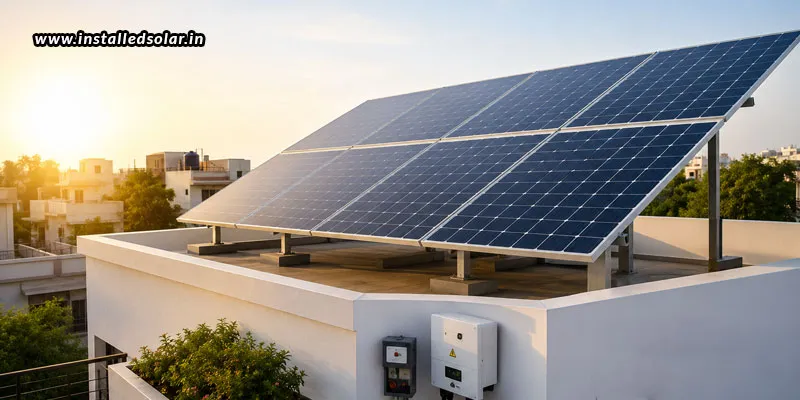
Available rooftop space is an important consideration when planning a solar installation. The usable area depends on roof dimensions, orientation, sunlight exposure, shading, and existing rooftop structures. Assessing these factors helps determine where panels can be positioned effectively and how much solar capacity the property can accommodate without compromising installation quality or energy generation.
- Battery requirements
Battery storage should be considered according to the property’s energy requirements and backup expectations. Homes seeking only electricity bill reduction may not require battery storage, while those wanting stored solar power or backup during outages may benefit from it. Selecting appropriate battery capacity helps balance energy requirements, system performance, investment, and overall practicality.
- Grid reliability and regulations
Grid reliability can influence the choice of solar configuration, particularly when backup power is important. Properties experiencing frequent outages may consider battery-backed solutions. Grid-connected installations must also comply with applicable regulations, approvals, and metering requirements. Understanding these considerations beforehand helps ensure smoother installation, grid connection, commissioning, and ongoing operation of the solar system.
- Capacity and size
The solar system should be appropriately sized according to the property’s electricity consumption, available installation space, sunlight conditions, and energy objectives. An undersized system may not meet expected requirements, while unnecessary capacity can increase the initial investment. A technical assessment can help determine a suitable system capacity that balances performance, practicality, and long-term value.
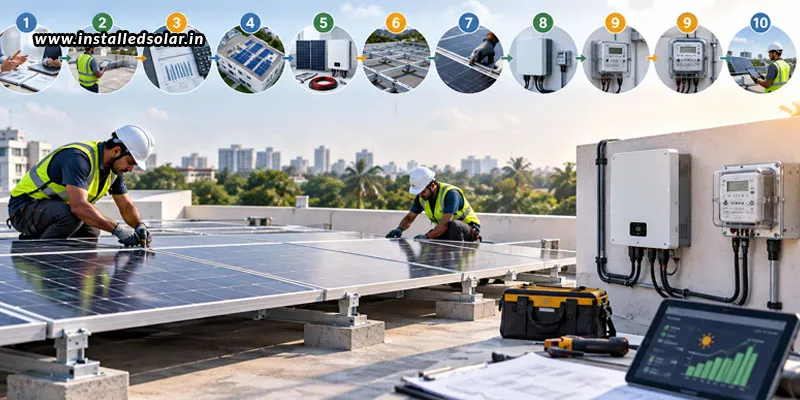
Choosing the right solar system is an important step towards making renewable energy a practical part of everyday life. As solar technology becomes increasingly accessible, property owners have more opportunities to adopt cleaner and smarter ways of meeting their energy needs. The ideal solution should complement the property’s requirements while offering dependable performance and lasting value. With thoughtful planning and professional installation, rooftop solar can become a worthwhile investment rather than simply an alternative source of electricity. For homeowners considering rooftop solar in Banashankari, iNSTALLED can help identify a suitable solution based on their property’s requirements. A well-planned solar installation can support efficient and sustainable energy use for years to come.
Resource: On-Grid, Off-Grid, Or Hybrid Solar System – Which One Is Right For Your Property?




























Sign in to leave a comment.