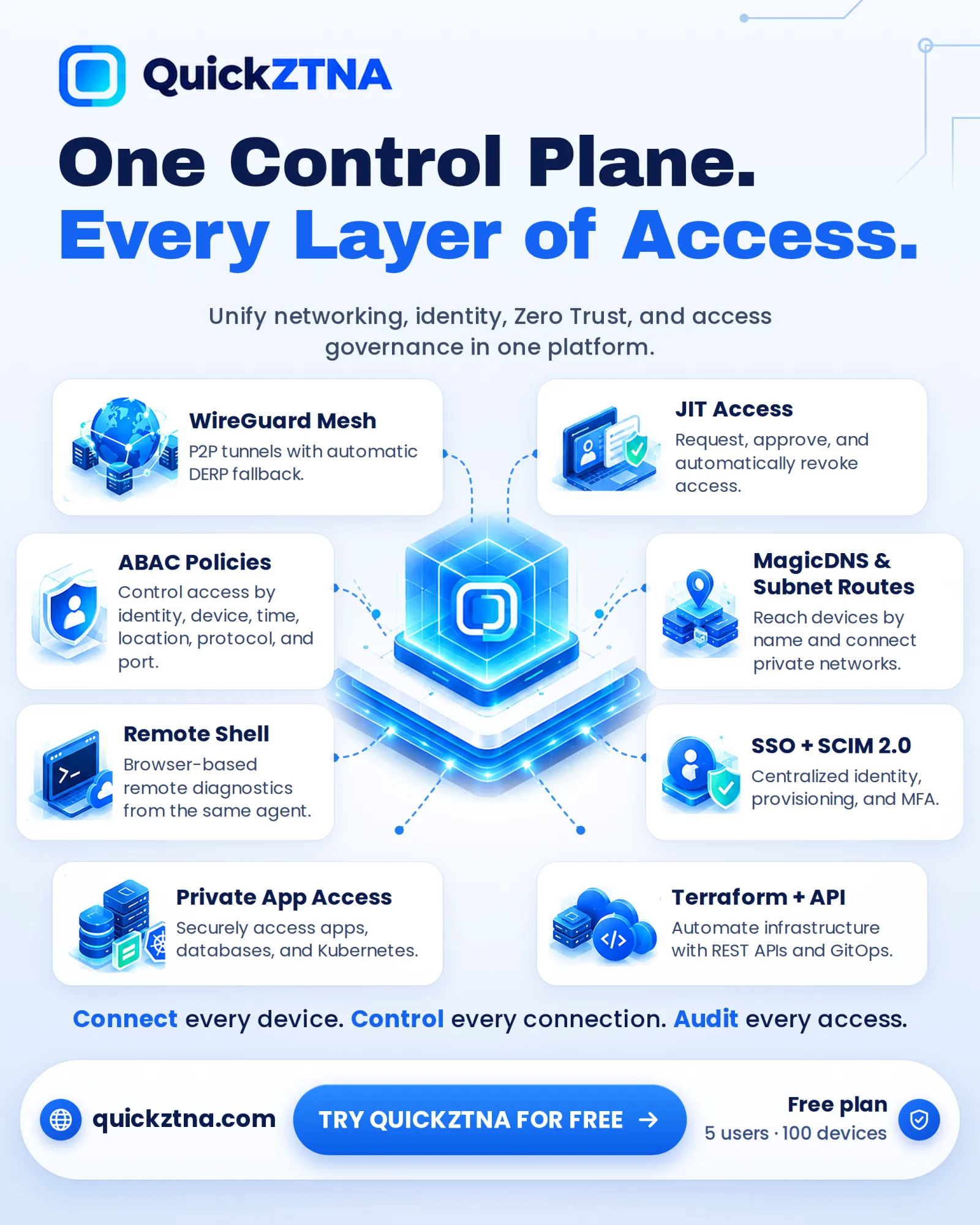

Zero Trust Security gives modern teams a practical way to protect applications, users, devices, and network resources without relying on traditional perimeter-based access. As organizations support remote employees, cloud workloads, contractors, and distributed offices, security policies need to follow people and resources wherever they operate. This identity-based access strategy highlights why centralized policy management matters.
Why One Control Plane Matters
Security environments often depend on separate systems for identity, connectivity, endpoint controls, application access, and monitoring. Managing policies across disconnected platforms can increase administrative work and create gaps between security layers.
A single control plane brings those layers into a consistent operating model. Instead of handling every connection as a separate exception, teams can define access policies centrally and apply them according to identity, role, device context, resource sensitivity, and network conditions.
Identity-Based Access Without Broad Network Trust
Traditional remote access can give users more network visibility than needed. Zero Trust changes that model by focusing on specific permissions instead of assuming that a user should trust everything after connecting.
With identity-aware policies, teams can decide which applications, private services, or internal resources a user can access. Employees may receive permissions based on their roles, while contractors or external partners can be limited to resources relevant to their work.
Device Context Adds Another Layer
An authenticated account is only one part of the security decision. Devices also provide valuable context. Security teams may need to consider whether an endpoint is managed, what operating system it uses, or whether it meets posture requirements.
Combining user identity with device context creates a detailed access policy. Rather than treating every valid login as equally trusted, organizations can apply controls that reflect the conditions surrounding each connection.
Connecting Network Protection With Access
Network security should not exist separately from identity and access policy. Encrypted connectivity, DNS controls, traffic rules, segmentation, logging, and monitoring can support a Zero Trust framework.
A unified approach helps teams maintain policies while improving visibility across users, devices, applications, and private infrastructure. For organizations reviewing this architecture, centralized network access controls can provide a foundation for managing secure connectivity and granular permissions.
Simplifying Security Operations
The value of one control plane goes beyond having fewer dashboards. Centralization can make it easier to understand where policies are applied, update permissions, investigate access activity, and maintain controls as teams grow.
It can also reduce friction when security teams coordinate changes across disconnected tools. A consistent policy layer gives IT and security teams a framework for managing access across changing environments.
Bringing identity, devices, access policies, and network protection together can create a manageable Zero Trust architecture.
Build a More Consistent Access Strategy
Zero Trust security is strongest when access decisions are contextual, policies are centralized, and every connection is evaluated according to requirements. A unified control plane can help organizations simplify administration while maintaining access across modern environments.
Ready to strengthen access without expanding unnecessary network trust? Explore modern secure access and Zero Trust controls and create a security strategy built for teams.
#ZeroTrust #CyberSecurity #ZTNA #NetworkSecurity #IdentitySecurity #SecureAccess #CloudSecurity






















Sign in to leave a comment.