


GCSEs are the first exams that genuinely shape what comes next. Sixth form places, college courses and apprenticeship offers all rest on a handful of results in August. Most students know this. Very few know how to revise in a way that actually moves a grade.
The good news is that the best preparation no longer requires a commute, a tutoring centre, or an hour lost on the Tube after a full school day. With online GCSE tutoring delivered through the AMALearning app, a student can learn from a specialist teacher, sit timed mocks and get marked feedback without leaving the kitchen table.
Below are five smart ways to prepare for GCSE exams from home, what each one fixes, and how families near Great Portland Street in London are putting them to work.
Way 1: Replace Rereading With Active Recall
Most students revise by rereading notes and highlighting textbooks. It feels productive. It rarely raises a grade, because recognising information is not the same as retrieving it under timed conditions.
Active recall means closing the book and answering questions from memory. It is uncomfortable, which is exactly why it works.
How Smart Quizzes make recall a daily habit
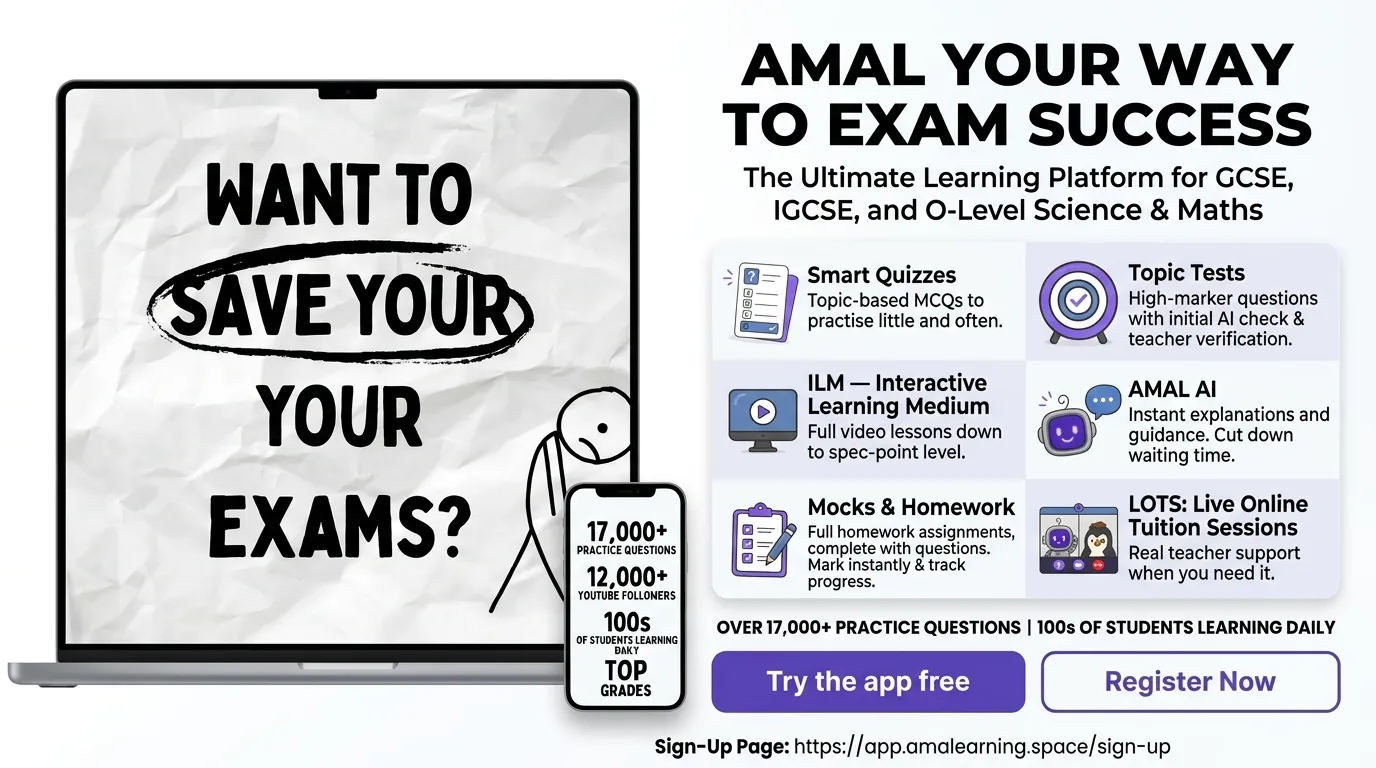
Smart Quizzes are short, low stakes question sets that adapt to what a student keeps getting wrong. Instead of guessing which topics are weak, the app tracks it.
- Quick sessions of ten to fifteen minutes that fit around school
- Questions that return at spaced intervals so knowledge sticks
- Instant feedback on the exact step where the answer broke down
How Topic Tests confirm real mastery
Topic Tests go deeper. They check whether a full unit has been understood before the class moves on, which stops the familiar Year 11 problem of covering everything and remembering very little.
Way 2: Study With a Subject Specialist Through Online GCSE Tutoring
A student can be perfectly capable and still lose fifteen marks a paper to technique. Command words, timing per mark, and answering the question that was asked rather than the one they revised for are all learned skills.
That is where a teacher matters more than a resource. Every tutor on the platform has 15 years or more of classroom experience, so they know the difference between a Grade 5 answer and a Grade 7 answer on the same question, and they know which topics in the AQA, Edexcel specifications carry the most marks.
What a typical online GCSE tutoring session looks like
Live Online Tuition Sessions, known as LOTS, are timetabled lessons with a specialist teacher. Students cover specification content, work through past paper questions in real time, and ask the questions they were too self conscious to ask in a class of thirty.
Because everything runs through the app rather than a physical classroom, a student is matched with the strongest available teacher for triple science or English literature, not simply the nearest one.
Way 3: Practise Under Real Exam Conditions
Exam day rarely goes wrong because of missing knowledge. It goes wrong because of timing, panic and unfamiliarity.
The fix is repetition. A student who has already sat four full papers under timed conditions walks into the hall with nothing new to be frightened of.
Using Mocks to remove exam day shock
Full Mocks replicate real timing, layout and marking. Results come back with a breakdown of where marks were dropped, which turns a score into a plan.
Using Homework to close the gaps
Homework is set after every session and marked with specific next steps rather than a tick. This is the quiet part of good GCSE exam preparation, because the work done between lessons is what decides whether a lesson was worth attending.
Way 4: Make Revision Interactive Instead of Passive
Watching a video and hoping it sticks is one of the least effective things a student can do with an evening.
Learning through the ILM
The Interactive Learning Medium turns explanation into practice. Students work through guided activities, annotated diagrams and step by step model answers, which means they are producing something rather than absorbing something.
Building a personal revision library with the Wall of Knowledge
The Wall of Knowledge collects the strongest explanations, model answers and revision notes into one shared library. A student can return to it in April for a topic first taught in October, which is exactly when most revision plans fall apart.
Way 5: Get Answers the Moment You Are Stuck
Momentum is fragile. A past paper question that refuses to make sense at ten at night can end a whole revision session.
AMAL AI is built for that moment. It answers subject questions instantly, explains the method rather than just the result, and keeps a student working instead of closing the laptop in frustration.
Why instant support protects confidence
Students who get unstuck quickly build the belief that hard questions are solvable. Students who stay stuck slowly learn to avoid the subject altogether. Over two years, that difference is worth more than any single revision technique.
Studying From Home Near Great Portland Street, London
Great Portland Street sits in one of the most academically competitive parts of the capital. Families in Fitzrovia, Marylebone and around Regent's Park are often aiming for selective sixth forms where entry requirements start at Grade 7.
Local tuition demand is high and so are local prices. Studying through the app gives households in the W1 postcode the same specialist teaching without the travel, the waiting room, or the premium attached to Central London floor space.
It also means a student who changes schools, travels, or carries a packed timetable keeps the same teacher and the same progress record throughout.
Frequently Asked Questions
What is the best way to prepare for GCSEs at home?
Effective GCSE exam preparation at home combines four things. Live teaching from a subject specialist, active recall through short quizzes, timed past papers, and marked feedback. Reading notes alone is the weakest option and the most common one.
Does studying from home actually work for GCSE students?
Yes, when it is structured. Progress comes from a fixed timetable, assigned homework and measured results. Unstructured home study without accountability is where most students drift.
When should GCSE exam preparation begin?
The strongest results usually come from students who start a structured routine at the beginning of Year 10. Starting after the winter mocks in Year 11 still helps, but the plan then has to prioritise the highest mark topics rather than cover everything.
How many hours a week should a GCSE student revise?
Around one to two hours per subject each week in Year 11, spread across several short sessions rather than one long block. Frequency beats duration, because spacing is what builds long term memory.
Which exam boards are supported?
Teaching follows the major boards including AQA, Edexcel. Quizzes, tests and mocks are matched to the specification a student is actually entered for, so no revision time is wasted on content that will not appear.
Final Thoughts
Preparing for GCSEs from home is not about working longer hours. It is about working in the right order, with feedback, and with someone experienced watching for the gaps.
Those five ways work together. Active recall through Smart Quizzes and Topic Tests. Expert teaching through online GCSE tutoring in Live Online Tuition Sessions. Real exam practice through Mocks and marked Homework. Interactive study through the ILM and the Wall of Knowledge. Instant help from AMAL AI when the house is asleep and the question still will not budge.
If your child is entering Year 10 or Year 11, now is the point where a calm, structured plan is still possible.
Download the AMALearning app or get in touch to book a first Live Online Tuition Session and see how much difference an experienced teacher makes.


























Sign in to leave a comment.