

North Carolina runs from the mountains around Asheville to the Piedmont cities of Charlotte, Raleigh, and Greensboro, out to the coast near Wilmington and the Outer Banks. For people in smaller towns and rural counties, a therapist trained in a specific approach like EMDR or Internal Family Systems (IFS) may simply not exist within driving distance. An online therapist North Carolina residents can see by secure video removes that limit, and for people in busier metro areas, it removes the commute and waiting room instead.
This guide covers what to look for in a virtual therapist in North Carolina, how online sessions work, and what kinds of concerns they're well suited to.
Why North Carolinians Are Choosing Online Therapy
- Access to specialized training. Therapists trained in EMDR or IFS are concentrated in a handful of metro areas. Online sessions let you choose based on training and fit rather than what's nearby.
- Geography. Whether you're dealing with mountain roads, a long drive from a rural county, or Charlotte or Raleigh traffic, travel time is one of the most common reasons people delay or quit therapy. Virtual sessions remove it.
- Privacy. In smaller towns and close knit church communities, some people prefer not to be seen walking into a counseling office. Sessions from home keep that private.
- Consistency. Deeper work, including trauma processing, benefits from steady, regular sessions. Without a commute, that consistency is much easier to maintain.
What to Check Before Choosing an Online Therapist in North Carolina
Licensure in North Carolina. Telehealth generally follows the client's physical location, so your therapist should be licensed in North Carolina. Professional counselors in the state are licensed through the North Carolina Board of Licensed Clinical Mental Health Counselors, which offers a public license lookup to confirm an active license.
Relevant training. A license is the legal baseline. If you're working through trauma, anxiety, or long standing patterns, ask specifically about training in evidence based methods like EMDR or IFS.
Approach to faith. If faith matters to you, ask how it's handled. It should be integrated when you want it and left out when you don't, never assumed either way.
Payment structure. Ask whether the practice is insurance based or self pay. Self pay practices typically offer more privacy and flexibility, while insurance based care may reduce out of pocket costs for some clients.
Secure technology. Sessions should run on HIPAA compliant video, not a general consumer video app.
What an Online Therapist in North Carolina Can Help With
Virtual therapy is well suited to most adults working through:
- Anxiety and chronic worry
- Trauma and painful past experiences, including through EMDR
- Codependency and people pleasing
- A harsh inner critic or persistent shame, often addressed through IFS informed work
- Religious trauma or spiritual abuse
- Relationship patterns rooted in earlier family or faith community experiences
Online sessions may not fit someone in an acute crisis who needs a higher level of in person support than outpatient therapy provides. A good therapist will be upfront about that in your first conversation.
What to Expect From Your First Sessions
- A free consultation. A short video call to talk through what's bringing you in and whether the fit feels right.
- Intake and goal setting. Your therapist learns your history and what you want to change.
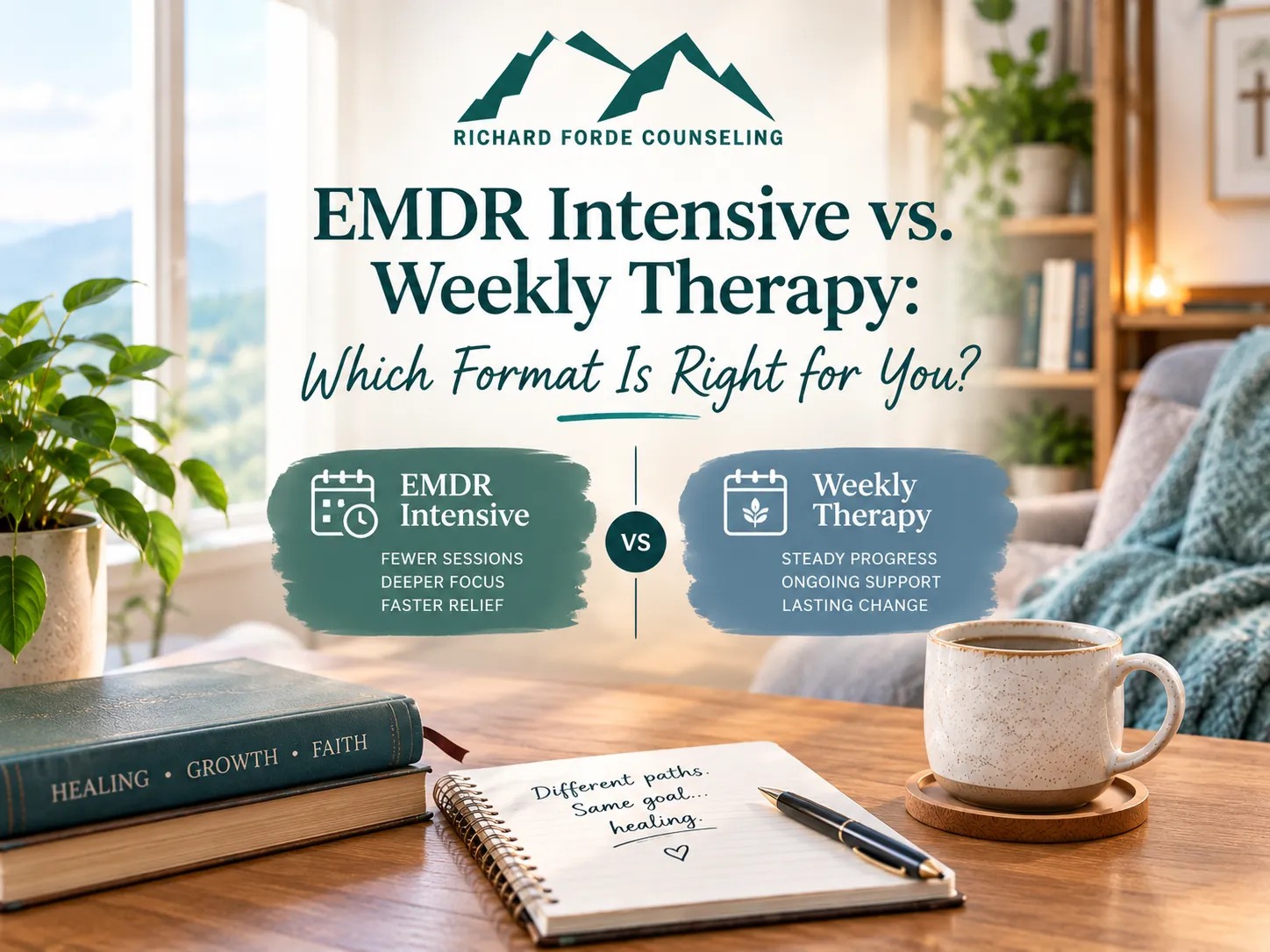
- Ongoing sessions. Weekly work, or for some clients a condensed EMDR intensive, depending on your goals.
- Regular check ins on whether the pace and approach are working for you.
Working With Richard Forde Counseling as Your Online Therapist in North Carolina
I'm Richard Forde, a Licensed Professional Counselor with over 25 years of clinical experience, trained in EMDR and informed by Internal Family Systems (IFS). I work virtually with adults across North Carolina, as well as Florida, Georgia, and Virginia, on anxiety, trauma, and codependency.
Faith integration is available for clients who want it woven into sessions, and set aside for those who don't. Sessions are self pay, which keeps your care private and puts the pace of the work in your hands. Every new client starts with a free 15 minute consultation, and you're welcome to ask about licensure, training, or approach during that call.
If you're looking for an online therapist in North Carolina, schedule a free consultation and we can talk through what you're hoping to work on.






















Sign in to leave a comment.