
The Worldwide PA12T Market: Strategic Trends and Commercial Opportunities Through 2032
Market Landscape and Core Challenges
The global market for polyamide 12T and related high-temperature nylon grades has entered a sustained expansion phase, with revenue surpassing half a billion USD in 2025 and projected to approach the 825 million USD threshold by 2032. The trajectory reflects a compound annual growth rate of approximately 7.05 percent across the forecast horizon, signaling durable demand rather than a cyclical spike. Growth is rooted in the material's unique balance of thermal stability, chemical resistance, and mechanical performance, which positions it as a preferred engineering polymer in applications where conventional plastics reach their operational limits. As downstream industries modernize and electrify, the substitution of metal components and lower-performance polymers continues to widen the addressable market.
Despite the favorable top-line momentum, several structural challenges are reshaping how value is created and captured across the value chain. First, supply-side dynamics are tightening. High-temperature nylons such as PA12T and PA10T, alongside standard PA12 grades, continue to experience price strength amid fluctuating upstream monomer dynamics. The dependence on specific diamines and diacid building blocks introduces volatility that ripples through processing costs and margin planning. Terephthalic acid, a primary diacid building block for semi-aromatic polyamides, is heavily supplied by China as the largest global producer, concentrating a critical input in a region subject to shifting trade and logistics conditions. Second, processing constraints are becoming a strategic bottleneck. High-performance polyamides are typically processed at melt temperatures ranging from 290 to 340 degrees Celsius, which demands robust equipment, precise thermal control, and specialized compounding know-how. Manufacturers that lack adequate setup face higher scrap rates, energy intensity, and quality consistency issues, limiting the pace at which new applications can be qualified. Third, customer qualification cycles are lengthening even as demand accelerates. In automotive and electrical/electronics sectors, end-users require extensive validation for thermal cycling, chemical exposure, and long-term reliability. This tension between rapid substitution appetite and cautious approval processes creates uneven near-term uptake and rewards players who can accelerate testing and co-development with OEMs.
Key Drivers Shaping the Market
Technological Innovation and Material Breakthroughs
Material science advancements are expanding the performance envelope of PA12T and related polyamides, enabling designers to push operating temperatures higher while retaining stiffness and dimensional stability. The chemistry relies on polycondensation of dodecanediamine and terephthalic acid or dimethyl terephthalate, a route that allows precise tuning of molecular architecture and thermal properties. Incremental improvements in catalyst systems, molecular weight control, and stabilization packages are reducing variability in melt flow and enhancing long-term heat aging behavior. These refinements matter because they lower the risk premium for equipment manufacturers considering high-temperature nylon as a metal replacement in under-the-hood components, connectors, and high-load structural parts. At the same time, compounding innovations—glass and mineral reinforcement, flame retardancy, and nucleating agents—are widening the processing window and making the resin more compatible with high-speed injection molding and extrusion lines. The practical consequence is a broader set of grades that can be matched to specific end-use requirements, reducing the need for custom development from scratch and shortening time-to-production for new programs.
Nasal Spray Vaccine Market
Policy and Regulatory Environment
Regulatory trajectories are reinforcing the case for high-performance polymers in multiple sectors. In automotive and industrial equipment, tightening emissions and efficiency standards favor lightweighting and durable components that can withstand higher thermal loads without frequent replacement. In electronics and electrical systems, standards for flame resistance, halogen-free formulations, and dielectric performance are steering specification teams toward polyamides that meet demanding socket and connector requirements while maintaining manufacturability. The regulatory backdrop is not simply a compliance hurdle; it is becoming a selection criterion that tilts the playing field toward materials with proven thermal and chemical resilience. Because PA12T and related semi-aromatic grades can operate at elevated temperatures and resist degradation from oils, fuels, and cleaning agents, they are increasingly specified where failure penalties are high. At the same time, environmental disclosure expectations are pushing producers and converters to document energy intensity and recyclability pathways, which is beginning to shape product design and plant-level operating practices.
Demand-Side Shifts
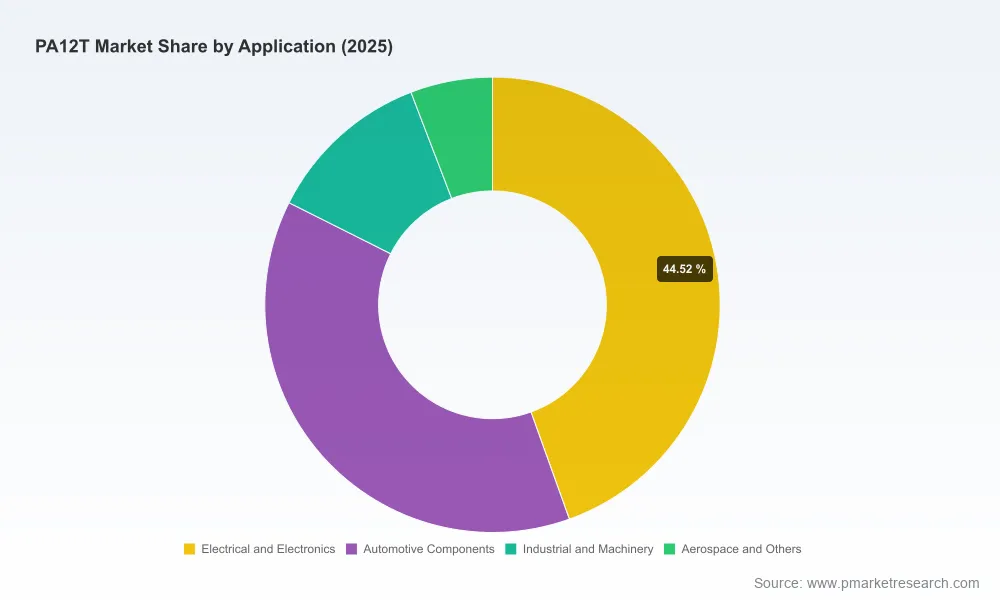
Downstream behavior is shifting from cost-first substitution to performance-first selection. In electrical and electronics, the proliferation of higher-power architectures, denser interconnect boards, and components exposed to heat fluxes is driving qualification of materials that sustain mechanical integrity over longer service intervals. In automotive, the combination of tighter packaging, higher under-hood temperatures, and the need for durable lightweight parts is expanding the use of engineering-grade polyamides in connectors, sensor housings, and structural elements. Industrial and machinery applications are pursuing longer service life and reduced maintenance windows, which improves the economics of higher-grade resins even when unit prices are higher. Across these segments, the decision calculus is evolving: total cost of ownership, field reliability, and assembly compatibility now weigh as heavily as raw per-kilogram price. This shift favors suppliers that can provide not just resin but also processing guidance, testing data, and application support that de-risk the transition for OEMs and tier suppliers.
Supply Chain and Cost Structure Dynamics
Cost structures are being reshaped by monomer availability, regional production footprints, and the degree of backward integration. Producers that control key intermediates or maintain proximity to feedstock sources can buffer margin pressure more effectively during periods of input volatility. Long-chain polyamide chemistry depends on specific diamines and diacid derivatives, and any disruption in those supply lines transmits quickly into pricing and availability. Regional concentration of certain building blocks, combined with logistics complexity and freight variability, means that resilient sourcing strategies are increasingly important. At the same time, energy costs and thermal processing requirements influence the economics of converting high-temperature nylon into finished parts. Facilities with modernized drying, melt filtration, and temperature control systems can run at higher line speeds with better consistency, turning a potential cost disadvantage into a throughput advantage. The broader implication is that value capture is shifting toward firms that align feedstock security, processing capability, and application engineering rather than competing on price alone.
Competitive Landscape and Leading Strategies
The competitive field is concentrated, with the top three players accounting for more than two-thirds of revenue and the top five exceeding four-fifths of the market. This concentration reflects the technical barriers to entry, the importance of trusted qualification with OEMs, and the capital intensity of high-temperature polymer platforms. Yet the landscape is not static. Established producers are reinforcing their positions through integration, grade diversification, and application-specific support, while regional players are expanding their footprint in high-growth segments where proximity to end-users and responsive service can offset global scale advantages.
Wanhua Chemical remains an active producer of PA12 and high-temperature nylons, including PA12T and PA10T series, with strong positioning in the engineering-grade segment. The company's recent pricing actions, including a 5–10 percent increase across the PA12 series with continued price strength in high-temperature nylons, illustrate how premium segments can sustain margin resilience when demand quality is high and substitution economics are compelling. EMS-Chemie Holding AG, through its EMS-GRIVORY business, competes as a leading high-performance polyamide producer with expertise in long-chain aliphatic chemistries suitable for demanding applications and backward integration in lactam production. That integration supports consistency and supply control, which are critical when customers require repeatable performance in extrusion, injection molding, and blow-molding operations. Evonik Industries maintains a significant position in polyamide 12 with laurolactam backward integration and a focus on technical applications, while Arkema offers Rilsamid PA12 resins with broad processing capabilities that span extrusion, injection, and blow-molding for industrial and technical polymer markets.
Beyond the traditional PA12 leaders, high-temperature polyamide capabilities are expanding through advanced engineering plastics players. Kingfa Science & Technology supplies reinforced high-temperature grades including PPA variants for automotive, electronics, and engineering plastics, leveraging its scale and regional presence to serve fast-growing downstream demand. DuPont has historical and ongoing relevance in high-temperature polyamides and PPA technologies, with Zytel HTN and related performance materials addressing applications that require thermal and mechanical endurance. Solway contributes Amodel polyphthalamides for electronics, automotive, and industrial uses, while BASF's Ultramid Advanced T series reinforces the availability of high-temperature engineering plastics across global channels. The presence of multiple credible platforms is healthy for customers because it broadens grade selection and reduces single-source dependency, but it also intensifies competition on technical service, processing support, and application development.
PW Consulting
Strategic differentiation is increasingly anchored in three areas. First, integration and feedstock security matter: producers that control intermediates or maintain reliable relationships with key building block suppliers can offer more predictable lead times and pricing in volatile conditions. Second, application engineering and qualification support are becoming decisive: companies that co-develop grades with OEMs, provide processing windows, and supply test data shorten adoption cycles and build switching costs. Third, regional responsiveness is reshaping share dynamics: fast-growing markets reward local technical presence, shorter logistics, and flexible service levels, which can erode the advantage of pure global scale when customers value speed and co-location. The market is therefore evolving along two tracks: consolidation among leaders who are deepening integration and technical capabilities, and selective entry or expansion by regional and application-focused players who compete on service, speed, and segment specialization. Over time, expect further rationalization in mature segments and continued segmentation in high-temperature grades where qualification, processing know-how, and supply reliability create durable moats.
Forward Trends and Strategic Opportunities
Looking ahead three to five years, three trends are likely to shape how the market grows and where value concentrates. The first is accelerated substitution driven by thermal demand. As electronics handle higher power and as vehicles and machinery operate in more demanding thermal envelopes, the specification of PA12T and related high-temperature polyamides should broaden from established niches into higher-volume components. The commercial opportunity lies in standardizing qualified grades and processing recipes that can be deployed across multiple programs, reducing per-application engineering cost and enabling faster scaling once a design is approved. Manufacturers that invest early in validated material-process combinations will be positioned to capture recurring demand as successor programs launch.
The second trend is supply chain realignment around feedstock resilience and regional flexibility. Concentration of key building blocks in a few geographies and exposure to logistics variability will encourage buyers and producers to diversify sourcing, increase inventory buffers for critical intermediates, and favor suppliers with backward integration or demonstrated supply continuity. For processors and end-users, this creates opportunities to secure multi-source agreements, qualify alternative grades that meet the same performance envelope, and align production footprints closer to demand centers to reduce lead times and freight exposure. The risk is that regional fragmentation could raise complexity and duplicate qualification efforts if not managed with harmonized specifications and mutual acceptance of test data.
The third trend is rising technical service intensity as a competitive differentiator. Because high-temperature polyamides require elevated processing temperatures and precise handling, companies that provide drying protocols, melt filtration guidance, mold temperature recommendations, and failure analysis support will reduce customer friction and improve yield. This service layer can be monetized through grade-specific support contracts, co-development programs, and training that lowers the risk of scrap and rework. The uncertainty is that rapid demand growth could outpace the availability of skilled processing engineers and robust equipment, creating bottlenecks in conversion capacity that delay realization of market potential. Navigating this will require coordinated investment in both materials and the processing ecosystem around them.
Actionable Guidance for Decision-Makers
For manufacturers evaluating material transitions, the priority is to move from ad-hoc substitution to structured qualification. Build a shortlist of grades that meet thermal, chemical, and mechanical requirements, then run controlled trials that mirror real processing conditions and cycle times. Document melt behavior, shrinkage, warpage, and long-term heat aging so that design and production teams share a common evidence base. Engaging suppliers early on processing windows and test protocols reduces rework and accelerates program approval, which matters when launch timelines are tight and qualification cycles are lengthening.
For investors, the attractive exposure is in firms that combine feedstock resilience, backward integration where feasible, and strong application engineering capabilities. Track indicators such as price strength in high-temperature grades, stability of key intermediate supply, and the pace at which OEMs scale qualified programs into production. Diversify attention across both global leaders and regional players with strong service footprints, since different parts of the value chain capture value under different demand and input scenarios. Be mindful that concentration in the market can amplify the impact of any single supply disruption or qualification delay, so portfolio exposure should reflect both growth potential and concentration risk.
For procurement and supply chain leaders, the imperative is to secure continuity without overcommitting to a single path. Establish dual sourcing for critical grades, align on specifications that can accommodate equivalent materials from different suppliers, and maintain realistic safety stock for monomers or intermediates that are prone to volatility. Where possible, negotiate flexible terms that allow grade adjustments within an approved performance envelope, so that production can continue smoothly if a specific input tightens. In parallel, invest in internal processing capability and operator training to ensure that higher-temperature materials are handled consistently, because yield and quality often determine economics more than the resin price alone.
For organizations seeking to move faster with less risk, deeper segmentation data, regional pricing dynamics, and tailored sourcing scenarios can sharpen planning. Additional detail on grade-level demand, end-use adoption curves, and company-specific positioning is available in the full research report, where more granular breakdowns and customized recommendations can be aligned to specific operational goals and investment horizons.
Worldwide Veterinary Glucometers Market
For detailed analysis of this topic, please visit the official page: Worldwide PA12T Market
Lacy Lee
Senior Marketing Manager
[email protected]
PW Consulting: www.pmarketresearch.com
























Sign in to leave a comment.