

Choosing the wrong pallet attachment costs time, damages product, and puts operators at risk.
A pallet lifter suits heavier or mixed loads that need full base support. A pallet hook suits light, single-pallet moves where speed matters more than stability.
This choice matters more as sites handle a wider mix of pallet types and load weights. A method that works in a small stockroom often fails on a busy warehouse floor.
This guide explains why the two attachments serve different jobs, how load weight decides which one to use, and what to check before choosing one for your site.
Key points covered in this guide:
- Why the two attachments are not interchangeable
- How load weight determines which one is safe to use
- Whether an edge-grip attachment can handle a fully loaded pallet
- How site layout affects the right choice
- What to check before buying or hiring either option
Why Isn't a Pallet Lifter the Same as a Pallet Hook?
No, they are not. One slides under the pallet and supports its full base, spreading the load evenly across the frame. The other grips one edge of the pallet and lifts from that single point.
This difference in contact area separates the two attachments, not their size or brand. One is built for stability under weight. The other is built for speed on lighter loads.
How Does Load Weight Decide Which Attachment to Use?
Load weight is the main factor. It comes down to how the weight is supported. A full-base design carries a higher rated capacity because the frame spreads the load across the whole surface. This reduces strain on any single point.
An edge-grip design carries a lower rated capacity since all the weight pulls on one point. Exceeding this limit is a common cause of tipped loads on site. Check the rated capacity, usually stamped on the attachment plate, before every heavy lift.
A pallet lifting attachment is the right choice whenever a load needs this full-base support, since it spreads weight across the frame rather than pulling from one point.
Can an Edge-Grip Attachment Lift a Fully Loaded Pallet?
Sometimes, depending on the pallet's total weight and how it is packed. It lifts a fully loaded pallet safely if the load stays within its rated capacity and remains balanced during the lift.
It becomes unsafe once the pallet is heavy, unevenly packed, or carries fragile goods, since there is no base support to stop the load shifting mid-lift. In these cases, a full-base attachment is the safer choice, even if it takes slightly longer to position.
Does Site Layout Change Which Attachment Works Best?
Yes, exactly. A compact edge-grip design suits tight aisles and frequent short moves because it fits onto a forklift quickly. A full-base design needs more clearance to slide under the pallet, which matters on sites with narrow racking or limited turning space.
Check these site conditions before choosing an attachment:
- Aisle width and turning space near pallet storage
- How often pallets move per shift
- Whether loads are uniform or mixed weight
- Distance between pickup and drop off points
- Access restrictions at loading docks
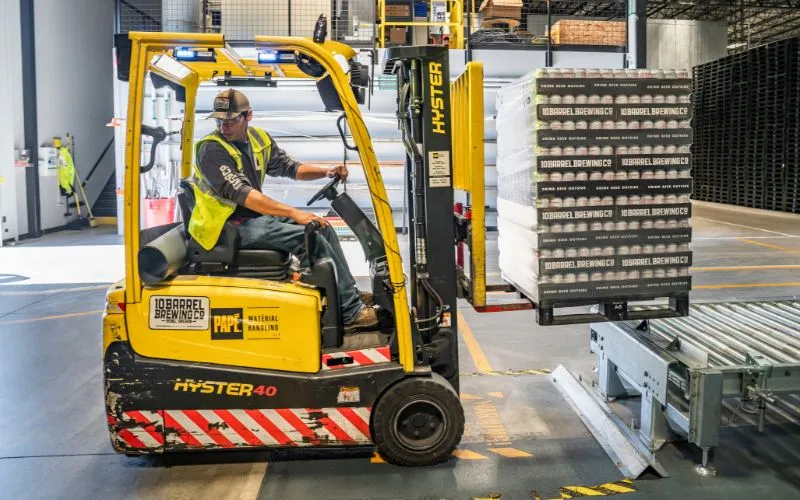
A forklift pallet hook works best on sites like these, where speed and manoeuvrability matter more than load support.
How Do the Two Attachments Compare Side by Side?
| Factor | Pallet Lifter | Pallet Hook |
| Load support | Full base | Single edge |
| Best for | Heavy or mixed loads | Light, single pallets |
| Speed of use | Slower to position | Faster to fit and lift |
| Site fit | Wider aisles | Tight aisles |
This comparison shows the trade-off clearly. One prioritises stability. The other prioritises speed.
What Should You Check Before Choosing an Attachment?
A proper decision needs more than picking whichever attachment is available. Check these points first:
- The typical weight of pallets moved on site
- Whether loads stay consistent or vary day to day
- Available clearance in storage and loading areas
- How often pallets move per shift
- Whether the forklift is rated for the attachment's added weight
This step matters because choosing an attachment based on convenience alone often leads to overloading a single-point design or slowing down a site that needed speed, not stability.
Is It Worth Matching the Attachment Exactly to the Load?
The decision comes down to what sits on the pallet, not personal preference. A full-base attachment protects heavier or fragile loads that need full support. An edge-grip attachment keeps light, high-turnover moves fast and efficient.
Check the load weight first, then choose the attachment built for it. Matching the two properly prevents damage, delays, and safety incidents on site.



















Sign in to leave a comment.