

Most people book a Panchakarma treatment in Bali for the therapies. They read the list of procedures, picture the oil and the steam, and assume the results come from the table.
They come from what happens around the table.
Ask any experienced vaidya what separates a program that works from one that leaves the guest flat and slightly disappointed, and you will hear the same three things: whether the person actually rested, whether they followed the daily routine, and whether the place they stayed in allowed both. The procedures are roughly the same everywhere. The conditions are not.
This article looks at those conditions in detail, because they are the part almost no one researches before they arrive.
What Panchakarma Actually Is, and What It Is Not
Panchakarma is a structured medical protocol from Ayurveda, not a treatment menu. The word refers to five principal actions, but in practice a program is built in three phases, and the middle phase is the shortest one.
The Three Phases
- Purvakarma (preparation): Internal oleation with medicated ghee, external oil application, and induced sweating. This phase loosens accumulated waste, called ama, and moves it toward the digestive tract. It usually takes three to seven days.
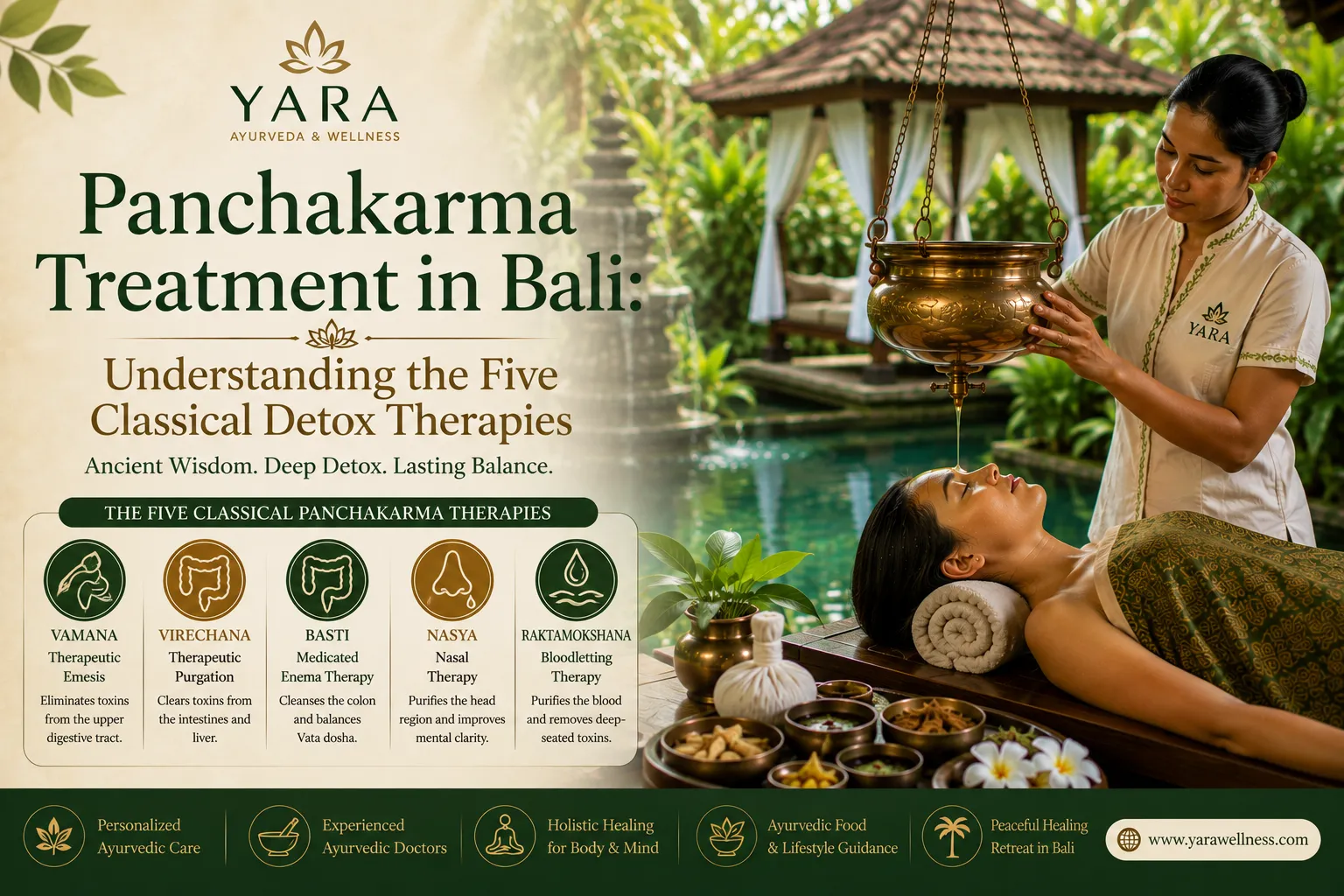
- Pradhanakarma (main procedures): The therapeutic elimination itself. Depending on your constitution and condition, this may include virechana (purgation), basti (medicated enema), nasya (nasal administration), and less commonly vamana (therapeutic emesis).
- Paschatkarma (aftercare): A graded return to normal food, activity and routine, along with rasayana or rejuvenative support. This phase is longer than most guests expect and is the one most often skipped.
Here is the part worth sitting with: the eliminative procedures occupy perhaps two or three days of a two-week program. The rest of the time, your body is either being prepared or being rebuilt. That is why the environment matters so much. You spend most of a Panchakarma living in it, not lying on a table.
A useful mental model: Panchakarma removes. What you put back in afterwards determines what you keep.
Why Bali Became a Base for Ayurvedic Healing Therapies
Bali did not inherit Ayurveda. It built a hosting culture around healing that happens to suit it unusually well.
A few practical reasons an Ayurvedic retreat in Bali works:
- Climate. Warm, humid air supports oleation and sweating. Vata-dominant guests arriving from cold or dry climates often respond faster here than they would at home in winter.
- Slowness is normal. Rural Gianyar, Sidemen and the Ayung valley run at a pace that does not fight a rest protocol. Nobody is surprised that you are not going out.
- An existing healing tradition. Balinese usada practice, with its village balians, herbal preparations and boreh body pastes, means the local staff culture already understands treatment as something serious and unhurried.
- Travel practicality. For guests from India, Singapore, Australia and much of Southeast Asia, the flight is short and the time difference is small. Less jet lag means less vata disturbance in the first three days, which is exactly when you need to be settling.
- Fewer obligations. This one is underrated. Doing Panchakarma at home in India often means a relative calls about a wedding on day four. Distance protects the protocol.
None of this makes Bali superior to Kerala or Gujarat. It makes it a different set of conditions, and for a particular kind of guest, a better fit.
Rest Is a Treatment, Not a Gap Between Treatments
This is the single biggest misunderstanding guests bring with them.
During Panchakarma, the body is doing work it cannot do while you are also digesting a heavy lunch, walking eight thousand steps and answering Slack messages. Rest is not the absence of therapy. It is where the therapy lands.
What Rest Actually Means Here
- No vigorous exercise. Gentle walking and restorative yoga only, and often not even that during the eliminative phase.
- No swimming, no cold showers, no air conditioning blasting directly on the body. Cold constricts and works against everything oleation is trying to do.
- No daytime sleeping in most protocols, though this is individualised and your doctor may allow it after virechana.
- Minimal screens, minimal reading that demands concentration, minimal problem-solving.
- No sexual activity, alcohol, or stimulants for the duration.
What Quietly Breaks Rest
The obvious offenders are easy to avoid. The subtle ones catch people out:
- Booking day trips on "free" afternoons. A temple tour is not rest.
- Taking one work call. It restarts the nervous system pattern you are there to interrupt.
- Socialising heavily with other guests. Conversation is stimulation, and a lot of it is unconsciously competitive.
- Sleeping badly because you arrived the night before and never adjusted. Arrive a day early if you can.
A reasonable test: if an activity would be fine on a beach holiday, question whether it belongs in a Panchakarma week.
Dinacharya: Why the Daily Routine Does Half the Work
Ayurveda organises the day around the cycle of the doshas, and a well-run program uses that structure rather than fighting it. This is dinacharya, the daily regimen, and it is doing more clinical work than guests realise.
A Typical Day at a Well-Run Retreat
- Early morning: Waking before or around sunrise, oral hygiene including tongue scraping, warm water, elimination.
- Morning: Medicated ghee on an empty stomach during the preparation phase, followed by a period of complete stillness.
- Mid-morning: Gentle pranayama or restorative movement, then rest.
- Midday: The largest meal of the day, taken when digestive fire is strongest.
- Afternoon: The main therapies, such as abhyanga followed by swedana, or shirodhara.
- Evening: A light early dinner, usually before seven, then herbal tea, low light, and an early night.
The pattern repeats. That repetition is the point. Circadian regularity stabilises digestion and sleep faster than almost any single therapy, and by day five most guests notice they are waking naturally at the same time without an alarm.
If you have spent years in irregular hours, this alone can be the most valuable thing you take home.
Practical tip: start shifting your dinner time earlier a week before you travel. Guests who arrive already eating at 7pm find day one far less brutal than those eating at 10:30pm the night before departure.
The Therapeutic Environment Is Clinical, Not Cosmetic
Marketing photographs sell rice terraces. The reason the setting matters is more boring and more important than the view.
A therapeutic environment does three things:
- It removes decisions. When meals, timings and activities are set, the mind stops arbitrating. Decision fatigue is a real load, and removing it frees energy for recovery.
- It removes sensory noise. Traffic, notifications, bright light at night and crowds all aggravate vata. Panchakarma is partly a vata-pacifying protocol, so a noisy setting works against the treatment itself.
- It normalises the behaviour. It is far easier to eat plain kitchari for ten days when everyone around you is doing the same and nobody is holding a cocktail at the next table.
What to Look For in a Location
- Genuine quiet at night, not just during the day. Ask directly about nearby roads, bars and construction.
- A kitchen that cooks fresh for each meal and can adjust to your constitution, not a buffet.
- Enough separation from tourist centres that leaving the property is inconvenient. That inconvenience is a feature.
- Rooms that stay warm and draught-free, with fans rather than aggressive air conditioning.
- Space to walk slowly outdoors without needing a vehicle.
If you are comparing programs, this is where to spend your research time. Most reputable providers offer similar therapy lists. Not all of them offer conditions where those therapies can work.
The Core Ayurvedic Healing Therapies in Bali and What Each One Does
You will see these names on every program page. Here is what they are for.
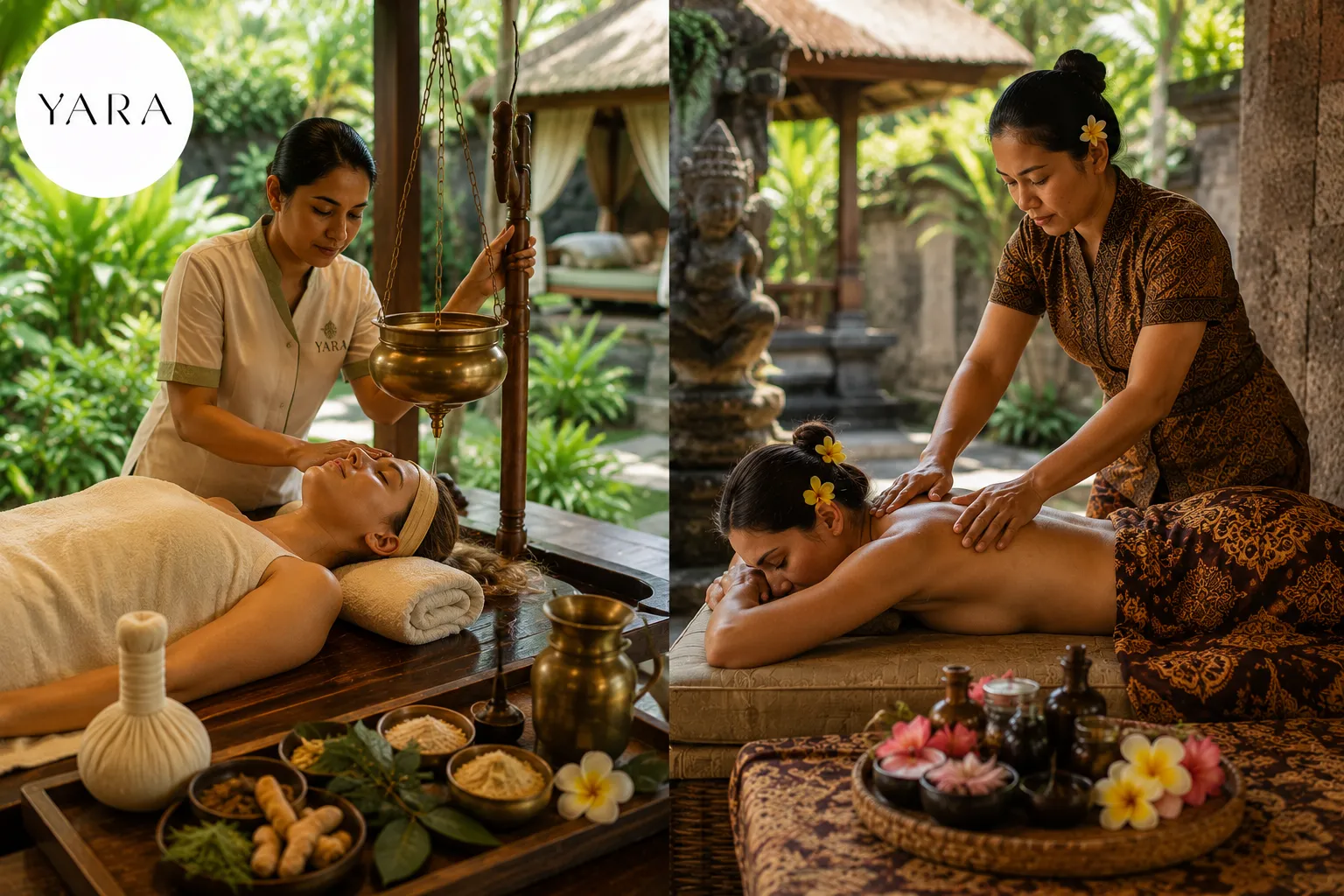
- Abhyanga: Warm medicated oil applied in synchronised strokes, usually by two therapists. Mobilises toxins toward the digestive tract, calms the nervous system, supports sleep.
- Swedana: Induced sweating, often in a wooden steam box with the head outside. Opens channels so loosened waste can move. Almost always follows abhyanga, not the reverse.
- Shirodhara: A continuous stream of warm oil poured across the forehead. Used for anxiety, insomnia and chronic overthinking. Emotional release during this therapy is common and clinically unremarkable.
- Udvartana: A dry or semi-dry herbal powder massage, applied against the direction of hair growth. Used for kapha conditions, sluggish metabolism and lymphatic stagnation.
- Virechana: Therapeutic purgation using herbal preparations. Primarily clears pitta from the small intestine. A single supervised day, not a repeated practice.
- Basti: Medicated oil or decoction enema. Considered the primary treatment for vata disorders and often the therapy with the most noticeable effect on chronic stiffness and irregular digestion.
- Nasya: Medicated oil administered through the nostrils. Used for sinus congestion, headaches and mental fog.
- Pinda sweda and takradhara: Supportive therapies using herbal boluses and medicated buttermilk respectively, typically added for specific conditions.
Two things worth knowing. First, you should not receive all of these. A program that gives everyone the same sequence is selling a package, not prescribing a treatment. Second, the eliminative procedures require medical supervision and a prior consultation, including pulse assessment and a review of your medications and history.
If you are in the research stage, a short consultation with a qualified Ayurvedic doctor before you book will tell you more than another twenty pages of browsing.
Why the Food Is Plain on Purpose
New guests often assume the kitchari is a budget decision. It is a clinical one.
During Panchakarma, digestive capacity, or agni, is deliberately kept low so the body can direct resources elsewhere. Mono-diets of rice and mung dal with ghee and warming spices are chosen because they require almost nothing from the digestive system while still supplying protein, calories and fat.
A few things that surprise people:
- You will often feel hungrier than usual by day four, and that is a good sign.
- Cold water and cold food are restricted throughout, sometimes for a week after you leave.
- Ghee is used therapeutically in doses that climb daily, and it tastes worse each morning. Everyone complains. Your grandparents complained too.
- Meals stop being boring somewhere around day six. Most guests report the taste of plain food sharpening considerably.
How Long Should a Panchakarma Program Be?
Shorter is not a smaller version of longer. It is a different treatment.
- Three to five days: Preparatory and restorative therapies only. Useful for rest and routine reset. Not classical Panchakarma, and honest providers will say so.
- Seven to ten days: Enough for oleation, sweating and one main eliminative procedure, typically virechana or a basti course. The realistic minimum for a genuine protocol.
- Fourteen to twenty-one days: The traditional range. Allows full preparation, more than one main procedure, and a proper aftercare phase inside the program rather than left to you.
- Twenty-eight days and beyond: Usually for chronic conditions, and always physician-led.
If your schedule only allows five days, book five days of rest and restorative therapy honestly, and plan a longer program later. A compressed Panchakarma is more likely to leave you depleted than detoxified.
Check your visa allowance before you commit to a longer stay, since Indonesia's visa-on-arrival period is limited and extension rules change periodically.
Panchakarma: The Phase Everyone Underestimates
The most common failure in Panchakarma is not a bad procedure. It is a good procedure followed by a flight, a celebratory dinner and a Monday morning.
After eliminative therapy, digestion is deliberately weak, and tissues are receptive. That receptivity is the whole opportunity of the rejuvenation phase, and it is equally an opportunity to undo the work.
Reasonable aftercare expectations:
- A graded reintroduction of food over roughly the same number of days as your main procedures took.
- No alcohol, no cold drinks, no raw or heavy food for at least a week, often longer.
- No intense exercise, travel or late nights for several days after returning.
- Continued herbal support as prescribed, which may run for weeks.
- A follow-up consultation, ideally scheduled before you leave the retreat.
Build a buffer of two or three quiet days at home before you return to work. Guests who do this consistently report better results at the three-month mark than those who fly back into a full calendar.
How to Tell a Clinical Program From a Spa Package
Both can be pleasant. Only one is treatment. Look for these signals:
- A pre-arrival consultation or detailed health questionnaire, including current medications.
- A resident or regularly visiting Ayurvedic physician, with a qualification you can verify, not only therapists.
- A treatment plan that changes after you arrive, based on assessment.
- Willingness to decline or modify therapies for you, including saying no to the program you wanted.
- Clear contraindication policies and a stated position on pregnancy, acute illness, recent surgery and certain chronic conditions.
- No promises of cures, weight-loss numbers or fixed outcomes.
That last point is a reliable filter. Serious practitioners are careful with claims.
Who Should Be Cautious
Panchakarma is a medical intervention and is not appropriate for everyone. Speak to a qualified physician before booking if you are pregnant or breastfeeding, recovering from surgery, managing an acute infection, living with an advanced cardiac, kidney or liver condition, in an eating-disorder recovery process, or taking medications that require stable absorption, including anticoagulants and thyroid or psychiatric medication.
A good retreat will ask about all of this before you pay. If nobody asks, that tells you something.
Practical Takeaways
- Treat rest as a prescribed therapy, not downtime between appointments.
- Arrive at least a day early and start shifting your meal and sleep timings a week before travel.
- Choose the environment as carefully as you choose the therapy list, and weight quiet, food and distance from distraction heavily.
- Book the longest program you can genuinely commit to, and be honest if that is a short restorative stay rather than full Panchakarma.
- Protect the two weeks after you get home. That is where results are kept or lost.
- Verify that a qualified physician is assessing you, not only supervising therapists.
Conclusion
A Panchakarma treatment in Bali is not a sequence of oil treatments delivered in a beautiful location. It is a controlled period in which rest, a stable daily routine, simple food and a supportive setting allow a set of classical procedures to do their work.
Guests who understand this before they arrive tend to get more from ten days than others get from three weeks. They protect their sleep, they stop negotiating with the routine, and they leave the afternoon free instead of filling it.
The therapies are the visible part. The conditions are the treatment.
Plan Your Program Properly
If you are considering an Ayurvedic retreat in Bali, start with an assessment rather than a booking. A short consultation with an Ayurvedic physician will tell you which procedures are appropriate for your constitution, how long you realistically need, and whether this is the right season for you to travel.
Speak to our team about a pre-arrival consultation, and we will build a program around your condition, your schedule and the aftercare you will need once you are home.
Frequently Asked Questions
What is the best duration for Panchakarma treatment in Bali? Fourteen to twenty-one days is the traditional range and allows full preparation, main procedures and aftercare. Seven to ten days is the realistic minimum for a genuine protocol. Programs under five days are restorative rather than classical Panchakarma.
Is Panchakarma in Bali as authentic as in India? Authenticity depends on the physician, the protocol and the medicines, not the country. Look for a qualified Ayurvedic doctor, individual assessment, classical formulations and proper aftercare. Several retreats in Bali meet these standards, and several do not.
What is the best time of year for an Ayurvedic retreat in Bali? The drier months from roughly May to September suit most guests. The wetter season brings higher humidity, which some kapha-dominant guests find heavy. Your physician may recommend a season based on your constitution and condition.
Will I feel unwell during Panchakarma? Mild fatigue, headaches, emotional sensitivity and disrupted appetite are common during the preparation and eliminative phases. These usually pass within a day or two. Report anything severe to the supervising physician immediately.
Can I work during a Panchakarma program? No. Working defeats the mechanism of the treatment. If you cannot step away from work entirely, postpone the program rather than dilute it.
What are the most common Ayurvedic healing therapies in Bali? Abhyanga, swedana, shirodhara, udvartana, nasya, basti and virechana are the most frequently prescribed. Which of these you receive should depend on your assessment, not on a fixed package.
Do I need to follow a diet after returning home? Yes. Expect a graded return to normal food over roughly a week, with cold, raw and heavy items restricted for longer. Aftercare guidance is usually as detailed as the program itself.

























Sign in to leave a comment.