
A diagnosis of pancreatic cancer can be overwhelming, especially when surgery is being considered. One of the most important operations used for selected pancreatic cancers is the Whipple procedure, also known as pancreaticoduodenectomy.
The Whipple procedure is a complex operation mainly used for tumors located in the head of the pancreas. Modern pancreatic surgery may involve open, laparoscopic, or robotic approaches, depending on the location and extent of the tumor, the patient's overall health, and the experience of the surgical team.
Understanding how the procedure works and how modern surgical approaches differ can help patients and families have more informed discussions with their cancer care team.

What Is Pancreatic Cancer?
The pancreas is an organ located behind the stomach. It produces digestive enzymes and hormones, including insulin, that help regulate blood sugar.
Pancreatic cancer occurs when abnormal cells in the pancreas grow uncontrollably. Treatment depends on the type of cancer, its location, stage, whether it has spread, and the patient's overall health.
Possible symptoms may include:
- Abdominal or back pain
- Unexplained weight loss
- Loss of appetite
- Jaundice or yellowing of the eyes
- Dark urine
- Pale stools
- Nausea
- Changes in digestion
- New or worsening diabetes in some patients
These symptoms can have many other causes, so they do not by themselves confirm pancreatic cancer.
When Is a Whipple Procedure Used?
The Whipple procedure is most commonly associated with cancers involving the head of the pancreas. It can also be used for selected tumors involving the bile duct, duodenum, ampulla, and certain other pancreatic conditions.
Whether surgery is possible depends on detailed imaging and assessment of the tumor.
Doctors may evaluate:
- The exact location of the tumor
- Whether the tumor has spread
- Involvement of nearby blood vessels
- Lymph nodes
- Overall health and fitness for major surgery
- Response to chemotherapy or other treatments
For some patients, chemotherapy or chemoradiation may be recommended before surgery. Treatment sequencing is individualized according to the cancer and multidisciplinary assessment.
What Happens During a Whipple Procedure?
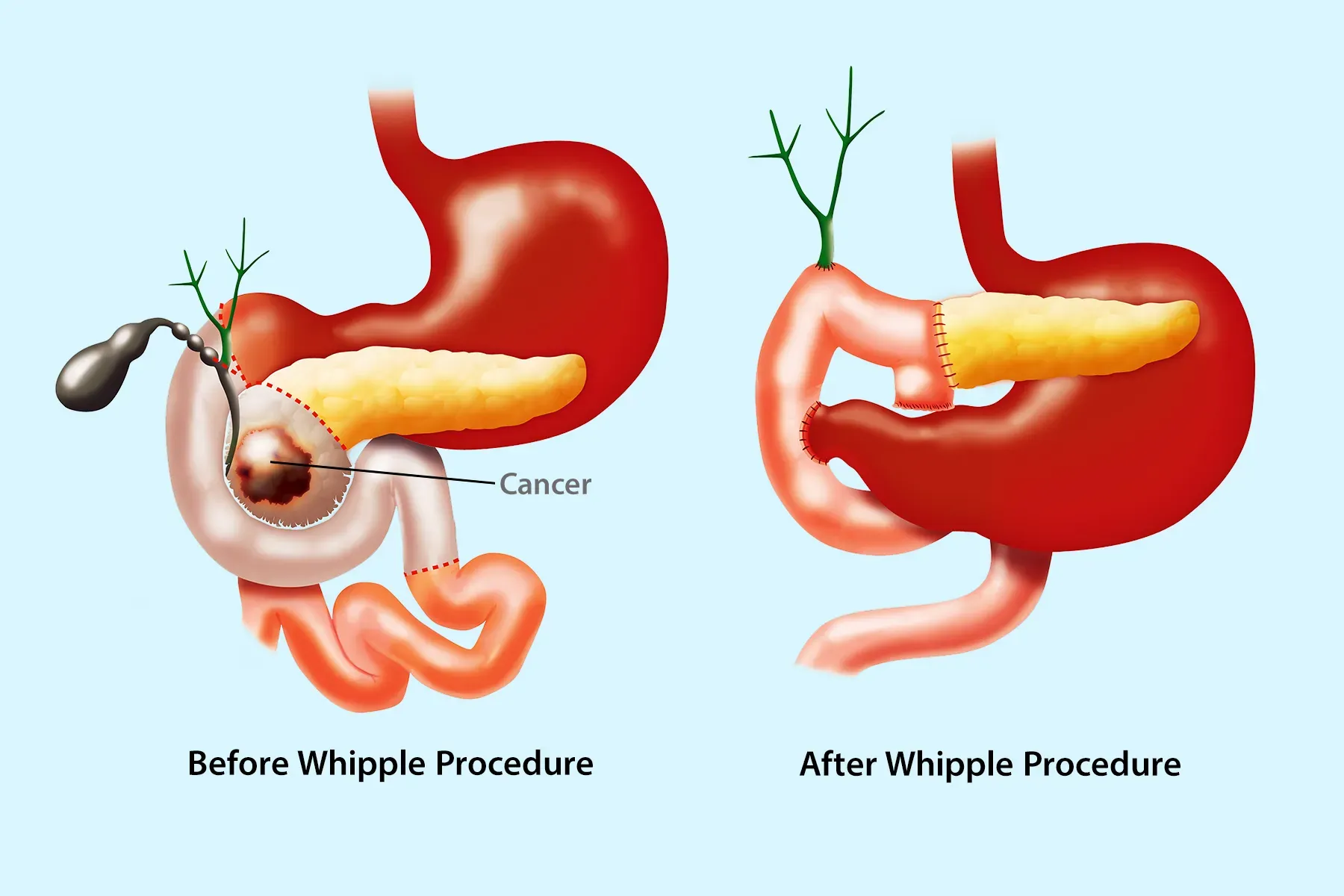
The Whipple procedure is a major operation designed to remove the tumor while preserving as much healthy tissue and organ function as possible.
During a standard Whipple procedure, the surgeon removes:
- The head of the pancreas
- The duodenum, which is the first part of the small intestine
- The gallbladder
- Part of the bile duct
- Nearby lymph nodes
In some cases, part of the stomach may also be removed.
After the diseased tissues are removed, the remaining pancreas, bile duct, and digestive tract are surgically reconnected so that digestive juices and food can continue to pass through the digestive system.
Modern Surgical Approaches to the Whipple Procedure
The Whipple procedure can be performed using different surgical approaches.
Open Whipple Procedure
Traditional open surgery uses a larger abdominal incision to provide direct access to the pancreas and surrounding structures.
Open surgery remains an important approach, particularly for complex tumors or cases where extensive reconstruction or vascular work may be required.
Laparoscopic Whipple Procedure
A laparoscopic approach uses several smaller incisions and specialized instruments with a camera.
For appropriately selected patients, minimally invasive surgery may offer benefits such as smaller incisions, reduced blood loss, and potentially faster recovery when compared with open surgery. However, the suitability of this approach depends on the individual case and surgical expertise.
Robotic Whipple Procedure
Robotic surgery is another minimally invasive approach.
The surgeon controls specialized instruments from a console while viewing the surgical area through a high-definition three-dimensional camera.
Robotic surgery can provide enhanced visualization and precise instrument movement in difficult anatomical spaces. However, it is not automatically suitable for every pancreatic cancer patient. Tumor location, blood-vessel involvement, disease stage, overall health, and the surgical team's expertise all influence the choice of approach.
Is Minimally Invasive Whipple Surgery Better for Everyone?
No single surgical approach is appropriate for every patient.
The decision between open, laparoscopic, and robotic surgery should be based on the patient's cancer characteristics and overall medical condition.
A minimally invasive approach may provide smaller incisions and potentially easier recovery in selected patients, but the primary goal remains safe and complete cancer surgery.
Patients should discuss the proposed surgical approach, the surgeon's experience with pancreatic surgery, and the potential benefits and risks before making a treatment decision.
What Happens Before a Whipple Procedure?
Before surgery, patients usually undergo detailed evaluation.
This may include:
- Blood tests
- CT or MRI imaging
- Endoscopic investigations when appropriate
- Assessment of nutritional status
- Evaluation of heart and lung function when needed
- Review by a multidisciplinary cancer team
Depending on the tumor's stage and characteristics, chemotherapy or radiation therapy may be recommended before surgery.
The purpose of this evaluation is to determine whether surgery is appropriate and to develop an individualized treatment plan.
Recovery After Whipple Surgery
The Whipple procedure is a major abdominal operation, so recovery takes time.
After surgery, patients are monitored for complications and gradually progress from hospital-based recovery to normal activities.
Recovery may involve:
- Gradual return to eating
- Nutritional support
- Pain management
- Monitoring of blood sugar
- Monitoring pancreatic and digestive function
- Wound care
- Follow-up imaging and consultations
- Additional cancer treatment when recommended
The exact recovery period varies significantly between patients.
Possible Complications
Like any major operation, Whipple surgery has potential risks.
These may include:
- Bleeding
- Infection
- Leakage from reconstructed digestive connections
- Delayed stomach emptying
- Digestive difficulties
- Changes in blood sugar
- Pancreatic or bile duct complications
The risk depends on the patient's health, tumor complexity, surgical approach, and other factors.
Because the Whipple procedure is technically demanding, experience with complex pancreatic surgery is an important consideration when choosing a treatment team.
Why a Multidisciplinary Team Matters
Pancreatic cancer treatment often involves more than surgery alone.
A multidisciplinary team may include:
- HPB or pancreatic surgeon
- Medical oncologist
- Radiation oncologist
- Gastroenterologist
- Radiologist
- Pathologist
- Anesthesiologist
- Nutrition and rehabilitation specialists
The team reviews the patient's diagnosis and develops a treatment plan based on the cancer stage, location, medical condition, and treatment goals.
When Should You Seek Specialist Evaluation?
Patients should consider specialist evaluation when they have been diagnosed with pancreatic cancer or have imaging findings suggesting a pancreatic tumor.
Specialist assessment is particularly important when the treatment plan involves major pancreatic surgery.
A pancreatic or HPB specialist can review the imaging, determine whether the tumor may be surgically removable, discuss available treatment approaches, and coordinate with oncology specialists when needed.
Frequently Asked Questions
Is the Whipple procedure only used for pancreatic cancer?
No. Although it is commonly used for tumors in the head of the pancreas, the Whipple procedure can also be used for selected cancers and other conditions involving the bile duct, duodenum, ampulla, and pancreas.
Is robotic Whipple surgery suitable for every patient?
No. Robotic surgery is appropriate only for selected patients. Tumor location, disease extent, blood-vessel involvement, overall health, and the surgeon's expertise all influence the decision.
Is chemotherapy needed before or after a Whipple procedure?
Some patients receive chemotherapy before surgery, while others may receive additional treatment after surgery. The recommended sequence depends on the cancer type, stage, imaging findings, and multidisciplinary assessment.
How long does a Whipple procedure take?
The duration varies depending on the surgical approach and complexity of the case. Mayo Clinic notes that surgery may take approximately 4 to 12 hours depending on these factors.
Can pancreatic cancer be cured with surgery?
Surgery can potentially provide long-term disease control or cure for selected patients whose cancer can be completely removed. However, surgery is not appropriate for every pancreatic cancer, and outcomes depend on factors such as stage, tumor biology, and response to other treatments.
Final Takeaway
The Whipple procedure is one of the most complex operations used to treat selected pancreatic and nearby cancers.
Modern pancreatic surgery includes open, laparoscopic, and robotic approaches. The best approach depends on the individual patient's tumor, anatomy, overall health, and the experience of the surgical team.
If you or a family member has been diagnosed with pancreatic cancer, a detailed evaluation by an experienced HPB or pancreatic surgery team can help determine whether surgery is appropriate and what treatment options are available.
Consult Dr. N. Anand Vijai in Coimbatore
Dr. N. Anand Vijai is an HPB and Liver Transplant Surgeon in Coimbatore with a focus on complex hepatobiliary and pancreatic conditions.
Patients seeking specialist evaluation for pancreatic, bile duct, or other HPB conditions can visit:
HPB Surgery:
Dr. Anand Vijai – HPB Surgery
Contact & Appointment:
Contact Dr. Anand Vijai
This article is intended for general educational purposes and does not replace an individual medical consultation, diagnosis, or treatment plan.



























Sign in to leave a comment.