

If you work in pharmaceutical manufacturing or biotech production and your plant runs on Werum's PAS-X platform, you already know the system is not something you can learn by clicking around for an afternoon. PAS-X MES Training is the difference between an engineer who can configure a batch record and one who has to call support every time something breaks. Whether you are based in a manufacturing hub in India or working at a facility in the USA, the demand for people who genuinely understand this Manufacturing Execution System has grown fast, and the gap between demand and skilled professionals has grown right along with it.
This article walks through what PAS-X MES Training actually covers, who needs it, how it is typically delivered, and what to expect from a good program. We will also touch on Caesar II Training in Chennai, a related but different skill set that shows up often in the same career conversations because both fields sit at the intersection of engineering rigor and specialized software.
Why PAS-X MES Training Matters Right Now
Pharmaceutical companies in both India and the USA are under constant pressure to meet FDA and other regulatory standards while keeping production efficient. PAS-X, developed by Werum IT Solutions, is one of the most widely used Manufacturing Execution Systems in the industry because it handles electronic batch records, recipe management, and compliance documentation in a single environment.
The problem is that PAS-X is not intuitive for someone coming from a general IT or manufacturing background. It has its own logic, its own configuration language, and its own way of handling master data. Without proper PAS-X MES Training, even experienced professionals end up misconfiguring workflows or misunderstanding how the system enforces good manufacturing practice rules.
Companies know this. That is why job postings for MES specialists, validation engineers, and production supervisors increasingly list PAS-X experience as a requirement rather than a preference. For professionals in India looking to work with multinational pharma companies, and for those in the USA supporting FDA regulated plants, this training has become a practical career investment rather than an optional extra.
What Good PAS-X MES Training Actually Covers
A solid training program does not just show you where the buttons are. It builds an understanding of why the system is structured the way it is. Here is what you should expect from a program worth your time.
- System architecture and navigation: understanding how PAS-X connects to ERP systems, historians, and other plant floor software
- Recipe and master data configuration: building process orders, material specifications, and equipment classes correctly the first time
- Electronic batch record management: creating, reviewing, and releasing batch records in line with regulatory expectations
- Exception handling and deviation management: knowing how the system flags issues and how to resolve them without breaking compliance
- User role and security setup: configuring access levels so the system supports audit readiness rather than working against it
- Integration basics: how PAS-X talks to SAP, LIMS, and SCADA systems in a typical pharma environment
Training programs that skip the integration piece tend to leave people underprepared, because in real plants PAS-X rarely operates in isolation. It is part of a larger digital ecosystem, and understanding those connections is often what separates a junior user from someone trusted to lead an implementation.
Who Should Take PAS-X MES Training
This training is not only for software administrators. In practice, the people who benefit most fall into a few groups.
Process engineers and production supervisors who need to understand how their daily decisions get recorded and validated within the system. Quality assurance professionals who review electronic batch records and need to know what a properly configured workflow should look like. Validation engineers responsible for confirming the system performs as intended before it goes live. IT professionals supporting pharma manufacturing who need domain specific knowledge beyond general software administration.
Fresh engineering graduates in India entering the pharma sector often pursue PAS-X MES Training early because it gives them a concrete, in demand skill that sets them apart from candidates with only theoretical manufacturing knowledge. In the USA, mid-career professionals frequently pick it up as part of a shift toward digital manufacturing roles, especially as more plants move away from paper-based batch records.
How PAS-X MES Training Is Typically Delivered
Training formats vary depending on the provider and the learner's schedule. Most programs fall into a few categories.
Instructor led classroom sessions remain popular in India, particularly in cities with a strong pharma manufacturing presence, where hands-on lab access to a sandbox PAS-X environment makes a real difference in retention. Live online sessions have become the standard choice for professionals in the USA who need flexibility around shift work or travel. Self paced modules exist too, though they work best as a supplement rather than a replacement for guided instruction, since PAS-X configuration mistakes are much easier to catch with an instructor watching over your shoulder.
A well run PAS-X MES Training course usually runs somewhere between forty and eighty hours depending on depth, with the more comprehensive programs including a capstone project where learners configure a mock production line from start to finish. That kind of applied practice is what actually builds confidence, not just familiarity with menu screens.
The Chennai Connection: Caesar II Training in Chennai
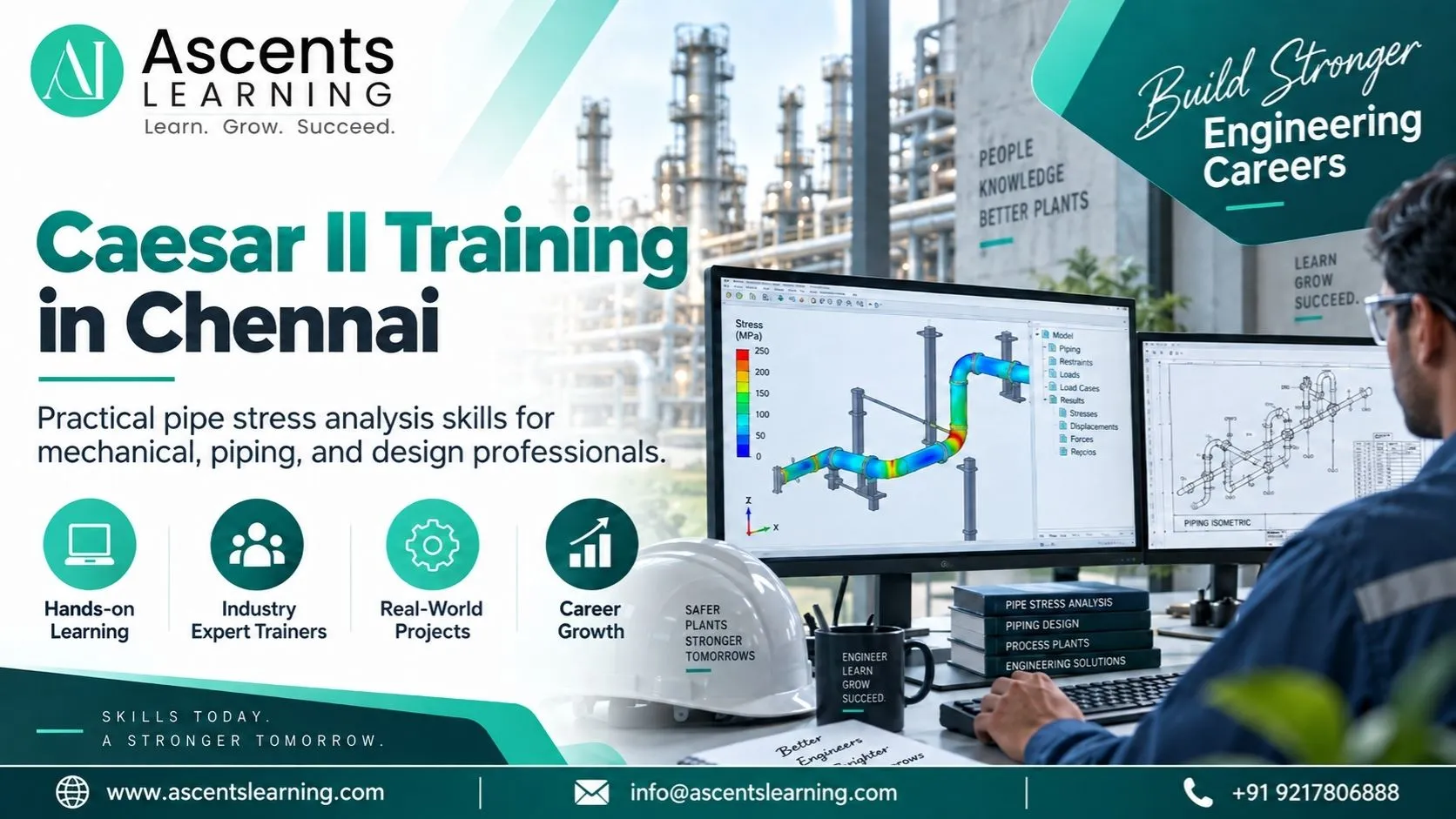
Chennai has become one of India's stronger hubs for both pharmaceutical manufacturing support and piping engineering services, which is why Caesar II Training in Chennai often gets mentioned alongside PAS-X MES Training in career discussions, even though the two tools serve very different purposes.
Caesar II is a piping stress analysis software used heavily in oil and gas, power, and process plant engineering. It has nothing to do with batch records or manufacturing execution, but the professionals who pursue both training tend to share a similar mindset. They work in industries where a small configuration error has real physical or regulatory consequences, and they want technical depth rather than a surface level certificate.
For engineers in Chennai specifically, the city's mix of process industries and its growing pharma manufacturing base means that Caesar II Training in Chennai and PAS-X MES Training sometimes appeal to overlapping talent pools, even if the day to day work looks completely different. If you are choosing between the two, the decision should come down to your actual career direction. Piping and structural engineers benefit from Caesar II. Pharma manufacturing, quality, and validation professionals benefit from PAS-X MES Training.
Choosing the Right PAS-X MES Training Provider
Not every training program is built the same way, and picking the wrong one wastes both time and money. A few things worth checking before you enroll.
Ask whether the provider gives you access to an actual PAS-X sandbox environment rather than just slides and screenshots. Ask how recent their course content is, since Werum releases updates regularly and outdated training can teach you workflows that no longer match the current version. Ask whether the instructor has real plant floor experience with PAS-X, not just trainer certification. And ask what kind of support exists after the course ends, because the first few weeks of applying this knowledge on the job is usually when the real questions show up.
Professionals in India often find value in providers who combine classroom instruction with case studies from local pharma manufacturers, since the regulatory context and plant setup can differ from what a USA based program assumes. Cross checking a provider's track record with people who have already completed the course is worth the extra time it takes.
Final Thoughts
PAS-X MES Training is not a checkbox item for a resume. It is a genuine skill that pharma manufacturing teams in India and the USA need more of as digital compliance becomes the standard rather than the exception. If you are serious about a career in MES, validation, or production leadership within pharma, investing the time to learn PAS-X properly, ideally with hands on practice and a knowledgeable instructor, will pay off well beyond the course itself.
And if your career path runs through piping and process engineering rather than pharma manufacturing, keep Caesar II Training in Chennai on your radar too. Different tools, different industries, but the same underlying principle applies. Deep, practical training beats a surface level introduction every time.
Frequently Asked Questions
1. How long does PAS-X MES Training usually take to complete?
Most structured programs run between forty and eighty hours, spread across several weeks depending on whether you choose classroom, live online, or a hybrid format.
2. Do I need a pharma background before starting PAS-X MES Training?
A basic understanding of manufacturing processes helps, but many programs are designed to bring engineers, IT professionals, and quality staff up to speed even without prior MES experience.
3. Is PAS-X MES Training relevant for professionals outside India and the USA?
Yes. PAS-X is used by pharma manufacturers globally, so the skills apply anywhere the system is deployed, though demand is currently strongest in these two markets due to regulatory pressure and expanding manufacturing capacity.
4. What is the difference between PAS-X MES Training and general MES training?
General MES training covers broad manufacturing execution concepts, while PAS-X MES Training focuses specifically on Werum's platform, its configuration logic, and its compliance features for pharma and biotech environments.
5. Why do people search for Caesar II Training in Chennai alongside PAS-X MES Training?
Chennai has a strong presence in both piping engineering and pharma manufacturing support, so the two trainings often come up together in local career discussions, even though they serve completely different industries and skill sets.























Sign in to leave a comment.