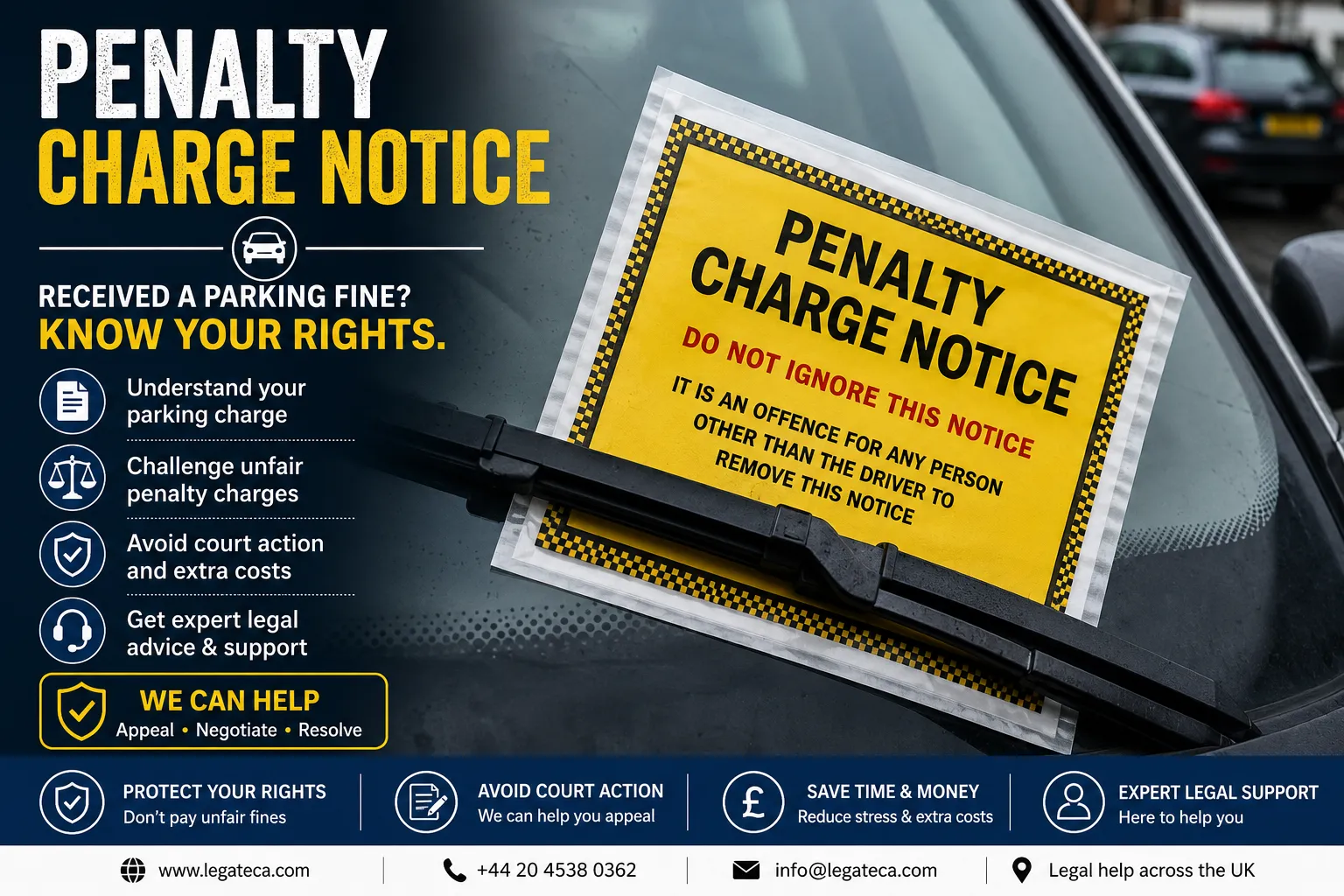

Receiving a parking notice or a letter about PCN parking claims can be confusing, especially when you are unsure whether the charge is valid or what you should do next. Parking notices can come from local authorities or private parking companies, and the process for dealing with each type can be different.
Before paying, appealing, or responding to further correspondence, it is important to understand what type of parking charge you have received and what options may be available.
What Is a PCN?
PCN commonly stands for Penalty Charge Notice. It can be issued by a local authority for certain parking or traffic contraventions. However, people sometimes also use “PCN” when referring to private parking charges.
The distinction is important because a council-issued Penalty Charge Notice and a private parking charge are not dealt with in exactly the same way.
Your notice should provide information about the organisation that issued it, the reason for the charge, the date and location of the alleged incident, and information about payment or appeal procedures.
What Are PCN Parking Claims?
PCN parking claims generally refer to disputes or legal claims connected with an unpaid parking charge.
A matter may begin with a parking notice and later progress through correspondence, appeals, debt recovery communications, or, in some circumstances, court proceedings.
The exact process depends on who issued the notice and the circumstances of the alleged parking incident.
What Should You Check on a Parking Notice?
If you receive a PCN, carefully check all the information provided.
Important details can include:
- Date of the alleged parking incident
- Time of the incident
- Vehicle registration number
- Location
- Reason for the charge
- Amount requested
- Issuing organisation
- Payment deadline
- Appeal instructions
If any information appears incorrect, keep a record of the issue and gather documents that may support your position.
Council PCNs and Private Parking Charges
One of the first things to establish is whether your notice came from a local authority or a private parking company.
A council-issued Penalty Charge Notice may relate to parking restrictions, controlled parking zones, bus lanes, or other traffic regulations.
A private parking charge generally relates to an alleged breach of parking terms on privately managed land.
The terminology can sometimes be confusing, so checking the issuer and the wording of the notice is an important first step.
Can You Challenge a PCN?
Depending on the type of notice and the circumstances, you may have an opportunity to challenge or appeal a parking charge.
Possible issues may include:
- Incorrect vehicle details
- Incorrect date or location
- Payment was made
- You had permission to park
- Parking signs were unclear
- The circumstances were different from those described
- You have evidence supporting your position
The appropriate appeal process depends on the organisation that issued the notice. Always check the instructions included with the notice and pay attention to any deadlines.
What Evidence Should You Keep?
Evidence can be particularly useful when dealing with disputed PCN parking claims.
Depending on your circumstances, you may wish to keep:
- Photographs of parking signs
- Photographs of the parking location
- Parking tickets or receipts
- Payment records
- Vehicle documents
- Correspondence with the parking company or council
- Appeal submissions and responses
- Details about who was driving
- Any other records relating to the parking event
Do not rely solely on memory. Keeping a clear record of the incident can make it easier to explain your position if the matter develops further.
What Happens If You Do Not Pay a Parking Charge?
The consequences can depend on the type of parking notice and the organisation involved.
A matter may progress through additional correspondence if a charge remains unpaid. In some private parking cases, the operator or its legal representatives may eventually consider court proceedings.
If you receive formal legal correspondence, read it carefully rather than assuming it is simply another payment reminder.
What If You Receive a Court Claim?
A court claim is different from an ordinary parking notice or reminder letter.
If you receive official court paperwork relating to a parking claim, check the claim number, claimant information, amount being claimed, stated reason for the claim, and response deadline.
Do not ignore court documents. If you are unsure about the procedure or your legal position, consider seeking independent legal advice.
How Can You Organise a PCN Parking Claim?
Keeping your documents organised can help you understand the history of the matter.
Create a simple record containing:
- The original parking notice.
- Photographs of the location and signs.
- Payment records.
- Any appeal submitted.
- Responses received.
- Letters or emails from the parking operator.
- Any legal correspondence.
- Court documents, if applicable.
A clear timeline can help you identify what happened and what stage the matter has reached.
Should You Pay or Challenge a PCN?
There is no single answer for every parking situation. Your options depend on the type of notice, the circumstances, the evidence available, and the applicable appeal or legal procedure.
If you believe the notice is valid, you may choose to follow the payment instructions provided.
If you believe the charge is incorrect, review the available evidence and the relevant appeal procedure before deciding how to proceed.
For formal court claims or complicated disputes, independent legal advice may help you understand the appropriate next steps.
Final Thoughts on PCN Parking Claims
PCN parking claims can involve different procedures depending on whether the charge was issued by a local authority or a private parking operator. Understanding the type of notice is therefore an important first step.
Check the details carefully, keep relevant evidence, follow applicable deadlines, and do not ignore formal correspondence. If a dispute progresses towards legal proceedings, make sure you understand the documents you receive and consider obtaining appropriate legal guidance.
For further information about UK parking charges, appeals, and related legal correspondence, you can explore Legateca parking-related resources.

























Sign in to leave a comment.