

A pharmaceutical facility has to control far more than what happens inside its production equipment. The surrounding environment matters just as much. Airborne particles, moisture, temperature changes, microorganisms, and uncontrolled movement can all affect sensitive products and processes.
This is where pharmaceutical cleanroom doors become an important part of the facility.
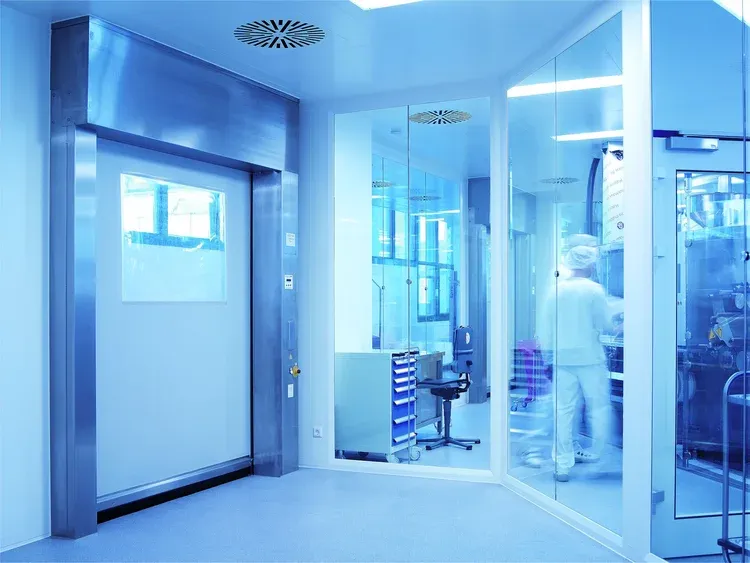
At first glance, a cleanroom door may look like an ordinary door with a more polished appearance. In reality, its design can play an important role in maintaining the conditions inside a controlled space. The door must open and close reliably, support cleaning routines, limit unwanted air movement, and fit the way people and materials move through the facility.
Think of a cleanroom as a carefully protected bubble. Every time someone enters or leaves, that bubble is temporarily exposed to another environment. The right door helps make that transition more controlled.
For pharmaceutical manufacturers, laboratories, medical product facilities, and other controlled environments, choosing an appropriate door is therefore not simply a matter of selecting a convenient entrance. The door needs to work as part of the overall cleanroom design.
Why Doors Matter in Pharmaceutical Facilities
Pharmaceutical production often involves materials that are sensitive to contamination. Even small amounts of unwanted particles can create problems in certain manufacturing or packaging environments.
A cleanroom is designed to reduce and control these risks. Walls, ceilings, floors, air-handling systems, equipment, clothing procedures, cleaning routines, and doors all contribute to the environment.
The door is particularly important because it is a moving part in an otherwise controlled enclosure.
Imagine trying to keep a refrigerator cold while repeatedly leaving the door open. The cooling system may continue working, but the opening makes it harder to maintain the desired internal condition. A cleanroom door presents a similar challenge, although the concerns can include particles and air movement rather than simply temperature.
A well-designed pharmaceutical door can help:
- Separate different areas of a facility
- Reduce uncontrolled air movement
- Support cleanliness requirements
- Make routine cleaning easier
- Provide dependable access for employees
- Accommodate equipment and material movement
- Integrate with access-control systems
- Maintain a smooth, professional working environment
The door does not create a cleanroom by itself. Instead, it supports the larger system.
What Makes a Pharmaceutical Cleanroom Door Different?
Ordinary commercial doors are generally designed around everyday concerns such as appearance, security, durability, and convenience. A pharmaceutical environment introduces additional considerations.
The surface of a cleanroom door should be easy to clean and should not create unnecessary places where dirt or residue can collect. Complex decorative features, exposed gaps, rough surfaces, and difficult-to-reach areas can make sanitation more challenging.
Door construction also matters. Depending on the facility and application, manufacturers may use materials and finishes selected for durability, cleanability, moisture resistance, and compatibility with the surrounding environment.
Another consideration is how the door operates.
A door that is constantly slammed, left partially open, or difficult to operate can create problems for employees and interfere with controlled movement. In busy pharmaceutical facilities, the door should suit the actual traffic pattern rather than forcing workers to fight against the design.
This is one reason pharmaceutical cleanroom doors are treated as part of the facility's operational planning rather than as ordinary architectural openings.
Choosing the Right Door Configuration
There is no single door style that fits every pharmaceutical application. The best configuration depends on the room, traffic level, available space, cleaning procedures, equipment, and access requirements.
Swing Doors
Swing doors are familiar and straightforward. They can work well in areas where traffic is moderate and there is enough room for the door leaf to move safely.
Their simplicity can be an advantage. Fewer moving components may make routine operation easier to understand and maintain.
However, the direction of swing needs careful consideration. A door should not create a hazard for people walking through adjacent areas or interfere with equipment, carts, or other doors.
Sliding Doors
Sliding doors can be useful where floor space is limited or where frequent movement takes place between rooms.
Instead of swinging into a corridor or work area, the door moves sideways. This can make the available space easier to organize.
Sliding systems can also be designed for automated operation, which may be useful in facilities where employees frequently move through controlled areas while carrying materials or equipment.
Automatic Doors
Automation can reduce the need for workers to physically handle a door. This can be helpful when employees are wearing protective clothing or carrying supplies.
Automatic operation may also make traffic flow more predictable. Sensors, push buttons, access controls, or other activation methods can be incorporated depending on the facility's requirements.
Automation should not be added simply because it looks modern. The system needs to match the room's traffic pattern and be maintained properly.
Surface Design Is More Important Than Appearance
In a pharmaceutical environment, a door's appearance is only one small part of the decision.
The surface needs to withstand the cleaning methods used in the facility. Pharmaceutical areas may be cleaned frequently, sometimes using cleaning agents that would be unsuitable for certain ordinary finishes.
A good cleanroom door should therefore be selected with its cleaning environment in mind.
Smooth surfaces are generally easier to wipe than heavily textured ones. Rounded or carefully designed edges can also make routine cleaning more manageable. Hardware should be positioned and designed so that employees can clean around it without unnecessary difficulty.
This does not mean every pharmaceutical door has exactly the same construction. Different rooms may have different environmental and operational requirements.
For example, a production room with frequent washdown activity may require different considerations from a dry laboratory or a controlled storage area.
Sealing and Air Control
One of the less obvious functions of a cleanroom door is helping manage the boundary between two spaces.
Different rooms may operate under different pressure conditions. In simple terms, pressure differences can help influence the direction in which air moves between areas.
A door that fits poorly or remains open longer than necessary can make this control more difficult.
This is why door leaves, frames, seals, closing mechanisms, and installation details deserve attention. The goal is not merely to have a door that closes. It needs to form an appropriate boundary when closed.
Think of the door as the lid on a storage container. A lid that sits correctly helps protect what is inside. A damaged or poorly fitting lid does not provide the same level of protection.
The exact sealing requirements depend on the facility's design and the purpose of the room, so the door should be selected as part of the complete environmental-control strategy.
Door Movement and Personnel Flow
Pharmaceutical facilities can have surprisingly complicated traffic patterns.
Employees may move between changing rooms, corridors, laboratories, manufacturing areas, packaging spaces, warehouses, and other controlled zones. Materials may follow separate routes. Some equipment may need to pass through large openings.
A door that looks appropriate on a floor plan may become inconvenient when real workers begin using it dozens or hundreds of times a day.
Consider a worker carrying a container with both hands. A manually operated door that requires a strong pull or push may be inconvenient. Now consider a cart moving through the same opening. The required clearance changes again.
This is why traffic should be considered before selecting the door.
The facility team should think about:
- How many people use the opening?
- Are carts or equipment moved through it?
- Is hands-free operation useful?
- How much space is available?
- Should the door remain closed when not in use?
- Are there adjacent doors or corridors?
- Does the door need access control?
- How often will the opening be cleaned?
These practical questions can reveal requirements that may not be obvious during the initial design stage.
Access Control Can Add Another Layer of Protection
Not every person should necessarily have unrestricted access to every pharmaceutical area.
Depending on the facility, doors may work alongside access-control systems such as keypads, card readers, identification systems, or other controlled-entry methods.
This can help manage who enters specific areas and create a more organized movement pattern.
Access control can also be coordinated with automatic door operation. For example, an authorized employee may present an access credential before the door opens.
The exact system depends on the facility's security and operational requirements. The important point is that the door should be capable of supporting the broader access strategy rather than being treated as an isolated component.
Preventing Cross-Contamination Through Better Planning
Cross-contamination is a serious concern in many pharmaceutical environments. The specific risks vary according to the products and processes involved, but facility layout and controlled movement can play an important role in reducing unwanted transfer between areas.
Doors contribute by defining physical boundaries.
For example, a facility may separate cleaner areas from less-controlled spaces. Employees and materials may move through designated transitions rather than passing freely between rooms.
A door cannot replace proper hygiene practices, protective clothing, cleaning procedures, air-handling systems, or other controls. However, it can support these measures by creating a reliable physical separation.
This is especially important when multiple rooms have different environmental requirements.
Maintenance Should Be Part of the Original Plan
Even a well-designed door can become a problem if it is poorly maintained.
Over time, hinges can wear, automatic operators can require adjustment, seals can deteriorate, and hardware can become loose. A door that once closed smoothly may begin sticking or failing to close completely.
In a controlled environment, small operational problems should not simply be ignored.
Routine inspections can look for issues such as:
- Damaged seals
- Loose hardware
- Unusual operating noise
- Slow or inconsistent movement
- Doors failing to close completely
- Surface damage
- Problems with sensors or automatic controls
- Cracks or gaps around the frame
Maintenance schedules should fit the frequency of use and the conditions of the facility.
A heavily used production-area door may need more attention than a door serving a lightly occupied room.
Installation Deserves Just as Much Attention
Choosing a suitable door is only part of the process. Installation also affects how well the system performs.
A high-quality door that is poorly installed may have alignment problems, gaps, operating difficulties, or premature wear.
The surrounding wall construction, frame installation, hardware, seals, and floor conditions all need to work together.
This is similar to installing a window in a building. Buying an excellent window does not guarantee good performance if the frame is installed incorrectly or the surrounding opening is not prepared properly.
For pharmaceutical facilities, installation should therefore be planned alongside the door specification rather than treated as an afterthought.
Consider the Door During Facility Planning
One of the easiest mistakes is to think about doors too late.
By the time construction is underway, the facility may already have fixed locations for walls, equipment, utilities, corridors, and production machinery. Changing a door configuration at that stage can become more difficult and expensive.
Early planning gives facility teams an opportunity to consider door size, opening direction, traffic flow, automation, access control, cleaning requirements, and maintenance access.
This is also the stage where different departments can contribute.
Production staff understand workflow. Maintenance teams understand service requirements. Quality teams understand environmental concerns. Safety personnel can identify potential hazards.
Bringing those perspectives together can result in a more practical door selection.
Why Customization Can Be Valuable
Pharmaceutical facilities do not all operate in the same way.
A small laboratory, a large manufacturing plant, a sterile processing area, and a pharmaceutical warehouse can have very different needs. Standard solutions may work in some locations, while a customized approach may be more suitable elsewhere.
Customization can involve dimensions, operating methods, materials, hardware, visibility, automation, or integration with other building systems.
The objective should not be customization for its own sake. Instead, every feature should solve a genuine operational requirement.
Newport Company provides cleanroom door solutions designed around the practical demands of controlled industrial environments, helping facility teams consider factors such as access, movement, durability, and cleanability when planning their openings.
Looking Beyond the Door Itself
The most useful way to evaluate a pharmaceutical door is to consider the entire environment around it.
Ask what happens before someone reaches the door, what happens while they pass through, and what happens after they enter.
Does the person need to change protective clothing? Are materials being transferred? Does the room have a different environmental condition? Is another door nearby? Does the opening need to remain closed most of the time? Will cleaning staff need frequent access?
These questions turn door selection from a simple purchasing decision into part of facility planning.
It also helps avoid a common problem: choosing a door based only on its initial price.
A cheaper door may not be the most economical choice if it requires frequent repairs, slows down employees, is difficult to clean, or does not fit the facility's workflow.
The better approach is to consider the door's entire working life.
Building a More Reliable Controlled Environment
Pharmaceutical manufacturing depends on consistency. Processes need to be repeatable, environments need to be controlled, and equipment needs to function reliably.
Doors may not receive as much attention as filling machines, packaging equipment, air systems, or production technology, but they are used every day.
That repeated use makes their design significant.
A properly selected door can make movement easier for employees, support room separation, simplify cleaning, and work alongside the facility's environmental and access-control systems.
At the same time, the door should be easy enough to operate that workers are not tempted to bypass it or leave it open.
Good facility design often comes down to making the correct behavior the easiest behavior.
Conclusion
Pharmaceutical cleanroom doors are more than entrances between rooms. They are part of the physical boundary that helps a controlled facility maintain its intended operating conditions.
The right solution depends on several factors, including room function, traffic volume, cleaning practices, available space, air-control requirements, security, maintenance, and the movement of people and materials.
Swing, sliding, and automatic configurations can each serve useful purposes when matched to the right application. Surface construction, sealing, hardware, installation, and long-term maintenance are equally important.
Most importantly, the door should be considered as one component of the complete cleanroom environment. When its design supports the way the facility actually operates, it can contribute to smoother workflows, easier maintenance, and more dependable room separation.
For pharmaceutical facilities, that practical approach is often what turns a basic doorway into a useful part of the controlled environment.

























Sign in to leave a comment.