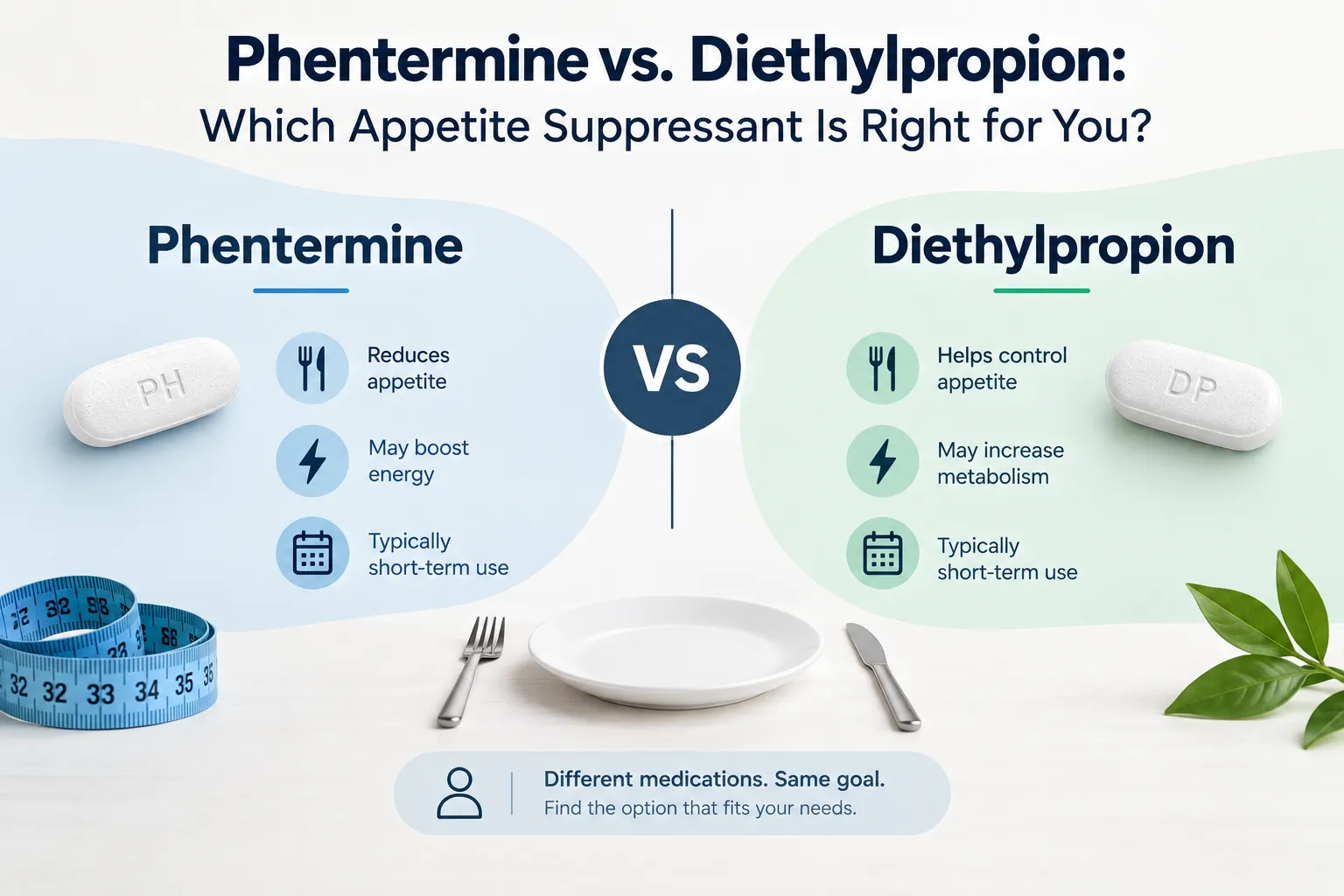

Quick answer: Phentermine and diethylpropion are both prescription appetite suppressants used for short term weight loss alongside diet and exercise. Phentermine is generally considered the stronger of the two and is often chosen for people who need a more powerful reduction in hunger. Diethylpropion is usually seen as milder and may suit people who are more sensitive to stimulant effects. The right choice depends on your health history, blood pressure, lifestyle, and how your body responds, which is why a clinician should always make the final decision.
If you have been researching weight loss medication, you have probably come across both of these names. They are among the most established appetite suppressants available, yet many people are unsure how they differ. This guide breaks down how each medicine works, what results you can realistically expect, the side effects to watch for, and how to decide which option may be best for you.
What Is Phentermine?
Phentermine is a prescription medicine that belongs to a group of drugs called sympathomimetic amines. It works on the central nervous system by increasing the release of noradrenaline, a chemical messenger that helps reduce feelings of hunger. When your brain receives fewer hunger signals, it becomes easier to eat smaller portions and resist snacking.
Phentermine is usually taken once daily in the morning. Because it has a stimulating effect, taking it later in the day can interfere with sleep. It is designed for short term use, typically up to 12 weeks, as part of a wider weight management plan.
What Is Diethylpropion?
Diethylpropion, also known as amfepramone, is another appetite suppressant from the same broad family of medicines. It acts on the brain in a similar way to phentermine, reducing appetite by influencing the chemical signals that control hunger.
Diethylpropion is available in two main forms. The immediate release version is usually taken several times a day before meals, while the controlled release version is taken once daily. Many clinicians describe diethylpropion as having a gentler stimulant profile, which can make it a useful option for people who find phentermine too strong.
How Do Phentermine and Diethylpropion Compare?
Here is a simple side by side comparison of the two medicines.
| Feature | Phentermine | Diethylpropion |
|---|---|---|
| Drug type | Sympathomimetic amine | Sympathomimetic amine |
| Main action | Suppresses appetite | Suppresses appetite |
| Relative strength | Generally stronger | Generally milder |
| Typical dosing | Once daily in the morning | Several times daily or once daily (controlled release) |
| Treatment length | Short term, usually up to 12 weeks | Short term, usually up to 12 weeks |
| Common side effects | Dry mouth, insomnia, raised heart rate | Dry mouth, restlessness, constipation |
| Often suited to | People needing stronger appetite control | People sensitive to stimulants |
Which One Works Better for Weight Loss?
Both medicines have been shown to support weight loss when combined with a reduced calorie diet and regular physical activity. Clinical studies suggest that phentermine tends to produce slightly greater weight loss over a short period, which is one reason it is widely prescribed. Diethylpropion has also demonstrated meaningful results in clinical research, with some longer studies showing steady and sustained weight reduction.
In practice, the "better" medicine is the one that works for your body with the fewest side effects. Someone who responds well to phentermine may lose weight quickly, while another person may find diethylpropion more comfortable to take day to day and therefore easier to stick with. Consistency matters more than raw strength.
What Are the Side Effects?
Because both medicines stimulate the nervous system, their side effects are similar. Common ones include:
Dry mouth, which can often be managed by drinking plenty of water throughout the day. Difficulty sleeping, especially if the medicine is taken too late. A faster heartbeat or palpitations, which should always be reported to your prescriber. Restlessness, nervousness, or irritability. Constipation or mild stomach upset. Headaches.
Phentermine is more commonly associated with sleep problems and a raised heart rate, while diethylpropion is often reported to feel smoother. However, everyone responds differently, and any concerning symptom such as chest pain, shortness of breath, or severe dizziness needs urgent medical attention.
Who Should Not Take These Medicines?
Neither phentermine nor diethylpropion is suitable for everyone. They are generally not recommended if you have:
Heart disease or a history of stroke. High blood pressure that is not well controlled. An overactive thyroid. Glaucoma. A history of drug or alcohol misuse. Certain mental health conditions, such as severe anxiety or agitation. Pregnancy or breastfeeding.
They should also not be combined with certain other medicines, including some antidepressants. This is why a thorough medical assessment is essential before treatment begins.
Who Is Eligible for Treatment?
In the UK, appetite suppressants are prescription only medicines. Clinicians typically consider them for adults with a BMI of 30 or above, or a BMI of 27 or above when weight related conditions such as type 2 diabetes or high cholesterol are present. Your prescriber will review your medical history, current medications, and lifestyle before recommending a treatment.
If you are exploring your options, you can learn more about Phentermine & Diethylpropion Tablets UK and how a supervised treatment plan works.
Are There Alternatives to Stimulant Appetite Suppressants?
Yes. Stimulant medicines are not the only route to medically supported weight loss. Newer treatments work on the hormones that regulate appetite and fullness rather than stimulating the nervous system. These can be a good fit for people who cannot take stimulants or who want a treatment designed for longer term use. If a non stimulant approach appeals to you, it is worth reading about Daily Weight Loss Tablets and discussing them with a clinician.
How to Choose the Right Appetite Suppressant
When deciding between phentermine and diethylpropion, it helps to think about a few practical questions:
How strong is your appetite, and how much support do you feel you need? How sensitive are you to caffeine or other stimulants? Do you prefer taking one tablet a day, or are you comfortable with multiple doses? Do you have any heart, blood pressure, or mental health concerns?
Your answers give your prescriber valuable information. The best results come from pairing the right medicine with realistic goals, balanced nutrition, and regular movement. Medication can make healthy habits easier to build, but it works best as part of a complete plan.
For personalised guidance, Weight Medics offers clinician led assessments to help you find a treatment that suits your health and goals.
Key Takeaways
Phentermine is typically stronger and taken once daily. Diethylpropion is typically milder and may suit people sensitive to stimulants. Both are intended for short term use alongside diet and exercise. Both carry similar side effects and are unsuitable for people with certain heart, blood pressure, or mental health conditions. A medical assessment is the safest way to decide which one is right for you.
Frequently Asked Questions
Is phentermine stronger than diethylpropion?
Phentermine is generally considered the stronger appetite suppressant, while diethylpropion is often viewed as gentler. Individual responses vary, so strength alone should not decide your treatment.
How much weight can I lose on phentermine or diethylpropion?
Results vary from person to person. Most people see modest but meaningful weight loss over several weeks when the medicine is combined with a healthy diet and regular exercise.
How long can I take these medicines?
Both are usually prescribed for short term use, often up to 12 weeks. Your clinician will review your progress and decide whether continuing is appropriate.
Can I drink coffee while taking an appetite suppressant?
Caffeine can increase stimulant side effects such as jitteriness and a racing heart. It is sensible to reduce your intake and follow your prescriber's advice.
Do I need a prescription in the UK?
Yes. Both phentermine and diethylpropion are prescription only medicines and should only be taken after a proper medical consultation.
What happens when I stop taking the medicine?
Appetite may gradually return to normal. Building sustainable eating and activity habits during treatment is the best way to maintain your results afterwards.
Can I switch from phentermine to diethylpropion?
Switching is possible if one medicine is not working well or causes unwanted side effects, but it should only be done under the guidance of your prescriber.
This article is for general information only and does not replace medical advice. Always speak to a qualified healthcare professional before starting any weight loss medication.



























Sign in to leave a comment.