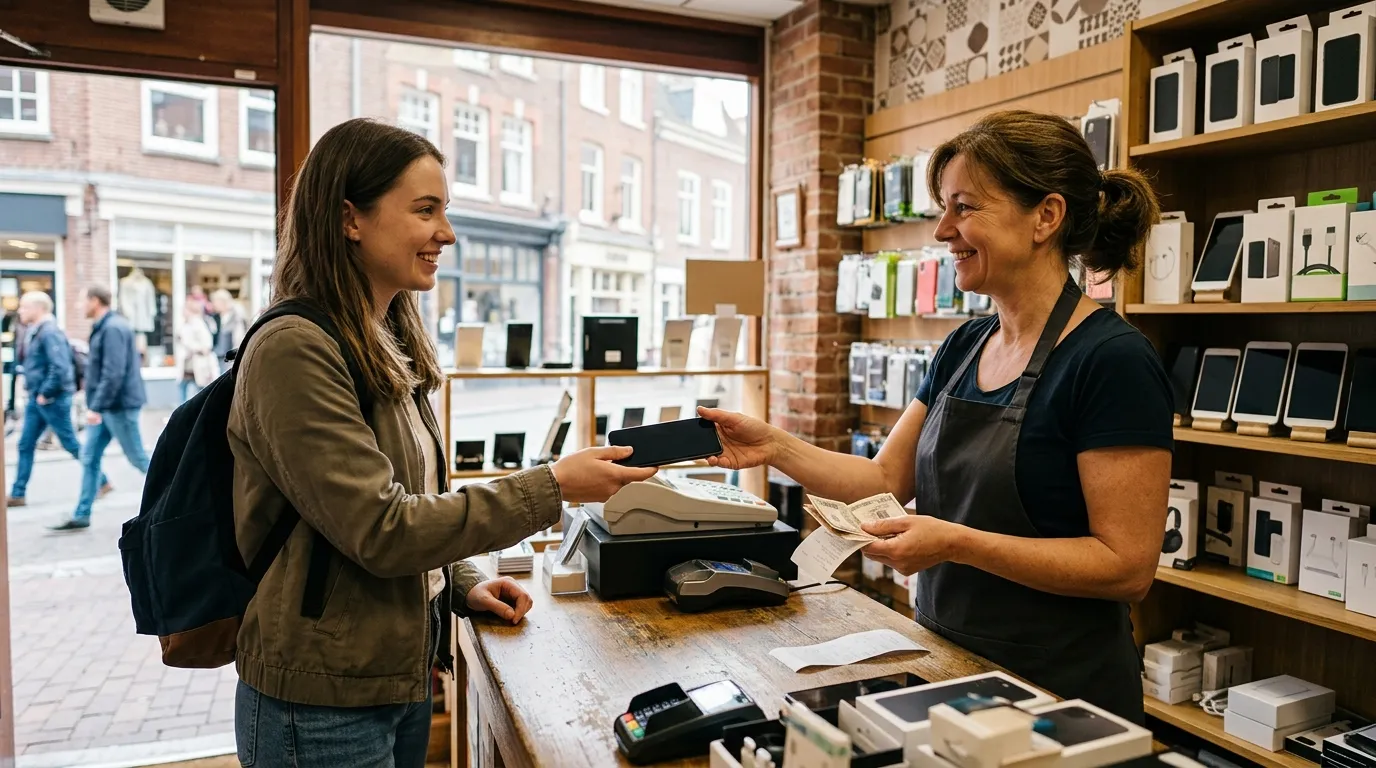

Most people have at least one old phone hiding somewhere at home.
It might be an older smartphone sitting in a desk drawer, a device you kept after upgrading, or a phone that was replaced because of a cracked screen or battery problem. You may have stopped using it, but that does not necessarily mean it has stopped having value.
If you have a phone to sell for money, the first step is not finding the fastest buyer. It is understanding what you have and deciding which selling option makes the most sense.
The phone's model, age, storage capacity, physical condition, battery health, carrier status, and current demand can all affect its potential value. Your personal information is another major consideration because smartphones can contain years of private data.
With some preparation, you can approach the selling process with realistic expectations and fewer surprises.
Start by Finding Out What Phone You Have
Before trying to sell your phone, identify the exact device.
Check the manufacturer's name, model, generation, and storage capacity. You can usually find this information through the phone's settings.
If you still have the original packaging, compare the details on the box with the device.
This step matters because two phones that look almost identical may have different specifications and values.
Storage capacity can also make a difference. For example, a higher-storage version of a particular model may be more desirable than a lower-storage version.
If you have several old phones, write down the details for each one. Creating a simple inventory can make it easier to compare potential offers later.
Inspect the Phone's Physical Condition
A phone's physical condition is one of the first things a potential buyer will consider.
Look carefully at the screen. Check for cracks, scratches, dead pixels, discoloration, or areas where the touchscreen does not respond properly.
Examine the frame and back panel for dents, chips, cracks, or other damage.
The camera lenses should also be inspected. Scratches or cracks around the lenses can affect photography performance.
Finally, check the charging port and make sure the device charges normally.
Remember that a used phone does not need to look brand new to have value. Minor signs of everyday use are expected.
The important part is accurately describing its condition.
Test the Main Features
A phone may look fine but still have hidden problems.
Turn it on and test its major functions before deciding how to sell it.
Check the:
- Touchscreen
- Front and rear cameras
- Speakers
- Microphone
- Charging port
- Power button
- Volume buttons
- Wi-Fi
- Bluetooth
- Cellular connection
- Fingerprint sensor
- Facial recognition
- Battery performance
Try making a test call if cellular service is available.
Connect the device to Wi-Fi and Bluetooth. Take a few photographs, record a video, play audio, and test the charging connection.
If you discover a problem, make a note of it.
This information will help you determine whether the phone should be sold as fully functional, partially functional, or damaged.
Check the Battery
Battery condition is particularly important for an older phone.
Smartphone batteries naturally lose capacity over time. An older device may therefore require more frequent charging than it did when it was new.
If your phone has a battery-health feature, check the information provided.
Also consider how the phone performs during everyday use.
Does the battery drain quickly? Does the device shut down unexpectedly? Does it become unusually warm?
These issues may affect its potential value.
You might consider replacing the battery before selling, but do not assume a repair will automatically result in more money. Compare the repair cost with the likely increase in resale value.
For some phones, selling the device as-is may be the more practical option.
Check the Carrier and Unlock Status
Before selling a phone, determine whether it is unlocked or associated with a particular cellular carrier.
An unlocked device may offer greater flexibility to another user, depending on the phone and network requirements.
A carrier-locked device may have additional limitations.
You should also determine whether the phone is still connected to a financing or installment agreement.
Having accurate information about the device's network and account status can prevent confusion during the selling process.
Research What Your Phone May Be Worth
A phone's original purchase price does not determine its current resale value.
Smartphones typically lose value as newer models are released. However, certain devices may retain demand because of their performance, camera capabilities, software support, durability, or popularity.
Research similar phones before deciding on a price.
Compare devices with the same:
- Model
- Storage capacity
- Condition
- Battery health
- Age
- Carrier status
- Unlock status
Look at several sources.
An advertised price is not necessarily the amount a seller will actually receive. Private buyers may negotiate, while professional buyers may use their own evaluation process.
Instead of expecting one exact number, develop a realistic price range.
Decide How You Want to Sell
There are several ways to turn a phone to sell for money into an actual transaction.
Sell Directly to Another Person
A private sale can provide more control over your asking price.
You can create an online listing, take photographs, communicate with interested buyers, negotiate, and arrange payment.
The trade-off is time and effort.
You may receive questions from multiple people, negotiate over the price, arrange an in-person meeting, or package the device for shipping.
Use a Trade-In Program
A trade-in program may be convenient when you are replacing your current phone.
However, the value may be provided as store credit or applied toward another purchase instead of being paid directly as cash.
Check the terms carefully to understand exactly what you will receive.
Research Electronics Buying Services
Some businesses specialize in purchasing used smartphones and other electronics.
These services can offer a structured alternative to creating a private listing.
Prime Mobile is one company that can be researched when comparing options for selling used phones and electronics. As with any potential buyer, review the accepted devices, evaluation process, payment arrangements, and terms before proceeding.
The right method depends on what matters most to you.
If maximizing the asking price is your priority, you may prefer a private sale. If convenience is more important, a structured buying service may be worth considering.
Think About the Total Value
The highest advertised offer is not always the best overall option.
Consider the complete selling process.
Ask yourself:
- Are there listing fees?
- Are there payment-processing fees?
- Will I need to pay for shipping?
- How much time will I spend communicating with buyers?
- Will I need to travel?
- How is the phone evaluated?
- Can the final offer change?
- How quickly will I receive payment?
A slightly lower offer may sometimes be more appealing if it saves you significant time, effort, or expense.
The goal is to find an option that provides a reasonable balance between money, convenience, and confidence.
Take Clear Photos
If you choose to sell privately, good photographs can make your listing more useful.
Take pictures in good lighting and show the phone from several angles.
Include the front, back, sides, camera lenses, charging port, and screen.
If there are scratches, dents, cracks, or other signs of damage, photograph them clearly.
Do not hide defects.
Clear images help potential buyers understand what they are considering and can reduce misunderstandings later.
Write an Honest Listing
A good phone listing should give buyers enough information to make an informed decision.
Include the exact model, storage capacity, physical condition, battery health if available, carrier status, unlock status, and included accessories.
Mention any known technical problems.
Avoid calling a heavily used phone “like new.”
If the battery is weak or the screen has a crack, explain it.
Honest descriptions may reduce unnecessary negotiations and help you deal with serious buyers.
Protect Your Personal Information
If you have a phone to sell for money, protecting your personal information should be one of your highest priorities.
A smartphone can contain:
- Photos and videos
- Contacts
- Messages
- Emails
- Documents
- Saved passwords
- Social media accounts
- Banking applications
- Payment information
Start by backing up everything you want to keep.
Then sign out of your personal accounts and remove the device from linked-account lists where appropriate.
Disable applicable tracking, activation, and security features.
Remove the physical SIM card.
If your phone uses an eSIM, review the cellular settings and follow the appropriate transfer or removal procedure.
After backing up your information and removing your accounts, perform a factory reset according to the manufacturer's instructions.
Turn the phone on again afterward to make sure your personal information is no longer visible.
Clean the Device
Before handing over or shipping the phone, clean it.
Use a soft cloth to remove fingerprints, dust, and smudges from the screen and exterior.
Avoid harsh chemicals and be careful around the charging port, microphone, speakers, and camera lenses.
If you have the original box, charger, cable, case, or other accessories, collect them together.
A well-organized device is easier to present to a potential buyer.
Should You Repair the Phone First?
If your phone has a cracked screen, damaged camera, or weak battery, you may wonder whether repairing it will help you make more money.
Do the math first.
Compare the cost of the repair with the potential increase in resale value.
For example, spending $200 on a repair may not make sense if the repaired phone would only be worth $100 more.
A relatively inexpensive repair may make sense for a newer device, while an older phone may be better sold in its current condition.
If you sell a damaged phone, clearly disclose the problem.
Stay Safe When Selling Privately
Selling directly to another person requires some common-sense precautions.
For an in-person transaction, choose an appropriate public location.
Avoid sharing unnecessary personal information.
Never provide passwords, authentication codes, or account credentials to a potential buyer.
Be cautious about unusual payment requests or people who pressure you to complete the transaction immediately.
If you ship the phone, package it securely and keep tracking information and transaction records until the sale is complete.
What If the Phone Is Not Worth Much?
Not every old phone will generate significant cash.
That does not mean the device is useless.
An older smartphone can sometimes serve as a backup phone, music player, camera, navigation device, gaming device, or emergency phone.
You could also donate it or give it to someone who needs a basic device.
If the phone is too damaged or outdated to be useful, responsible electronics recycling may be a better option.
The important thing is to consider the phone's next purpose rather than automatically throwing it away.
A Simple Pre-Sale Checklist
Before turning your phone to sell for money into a completed transaction, make sure you:
- Identify the exact model.
- Confirm storage capacity.
- Inspect physical condition.
- Test major features.
- Check battery health.
- Confirm carrier and unlock status.
- Check financing obligations.
- Research current market value.
- Compare selling methods.
- Consider repair costs.
- Take clear photographs.
- Write an accurate description.
- Back up important data.
- Sign out of personal accounts.
- Disable applicable security features.
- Remove the SIM card.
- Review eSIM settings.
- Perform a factory reset.
- Clean the device.
- Gather accessories.
- Keep transaction records.
Final Thoughts
Having a phone to sell for money can be an opportunity to recover some value from technology you no longer use. But the best selling experience starts with preparation rather than immediately accepting the first offer.
Identify your phone, inspect its condition, test its features, check the battery, and confirm its carrier status. Then research comparable devices to develop a realistic idea of what the phone may be worth.
After that, compare your selling options. Private marketplaces can give you more control, trade-in programs may be convenient during an upgrade, and electronics buyers such as Prime Mobile can be researched alongside other available services.
Remember to consider the entire transaction, not just the advertised amount. Fees, shipping, travel, evaluation procedures, payment methods, and your own time can all affect the actual value of an offer.
Most importantly, protect your personal information. Back up your data, sign out of accounts, remove the SIM card, disable applicable security features, and perform a factory reset before transferring ownership.
An old phone may not be useful to you anymore, but that does not mean it has reached the end of its life. With a little research and preparation, you can decide whether selling, reusing, donating, repairing, or recycling is the most sensible next step.
























Sign in to leave a comment.