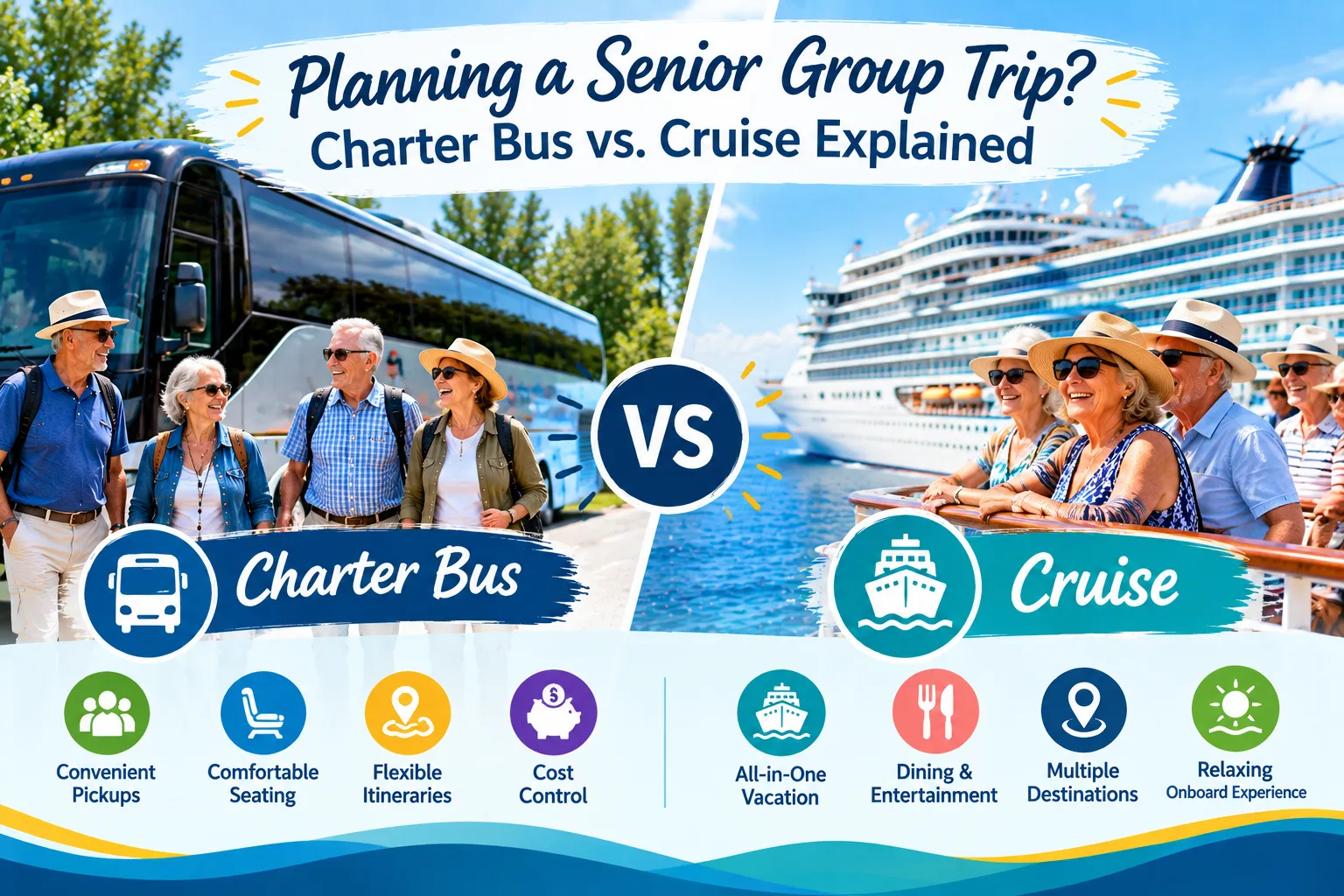

Planning a senior group trip involves more than choosing an attractive destination. Organizers also need to consider comfort, accessibility, scheduling, transportation costs, and how easily everyone can stay together. Cruises remain a popular vacation option because they combine lodging, dining, entertainment, and multiple destinations. Charter buses, however, offer a flexible alternative for domestic day trips, weekend getaways, and multi-day tours. During the senior group travel planning process, comparing these two options can help organizers choose the right experience. This senior travel transportation guide provides another useful comparison of charter bus and cruise travel for older groups.
Start With the Group's Needs
Before comparing prices or destinations, group organizers should understand who will be traveling.
Senior groups can include active travelers, passengers who prefer shorter walking distances, and people who use canes, walkers, wheelchairs, or other mobility equipment. These differences can influence the type of transportation that will be most comfortable.
A cruise may appeal to travelers who enjoy onboard activities and ocean destinations. A charter bus may be more suitable for groups that want to control the route, schedule, stops, and pace of their trip.
Creating a basic passenger profile before booking makes it easier to choose transportation based on actual needs rather than assumptions.
Charter Bus Travel Starts at a Convenient Pickup Point
One of the biggest practical differences between the two options is where the journey begins.
Cruise passengers must reach a specific port by a scheduled embarkation time. Depending on the group's location, reaching that port may involve flights, airport transfers, hotel stays, or long-distance driving.
A charter bus can pick up the group at a convenient location. This could be a senior center, church, community center, hotel, retirement community, or another agreed meeting point.
Everyone boards one vehicle and travels together. For group leaders, this can eliminate the challenge of coordinating several transportation arrangements before the vacation even begins.
Comfort Should Be a Priority
Long-distance travel can be tiring for anyone, but senior passengers may have additional comfort considerations.
A cruise ship offers cabins, restaurants, entertainment spaces, and other amenities, but its size can require passengers to walk between different areas throughout the day. Getting from a cabin to a dining room, theater, elevator, or boarding area may involve considerable walking.
A charter bus creates a more contained travel environment. Once passengers are seated, they can relax while a professional driver handles the road.
Depending on the coach, amenities may include reclining seats, climate control, an onboard restroom, Wi-Fi, power outlets, luggage storage, and additional legroom.
For a group that spends several hours traveling between destinations, these features can make the journey more comfortable.
Accessibility Requires Advance Planning
Accessibility should never be left until the last minute.
If passengers use wheelchairs, walkers, or scooters, organizers should communicate these requirements before reserving transportation. Accessible charter buses may be available with wheelchair lifts and secure areas for mobility equipment, but the appropriate vehicle needs to be requested in advance.
Cruise ships also offer accessible accommodations, but passengers still need to move around the vessel and navigate shared spaces.
The best transportation choice is the one that allows the entire group to participate without unnecessary physical challenges.
Charter Buses Offer Greater Itinerary Control
Cruises operate on predetermined schedules. The departure date, ports, dining schedules, and activities are largely established before passengers arrive.
That structure works well for travelers who enjoy having their vacation organized for them. However, it provides less flexibility when a group wants to create a customized itinerary.
Charter buses offer more control.
A senior group can choose destinations based on its interests. The itinerary might include historic towns, museums, casinos, theaters, scenic locations, national parks, shopping districts, restaurants, or cultural attractions.
The group can also determine how much time to spend at each location and where to schedule breaks.
Planned Rest Stops Can Improve the Experience
Breaks are especially important on longer road trips.
A charter bus itinerary can include scheduled restroom stops, meal breaks, and opportunities to stretch. The frequency of stops can be discussed with the transportation provider based on the distance and needs of the passengers.
This allows the trip to follow the group's preferred pace.
Cruises naturally provide restrooms and places to sit throughout the ship, but the group remains subject to the vessel's schedule. With a charter bus, the group has more direct control over travel breaks.
Compare the Complete Cost
Transportation costs should be evaluated as part of the entire trip budget.
A cruise fare may include accommodations, selected meals, and certain entertainment, but additional expenses can include gratuities, specialty dining, beverages, Wi-Fi, shore excursions, transportation to the port, and hotel stays.
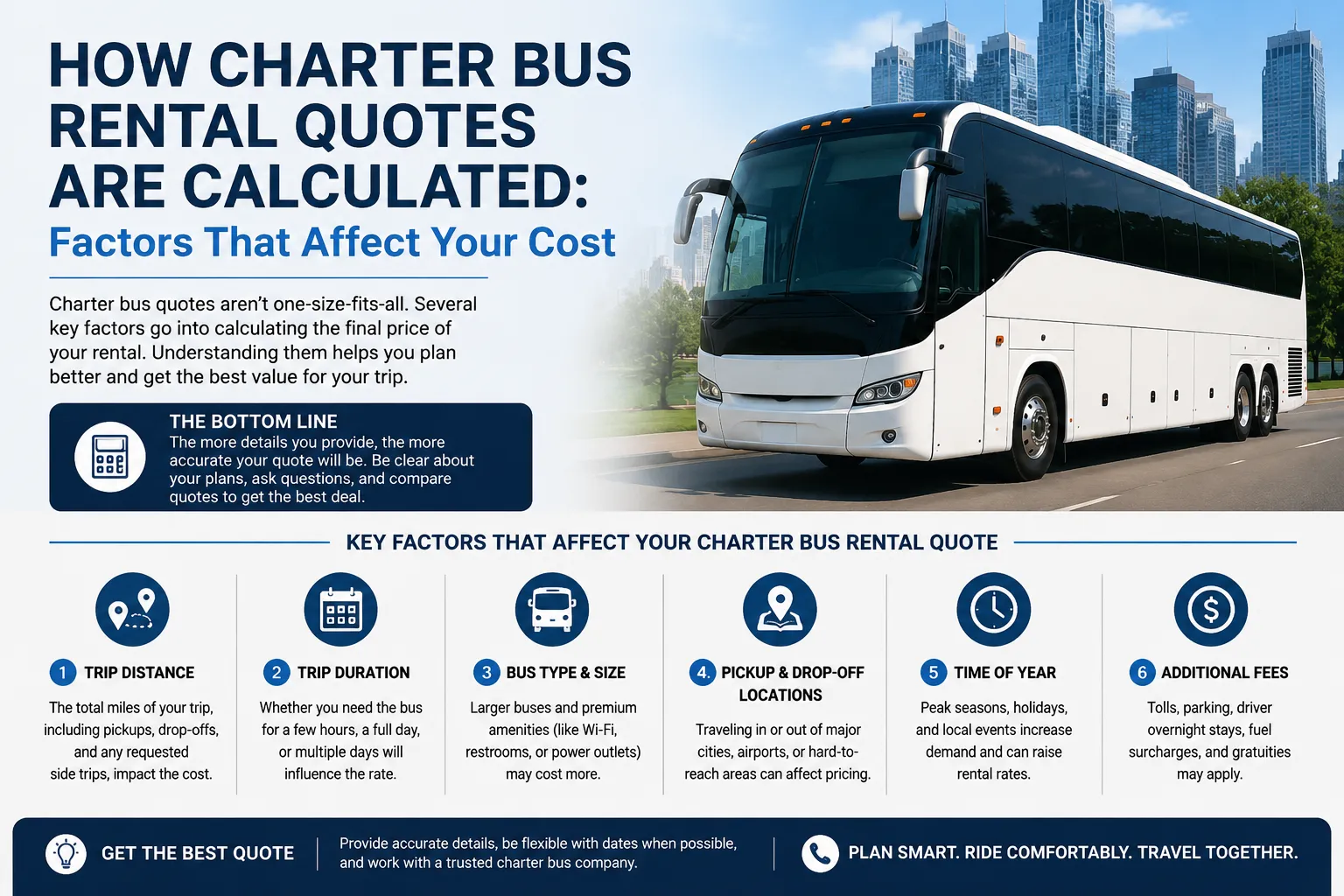
A charter bus quote generally focuses on the transportation itself. Costs can depend on the vehicle, route, mileage, travel time, and trip duration. Hotels, meals, attractions, and other activities can then be budgeted separately.
The final cost of either option varies significantly based on destination, season, group size, itinerary, and selected services. Instead of comparing advertised starting prices, organizers should calculate the complete cost per traveler.
Keeping the Group Together
One of the main benefits of group travel is spending time together.
Cruise ships offer many activities, which can be enjoyable, but members of a large group may naturally split up. Different dining schedules, excursions, entertainment choices, and areas of the ship can make it difficult for everyone to remain together.
A charter bus creates a shared travel environment. Everyone is traveling in the same vehicle, making it easier to communicate, socialize, share announcements, and enjoy the journey together.
For senior centers, community groups, churches, and family organizations, this sense of connection can be an important part of the trip.
Consider the Ideal Trip Length
The type of transportation should also match the length of the vacation.
Cruises are generally designed for multi-day travel, making them attractive for groups that want several nights away from home.
Charter buses can support a much wider range of trip lengths. A group can book transportation for a short local outing, a full-day excursion, a weekend getaway, or a multi-day regional tour.
This flexibility can make it easier for senior organizations to offer several smaller trips throughout the year instead of planning only one major vacation.
When a Cruise Is the Better Choice
A cruise can be an excellent choice for a senior group that enjoys ocean travel, onboard entertainment, organized dining, and multiple destinations.
It may work particularly well for active travelers who are comfortable spending several days away from home and want accommodations and entertainment included as part of the vacation experience.
Groups interested in Caribbean, Alaska, or other cruise-specific destinations may also find that a ship provides an experience that a road trip cannot duplicate.
When a Charter Bus Is the Better Choice
A charter bus may be the better fit when the group prioritizes flexibility, accessibility, domestic destinations, and control over the schedule.
It works well for day trips, weekend getaways, regional tours, multi-city vacations, family gatherings, and community outings.
Organizers can choose the route, pickup location, attractions, rest stops, and travel pace rather than following a fixed ship itinerary.
Questions to Ask Before Booking
Before making a final decision, organizers should review several practical factors. Consider the number of travelers, destination, trip duration, budget, mobility requirements, preferred activities, and how much walking passengers are comfortable doing.
If choosing a charter bus, ask about the specific vehicle, seating configuration, restroom, luggage capacity, climate control, accessibility equipment, Wi-Fi, and power outlets.
It is also helpful to confirm the company's experience with senior groups. An experienced operator can help plan appropriate pickup procedures, rest stops, routes, and travel schedules.
For cruises, review exactly what the fare includes and identify additional charges before calculating the final cost.
Final Thoughts
Planning a senior group trip becomes much easier when transportation is selected around the passengers rather than simply the destination. Cruises offer an appealing combination of lodging, dining, entertainment, and ocean travel, while charter buses provide flexibility, convenient group pickups, customized routes, and greater control over the itinerary.
For groups that want domestic travel with a personalized schedule, a charter bus can be an excellent option. For travelers who specifically want an ocean vacation with onboard activities and scheduled ports, a cruise may be the right choice.
By comparing comfort, accessibility, scheduling, cost, trip length, and group togetherness, organizers can make a transportation decision that supports a smoother and more enjoyable senior group vacation.

























Sign in to leave a comment.