

 A South India holiday can look straightforward on a screen: choose a few temples, add a hill station, book a boat and connect everything with a car. The practical experience is more complicated, and more interesting. Where you sleep, how often you move and what you leave out can shape the journey as much as the places you choose.
The most useful planning decisions are often small ones. An extra night can turn a hurried stop into a favourite destination. A better hotel location can make evenings easier. Choosing one hill base instead of two can give you time to enjoy the view you travelled to see. This guide looks at twelve choices that help a South India holiday feel comfortable, varied and worth remembering.
1. Choose a Travel Style Before Choosing a Route
Start by asking what you enjoy doing for several hours, rather than what looks attractive in photographs. If you like architecture, religious history and detailed explanations, a cultural route through Tamil Nadu may suit you. If your ideal day includes scenery, gentle outings and leisure time, you may prefer a more concentrated Kerala journey or a hill-focused holiday.
Talk about these preferences with everyone travelling. One person's rewarding morning at a temple can be another person's limit for the entire week. There is no need to make every day identical, but the balance should be deliberate. Choose a few shared priorities, then include room for individual interests where practical.
A useful route has a clear centre of gravity. You can add a contrast, such as backwaters after temple towns, without turning the holiday into an attempt to cover every theme. When an extra destination does not support your main interests, ask what it contributes before accepting the additional travel.
2. Count Usable Days, Not Just Holiday Dates
A twelve-day booking does not necessarily provide twelve days of exploration. Arrival, departure and substantial transfers consume time, even when an itinerary describes them briefly. Put your actual flight timings beside the proposed schedule. A late landing should not quietly become a full sightseeing day in your expectations.
The same applies to your departure. Consider the complete journey from the last hotel to the airport and leave a sensible margin. If the final destination is some distance away, an additional night near the departure city may improve the end of the holiday. Ask your organiser to explain the reasoning rather than simply supplying a pickup time.
Once these boundaries are clear, look at the remaining days. Decide where you want longer stays and which places can be omitted. It is much easier to simplify a route before bookings are confirmed than to remove an exhausting transfer after the holiday has already begun.
3. Give Important Temple Visits Enough Attention
A temple tour is most rewarding when you have time to understand the places you visit. Treating several major complexes as interchangeable photo stops can make even remarkable architecture feel repetitive. Choose sites for their distinct character and give your guide a clear sense of what interests you: history, sculpture, religious practice or the relationship between buildings and town life.
Mamallapuram can provide an appealing introduction through its stone monuments and coastal setting. Inland destinations bring different experiences. Thanjavur invites attention to large-scale temple architecture, while Madurai adds the atmosphere of an active religious city. You do not need to see everything to appreciate these contrasts.
If architecture is the main reason for travelling, compare your ideas with a South India temple tour. Ask which visits include specialist guiding, how much time is allowed and where the schedule can be adapted. A focused route should still leave enough space for rest and everyday discoveries between the principal sites.
4. Use Historical Background to Make Better Questions
Reading a little before a major visit can transform what you notice. You do not need a complete history lesson, but knowing the broad context makes it easier to follow explanations. Choose reliable background material and bring a few questions with you, rather than trying to memorise facts that may have little connection to your interests.
For Thanjavur, the official Incredible India page about Brihadeeswarar Temple offers an introduction to its Chola heritage. Use it as a starting point for understanding the site. Ask your guide how the layout works and which details visitors commonly overlook, then take time to look for yourself.
Keep historical research separate from practical arrangements. An informative destination page does not guarantee the access, ceremony or photography rules for your travel date. Confirm those details locally. Clear expectations allow you to appreciate the permitted experience instead of arriving with a fixed picture that may not match current arrangements.
5. Reserve Two Nights Where the Experience Matters Most
One-night stops have a practical role, especially on longer routes. The problem begins when every destination receives the same brief treatment. Constant packing and checkout can make different places blur together, while leaving little time to enjoy the accommodation or surrounding neighbourhood.
Choose the places where another night would improve the experience. That might be a cultural town where you want both guided sightseeing and independent time, or a hill base where the scenery is part of the reason to stay. Give those destinations the room they need, then adjust the less important stops around them.
Think about the shape of the stay rather than the number of nights alone. Arriving late and leaving early gives you less usable time than arriving comfortably and departing after breakfast. Ask what you can reasonably do between the transfers. A slightly longer booking is worthwhile when it creates a genuinely different day.
6. Select a Hill Base for Its Activities and Location
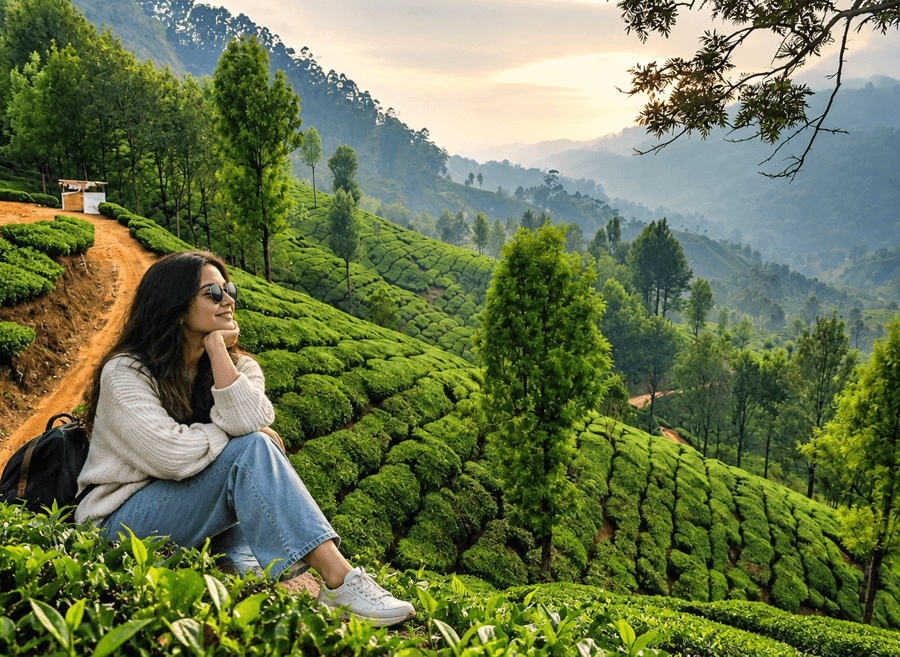
Hill destinations are often sold through views, but a view does not explain the whole stay. Munnar may appeal because of tea landscapes and opportunities for suitable outings. Other hill bases offer a different mix. Decide what you want to do before choosing how many stops to include.
On a compact holiday, one well-chosen base may be enough. Adding another hotel can create a second round of similar viewpoints while reducing time for the activities you actually enjoy. If you include two hill destinations, give each a separate purpose and check that the transfers remain comfortable.
Ask where your property is in relation to the arrival road and planned visits. A quiet retreat is attractive when you want to spend time there, but less convenient if every meal or outing requires another drive. Discuss access, walking conditions and dining arrangements as carefully as the room photographs.
Make the Outdoor Programme Flexible
Before confirming a walk, explain your ability and ask about terrain, permissions and guiding. Weather can change what is sensible on the day. A short outing with time to enjoy the landscape is preferable to a demanding route chosen only for its reputation.
Respect plantation access and avoid entering working areas without permission. Follow established paths and ask before photographing workers closely. Your holiday scenery is also someone else's workplace. Small considerate choices help make the experience more comfortable for everyone involved.
7. Decide What You Want from the Backwaters
A backwater visit can mean very different things. You might want an overnight houseboat, a daytime cruise or a hotel stay with a shorter excursion. None is automatically the correct choice. Think about how you would like to spend the evening, the level of privacy you prefer and whether sleeping aboard genuinely appeals to you.
If booking a houseboat, ask for details of the actual vessel or an accurately defined category. Confirm cruising hours, mooring arrangements, meals, bathrooms and air conditioning. Find out whether the boat is exclusive to your party. A general promise of luxury cannot answer these practical questions.
A shorter boat outing may fit better when your group wants time on the water followed by the facilities of a hotel. Consider boarding access and the comfort of everyone travelling. Compare the complete experience rather than deciding from a single photograph of an attractive boat.
Old sea piers at Alappuzha beach, photographed in 2023. Photo: BgbwikiV4, Wikimedia Commons, CC0 1.0.
Leave Time Around the Cruise
Avoid scheduling every remaining hour. You may appreciate a relaxed meal, a quiet afternoon or an appropriate walk where access is permitted. The waterways are part of a lived-in landscape, so respect private houses and gardens. Keep rubbish with you and do not disturb people simply to obtain a closer picture.
8. Give Kochi a Clear Brief Instead of an Endless Checklist
Kochi can work as an introduction to Kerala or as a final base before departure. Fort Kochi and Mattancherry offer a varied combination of streets, heritage visits, waterfront scenes and food. The day becomes easier when you decide which interests matter most and leave space between them.
Read the official Kerala Tourism overview of Fort Kochi for ideas, then build a smaller shortlist. Do not assume that every venue follows the same visiting hours or suits the same interests. Confirm the places that are essential, and treat other stops as optional.
If your time is limited, a private Kochi sightseeing day can provide a useful framework to review. Explain your walking preferences and whether you want a cultural performance, food break or time to explore independently. Ask what changes are possible if a venue is unavailable.
Cruise visitors should give the organiser the required return time and confirm an appropriate buffer. Hotel guests should consider where the tour finishes and how they will get back afterwards. These are small details, but they have a direct effect on whether the end of the day feels relaxed.
9. Extend into Karnataka for a Reason
Karnataka can deepen a South India journey through palace heritage, detailed temple architecture and archaeological landscapes. It is a good addition when those experiences genuinely interest you and the available time supports the extra travel. It is less helpful when it is included simply to increase the number of states on the itinerary.
Mysuru, Belur, Halebidu and Hampi do not form one interchangeable group of stops. Look at their individual appeal and the connections needed to reach them. Hampi in particular deserves enough time to appreciate its broader setting, rather than being treated as a quick addition at the end of a distant route.
For a longer holiday, review a three-state journey through Tamil Nadu, Kerala and Karnataka. Compare the overnight stays and driving days, not just the highlights. Ask whether adding time or removing a stop would create a better balance for your own group.
10. Make Transport Details Part of the Booking Decision
A private car and driver can simplify a route with several overnight bases, but the quotation should explain exactly what is provided. Confirm the vehicle category, usable luggage space and seating arrangement. Passenger capacity alone does not tell you how comfortable the journey will feel with everyone and their suitcases aboard.
Ask about tolls, parking, interstate charges and driver allowances. Check whether airport transfers and local sightseeing are covered on all relevant days. Explain child-seat needs, mobility concerns or motion sensitivity early enough for the provider to respond properly. Specific requirements are easier to address before the booking is finalised.
Keep transport and guiding separate in your expectations. A driver may be helpful with local arrangements without being booked to interpret major historical sites. Ask where specialist guides are included and in which language. Agree on reasonable daily timings and breaks so the itinerary works for travellers and the person responsible for driving.
11. Spend on the Parts of the Holiday You Will Use
A larger budget does not automatically create a better experience. The most valuable upgrade might be another night in a favourite destination, a knowledgeable guide or additional space in the vehicle. A decorative hotel upgrade may contribute less if you arrive late and leave before you can enjoy it.
Location deserves attention. A convenient hotel can make independent walks and dinner easier, while a remote property may suit a deliberate rest period. Choose according to how you plan to use each stay. There is no reason every night of the holiday must follow the same accommodation style.
Compare quotations item by item, including room categories, meals, entrance fees and boat arrangements. Ask what remains optional and obtain cancellation terms in writing. A useful budget should make the trip clearer. If an unexplained supplement appears, request an answer before paying rather than hoping it will be insignificant later.
12. Leave Room for the Holiday to Become Personal
Planning works best when it supports curiosity rather than replacing it. You might find yourself interested in a workshop, a particular dish or a neighbourhood you expected to pass through quickly. A little unallocated time gives you a chance to follow those interests without disrupting the rest of the journey.
This flexibility has practical limits, so discuss changes clearly. Ask what can be adjusted without affecting reservations or the next transfer. Respect agreed arrangements and recognise when a new idea needs additional time. A private holiday should feel responsive, but it still benefits from realistic expectations.
Record a few details at the end of each day if you enjoy doing so. A question answered by a guide or the name of a dish can preserve something a photograph misses. The aim is not to document everything. It is to remember the connections that make one place feel different from another.
Questions Worth Answering Before You Confirm
Should You Book Flights Before the Route Is Finished?
Research both together. You need enough information about arrival and departure options to build a sensible route, but a cheap flight is not necessarily a good choice if it creates substantial backtracking. Compare the full journey, including airport transfers, extra hotel nights and any domestic connections. Once the route and flight timings support each other, confirm the arrangements in the appropriate order with your providers.
Avoid relying on an unconfirmed early check-in after an overnight flight. Ask your hotel or organiser how room access will be handled and whether it requires an additional booking. The first few hours can influence how you feel during the opening days, so treat recovery as a practical requirement rather than a luxury.
How Much Independent Time Should a Cultural Tour Include?
That depends on your interests and confidence, but some independent time can help the journey feel less directed. You might want to revisit a street, browse without a timetable or spend longer over lunch. Choose areas where you feel comfortable and ask how to return to your hotel. There is no need to turn every free period into an ambitious excursion.
Tell the guide when you would prefer explanation and when you would rather look quietly. Different travellers absorb places differently. A good visit can include both conversation and silence, without either being treated as wasted time. What matters is communicating your preferences politely and making sure the practical arrangements remain clear.
What Is the Best Way to Handle Food Preferences?
Explain dietary requirements before travel, then repeat important details directly when ordering. Ask about ingredients rather than assuming a dish is suitable from its name or appearance. Regional menus vary, and there is no requirement to make every meal unfamiliar. A combination of local discoveries and comfortable choices often works well during a longer journey.
Leave enough time for meals on transfer days. A schedule that ignores lunch or treats breakfast as something to finish in minutes is unlikely to feel relaxing. If a cooking experience interests you, ask about the format, location and what you will actually do. Choose it because you enjoy the activity, not simply because it appears on a package list.
What Should Change When Travelling with Children or Older Relatives?
Discuss the ordinary demands of the itinerary in detail. Ask about steps, walking surfaces, room access, toilets during transfers and the availability of suitable meals. A destination can be appropriate while a particular hotel or sightseeing arrangement is not. Individual needs deserve specific answers instead of a general assurance that a tour is suitable for everyone.
Build shorter sightseeing sessions around the group's energy. A pause at the right time can prevent the entire afternoon from becoming uncomfortable. Explain your priorities, but accept that a different pace may require fewer stops. The goal is a shared holiday people can enjoy, rather than a programme one person completes while others endure it.
How Do You Prepare for Changes Without Overplanning?
Identify the activities most dependent on weather, access or advance reservations. Ask what happens if they cannot operate and whether a replacement or refund applies. You do not need a second complete itinerary, but one appealing alternative in each main base can make decisions easier when conditions change. Choose alternatives you would actually enjoy.
Keep essential contacts and booking information accessible offline. Confirm how to reach the organiser while travelling and who handles urgent changes. Save sensitive documents privately rather than adding them to a publicly shared guide. A little preparation should reduce the amount of administration you need to do during the holiday itself.
Keep a final copy of the agreed route and review any changes together before you travel so everyone knows what to expect.
Make the Final Plan Easy to Enjoy
Before committing, read the itinerary without looking at the destination photographs. Imagine breakfast, checkout, the transfer, lunch and the next hotel arrival. Does the day still sound appealing? If it only works with perfect traffic and unlimited energy, simplify it. Removing one optional stop can improve several other experiences.
The best South India holiday is not the one with the longest description. It is the one that matches your interests, gives important places enough attention and leaves you comfortable enough to notice what happens between them. Make those choices early, and the journey has a much better chance of feeling like your own.






















Sign in to leave a comment.