
Watch enough home projects, and you'll see the same shortcut every time. Someone falls for one window, then fits that same window everywhere. It's easy. It looks tidy. It feels like the safe move. And it quietly throws away one of the best chances you've got to make a home actually nicer to live in.
Because here's the thing. Every room does a different job. Your bedroom and your kitchen have almost nothing in common. Your living room and your bathroom want opposite things from a window. Repeating one style across all of them means most rooms end up with a window that doesn't quite suit them.
A design-first approach turns the usual order on its head. You don't pick a window and make every room live with it. You look at each room, figure out what it genuinely needs, then choose the window to fit. Aluminium makes this painless, since a good system carries a type for every situation. So let's go room by room.
Start with What the Room Actually Does
Forget windows for a second. Think about the room first.
How's it used? At what time of day? What does it face, and where does the light come in? Is privacy an issue here, or is it all about the view? Does the room get hot, stuffy, loud?
Those answers steer everything. A room baking in the afternoon sun wants nothing like what a cool north-facing study wants. A bathroom needs air and privacy at the same time. A living room built around a garden is really asking for glass and openness above all else. That's the whole idea behind good house window design: start with the room, not the window. Get into the habit, and the right choice for each space tends to announce itself.
The Living Room: Light, View, and Openness
This is usually where you go big. It's the room the family lives in and where guests land, so it earns the most generous treatment, and the priorities are light, a real link to the outdoors, and a feeling of space.
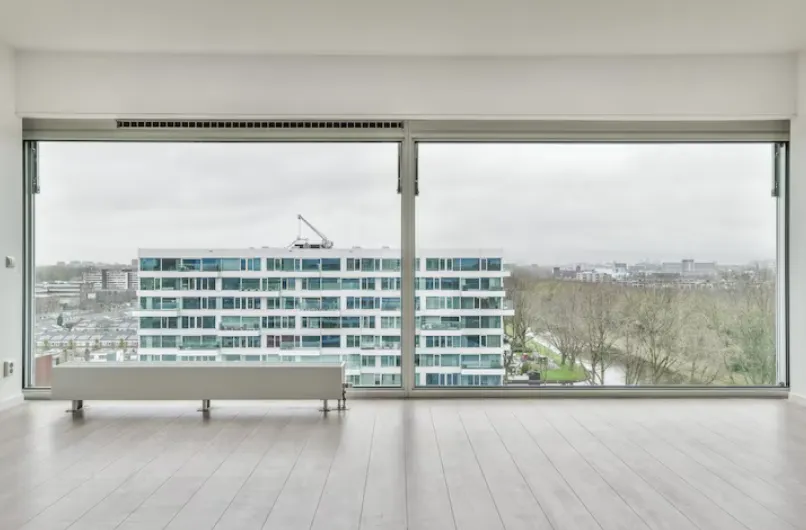
So this is the room for large glass and wide openings. Aluminium sliding windows open the space to a balcony or garden and let daylight flood in. If there's a view worth having, an aluminium fixed window gives you the most glass and the slimmest frame of any type, holding the outlook clean with nothing cutting across it. Plenty of homeowners run both together, a big fixed pane for the view with operable sections beside it for air. What you're chasing is a living room that feels open, bright, and connected, and the window design for home should back that up.
Bedrooms: Comfort, Quiet, and Control
Bedrooms are trickier. You want fresh air and daylight, sure, but also privacy, quiet, and some say, control over the light when you're trying to sleep.
Aluminium casement windows are the obvious fit. They swing open to let in a breeze and steer it into the room, then seal tight when you close them, shutting out noise so you can actually rest. That control counts in a bedroom, where you might want a crack of air on a cool night and the whole thing thrown open on a warm morning. If the bedroom opens onto a balcony or terrace, an aluminium French window brings in light and an easy line to the outdoors, wide open when you want it, snug when you don't. The whole point is a room that feels restful, private, and easy to sink into.
Kitchens: Ventilation Where It Counts
Kitchens have one demand that trumps the rest. They have to shift heat, steam, and cooking smells fast. Cook a proper Indian meal in a stuffy kitchen, and you'll know within minutes how quickly it turns miserable.
An openable aluminium window near the cooking zone is the fix. Put it in the right spot, and the rising heat and fumes escape before they fill the room, so the kitchen stays fresher and far nicer to work in. A casement or top-hung style that opens outward does this best, pushing the hot air out. And if the kitchen also needs decent light, pairing an operable section with a fixed pane covers both. For a kitchen, the house window design really comes down to airflow first, with light a close second.
Bathrooms and Utility Spaces: Air Without Exposure
Bathrooms and utility rooms are easy to skip past, but they carry a specific double demand. They need solid ventilation to clear moisture and head off damp, and they need privacy while they do it.
The usual answer pairs an openable window with the right glass. Frosted glass lets light through while blocking the view in, so the room stays bright and private at once. Set the window high on the wall, or use one that opens without exposing the room, and you get airflow without giving anything away. Aluminium is well suited to these damp-prone spots too, since it won't rot, swell, or corrode in constant moisture the way other materials do. Handle these rooms well, and you keep damp and mould out of exactly the places most likely to breed them.
Studies, Stairwells, and In-Between Spaces
It's often the overlooked rooms where a design-first approach really earns its keep. A study needs steady, glare-free light to work, which a north-facing window or a well-placed fixed pane can provide. Stairwells and landings are usually dark and ignored, and a generous fixed or French window pours daylight in and gives them some life. Dining nooks, corridors, home offices, each has its own little brief, and matching the window to it lifts spaces that a one-size-fits-all approach would just leave dead.
That's the quiet reward of planning room by room. The spaces that normally get ignored end up among the best in the house, purely because someone stopped to think about what they needed.
Tie It Together with One System
None of this means a mismatched jumble of windows. The move is to pick different window types from a single aluminium window system, so every opening shares the same frame profile, finish, and quality even as the style shifts to suit the room.
That way you get both. Each room gets exactly the window it needs, and the house still reads as coherent rather than cobbled together. A quality system on a strong alloy, like Eternia's Duranium-based range, is what holds it together, offering casements, sliders, fixed panes, and French windows in one consistent aluminium windows design. What you end up with is a home that works beautifully in every room and looks deliberate throughout.
Design-First Means a Home That Fits You
Planning windows room by room takes a bit more thought than settling on one style and repeating it. But what you get back is a home that genuinely suits how you live. Bright where you want it bright. Airy where you need the air. Private where privacy matters. Quiet where you sleep.
If you're building or renovating, this is one of the more rewarding ways to think about windows for houses. Start with each room and what it does, choose the window to match, and pull it all from one quality aluminium system to keep it cohesive. Do that, and you land on a home where every window feels right, because every window was chosen for the room it actually serves. That's design-first. And it's the difference between a house that merely has windows and a home that was thoughtfully designed.
























Sign in to leave a comment.