Play Dough for Kids India: How to Choose the Best Creative Dough Set for Children

Parents looking for engaging activities for children often want toys that are fun while also supporting creativity, coordination, and hands-on learning. Modeling dough is one such option because children can roll, press, shape, cut, and mold it into their own creations.
For families comparing play dough for kids India, the right set should offer more than bright colors. It should be easy for small hands to handle, suitable for creative activities, and supported by age-appropriate safety features. A well-designed dough kit can turn ordinary playtime into an activity where children create animals, food shapes, objects, characters, and imaginary scenes.
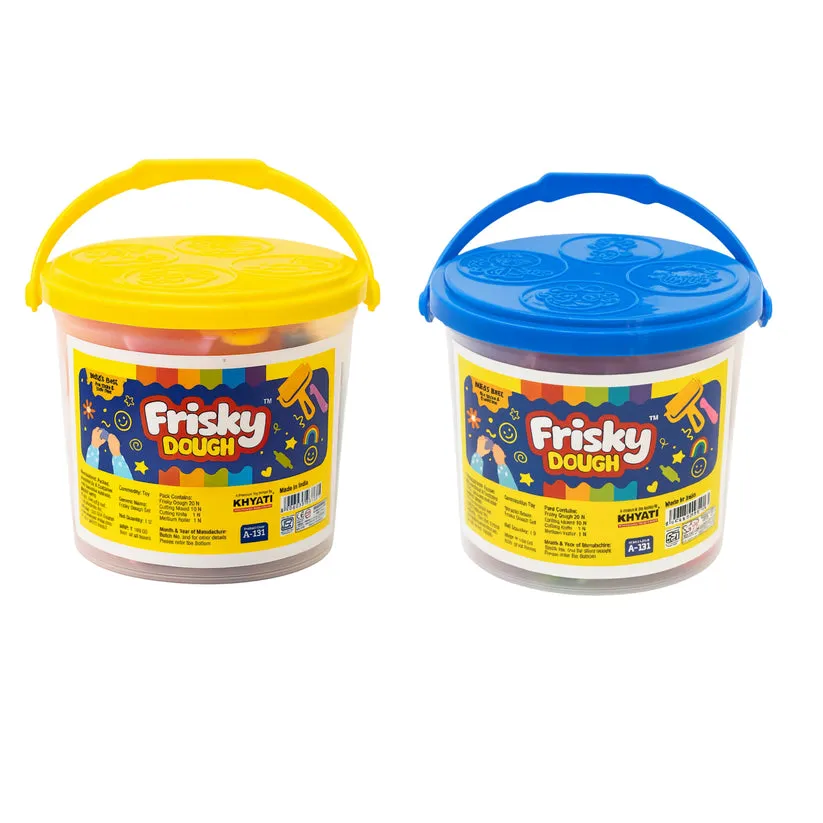
Frisky India offers the Frisky Dough 2 Bucket Set, a modeling dough kit designed around open-ended creative play. The product page states that each bucket contains 300g of soft, BIS-certified modeling dough, along with a roller, precision knife, and 10 molds. The dough is described as non-toxic and designed to be easy for children to shape and mold.
Why Is Play Dough a Useful Activity for Children?
Play dough gives children an opportunity to use their hands while thinking about shapes, colors, sizes, and patterns. Unlike toys with a fixed purpose, dough can become something different every time a child plays with it.
A child might make a simple ball one day, a miniature animal the next, and a pretend bakery or garden later. This open-ended approach gives children room to make decisions independently.
Hands-on activities can also help children practice basic fine motor movements. Rolling, pinching, pressing, flattening, and cutting require controlled hand movements. With regular age-appropriate practice, these activities can support coordination between the hands and eyes.
For parents, another benefit is that dough play can be adapted to different interests. A child interested in animals can create an animal collection, while another child may prefer making food, vehicles, houses, or characters.
What Should Parents Look for in Dough Toys for Kids?
Choosing clay toys for kids involves more than selecting a colorful package. Parents should consider the material, age suitability, accessories, storage, and the type of activities the set supports.
Safety should be a starting point. The Frisky India website states that its dough products are non-toxic, lab-tested, BIS-certified, and suitable for children aged 3 and above. Younger children should have adult supervision during play.
Texture also matters. Dough that is soft and easy to mold can make creative activities more comfortable for small hands. Children should be able to flatten, roll, and reshape the material without excessive effort.
Accessories can add another layer of play. Molds and shaping tools allow children to experiment with different techniques instead of using their hands alone.
How Does the Frisky Dough 2 Bucket Set Support Creative Play?
The Frisky Dough 2 Bucket Set is designed to give children several ways to work with modeling dough.
According to the product page, the set includes two buckets with 300g of dough in each bucket. It also includes a roller, a precision knife, and 10 fun molds. These tools can be used for flattening, shaping, cutting, and creating different forms.
This combination can make the set useful for both free play and guided activities.
For example, parents can ask children to create five different animals using the molds and their own ideas. Another activity could involve making a pretend meal with dough in different colors. Children can also create simple objects and then describe what they have made.
The goal does not have to be producing a perfect model. The process of making, changing, and trying again is an important part of creative play.
What Skills Can Children Practice With Modeling Dough?
Modeling activities can involve several basic skills at the same time.
Fine motor practice: Rolling and shaping dough requires children to use their fingers and hands in controlled ways.
Hand-eye coordination: Children need to watch what their hands are doing while forming a particular shape.
Creative thinking: Dough does not have one correct final result. Children can decide what they want to make and how they want to make it.
Color recognition: When children use different dough colors, parents can introduce simple color identification and matching activities.
Following instructions: Adults can give children simple challenges, such as making a circle, a flower, or an animal.
Storytelling: Finished dough creations can become part of a story. A child could make several characters and create a short pretend adventure around them.
These activities make clay toys for kids useful not only as entertainment but also as tools for hands-on learning.
Where Can Parents Use Dough Activities at Home?
Dough play does not need a large playroom. A clean table, tray, or other suitable surface can be enough.
At home, parents can create a short creative session after school or during weekends. Keeping the activity limited to 20 or 30 minutes can also make it easier for children to stay engaged.
Parents can prepare simple themes based on the child's interests.
An animal day could involve creating dogs, cats, birds, fish, or insects. A food theme could include fruits, vegetables, cakes, or pretend pizzas. A transportation theme could include cars, buses, trains, and airplanes.
The Frisky website also highlights dough activities for playdates, classrooms, birthdays, and quiet time at home.
How Can Parents Make Dough Play More Educational?
The easiest way to add learning is to turn creative play into simple questions.
Instead of telling a child exactly what to make, ask questions such as:
“What shape are you making?”
“How many pieces do you need?”
“Can you make this object bigger?”
“Which colors did you use?”
“What happens if you combine these two colors?”
These questions encourage children to think while they play.
Parents can also introduce basic counting. Ask a child to make three balls, five leaves, or four small animals. Older children can compare sizes, identify patterns, or create simple sequences.
The activity can also support vocabulary. Children can name the objects they make and describe their colors, shapes, textures, and uses.
Why Is a Two-Bucket Dough Set Practical for Families?
A two-bucket format can provide children with more material for group activities or extended creative sessions. It can also make it easier for siblings or friends to play together.
The Frisky Dough 2 Bucket Set currently appears on the product page at ₹400, reduced from ₹540, although availability and pricing can change. The page currently marks the product as sold out.
For parents considering a set, it is useful to check the current product page for availability, pricing, included accessories, and shipping information before purchasing.
View the Frisky Dough 2 Bucket Set
How Should Parents Store Modeling Dough?
Proper storage can help maintain the dough's texture between play sessions.
Frisky recommends keeping its dough in an airtight container when it is not being used. The brand also recommends storing it in a cool, dry place away from direct sunlight.
Children should also play on a suitable surface and clean their hands and the play area after finishing. Keeping the tools and dough together in a dedicated container can make the next activity easier to start.
Parents should follow the product's age guidance and supervise younger children during play.
What Makes Frisky a Useful Option for Creative Play in India?
Frisky focuses on slime and dough products designed around sensory and creative play. Its website says the products are made in India and that its dough and slime products are non-toxic, tested, and BIS-certified.
The brand also offers several dough options, including a 12-color set, bright-color dough, dark-color dough, and the 2 Bucket Set. This gives parents different formats depending on the type of activity they want to create.
For families seeking clay toys for kids, the key consideration should be whether the product encourages children to create rather than simply watch or press a button.
What Are Some Simple Dough Activities for Kids?
Parents can start with activities that require very little preparation.
Make an animal: Ask the child to create a favorite animal and add details such as eyes, ears, legs, or a tail.
Create a garden: Make flowers, leaves, vegetables, and small insects.
Build a pretend meal: Children can make fruits, vegetables, cookies, or other imaginary foods.
Practice shapes: Make circles, squares, triangles, stars, and other simple forms.
Tell a story: Create two or three characters and use them in a short story.
Make a color challenge: Ask children to use specific colors to create an object.
These activities can be adjusted for different ages and skill levels.
Why Should Parents Choose Open-Ended Creative Toys?
Children often benefit from toys that allow them to make decisions instead of following only one fixed sequence.
With modeling dough, there is no single way to create a house, animal, flower, or character. A child can make something, change it, flatten it, and start again.
That flexibility can make creative play feel less like a task and more like personal expression.
For parents in India comparing play dough for kids India, a useful approach is to look at the complete play experience: material safety, age suitability, texture, included tools, storage, and the number of activities a child can create with the set.
The Frisky Dough 2 Bucket Set brings several of these elements together through soft modeling dough, shaping tools, and molds. For families interested in hands-on activities, it can provide a simple way to add more creative time to a child's routine.
Visit Frisky India for dough and sensory play products
Frequently Asked Questions About Play Dough for Kids in India
1. What is the best play dough for kids in India?
The best option should be age-appropriate, safe, easy to mold, and suitable for creative activities. Parents should also check the included tools, storage instructions, and product certifications before buying.
2. Is modeling dough suitable for children aged 3 and above in India?
Frisky states that its slime and dough products are suitable for children aged 3 and above. Younger children should be supervised by an adult during play.
3. Where can I buy clay toys for kids in India?
Parents can compare dough and sensory play products through specialized Indian toy brands and online stores. Frisky India offers dough and slime products through its website.
4. What are the benefits of play dough activities for kids?
Play dough activities can encourage creative thinking and provide practice with fine motor movements, hand-eye coordination, shaping, and sensory exploration.
5. Is the Frisky Dough 2 Bucket Set safe for children?
The product page describes the dough as soft, non-toxic, and BIS-certified. Frisky also states that its products are lab-tested and child-safe.
6. What comes in the Frisky Dough 2 Bucket Set?
The set includes two buckets of modeling dough, with 300g in each bucket, plus a roller, precision knife, and 10 molds, according to the product page.
7. How can I use play dough for learning at home in India?
Parents can use dough to practice colors, shapes, counting, object names, storytelling, and simple creative challenges. The activities can be adjusted according to the child's age.
8. How should I store modeling dough after children play?
Frisky recommends storing its dough in an airtight container and keeping it in a cool, dry place away from direct sunlight.
9. What are good creative toys for kids at home in India?
Open-ended toys such as modeling dough, building materials, drawing supplies, and age-appropriate craft sets can give children opportunities to create and experiment independently.
10. How can parents make clay and dough activities more fun for kids?
Use simple themes such as animals, food, nature, vehicles, or storytelling. Parents can also introduce small challenges involving colors, shapes, counting, or creating something within a set time.


Sign in to leave a comment.