

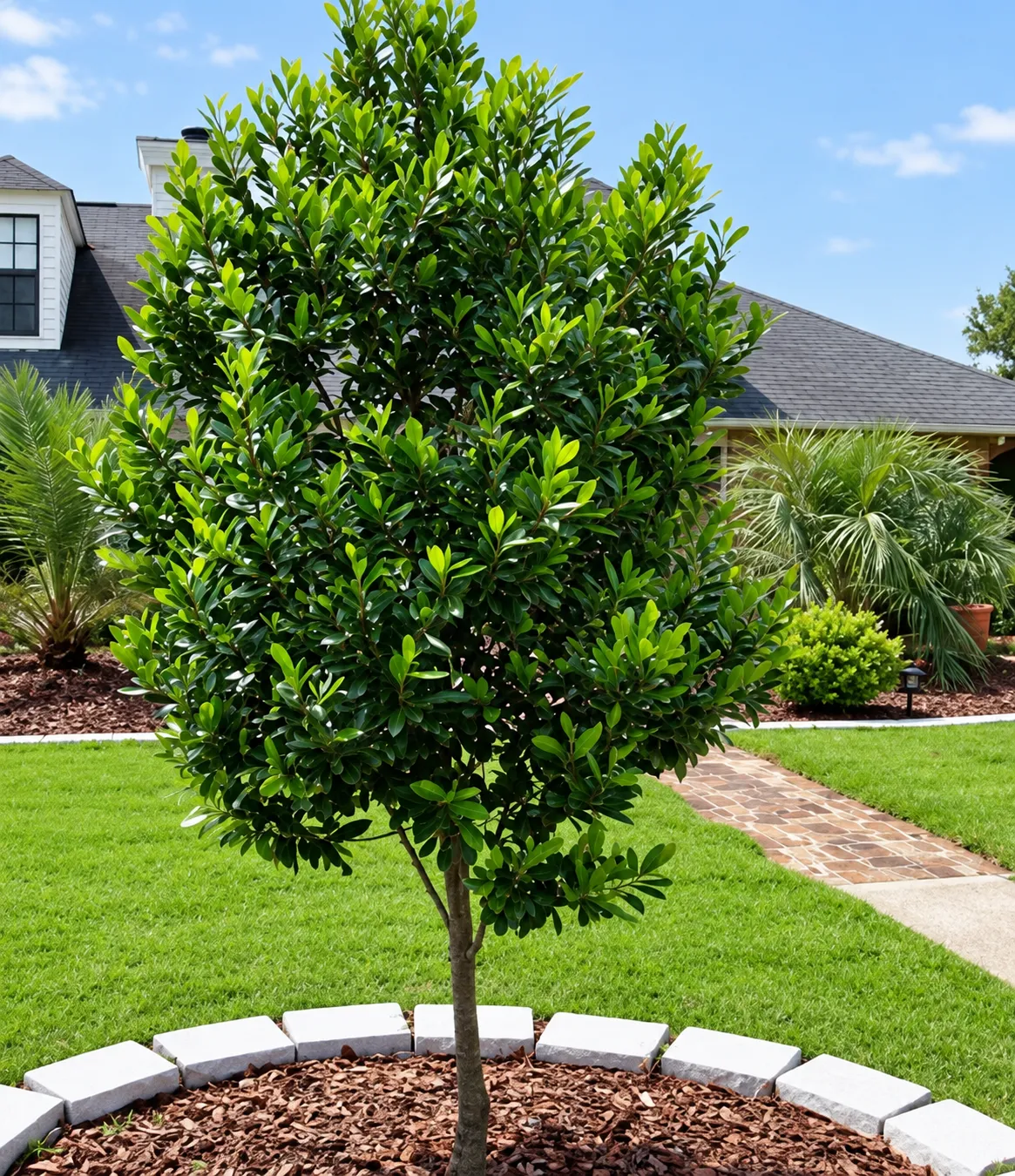
Choosing an evergreen for a privacy screen requires more than considering how quickly a plant grows. Homeowners also need to think about mature size, foliage density, sunlight, watering, soil drainage, pruning, and the amount of space available. Podocarpus Gracilior, commonly called African Fern Pine or Fern Pine, is a versatile evergreen that can be grown as a specimen tree or managed as a hedge.
Native to eastern Africa, this plant has fine, narrow foliage that gives it a softer appearance than many traditional screening plants. It can also tolerate pruning and adapts to different landscape settings, making it useful for creating privacy while maintaining a relatively refined appearance.
Why Use Podocarpus Gracilior for Privacy?
The main advantage of Podocarpus Gracilior for screening is its combination of evergreen foliage, vertical growth, and tolerance of pruning.
Plants Express describes Fern Pine as suitable for hedges, windbreaks, and privacy screens because of its upright growth and dense foliage.
The plant can also create a softer visual barrier than some tightly clipped hedges. Its narrow leaves and slightly graceful growth provide texture while still creating substantial visual separation.
This makes it suitable for property boundaries, patios, pools, driveways, and areas where homeowners want year-round greenery.
How Much Sun Does It Need?
Fern Pine can grow in full sun or partial shade. The University of Florida's IFAS Extension notes that it tolerates both conditions but performs best in well-drained soil and should be protected from frost.
A sunny location can encourage stronger, denser growth, which is particularly useful when the goal is to establish a privacy screen.
However, extremely hot locations may require some protection, especially when plants are young. The Missouri Botanical Garden recommends full sun to part shade and notes that afternoon shade can be helpful in climates with very hot summers.
What Soil Does Fern Pine Prefer?
Good drainage is one of the most important soil requirements.
The Missouri Botanical Garden recommends deep, well-draining soil and notes that the plant can adapt to clay and sandy soils. The University of Florida similarly advises against planting it in poorly drained locations.
Before planting, observe how quickly water drains from the intended site. Persistent standing water can create unfavorable conditions for the roots.
Improving drainage, selecting an appropriate planting location, and avoiding excessive irrigation can help create better growing conditions.
How Much Water Does It Need?
Water requirements change as the plant becomes established.
Newly planted Fern Pines need consistent irrigation while their roots develop. Once established, the plant can tolerate relatively dry conditions. The University of Florida reports that established specimens can require no irrigation, although actual water needs depend on local conditions.
This does not mean young plants should be left without water. Establishment is an important period when consistent moisture supports root development.
Homeowners should adjust irrigation according to rainfall, temperature, soil type, and plant maturity rather than following a fixed schedule throughout the year.
How Should Podocarpus Gracilior Be Pruned?
Pruning is particularly useful when Fern Pine is grown as a hedge.
Regular trimming can encourage a denser appearance and help control height and width. The plant responds well to pruning and shearing, according to the Missouri Botanical Garden.
The pruning strategy depends on the desired result. A formal hedge requires more frequent shaping, while an informal screen can be allowed to retain a softer, more natural appearance.
Removing dead, damaged, or poorly positioned branches can also improve the overall structure of mature plants. For established hedges, selective thinning may improve light and air circulation within dense growth.
How Far Apart Should Plants Be?
Spacing depends on the size of the plants at installation, desired privacy, and how quickly the homeowner wants the screen to become visually continuous.
A common landscape recommendation is to plant Fern Pines approximately three feet apart when creating a hedge.
However, spacing should not be based solely on achieving immediate coverage. Plants need sufficient room for root development, airflow, and long-term growth.
The eventual mature size of the species is much greater than the dimensions of a maintained hedge, so homeowners should also consider how much room is available behind and beside the screen.
Can It Be Grown as a Tall Hedge?
Yes. Fern Pine is frequently used as a tall screening plant.
Its ability to tolerate pruning makes it possible to maintain a controlled hedge rather than allowing every plant to develop into a full-sized tree. However, long-term maintenance is necessary if a specific height and width are required.
A homeowner should establish the intended dimensions before planting. It is generally easier to maintain a hedge at a manageable size through consistent pruning than to allow it to become significantly overgrown and attempt to reduce it later.
What Problems Can Occur?
Fern Pine is generally considered adaptable, but poor growing conditions can still create problems.
The most important considerations include:
- Poor soil drainage
- Excessive irrigation
- Frost exposure
- Insufficient sunlight
- Inadequate planting space
- Improper pruning
The University of Florida notes that frost can damage the plant and that poorly drained soil should be avoided.
Mature plants can also become quite large if allowed to grow naturally. Planning for their eventual dimensions helps prevent conflicts with buildings, pathways, fences, and other landscape features.
Conclusion
Podocarpus Gracilior is a versatile evergreen that can provide an attractive and durable privacy screen when planted in an appropriate climate and maintained correctly. Its fine foliage, substantial potential height, and ability to tolerate pruning make it suitable for both informal screens and more structured hedges. For landscapes comparing a ficus hedge with other evergreen screening options, Fern Pine offers a different combination of texture, growth habit, and maintenance characteristics. Selecting between them should depend on the property's climate, available space, desired screening height, and preferred appearance. With appropriate planning and consistent care, Fern Pine can become a long-lasting green boundary that provides privacy while adding structure and visual interest to the landscape.















Sign in to leave a comment.