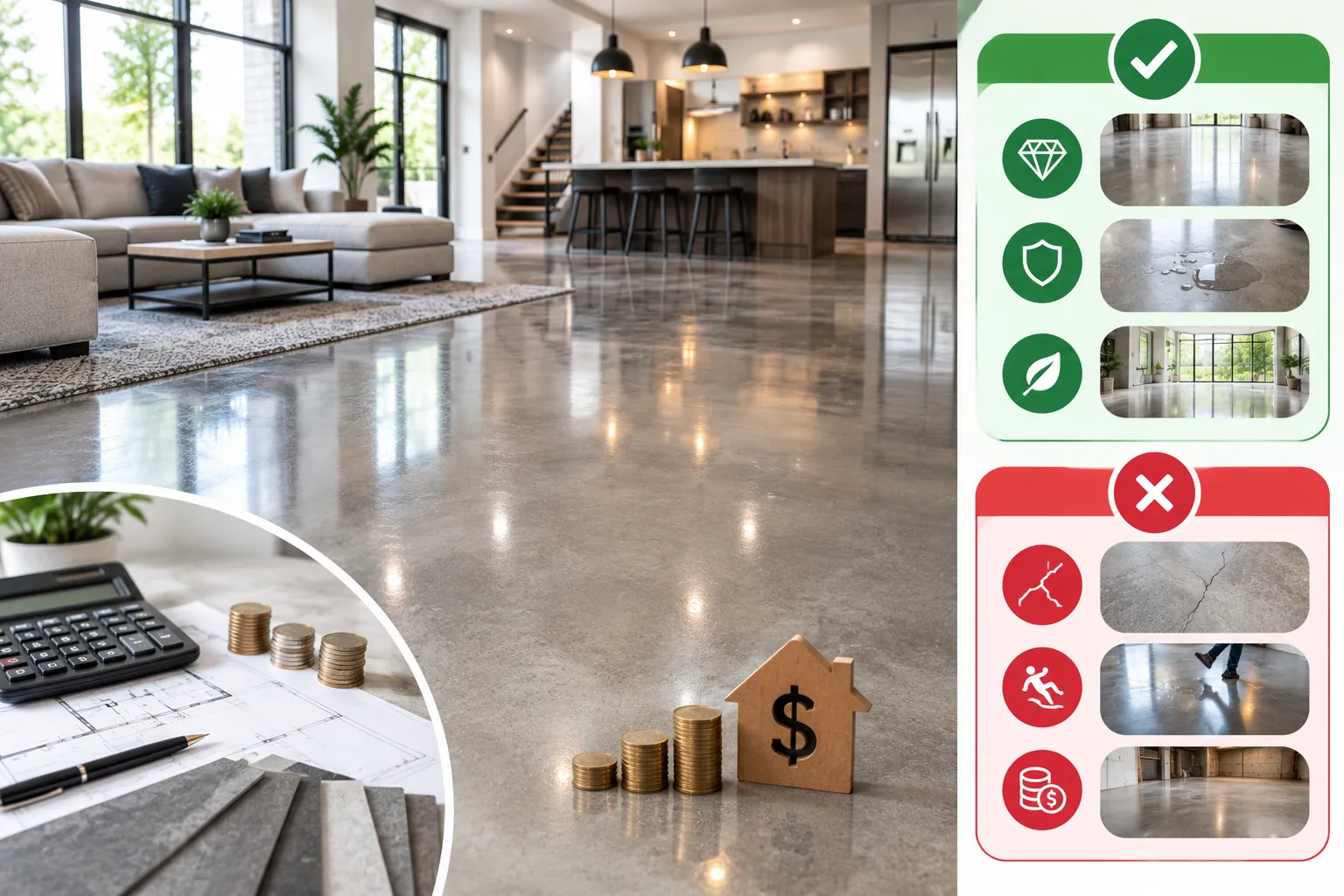

Polished concrete flooring has this reputation of looking super fancy in magazines while secretly being kind of a mystery to most homeowners. People know it's shiny and tough, but they don't really know how it happens or what it costs. I got curious after seeing a coffee shop floor that I couldn't stop staring at, so I asked the owner how they did it, and the answer was way more interesting than I expected.
How the Shine Gets There - Polished Concrete Flooring
It isn't paint or a thick coating. Crews grind the surface with heavy machines using diamond pads, starting rough and moving to finer and finer grits, like sanding wood but on a bigger scale. A chemical hardener gets applied to densify the surface, and then more polishing brings out the sheen. The result is a glossy finish that comes from the concrete itself, which is why it can last so long without peeling.
The Good Stuff
It's durable, it resists stains once sealed, and it reflects light so rooms feel brighter. Cleaning is basically sweeping and a damp mop. There's no waxing, no heavy upkeep, and no grout lines to scrub. In a lot of ways it's one of the most practical floors you can own. And honestly the look is just cool, in a modern, clean, slightly industrial way that fits many styles.
The Not So Good Stuff
It's hard. Dropped dishes will lose, and standing for hours can bother backs and knees. It can feel cold in winter unless you add rugs or radiant heat. Polished surfaces can also be slippery when wet, so some folks choose a lower sheen or add a slip resistant sealer in kitchens and entries. And if your slab has cracks, stains, or patches, they may show up, so expectations matter.
What It Costs
Pricing depends on slab condition, the level of shine, and how much grinding is needed. A basic satin finish costs less than a mirror gloss with decorative dyes. Existing slabs in good shape are cheaper to polish than ones with damage that needs repair. Compared to many other floors, the total can come out reasonable because you aren't buying a separate material, just the labor and sealers, and it holds up for years.
Things People Forget to Ask
Ask whether the slab is thick and healthy enough to polish, whether it has a vapor barrier underneath, and how the contractor handles dust. Dust control is a huge deal, since grinding can get messy. Also ask about maintenance and how often the surface should be re-treated. Online forums are full of folks who wish they'd asked more questions upfront, so don't be afraid to sound nosy.
Is It Worth It?
For garages, basements, studios, shops, and modern homes, absolutely. For cozy traditional spaces, it may feel out of place unless you're intentional. Think about comfort, lifestyle, and budget, then decide. A pro can walk the space with you and tell you honestly if your slab is a good candidate, and that single visit can save you from an expensive surprise.

























Sign in to leave a comment.