Polished Concrete Flooring vs. Epoxy: Which Lasts Longer?


Polished concrete flooring and epoxy get lumped together all the time, like they're the same glossy thing with different names. They aren't, and the difference matters if you're trying to decide what will still look good years from now. I learned that the hard way after a garage project where my buddy chose the wrong one and spent a weekend peeling pieces up with a scraper.
How Each One Is Made - Polished Concrete Flooring
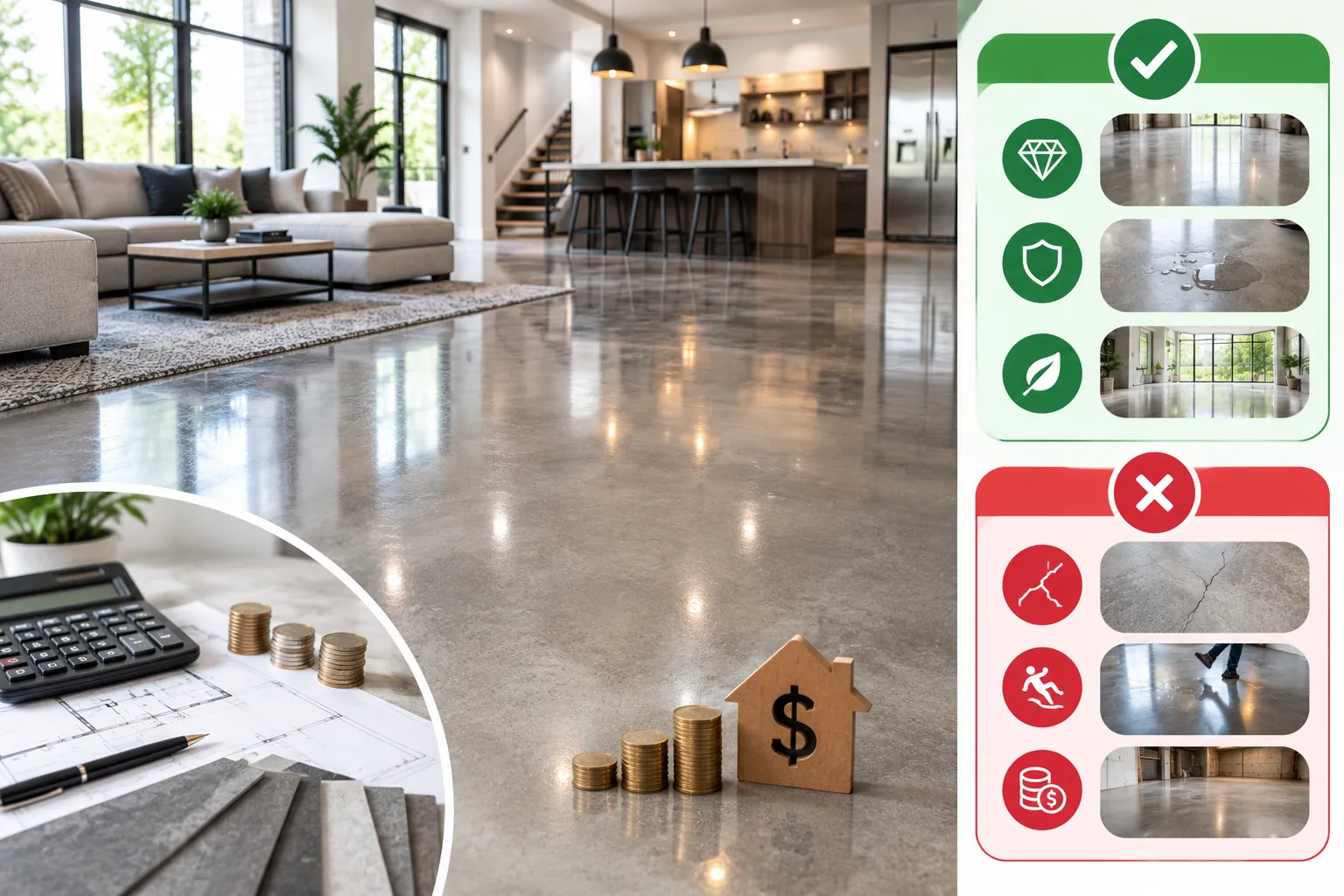
Polished concrete is the actual slab ground down with diamond abrasives and treated with a densifier until it shines. Nothing sits on top of it, the shine comes from the concrete itself. Epoxy is a coating, a resin and hardener mixed and rolled over the surface, forming a thick glossy layer. One is a refined surface and the other is a layer on top, and that fact explains most of what follows.
Wear and Tear Differences
Because polished concrete is the slab itself, it can't peel or chip off in sheets. It may show scratches or dull over time, but those can be re-polished. An epoxy coating can wear thin in high traffic zones, peel if moisture pushes up from below, or chip from impact. In busy places like shops or garages with hot tires, epoxy sometimes lifts in patches, which is exactly what happened to my buddy.
Moisture Is the Big Villain
Slabs breathe a bit, releasing moisture vapor. If that vapor gets trapped under an epoxy coating, bubbles and peeling can follow. Polished concrete deals with this better since there's no layer to detach. Either way testing the slab first is smart, but a coating is more at risk. It's one of those hidden problems that looks fine for a few months and then suddenly doesn't.
Looks and Maintenance
Epoxy offers more color options, flakes, metallic effects, and a super glossy, seamless finish that wow people. Polished concrete has a more natural, subtle look that can range from matte to mirror-like. Maintenance for both is easy, mostly sweeping and damp mopping. But damage repair is different, as polished floors can be buffed and refreshed, while a damaged epoxy coating might require sanding and recoating large sections.
Cost Over Time
Epoxy can be cheaper upfront in some cases, especially for simple coatings, but recoating every several years adds up. Polished concrete may cost more at the start because of the heavy grinding, though it generally needs less redoing. Think of it like buying cheap shoes versus a solid pair, one saves money today and the other pays off later, assuming you keep walking on them for years.
So Which One Lasts Longer?
In most real-life situations, polished concrete wins on longevity, as long as the slab is in good shape. Epoxy can still be a great choice for garages or spaces where you want bold color and chemical resistance, just expect to maintain it. Ask your installer to show past jobs and explain how they prep. The best floor is the one matched to your slab and your lifestyle, not just the shiniest one on social media.





Sign in to leave a comment.