

Prediction markets are changing how people engage with future events, from election outcomes and economic indicators to cryptocurrency movements, sports, and technology trends. Platforms such as Polymarket have demonstrated how market-based forecasting can turn collective opinions into measurable probabilities. This growing interest has encouraged entrepreneurs, fintech companies, and Web3 startups to explore prediction market platform development.
Building a Polymarket clone, however, involves more than replicating a familiar interface. It requires a secure trading environment, transparent market resolution, reliable data infrastructure, and a business model aligned with the platform's target audience and regulatory obligations.
Understanding the development process, essential features, implementation timeline, and operational considerations helps businesses make informed decisions before launching a prediction market platform.
What Is Polymarket Clone Development?
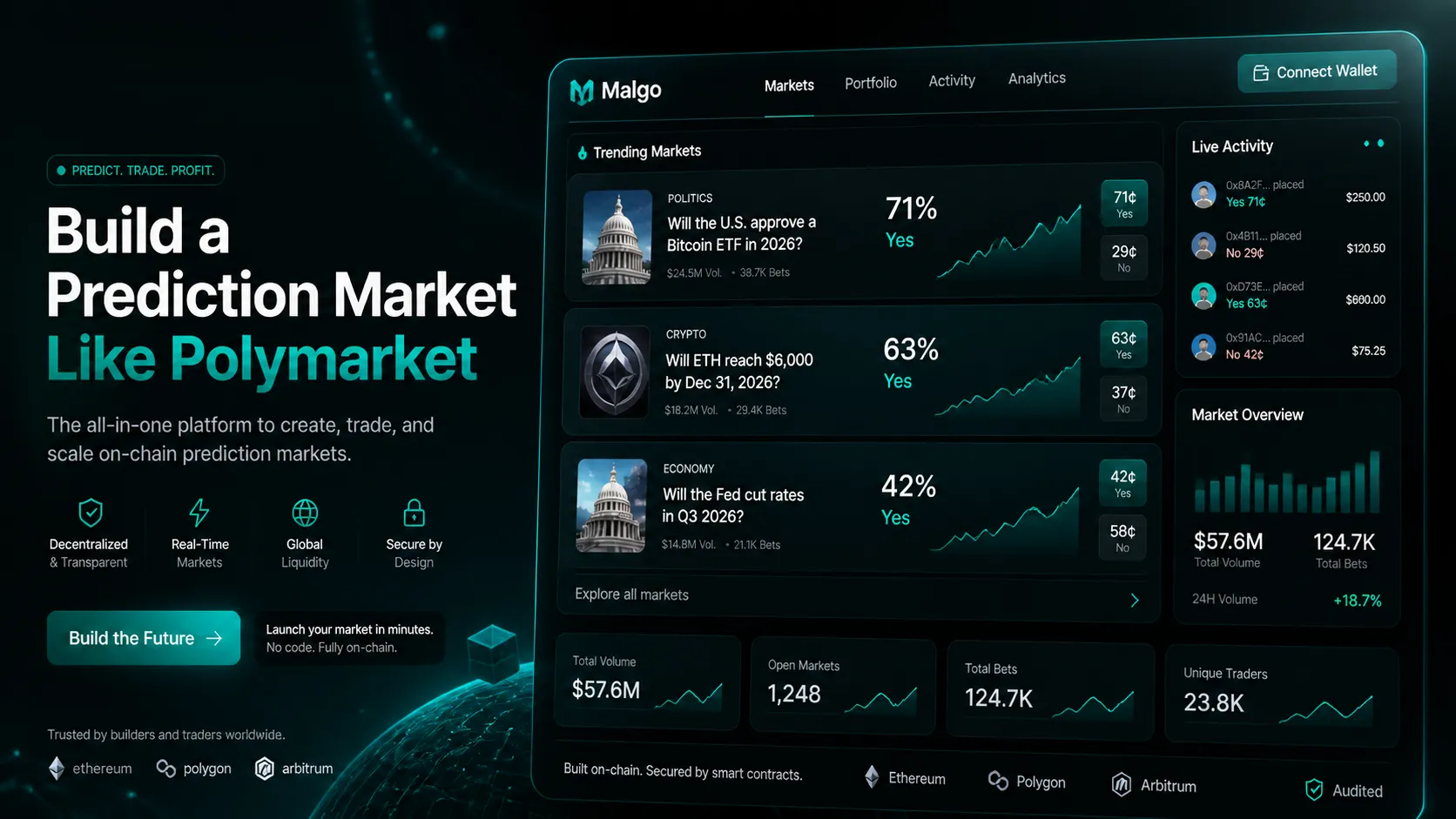
Polymarket clone development involves creating a prediction market platform inspired by the functionality and user experience of Polymarket. Users can participate in markets based on future events, purchase outcome shares, monitor changing probabilities, and potentially receive payouts when markets resolve according to predefined rules.
Unlike conventional polling applications, prediction markets allow participants to express their expectations through market activity. The resulting prices can indicate the collective probability assigned to a particular outcome, although they are not guaranteed to represent objective probabilities.
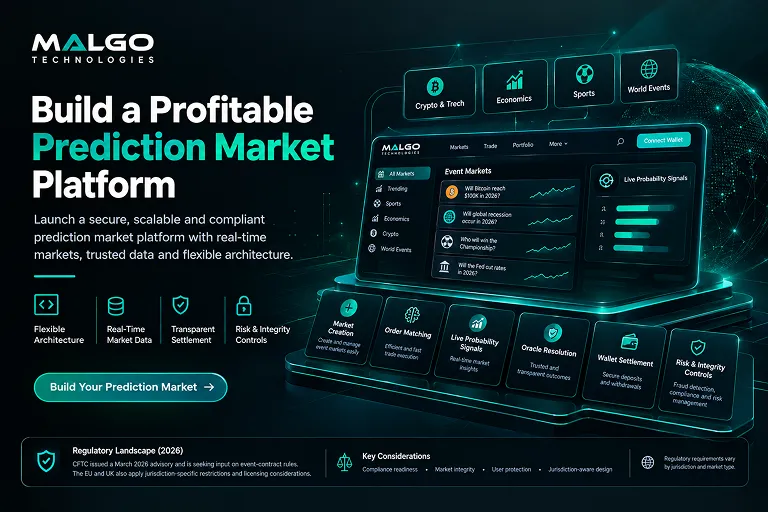
A typical platform combines user accounts, market creation, trading functionality, wallet integration, liquidity management, settlement mechanisms, and administrative controls. Depending on the business strategy, the system may operate on a blockchain, use centralized infrastructure, or adopt a hybrid architecture.
The objective is not simply to reproduce an existing product. It is to create a dependable platform that serves a specific audience, supports transparent participation, and can evolve as market demand grows.
Essential Features of a Polymarket Clone
Feature selection directly influences technical complexity, development priorities, and long-term platform performance. The most effective approach is to identify the capabilities required for a functional launch before introducing advanced features.
1. User Registration and Account Management
A streamlined onboarding process helps users access the platform without unnecessary friction. Essential capabilities include secure registration, authentication, profile management, account verification, and session controls.
Depending on the operating jurisdiction and business model, identity verification and additional compliance checks may also be necessary.
2. Prediction Market Creation and Management
Market creation is a core component of the platform. Administrators or approved market creators should be able to define event descriptions, possible outcomes, trading conditions, expiration dates, and resolution criteria.
Clear rules are particularly important. Ambiguous event descriptions can create disputes, undermine user confidence, and complicate settlement.
3. Trading Engine and Order Management
The trading engine processes user activity and maintains accurate market states. Depending on the selected trading model, the platform may support an order book, automated market makers, or another pricing mechanism.
A reliable engine should handle concurrent transactions, validate orders, prevent inconsistent balances, and provide timely updates. Performance testing is essential before opening markets to a large audience.
4. Wallet Integration and Transaction Processing
Wallet functionality allows users to manage supported assets and interact with platform transactions. A blockchain-based implementation may include wallet connectivity, smart contract interactions, transaction monitoring, and confirmation handling.
The system should also provide clear transaction histories and appropriate safeguards against unauthorized activity.
5. Market Resolution and Payouts
A prediction market needs a transparent process for determining winning outcomes. Resolution may rely on verified data providers, authorized administrators, decentralized oracle systems, or a combination of mechanisms.
Dispute procedures, exceptional circumstances, and payout rules should be documented before markets become available to users.
6. Admin Dashboard and Analytics
An administrative dashboard enables authorized personnel to manage users, review markets, monitor transactions, investigate suspicious behavior, and oversee disputes.
Analytics can help operators understand trading activity, liquidity distribution, user retention, and market participation. Role-based permissions and audit logs strengthen accountability.
Technology Stack and Architecture Considerations
The technology stack should reflect the platform's operating model, expected transaction volume, security requirements, and future expansion plans.
A web application may use React or Next.js for its frontend, with Node.js or another suitable backend framework managing business logic and APIs. PostgreSQL can support structured records, while Redis may assist with caching and time-sensitive data processing.
For blockchain-based platforms, developers may consider Ethereum-compatible networks, Solidity smart contracts, and suitable wallet integrations. The final choice depends on transaction characteristics, network reliability, ecosystem compatibility, and user experience requirements.
Real-time communication technologies can deliver market updates, while monitoring tools help identify service interruptions and unusual activity.
Architecture decisions should also address scalability, backup procedures, disaster recovery, access controls, and data integrity. Independent smart contract audits and penetration testing are valuable safeguards before production deployment.
Polymarket Clone Development Timeline
The development timeline depends on the platform's scope, integration requirements, team experience, and testing standards. A focused initial release generally follows several stages.
- Discovery and planning: Define the target audience, market categories, user journeys, trading model, and technical requirements.
- UI/UX design: Develop user flows, market pages, trading interfaces, dashboards, and responsive layouts.
- Core development: Implement authentication, market management, trading logic, wallets, APIs, and administrative functionality.
- Integrations and testing: Connect required services, validate transaction flows, assess performance, and test security controls.
- Deployment and monitoring: Prepare production infrastructure, configure alerts, validate operational procedures, and release the platform.
A relatively focused minimum viable product may take approximately three to five months, while a sophisticated platform with advanced trading mechanisms, extensive integrations, and stronger compliance workflows may require six to twelve months or longer. These are planning estimates rather than guarantees.
Launching with a clearly defined feature set can help businesses validate demand before expanding the product.
Business Considerations Before Launch
Regulatory Compliance and Market Restrictions
Prediction markets can fall under different legal frameworks depending on the jurisdiction, event categories, trading structure, and settlement mechanism. Some products may raise gambling, derivatives, financial promotion, consumer protection, or other regulatory concerns.
Businesses should obtain jurisdiction-specific legal advice before accepting users or facilitating transactions. Geographic restrictions, age controls, identity checks, recordkeeping, and transaction monitoring may be required.
Security and User Trust
Security should be part of the architecture from the beginning. Potential safeguards include smart contract audits, encryption, multi-factor authentication, secure key management, rate limiting, fraud detection, and incident response procedures.
Market rules and resolution evidence should remain accessible so participants understand how outcomes are determined.
Liquidity and User Acquisition
A technically sound platform can still struggle if its markets lack active participants. Early business planning should identify initial market categories, potential liquidity providers, community-building opportunities, and responsible user acquisition channels.
Market quality, transparent resolution, intuitive onboarding, and consistent performance can help build repeat engagement.
Revenue Model and Ongoing Operations
Possible revenue mechanisms include transaction fees, trading-related service charges, or other permitted platform services. Their suitability depends on user expectations, competitive positioning, applicable laws, and the underlying trading model.
Businesses must also plan for continuing expenses associated with infrastructure, security reviews, customer support, compliance, data services, and product improvements. Sustainable operations require more than a successful initial release.
Common Mistakes to Avoid
Several mistakes can undermine a prediction market project:
- Copying an existing platform without identifying a distinct market opportunity.
- Launching markets with unclear resolution criteria.
- Treating security audits as a final-stage activity.
- Underestimating liquidity requirements and user acquisition challenges.
- Expanding the feature set before validating core functionality.
- Overlooking legal restrictions across different jurisdictions.
Avoiding these issues requires disciplined planning, realistic technical priorities, and continuous evaluation after launch.
Conclusion
Polymarket clone development combines fintech engineering, market design, security, and business strategy. A successful platform needs more than familiar trading screens: it requires reliable transaction processing, transparent event resolution, appropriate compliance controls, and a clear plan for attracting active participants.
By prioritizing essential features, selecting a suitable technology stack, establishing realistic development milestones, and addressing operational risks early, businesses can build a prediction market platform designed for sustainable growth.
The strongest starting point is a well-defined product strategy supported by technical validation and jurisdiction-specific legal guidance. This foundation helps transform a prediction market concept into a credible, scalable digital product.






















Sign in to leave a comment.