
Polysilazane Market: Strategic Trends and Commercial Opportunities Through 2032
Market Landscape and Core Challenges
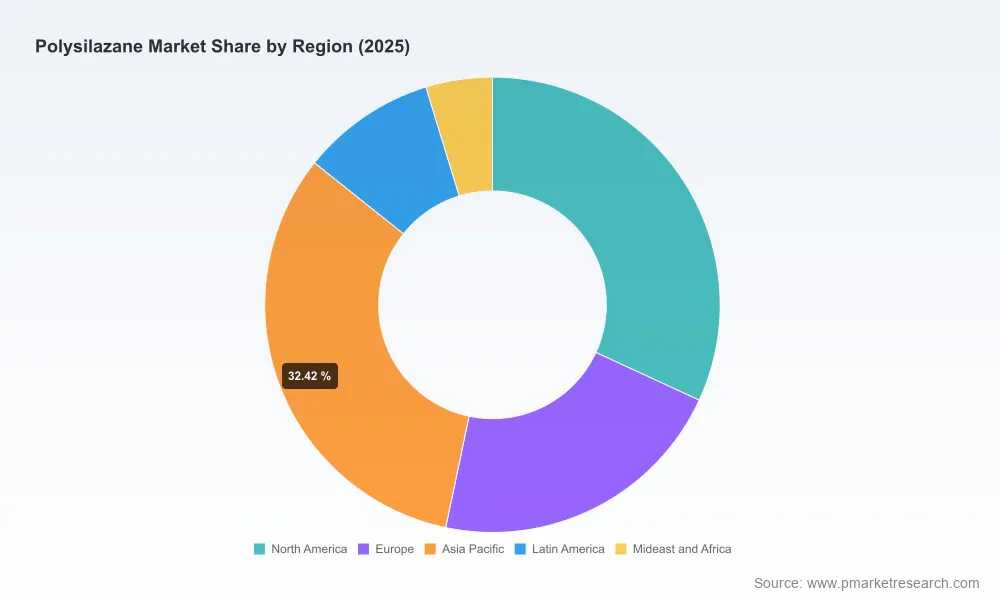
The polysilazane market has matured from a niche chemical segment into a strategically important materials category, driven by its unique ability to bridge organic processing flexibility with inorganic ceramic performance. Over the past five years, the market has expanded steadily, reaching a valuation of approximately 215 million USD in 2025 and maintaining a consistent upward trajectory. The compound annual growth rate of around 7 percent through 2032 signals sustained demand rather than speculative hype. This growth path reflects broader industrial shifts toward lightweight materials, advanced surface protection, and high-temperature resistant coatings across aerospace, automotive, electronics, and architectural applications. The market’s current size and projected expansion indicate that polysilazane is no longer an experimental additive but a foundational input for performance-critical manufacturing.
Despite the favorable growth trajectory, the industry faces structural challenges that demand strategic attention. First, raw material volatility and specialized precursor sourcing continue to pressure margins. Polysilazane synthesis relies on precise silane chemistry and controlled ammonolysis processes, making it sensitive to fluctuations in silicon-based feedstocks, energy costs, and regional regulatory constraints on hazardous intermediates. Manufacturers operating without diversified supply chains or backward integration face recurring cost unpredictability, particularly during periods of macroeconomic instability.
Second, the market’s technical complexity creates a high barrier to consistent quality but also fragments commercialization pathways. Achieving uniform curing behavior, controlled hydrolysis resistance, and reproducible ceramic conversion requires rigorous process control and application-specific formulation. End-users increasingly demand batch-to-batch consistency, especially in sectors like electronics and aerospace where material failure carries significant liability. Companies that cannot demonstrate robust quality assurance and technical support risk losing preference to more established resin providers, even when price differentials are notable.
Third, the market sits at a regulatory and sustainability inflection point. Traditional polysilazane applications have faced scrutiny around volatile organic compound emissions, flame retardant additives, and disposal of ceramic-precursor residues. At the same time, industries are accelerating their transition toward low-emission coatings, solvent-free formulations, and recyclable or lower-temperature curing systems. Manufacturers must balance performance requirements with evolving compliance expectations, environmental product declarations, and customer sustainability mandates. Failure to align with these shifts risks not only market exclusion but also reputational damage in procurement processes that increasingly weigh lifecycle impact alongside technical specifications.
Key Demand Drivers Reshaping the Market
The market’s expansion is not accidental; it is being pulled forward by a convergence of technological, regulatory, and demand-side forces that are reshaping how polysilazane is specified, produced, and deployed.
Innovation in Resin Chemistry and Processing
Advances in organic and inorganic polysilazane formulations have expanded the material’s functional envelope beyond traditional high-temperature ceramic precursors. Researchers and commercial developers have refined room-temperature curing chemistries, improved hydrophobicity and adhesion profiles, and introduced hybrid resin systems that enable thinner coating layers without sacrificing barrier performance. These innovations reduce energy consumption during curing, broaden compatibility with substrates such as aluminum, steel, composites, and engineered plastics, and open opportunities in applications where thermal budgets are limited. As formulation precision improves, manufacturers can tailor resin viscosity, reactivity, and ceramic conversion rates to specific processing environments, making polysilazane more accessible to mid-tier manufacturers that previously found the chemistry difficult to integrate.
Policy, Compliance, and Sustainability Mandates
Regulatory pressure is accelerating material substitution in coatings and surface engineering. Stricter limits on solvent emissions, shifting restrictions on certain corrosion inhibitors, and growing demand for durable protective layers are pushing formulators toward high-solid, low-emission chemistries. Polysilazane-based coatings align well with these requirements when engineered for reduced VOC content and lower curing temperatures. At the same time, procurement teams in automotive, construction, and industrial sectors are incorporating durability and lifecycle performance into their evaluation criteria, favoring materials that extend service intervals and reduce maintenance frequency. Policy-driven durability expectations, infrastructure longevity targets, and corrosion prevention standards indirectly reinforce polysilazane’s value proposition as a high-performance alternative to conventional organic coatings.
Shifting Demand Patterns Across End-Use Sectors
Demand behavior is evolving on two fronts. In high-value sectors, aerospace and automotive manufacturers continue to prioritize weight reduction, thermal protection, and corrosion resistance, reinforcing the role of ceramic-precursor resins in selective coating and surface engineering. In broader commercial and consumer-facing applications, the rise of nano-ceramic protective coatings for automotive detailing, marine equipment, and architectural surfaces has expanded the addressable market. End-users in these segments increasingly seek hydrophobic, scratch-resistant, and easy-to-maintain finishes that provide visible performance benefits while reducing long-term upkeep costs. This dual demand structure, combining technically demanding industrial specifications with volume-oriented surface protection markets, is reshaping sales channels, application development focus, and pricing strategies.
Supply Chain Realignment and Regional Production Dynamics
Supply chain considerations have become a primary factor in material selection. Geopolitical uncertainty, logistics constraints, and the desire for faster technical response times have encouraged end-users and converters to diversify supplier bases and prioritize regional production capabilities. Producers with multiple manufacturing sites or localized formulation support are gaining procurement preference because they can offer shorter lead times, greater supply assurance, and closer collaboration on application-specific adjustments. At the same time, cost structures are being reevaluated through the lens of total application performance rather than resin price alone. Buyers are increasingly willing to accept higher raw material costs if the end result delivers superior durability, reduced reapplication frequency, or simplified processing. This shift is gradually rewarding suppliers that can demonstrate measurable performance outcomes and provide technical integration support, rather than competing solely on commodity pricing.
Tristrimethylsilylamine Market
Competitive Landscape and Strategic Positioning
The polysilazane market remains moderately fragmented, with a small group of globally integrated suppliers competing alongside regional specialists and application-focused formulators. This structure creates both differentiation opportunities and consolidation pressure as the market matures.
Leaders and Their Strategic Advantages
Several established players illustrate how companies are translating chemistry expertise into commercial advantage. Global developers of branded polysilazane resin families have centered their strategies on consistent product architecture, broad application coverage, and multi-region manufacturing. By maintaining production footprints across major industrial regions, these suppliers reduce dependency on single-site output and position themselves to serve aerospace, automotive, electronics, and construction customers with localized technical support and shorter delivery cycles. Their differentiation often extends beyond resin supply to include formulation guidance, curing process optimization, and quality documentation that meets stringent industry requirements.
In parallel, regional suppliers have carved out strong positions by focusing on specific grade portfolios and application niches. Chinese manufacturers, for example, have gained traction by offering a wide range of organic polysilazane grades tailored for room-temperature and elevated-temperature curing, particularly in superhydrophobic nano-ceramic coatings and protective surface applications. Their competitive edge frequently stems from grade variety, price accessibility, and responsiveness to fast-growing coating segments where formulation flexibility matters more than global brand recognition. Meanwhile, specialty coating suppliers have built reputation-based advantages in focused verticals such as marine and automotive finishing, emphasizing application-ready products and proven field performance over broad chemical catalogs.
Market Evolution: Consolidation, Differentiation, and New Entry
The industry is moving along two simultaneous paths. On one hand, consolidation pressure is rising among suppliers seeking to expand capacity, standardize quality systems, and strengthen technical service offerings. Larger players are increasingly interested in acquiring regional formulation capabilities or building partnerships that extend their application coverage, especially in electronics, composites, and architectural coatings. On the other hand, differentiation is becoming more granular. New entrants and smaller firms are not necessarily trying to compete across the entire resin spectrum; instead, they target specific cure profiles, substrate compatibilities, or sustainability-driven formulations such as low-temperature curing or reduced-volatile systems. This bifurcation suggests that future competition will be less about who offers the most grades and more about who can reliably solve application-specific problems at scale.
For procurement teams and end-users, the practical implication is that supplier selection is becoming more multidimensional. Reliability, technical collaboration, regional supply resilience, and regulatory documentation are gaining weight alongside price. Companies that treat polysilazane as a performance partnership rather than a commodity resin are more likely to secure favorable long-term access and reduce formulation risk.
Multifunctional Polyhedral Oligomeric Silsesquioxane Poss Market
Forward-Looking Trends and Strategic Opportunities
Looking ahead to the next three to five years, several interconnected trends will shape how the polysilazane market evolves and where commercial value is likely to concentrate.
Trend 1: Mainstreaming of Advanced Surface Protection
Polysilazane-based surface treatments are likely to move further into mainstream commercial use as formulation ease and application consistency improve. In automotive aftermarket, marine equipment, and architectural metal finishing, demand for durable hydrophobic and UV-resistant coatings is expanding beyond early adopters. This opens opportunities for formulators and coating producers who can offer ready-to-use systems with clear performance claims, standardized application instructions, and scalable supply. The commercial opportunity lies not only in resin sales but in integrated coating solutions that reduce customer trial-and-error and accelerate time to market.
Trend 2: High-Performance Industrial and Electronics Applications
A second trend is the deepening role of polysilazane in high-value industrial and electronics-adjacent applications, where thermal stability, insulation properties, and ceramic conversion precision matter. As device packaging, power electronics, and advanced structural components demand more robust surface and intermediary layers, resin suppliers with strong quality control and application engineering capabilities are positioned to capture premium demand. Companies that invest in selective application processes, controlled curing optimization, and compatibility testing across substrate families can differentiate themselves in segments where performance validation is a prerequisite to procurement.
Trend 3: Sustainability-Linked Formulation and Lower-Energy Processing
A third trend is the push toward lower-temperature curing, reduced solvent content, and formulations that simplify compliance with environmental and safety requirements. These attributes are increasingly valued in both regulated industrial contexts and broader commercial coating markets. Suppliers that can demonstrate measurable reductions in processing energy, emission intensity, or maintenance frequency are likely to gain preference in projects where sustainability targets are tied to procurement decisions. The opportunity here is to align resin innovation with total-cost and lifecycle narratives, not just technical metrics, so that purchasing teams can justify selection on both performance and compliance grounds.
Associated Risks and Uncertainties
These trends carry meaningful uncertainty. Raw material availability and energy pricing will continue to influence cost structures, potentially compressing margins for suppliers that lack flexibility in sourcing or production planning. Regulatory frameworks may evolve unevenly across regions, creating compliance complexity for multinational coating developers and manufacturers. In addition, rapid improvement in competing coating technologies, including alternative hybrid resins and ceramic-derived systems, could shift relative advantage in certain applications. Finally, the market’s growth depends in part on continued adoption in high-value sectors; any slowdown in aerospace capex, automotive production intensity, or construction activity could alter the pace of demand growth and expose suppliers overly reliant on a narrow set of end markets.
Strategic Actions for Decision-Makers
Given the current trajectory, different stakeholders should orient their strategies around capability building, supplier diversification, and evidence-based evaluation rather than short-term price optimization alone.
PW Consulting
For Manufacturers and Formulators
Prioritize application-specific development over broad resin proliferation. Build technical service capacity that helps customers integrate polysilazane into real processing environments, including curing optimization, substrate compatibility checks, and quality documentation. Where possible, secure multiple sourcing options or regional production access to reduce supply risk. Invest in formulation options that address lower-temperature curing, reduced emissions, or improved adhesion for target substrates, since these attributes are becoming decisive in procurement discussions.
For Investors and Strategic Planners
Focus on value chain positions that combine chemistry expertise with application reach. The most resilient opportunities are likely to appear where resin supply is paired with formulation support, quality assurance, and regional supply resilience, rather than in undifferentiated volume trading. Evaluate targets and partnerships based on their ability to serve high-performance industrial segments while also accessing commercially scalable surface-protection markets. Monitor regional production expansion, regulatory shifts, and consolidation signals as early indicators of changing competitive advantage.
For Procurement and Buying Teams
Assess polysilazane suppliers using a broader scorecard that includes technical support, batch consistency, certification readiness, and supply continuity alongside unit cost. Request performance data relevant to your specific substrates, curing conditions, and service-life expectations rather than relying on generic grade descriptions. Consider structuring supplier relationships around collaboration on formulation adjustments and application troubleshooting, which can reduce downstream risk and improve total cost outcomes over the product lifecycle.
Closing Perspective
The polysilazane market is entering a phase where technical maturity, regulatory alignment, and application expansion intersect. Growth is being sustained by durable improvements in coating performance, surface protection demand, and industrial durability requirements, while the competitive landscape rewards suppliers that can deliver consistent quality, regional supply assurance, and real application support. For companies operating in or adjacent to this market, the strategic priority is clear: move beyond commodity framing and build capabilities that connect resin chemistry to measurable performance outcomes. Detailed segment data, company-level benchmarking, and tailored scenario analysis can help narrow the range of viable options and prioritize the moves most likely to translate market growth into sustainable commercial advantage.
For detailed analysis of this topic, please visit the official page: Polysilazane Market
Lacy Lee
Senior Marketing Manager
[email protected]
PW Consulting: www.pmarketresearch.com
























Sign in to leave a comment.