
Introduction
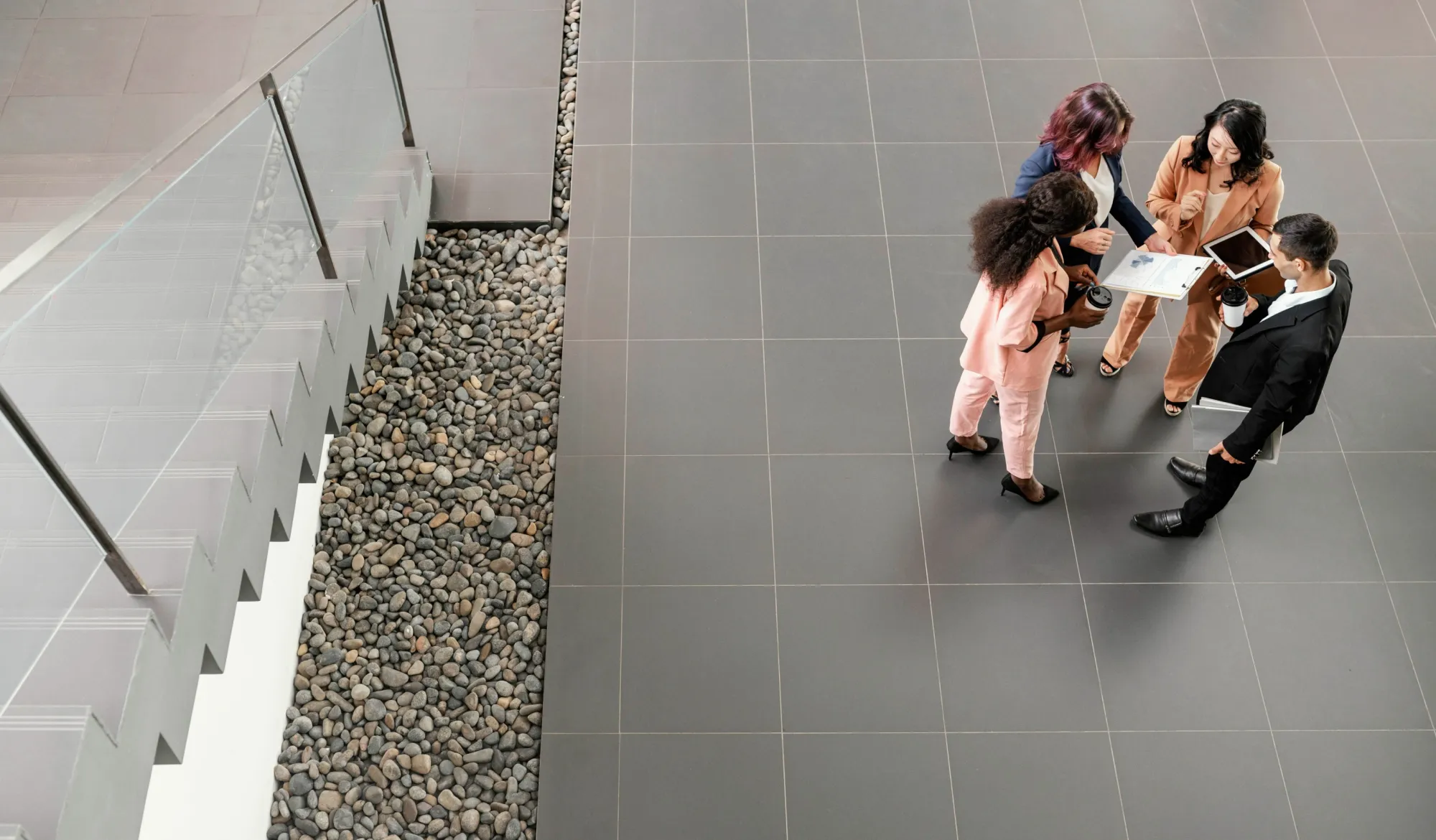
Specifying flooring for a commercial project carries more weight than most people realise. Architects and developers aren't just choosing something that looks good on day one. They're choosing something that needs to perform under constant footfall, cleaning regimes and changing conditions for years afterwards.
Porcelain tiles have become a default recommendation for exactly this reason. They're dense, low-maintenance and available in finishes that suit everything from a hospital corridor to a five-star hotel lobby.
The challenge isn't whether to use porcelain. It's choosing the right specification, finish and rating for the specific demands of each space, since a tile that works brilliantly in one setting can fail badly in another. This guide covers the practical decisions architects and developers need to make when specifying porcelain tiles for commercial projects, including the difference between matt and polished finishes and the technical ratings worth checking before sign-off.
Why Architects Specify Porcelain Tiles So Often
Porcelain is fired at a higher temperature than standard ceramic, which makes it denser and significantly less porous. That density translates directly into resistance against scratching, staining and moisture absorption. For a commercial fit-out, that means fewer callbacks, fewer replacements and a floor that still looks presentable well past the defects liability period. It's a material that rewards the extra upfront cost with lower lifecycle costs.
Porcelain also performs consistently across a wide temperature range, which suits entrances, atriums and any space with underfloor heating. That consistency is part of why it appears so often in specifications for retail, healthcare, education and hospitality projects. There's also the design flexibility to consider. Manufacturers now produce porcelain in finishes that convincingly mimic natural stone, timber and concrete, giving architects visual options without sacrificing the material's underlying performance.
Matt Tiles
Matt tiles have a soft, non-reflective surface that tends to hide scuffs, dust and footprints better than a glossy alternative. That's a genuine practical advantage in spaces with constant traffic. They also generally offer stronger slip resistance, which makes them the safer specification for entrances, kitchens and any area exposed to moisture. Warehouses, transport hubs and outdoor terraces benefit from matt finishes for the same reason. Where safety and low maintenance are the priority over visual drama, matt tiles are usually the more defensible choice on a specification document.
Polished Tiles
Polished tiles bring a glossy, light-reflecting finish that lifts the overall brightness of a room. Architects reach for them in spaces designed to make an impression, since the reflective surface adds a sense of scale and quality. They suit hotel lobbies, retail showrooms and corporate reception areas well, where visual impact outweighs heavy footfall concerns. Boardrooms and executive spaces are another natural fit. The compromise is reduced slip resistance. Polished surfaces need careful placement away from wet zones, and in some cases a slip-resistant treatment is worth specifying alongside them.
Technical Ratings Every Specification Should Include
A tile that looks right in a sample book can still be the wrong choice once it's installed and in daily use, so a few technical checks matter more than aesthetics at the specification stage.
Slip Resistance Rating
UK commercial specifications typically reference either an R-rating or a pendulum test value for slip resistance. Wet zones, entrances and ramps need a higher rating than dry internal areas. This isn't a nice-to-have. It's a safety and compliance requirement, and getting it wrong creates liability exposure for the building owner.
PEI Rating for Wear Resistance
The PEI rating indicates how well a tile withstands foot traffic over time. Commercial projects should generally specify PEI 4 or PEI 5, both rated for heavy or very heavy footfall. Anything lower is a domestic-grade tile, and it won't hold up in a building with continuous public access.
Format and Subfloor Preparation
Larger format porcelain tiles give a cleaner, more contemporary finish and reduce the number of grout lines across a floor. Fewer grout lines also mean lower long-term cleaning and maintenance costs. The trade-off is subfloor tolerance. Larger tiles demand a flatter, more precisely prepared subfloor, so this needs to be factored into the programme early rather than discovered on site.
Batch Consistency
Always specify a single batch reference for a project and request sign-off on a full pallet sample before the main order goes ahead. Porcelain colour can shift slightly between production runs. A visible mismatch across a large commercial floor is expensive and disruptive to correct after installation, so this check belongs at procurement stage, not snagging stage.
What's the Most Durable Finish for Heavy Footfall Areas?
Matt tiles typically outperform polished finishes in heavy footfall areas. They resist visible wear better and offer stronger slip resistance, which makes them the more practical specification for entrances, corridors and back-of-house zones.
Expert Tips
- Request slip rating and PEI certification in writing before finalising any commercial order.
- Specify a single batch number and inspect a full pallet sample ahead of the main delivery.
- Build subfloor preparation time into the programme when specifying larger format tiles.
- Keep a reserve stock from the original batch for future repairs or alterations.
Common Mistakes to Avoid
Specifying a tile based on its appearance in a sample book without checking PEI and slip ratings is one of the most common errors on commercial projects. Assuming a residential-grade porcelain will perform under continuous public footfall often leads to visible wear within the first year or two.
Overlooking subfloor preparation requirements for large format tiles can cause costly delays once installation begins. Failing to confirm batch consistency before ordering can result in a patchy, inconsistent floor that's difficult to remedy after the fact.
Conclusion
Specifying porcelain tiles for a commercial project is ultimately about matching finish and technical rating to how the space will genuinely be used, not just how it presents in a mood board. A well-specified floor, whether it leans on matt tiles for durability or polished tiles for visual impact, will perform reliably and still look considered years after completion.
Matt Tiles and Polished Tiles can create very different visual results, but neither should be selected without considering the practical demands of the space. A well-researched specification can help create commercial interiors that look considered while remaining suitable for demanding everyday use.






















Sign in to leave a comment.