Powder Days Made Simple With Ski & Snow Logistics in Japan


Every winter, skiers and snowboarders from around the world fly to Japan chasing deep, dry powder, cozy mountain villages, and a hot soak after the last run. The snow is real, but so is the planning. Resorts sit in remote regions, buses run on tight schedules, and a missed transfer can cost you half a day on the mountain. This guide covers the practical side of the trip, from reaching the slopes to renting gear and staying safe. Understanding Ski & Snow Logistics in Japan before you leave home lets you spend more time riding and less time standing in a snowy parking lot.
Why Japan’s Snow Draws Skiers From Everywhere
Cold air from Siberia sweeps across the Sea of Japan, picks up moisture, and drops it as light, fluffy snow on the mountains of Hokkaido and the northern part of Honshu. Some areas receive many meters of snowfall each season, and the powder is famously dry, which is why locals call it “Japow.” Heavy storms can bring days when the trees disappear beneath white, and the scenery alone makes the journey worthwhile.
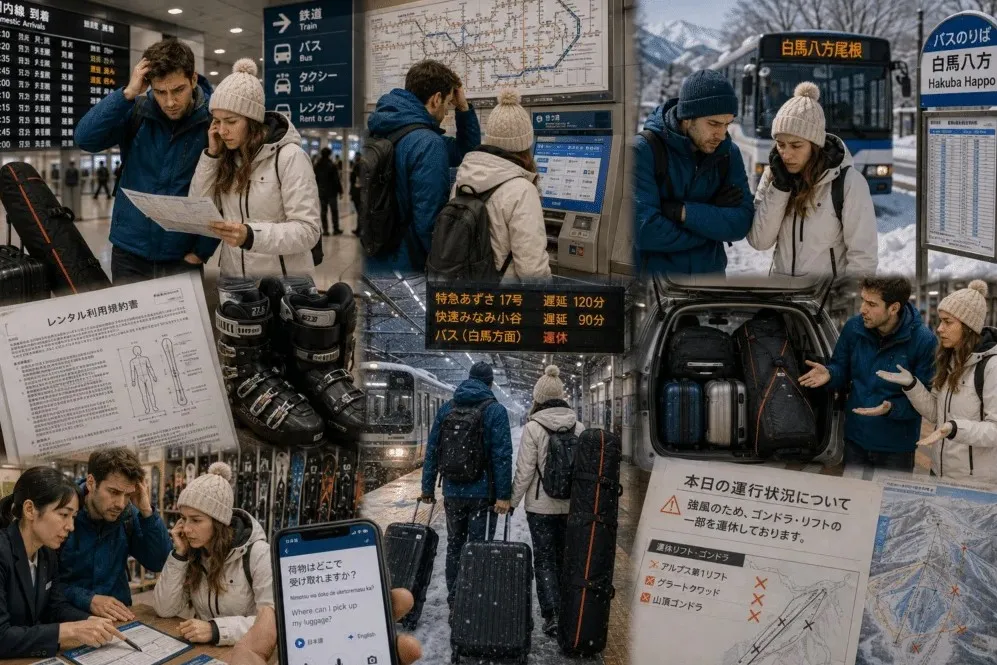
The culture around skiing is just as appealing. Resorts are clean, lifts run efficiently, and staff are polite and well organized. After a day on the slopes, you can eat a steaming bowl of noodles, relax in a hot spring, and sleep in a warm room within walking distance of the lifts. This combination of reliable snow and comfortable hospitality is what keeps visitors returning year after year, even though reaching the best spots takes a little effort.
Choosing a Region and the Right Time
The season generally runs from late December to March, with the deepest and most consistent powder usually arriving in January and February. Hokkaido is known for cold, light snow and a quieter atmosphere. Niseko is the most international resort, with English widely spoken, while smaller areas nearby offer a more local feel. On the main island, Nagano and Niigata offer a mix of large resorts, charming villages, and easy access from Tokyo.
Your choice should match your experience level and your patience for travel. Beginners often prefer resorts with gentle groomed runs, English lessons, and short transfers. Advanced riders may chase tree skiing and backcountry terrain in more remote areas. Think about crowds as well, because the New Year holiday and the late-February period can be very busy, and lift lines grow long. Good Ski & Snow Logistics in Japan starts with picking a location and week that suit your goals, since every later decision depends on that first choice.
Getting There and Moving Between Resorts
Most visitors fly into Tokyo or Sapporo, then continue by train, bus, or private transfer. For Hokkaido, the nearest airport is New Chitose, and shuttle buses and trains connect to the resort areas, though journeys can take a few hours. For Nagano and Niigata, the bullet train from Tokyo is fast and comfortable, with stations close to several major resorts. From there, local buses or taxis complete the trip.
Winter weather can slow everything down, so build slack into your schedule. Heavy snow sometimes delays flights, trains, and highway buses, and it is wise to avoid booking a tight connection on the day you must fly home. If you plan to drive, remember that winter roads require experience, snow tires, and caution, and many visitors find that public transport is less stressful.
Luggage is a particular headache with ski bags and boot bags. Large items can be awkward on crowded trains and buses, so consider using a luggage forwarding service to send bags ahead to your hotel. Many hotels can arrange it at the front desk. Pack a small daypack with essentials for travel day, including a charger, a layer of warm clothing, and any medication, and let the rest of your gear travel separately.
Lift Tickets, Rentals, and Gear on the Slopes
Lift tickets are sold at ticket counters, vending machines, and online, and many resorts offer day passes, multi-day passes, and regional passes covering several areas. Buying in advance can save time, but compare prices and conditions before committing. Some resorts use rechargeable cards with a refundable deposit, so keep the card safe and return it before you leave to receive your money back. Not every smaller mountain accepts credit cards, so carry some cash.
Renting equipment is easy and often the best option for short trips. Rental shops in resort towns stock skis, snowboards, boots, helmets, and clothing, and they can fit you quickly with English-friendly service in popular areas. Reserve ahead during busy weeks, since sizes can sell out. If you are bringing your own gear, check that your boots fit well and your bindings are in good condition, because repairs can be hard to arrange in remote villages.
Dress in layers, and do not skimp on waterproof outerwear, warm socks, gloves, and a face covering for windy days. Sunglasses or goggles are essential, since glare off fresh snow is intense. Strong Ski & Snow Logistics in Japan also covers the small things, such as lip balm, sunscreen, hand warmers, and a spare pair of gloves, because these items are easier to pack than to find on a mountain.
Where to Stay and Eat After the Last Lift
Accommodation shapes how smoothly your trip runs. Staying close to the lifts or near a shuttle stop saves time and energy, and many resorts offer ski-in, ski-out lodging for those who want maximum convenience. Hotels, small guesthouses, and traditional inns provide different experiences, so choose according to your budget and style. Book early for peak weeks, since the best places fill months in advance.
Look for features that make life easier, such as drying rooms for wet gear, boot warmers, and on-site laundry. Wet clothing that never dries can ruin a multi-day trip. Ask whether the property offers shuttles to the lifts, luggage storage on arrival and departure days, and breakfast early enough to catch first chair.
Food is part of the joy. Resort towns serve hearty bowls of ramen, curry, grilled meats, and local specialties, and many restaurants are small, so reserve ahead when you can. Hot springs are a highlight, but follow the etiquette by washing thoroughly before entering the bath and keeping towels out of the water. Some baths limit visitors with tattoos, so ask beforehand or choose a private option. A warm soak after a cold day is one of the great pleasures of the entire trip.
Safety, Weather, and Backcountry Awareness
Snow sports carry real risks, and Japan’s heavy snowfall adds a few of its own. Stay within resort boundaries unless you have proper training, equipment, and a qualified guide. Avalanche danger is serious outside marked terrain, and deep snow around trees can trap a fallen skier. Gates to unmarked areas may be closed for good reason, and ignoring a closure can endanger both you and the rescue teams who come after you.
Check the forecast each morning, because conditions change quickly. Strong winds can close upper lifts, and heavy snowfall can reduce visibility to almost nothing. Always ride with a partner, tell someone your plan, and keep your phone charged in an inside pocket where the cold will not drain the battery. Learn the resort’s emergency procedures and the location of the ski patrol hut.
Travel insurance that covers winter sports, medical care, and emergency transport is strongly recommended, because injuries on the mountain can lead to expensive treatment. In an emergency, dial 119 for an ambulance, and ski patrol can usually help first. Wear a helmet, stay hydrated, and stop when you are tired, since most accidents occur late in the day when energy is low. Knowing your limits is the most valuable piece of equipment you carry.
Conclusion
A winter trip to Japan rewards those who prepare thoughtfully. Choose a region that matches your skill and travel tolerance, allow extra time for weather delays, and send bulky luggage ahead when you can. Book lift tickets, rentals, and lodging with the season’s crowds in mind, and treat safety as a daily habit rather than an afterthought. When you understand Ski & Snow Logistics in Japan, the mountains stop feeling like a puzzle and start feeling like a playground, leaving you free to enjoy deep powder, warm baths, and the quiet beauty of a snowy village.


Sign in to leave a comment.