
The Worldwide Power Generation Engines Market: Strategic Trends and Commercial Opportunities
The global market for power generation engines has entered a decisive phase. Measured in USD millions across the 2020–2032 horizon, revenue has climbed from approximately 18.25 billion in 2020 to an estimated 23.96 billion in 2025, with a projected compound annual growth rate of 5.5 percent through 2032. The trajectory is not linear: post-pandemic supply normalization, shifting fuel preferences, and a structural surge in electricity demand have reshaped how engines are specified, deployed, and monetized. By 2032, the market is expected to approach 34.86 billion, driven by new load centers, grid reliability imperatives, and the ongoing transition toward flexible, multi-fuel power solutions. For executives and investors, the headline figure matters less than the underlying shifts in demand composition, technology roadmaps, and competitive positioning that will determine who captures value in the next cycle.
Diesel Engines Market
Market Landscape and Core Challenges
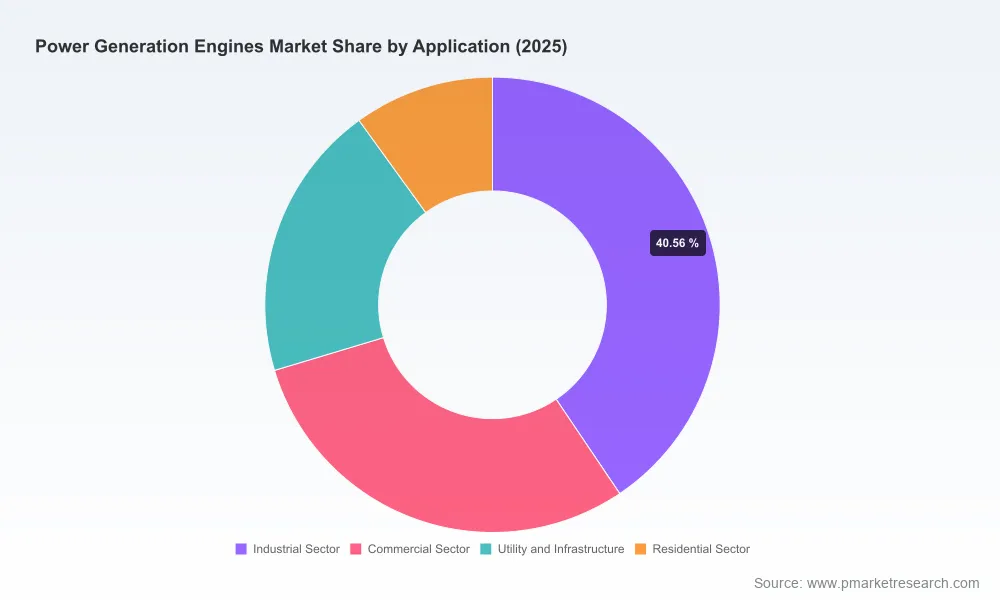
The market’s growth is underpinned by a broad base of stationary power applications across industrial, commercial, utility, and residential contexts. Fuel preferences continue to diverge by use case: diesel engines retain a substantial revenue share due to their installed base and reliability in backup and prime power scenarios, while natural gas engines represent a rapidly expanding segment as grid balancing and continuous generation needs grow. Dual-fuel and alternative fuel systems occupy a smaller but strategically important niche, reflecting early-stage adoption of hydrogen blends, biogas, and other low-carbon pathways. Regionally, Asia Pacific anchors the largest revenue base, followed by North America and Europe, with Middle East and Africa and Latin America contributing more specialized demand tied to infrastructure development and remote power needs.
Within this landscape, three interconnected challenges define the current inflection point. First, load growth is outpacing the pace of long-lead generation additions. Hyperscale data centers, industrial electrification, and electrified transport are adding capacity requirements faster than traditional utility-scale projects can come online, creating a near-term reliability gap that engine-based solutions are uniquely positioned to fill. Second, emissions and fuel transition pressures are intensifying. Operators face stricter air quality standards, methane accountability, and corporate sustainability mandates that complicate diesel-heavy portfolios while simultaneously opening a path for natural gas and dual-fuel platforms that can operate with lower carbon intensity and future-proof fuel flexibility. Third, input cost volatility and trade policy uncertainty are reshaping margins. Recent tariff increases on imported steel and engine components have raised production costs for major manufacturers, pressuring pricing strategies and squeezing the economics of smaller, commoditized product lines.
Key Demand Drivers
Technology Innovation and Breakthroughs
Engine platforms are being re-engineered around three performance axes: fast response, fuel flexibility, and digital integration. Modern gas and dual-fuel engines now achieve load acceptance rates and synchronization speeds that make them viable for balancing intermittent renewable generation and serving abrupt load steps from data centers and industrial facilities. High-efficiency generator sets with optimized combustion, advanced aftertreatment, and integrated controls are reducing specific fuel consumption and lifecycle operating costs. Equally important is the shift from standalone hardware to connected systems. Remote monitoring, predictive maintenance, and telemetry-enabled dispatch allow operators to manage fleets of distributed generation assets with higher availability and lower unplanned downtime. These innovations are not incremental; they redefine the operational value proposition of reciprocating engines in a grid that increasingly prizes flexibility over sheer baseload delivery.
Policy and Regulatory Environment
The regulatory backdrop is accelerating demand for flexible, rapidly deployable generation. In the United States, interconnection reforms and FERC Order No. 2023 and subsequent actions aim to streamline generator additions and reduce queue delays, creating a more favorable pathway for engine-based plants that can be permitted and commissioned on shorter timelines than large thermal or transmission-intensive projects. At the same time, emissions regulations and methane performance expectations are nudging operators toward natural gas and dual-fuel options that can meet current standards while retaining an upgrade path toward renewable gases and hydrogen blends. Policy uncertainty remains a double-edged sword: faster permitting supports near-term deployment, while evolving carbon and fuel standards can alter the economics of diesel-dominated fleets and reward platforms with lower-emission profiles.
Demand-Side Shifts in Consumer and Enterprise Behavior
Electricity demand is being reshaped by a cluster of structural drivers. Hyperscale and enterprise data centers are adding load at a pace that exceeds historical norms, with AI workloads intensifying both total consumption and the need for highly reliable, fast-ramping backup and continuous power. Industrial users are retrofitting operations for electrification and process modernization, increasing their appetite for on-site generation and resilient backup. Commercial and utility operators are responding to reliability concerns in regions with high load growth and intermittent renewable penetration by procuring distributed engine capacity that can be brought online quickly. The net effect is a broadening of the demand base: engines are no longer viewed merely as emergency backup but as strategic assets for continuity, revenue protection, and grid support.
Supply Chain and Cost Structure Changes
Input costs and logistics continue to shape competitive dynamics. Steel and component tariffs, shipping volatility, and localized labor constraints have elevated the cost base for engine and generator set manufacturing, particularly in the United States. The result is a growing emphasis on regional sourcing, design standardization, and higher-value configurations that can absorb cost pressures without eroding margins. Manufacturers are also responding by bundling engines with digital services, extended warranties, and performance guarantees that shift the value conversation from upfront price to total cost of ownership and uptime assurance. For buyers, this environment raises the importance of evaluating supplier resilience, service network density, and the ability to secure long-lead components in a constrained supply environment.
Competitive Landscape and Leading Strategies
The market features a mix of global engine and power systems leaders with deep installed bases, strong service networks, and differentiated technology roadmaps. Caterpillar, Cummins, Kohler, and Rolls-Royce’s mtu brand have long-standing positions across diesel and gas platforms, with product lines tailored to backup, prime, and continuous duty. Wärtsilä and INNIO Group emphasize flexible, multi-fuel gas engines optimized for power plant applications, grid balancing, and renewable integration. MAN Energy Solutions and Mitsubishi Heavy Industries bring capabilities in larger-scale, high-efficiency engine platforms for utility and industrial projects. Perkins, Deutz, John Deere, Volvo Penta, and Yanmar address adjacent segments ranging from compact industrial backup to mid-range and specialized generator set applications.
Strategic positioning is increasingly defined by three differentiators. The first is speed and responsiveness: leaders are aligning product roadmaps with fast-response gas generator sets that can sync quickly, accept large load steps, and support data center and grid reliability requirements. The second is fuel flexibility and emissions readiness: platforms that can operate on natural gas today and transition toward biogas or hydrogen blends tomorrow are gaining preference as operators seek to balance near-term reliability with longer-term decarbonization goals. The third is digital service integration: remote monitoring, condition-based maintenance, and telemetry-driven dispatch are becoming core elements of the value proposition, allowing suppliers to monetize uptime and performance rather than hardware alone.
Recent activity underscores this strategic reorientation. In January 2026, a major purchase agreement was announced for a large volume of fast-response natural gas generator sets to support a hyperscale AI data center campus, with deliveries scheduled to begin in September 2026. The same month, another leading engine manufacturer booked an order for a substantial number of gas engines to deliver a multi-hundred-megawatt U.S. power plant targeting data center load growth, reinforcing the link between rapid load expansion and engine-based capacity. In late 2025, new high-efficiency and fast-response generator set series were introduced to address both energy security and revenue-generating continuous operations. These developments are symptomatic of a broader shift: orders are being won not simply on cost, but on the ability to deliver reliable, flexible, and quickly deployable power aligned with specific load profiles.
The competitive landscape is likely to evolve along two tracks. Consolidation may continue among players seeking to broaden geographic reach, combine complementary fuel platforms, and expand service and digital capabilities. At the same time, differentiation will favor specialists that can pair engine expertise with application-specific integration, such as data center power packages, distributed grid support, and modular utility-scale deployments. New entrants and adjacent technology players may seek to challenge incumbents at the edges, particularly in hybrid configurations that combine engines with storage or renewable generation, but incumbents with strong service networks, fuel-flexible platforms, and digital integration are well positioned to defend share while expanding into higher-value segments.
Future Trends and Commercial Opportunities
Over the next three to five years, three trends are expected to shape the market’s direction and the commercial opportunities embedded within it.
PW Consulting
- Flexible gas and dual-fuel engines as enablers of grid reliability and renewable integration. As electricity demand grows and renewables and nuclear approach a larger share of generation through 2030, the need for dispatchable, fast-responding capacity will intensify. Engine-based solutions that can balance intermittency, provide peaking and backup power, and adapt to evolving fuel mixes will see sustained demand, particularly in regions with high load growth and interconnection bottlenecks.
- Application-specific deployment models, especially around data centers and distributed infrastructure. The convergence of hyperscale computing, industrial electrification, and reliability concerns is driving demand for power packages tailored to specific load profiles. This creates opportunities for integrated offerings that combine engines, controls, and service contracts designed for high-availability environments and rapid deployment.
- Fuel transition pathways and digital service monetization. Operators will increasingly evaluate engines on future fuel readiness and lifecycle performance. Platforms capable of operating on natural gas and transitioning toward renewable gases or hydrogen blends will command preference in uncertain policy environments. Simultaneously, digital services that improve availability, optimize dispatch, and reduce maintenance costs will become a meaningful source of recurring revenue and margin resilience.
These trends intersect with a set of risks that decision-makers should monitor. Policy and emissions standards may shift in ways that alter the relative economics of diesel versus gas and dual-fuel platforms, particularly if methane accountability or carbon pricing intensify. Supply chain pressures, including tariffs on steel and components, can affect cost structures and delivery timelines, making supplier selection and inventory strategy more consequential. Demand volatility remains a factor: load growth projections are robust, but the pace and location of data center build-outs, industrial electrification, and utility investment can vary, affecting where and when engine capacity is needed. Finally, technology substitution risk should not be ignored. While engines are well suited to fast-response and distributed applications, evolving storage costs, grid modernization, and alternative generation technologies could reshape the competitive set at the margins, especially in hybrid configurations.
Strategic Recommendations for Decision-Makers
For manufacturers and technology developers, the priority is to align product roadmaps with the demand signals that matter most: fast response, fuel flexibility, and digital service integration. Accelerating the availability of high-efficiency gas and dual-fuel platforms, strengthening service and remote monitoring capabilities, and securing resilient component sourcing can improve competitiveness in a market where uptime and adaptability increasingly drive selection. Diversifying into higher-value, application-specific packages rather than competing solely on commoditized hardware can also protect margins amid input cost pressures.
Power Generation Equipment Market
For investors, the opportunity set is widening in segments tied to load growth and flexibility needs, particularly gas and dual-fuel platforms serving data centers, distributed grid support, and industrial reliability. Due diligence should emphasize supplier differentiation through fuel-readiness roadmaps, service density, digital integration, and the ability to win large, application-specific orders rather than competing on unit price alone. Monitoring regulatory developments, interconnection reforms, and emissions standards will be critical to assessing the durability of demand and the relative attractiveness of diesel-heavy versus gas-leaning portfolios.
For procurement and operations leaders, the focus should shift from lowest upfront cost to total cost of ownership, availability, and future fuel readiness. Evaluating suppliers on service network reach, remote monitoring capabilities, component supply resilience, and the option to transition fuels over time can reduce operational risk in high-availability environments. Structuring contracts to include performance guarantees, predictive maintenance, and flexible fuel options can align procurement with long-term reliability and sustainability goals while limiting exposure to supply chain and policy volatility.
Detailed segmentation data, regional dynamics, and company-level benchmarking can sharpen these decisions considerably. PW Consulting’s comprehensive report on the Worldwide Power Generation Engines Market provides deeper coverage of market sizing by fuel type, application, and region, along with competitive profiles, recent order activity, and scenario-based outlooks. Executives seeking to translate these trends into product planning, capital allocation, or procurement strategy will find more granular data and tailored recommendations within the full study.
For detailed analysis of this topic, please visit the official page: Worldwide Power Generation Engines Market
Lacy Lee
Senior Marketing Manager
[email protected]
PW Consulting: www.pmarketresearch.com
























Sign in to leave a comment.