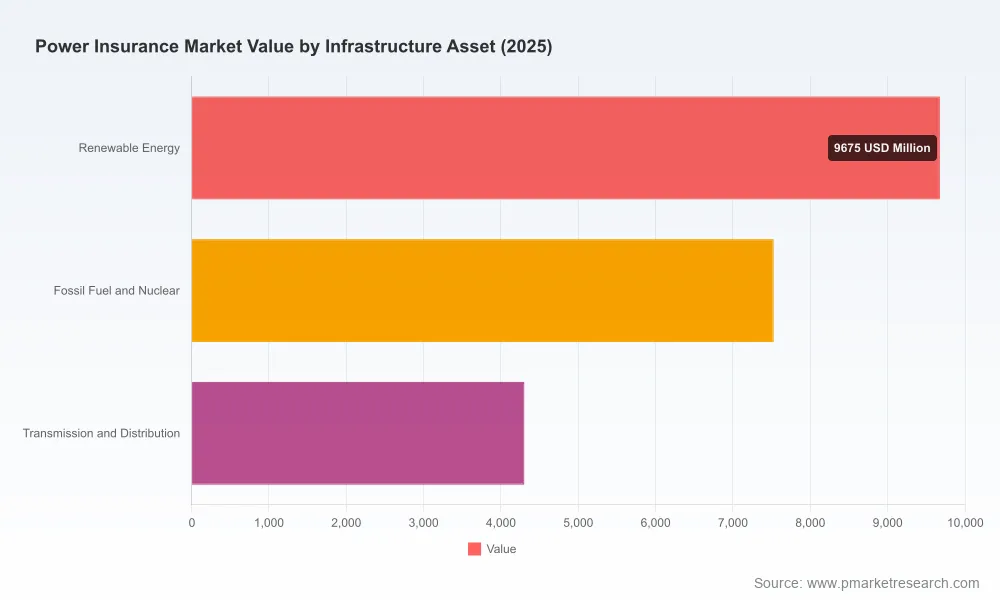

The Power Insurance Market: Strategic Trends and Commercial Opportunities Through 2032
The global power insurance market has entered a phase of structural expansion, driven by the intersection of infrastructure modernization, energy transition, and evolving risk profiles. Valued at approximately 21.5 billion USD in 2025, the sector is projected to grow at a compound annual rate of 6.5 percent, reaching roughly 33.4 billion USD by 2032. This trajectory reflects more than incremental demand growth; it signals a fundamental shift in how capital, risk, and energy infrastructure are being managed across developed and emerging economies.
For executives, investors, and procurement leaders, the power insurance landscape offers both tactical protection and strategic leverage. Insurance is no longer viewed solely as a compliance mechanism or loss mitigation tool. It has become a financing enabler, a regulatory navigation aid, and a competitive differentiator for developers, utilities, and specialized service providers. Understanding the forces reshaping this market is essential for capital allocation, risk structuring, and long-term portfolio planning.
Market Landscape and Core Challenges
The power insurance sector operates against a backdrop of rapid asset mix change and heightened risk complexity. Over the past five years, revenue growth has been consistently positive, with the market expanding from just under 19 billion USD in 2023 to the current 21.5 billion USD level. The forward path suggests steady acceleration, with the market expected to surpass 27.6 billion USD by 2029 and approach 33.4 billion USD by 2032. This expansion is broad-based but unevenly distributed across infrastructure types, coverage structures, and geographic exposures.
Several structural challenges define the current inflection point. First, the rapid proliferation of renewable energy assets has outpaced the maturation of standardized underwriting frameworks. Solar, wind, and hybrid projects introduce performance variability, weather exposure, and supply chain dependencies that traditional power insurance models were not fully designed to price. Insurers and insureds alike are recalibrating risk assumptions, which creates both pricing volatility and opportunities for innovative coverage structures.
Second, regulatory fragmentation is increasing compliance burden and market entry complexity. Policy uncertainty, permitting delays, and shifting subsidy or incentive architectures create project timeline risks that cascade into insurance planning. As regulatory environments become more dynamic, organizations require insurance partners that can adapt coverage terms to evolving legal and operational conditions without disrupting project financing or operational readiness.
Third, the demand for specialized expertise is intensifying across the value chain. Power and renewable underwriting require deep technical knowledge of generation technologies, grid integration, construction sequencing, and operational risk profiles. This expertise gap is tightening capacity in certain niche segments and pushing organizations toward brokers, risk engineers, and specialty carriers with demonstrable industry fluency. The result is a market where relationship depth, technical credibility, and solution flexibility are becoming primary competitive dimensions.
Key Demand Drivers and Structural Shifts
Technology Innovation and Risk Reassessment
Technology evolution is reshaping both the risk environment and the insurance products designed to address it. Renewable generation assets are becoming more efficient and more integrated with storage, digitization, and grid management systems. At the same time, these advancements introduce cyber exposure, control system vulnerabilities, and performance interdependencies that legacy property and liability structures may not fully capture.
The industry is responding with more granular risk engineering and coverage design. Parametric approaches, for example, are gaining attention for their ability to provide rapid, trigger-based payouts aligned with measurable events such as weather extremes or production shortfalls. This shift matters because it reduces claims latency and improves financial predictability for project developers and operators. For commercial leaders, the emergence of parametric and hybrid products signals a broader trend toward insurance solutions that are tied to operational outcomes rather than purely retrospective loss assessment.
Policy and Regulatory Dynamics
Policy environments are becoming both a catalyst and a constraint. Rising regulatory requirements and policy barriers are frequently cited as obstacles to renewable growth, with many energy professionals pointing to compliance complexity as a material risk factor. Insurance demand is therefore increasing not only because more assets are being built, but because organizations need risk transfer mechanisms that help navigate uncertain regulatory pathways.
In parallel, legislative movements around data protection and insurer obligations are reshaping operational expectations. Recent U.S. legislative activity introduced restrictions on federal entities' ability to compel certain data sharing from insurance companies, reflecting broader tensions around privacy, surveillance, and institutional data use. While the direct impact varies by jurisdiction, the direction is clear: insurers and their clients must operate with stronger data governance, clearer consent frameworks, and more disciplined information handling. This increases the value of carriers and brokers that can integrate compliance thinking into coverage design and risk advisory services.
Demand-Side Behavior and Capital Strategy
Customer behavior is changing on both the supply and demand sides of power infrastructure. Developers and independent power producers are increasingly treating insurance as part of the capital structure rather than an ancillary cost. Captive insurance arrangements, for instance, are being explored as a way to manage long-term risk, improve financing terms, and retain more control over claims and loss prevention strategies. This is especially relevant in renewable energy, where project economics depend heavily on stable operating performance and predictable risk costs over multi-decade asset lives.
Corporate procurement and utility planning are also evolving. organizations seeking to secure power supply, manage intermittency, or meet sustainability commitments are demanding insurance solutions that align with integrated project finance, construction timelines, and operational handovers. Coverage is expected to bridge construction risk, operational liability, business interruption, and increasingly, transition-related exposures. This integrated expectations curve places pressure on insurers to deliver bundled, lifecycle-oriented solutions rather than isolated policy products.
PW Consulting Information & Electronics Research Center
Supply Chain, Cost Structure, and Talent Constraints
Cost structures in power insurance are being influenced by both external input pressures and internal capability constraints. Construction materials, equipment logistics, and specialized labor all affect project risk profiles and, consequently, insurance pricing and terms. At the same time, the need for experienced risk engineers, technical underwriters, and energy-focused brokers is tightening the supply of qualified talent. This labor dynamic is not merely an HR issue; it is a market capacity issue.
Digital Insurance Market
Where specialized expertise is scarce, pricing can become less competitive and service differentiation more pronounced. Organizations that can demonstrate strong risk controls, credible operational data, and mature loss-prevention practices are better positioned to secure favorable terms. Conversely, projects with limited documentation, immature or absent risk management frameworks, or uncertain regulatory standing may face more restrictive coverage and higher cost. This dynamic makes risk transparency and operational discipline direct contributors to insurance economics.
Competitive Landscape and Leading Strategies
The power insurance market features a blend of global carriers, specialty insurers, reinsurers, and major brokerage platforms. Concentration levels indicate a moderately consolidated environment, with the top three players holding roughly 42.5 percent of the market and the top five approaching 58.2 percent. This structure suggests that scale matters, but differentiation increasingly comes from specialization, regional presence, and the ability to handle complex power risks across the asset lifecycle.
Several firms illustrate distinct strategic positioning. American International Group and Chubb both emphasize comprehensive energy and power coverage, spanning property protection for generation assets, renewable portfolios, and utility operations. Their scale and multi-line capabilities allow them to serve broad client bases while maintaining dedicated energy practices. Munich Re and Swiss Re operate from a reinsurance and capacity-providing perspective, offering risk absorption and technical expertise that support primary insurers and large project programs. Their involvement is particularly relevant when exposure aggregation, catastrophic potential, or long-tail risk requires additional balance sheet support.
AXA XL has been building visibility around energy transition-oriented advisory and product innovation. Recent work has highlighted insurers as strategic partners in energy transition and explored the role of captive insurance in financing renewable growth. This type of positioning reflects a broader shift among leading carriers: they are not only selling coverage but also shaping how clients think about risk financing, project structuring, and long-term resilience. Zurich Insurance Group and Allianz Global Corporate & Specialty continue to provide broad energy and power insurance across generation, utilities, and renewable assets, while increasingly integrating cyber, construction, and operational risk considerations into their offering design.
The broker side remains critical. Marsh McLennan, Aon, Willis Towers Watson, Gallagher, and others provide placement, risk advisory, and program design services that help clients navigate complex power risk environments. Their value lies in market access, comparative structuring, and the ability to coordinate multiple carriers for large or multifaceted exposures. For many organizations, the broker relationship is the primary interface for understanding available capacity, pricing logic, and emerging product features.
Recent market activity reinforces the competitive momentum. HDI Global expanded its presence in the London Energy & Power insurance market, signaling a push toward leading complex risk placements and building recognized expertise in a key specialty hub. AXA XL released an energy insurance insights report emphasizing the strategic partner role of insurers in energy transition, based on a broad survey of energy leaders, and separately published analysis on captive insurance in renewable financing. These moves point to a competitive environment where thought leadership, technical credibility, and solution breadth are being used to capture share in a growing but increasingly sophisticated client base.
Worldwide Blockchain Insurance Market
Market evolution is likely to continue along multiple paths. Consolidation may proceed where scale provides underwriting data advantages, reinsurance access, and multi-region delivery capabilities. At the same time, differentiation will reward firms that can combine specialty knowledge with flexible products, especially in renewables, complex infrastructure, and transition-exposed assets. New entrants and expanding incumbents will compete on the strength of their technical teams, their ability to underwrite evolving asset classes, and their capacity to offer solutions that integrate insurance with financing and operational risk advice.
Future Trends and Strategic Opportunities
Over the next three to five years, several trends are likely to define the power insurance market. The first is a continued shift toward coverage structures tailored to energy transition assets and hybrid risk profiles. As renewable penetration increases and storage integration becomes more common, insurers will need to refine pricing, performance assumptions, and operational risk monitoring. This creates opportunities for carriers and brokers that can deliver products aligned with real-world operating conditions, including parametric triggers, blended property and liability programs, and coverage that supports construction-to-operations transitions.
The second trend is the growing convergence of insurance, financing, and risk advisory. Captive structures, custom program design, and integrated risk engineering are becoming more relevant for organizations that view insurance as part of capital strategy. Clients that proactively develop risk data, loss-prevention protocols, and governance frameworks will be better positioned to access favorable terms and more innovative structures. For insurers and brokers, the opportunity lies in offering advisory depth that helps clients reduce loss exposure while improving financing and operational outcomes.
The third trend is regulatory and data governance intensification. Compliance expectations around privacy, cybersecurity, and AI-related controls are expanding, and insurance operations will need to adapt accordingly. This will increase demand for carriers and intermediaries that can embed regulatory awareness into coverage design, claims handling, and client advisory services. It also raises the importance of transparent data practices, since the ability to share and use risk information responsibly will affect both underwriting quality and market trust.
These trends present commercial opportunities across the value chain. Developers and operators can benefit from more predictable risk financing and tailored coverage that supports project bankability. Carriers and brokers can expand share by investing in specialized expertise, data-driven risk engineering, and transitional product design. Investors and strategic partners should watch for firms that are building durable advantages in renewable coverage, complex power risk placement, and integrated advisory services, as these capabilities are likely to command premium positioning in a maturing market.
Potential uncertainties remain. Asset performance variability, climate-related exposure concentration, and regulatory reversals or delays could pressure pricing and capacity in specific segments. Talent constraints may limit how quickly firms can scale specialized underwriting and risk engineering functions. Data governance requirements could increase operational costs and slow certain forms of information sharing, especially where regulatory expectations diverge across jurisdictions. Organizations should therefore treat long-term insurance strategy as a dynamic process rather than a fixed procurement decision.
Actionable Recommendations for Decision Makers
For power generation manufacturers, equipment suppliers, and technology providers, the priority is to align product design and risk documentation with insurance expectations. Clear performance data, reliable operational parameters, and transparent failure-mode documentation can improve underwriting confidence and support better coverage terms for end customers. Building insurance-aware product strategies can also become a commercial advantage, particularly when selling into renewable and hybrid projects where financing and risk transfer are tightly linked.
For investors and capital allocators, the strategic question is which capabilities will capture value as the market grows and differentiates. Preference should be given to platforms with demonstrated energy underwriting expertise, strong reinsurance or capacity relationships where relevant, and the ability to structure solutions for transition-exposed assets. It is equally important to evaluate whether a firm is contributing to market development through technical advisory, data-driven risk insight, and product innovation, since these capabilities tend to support durable positioning in a more sophisticated marketplace.
For procurement leaders and risk managers in utilities, developers, and industrial power consumers, the focus should be on treating insurance as part of a broader risk and financing strategy. This means engaging early in project design, documenting operational controls, evaluating parametric and captive options where appropriate, and selecting partners that can address the full asset lifecycle rather than isolated policy periods. Multi-line coordination, claims readiness, and clear data governance practices can materially improve outcomes when exposures are complex or regulatory conditions are fluid.
Given the pace of change across technology, regulation, and asset mix, detailed segment-level intelligence is increasingly valuable for precise planning. Market participants that need granular views of coverage dynamics, regional exposure trends, competitive positioning, and structured scenario analysis will benefit from deeper research resources. Comprehensive industry research can support more informed decisions on product strategy, carrier selection, capital deployment, and risk program design across the power and energy transition landscape.
For detailed analysis of this topic, please visit the official page: Power Insurance Market
Lacy Lee
Senior Marketing Manager
[email protected]
PW Consulting: www.pmarketresearch.com



























Sign in to leave a comment.