
Electric vehicles are no longer a niche topic in the automotive classroom. As more EVs and hybrids reach the road, shops, dealerships, and fleets need technicians who can work safely on high-voltage systems and diagnose problems with confidence.
For schools, colleges, and workforce programs, the question has changed. It is no longer whether to teach EV technology, but how to do it in a way that leads to real jobs. This guide covers what effective EV technician training looks like, which certifications matter, and how to build a program that gets students career-ready.
What Is EV Technician Training?
EV technician training teaches students to inspect, maintain, diagnose, and repair electric and hybrid vehicles. A complete program typically covers:
- Electrical fundamentals: voltage, current, resistance, circuits, and reading schematics
- High-voltage safety: safe work practices, protective equipment, and system de-energizing procedures
- Battery systems: how packs are built, managed, and maintained
- Motors and drive systems: how electric power becomes motion
- Wiring and system integration: connecting components so they work as a vehicle
- Diagnostics and troubleshooting: finding faults methodically, not by guesswork
Skipping the fundamentals is the most common mistake in EV education. Students who understand basic electricity first are far better prepared for advanced systems later.
Why Hands-On Learning Matters
Reading about a battery pack is not the same as working with one. Employers want technicians who can use tools, interpret schematics, and follow safety procedures on a working vehicle.
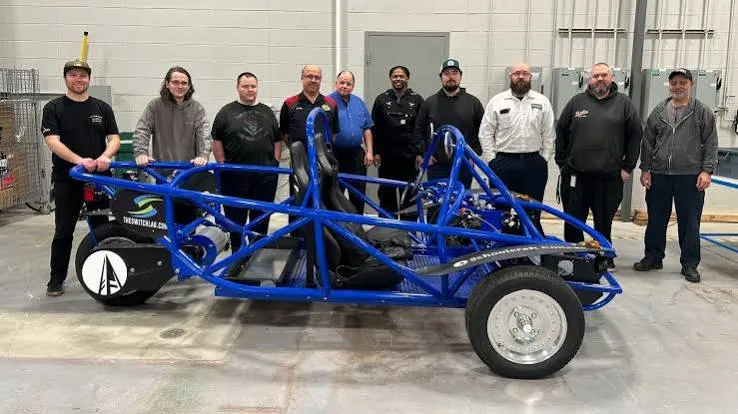
That is the idea behind the Switch Lab EV Pathway. Students progress from the basics of electricity to building a complete, road-ready electric vehicle in the classroom. Along the way they assemble electrical and mechanical systems, practice workplace safety, and diagnose real problems on a functioning vehicle.
Moving from learning a procedure to performing it is where workforce-ready skills are built.
Educators agree. Roger Pressley, an automotive instructor at the Central Academy of Technology and Arts, put it this way: "It really is plug and play. Any school can do this, regardless of the tools or shop facility.
Certifications That Matter for EV Technicians
Credentials give students a way to prove their skills to employers. Three stand out for automotive and EV programs:
1. ASE xEV certification
ASE (the National Institute for Automotive Service Excellence) is one of the most widely recognized names in the industry. Its electric and hybrid vehicle credentials help technicians show they can work on xEV systems. The Switch Lab offers xEV exam prep and is an official ASE training resource for electric vehicles.
2. NC3 technical skill credentials
NC3 credentials let students demonstrate specific technical skills, which makes them a strong fit for career and technical education programs.
3. OSHA Outreach safety training
Workplace safety is non-negotiable around high-voltage systems. OSHA Outreach training gives students a safety foundation employers recognize.
For a deeper look at building a program around these credentials, read our guide to Automotive CTE Certification Alignment: ASE, NC3 and Workplace Safety.
A Learning Path From Beginner to Certified
A well-designed EV education program moves in stages:
- Start with electricity. Teach circuits, measurement, and safe lab habits using tools like the Electric Systems Lab and Battery Lab.
- Add EV systems. Introduce batteries, motors, controllers, and charging concepts through the Electric Vehicle curriculum.
- Build and integrate. Have students assemble a complete vehicle as a team, which turns theory into skill.
- Diagnose and troubleshoot. Let students find and fix real faults on a working system.
- Prepare for certification. Align coursework with ASE xEV, NC3, and OSHA outcomes.
This progression works for high school and college programs and fits STEM, CTE, and Common Core goals in one package.
Train the Trainer First
A program is only as strong as the instructors teaching it. Many teachers are comfortable with traditional automotive systems but have not worked on high-voltage platforms.
That is why instructor training comes first. The Switch Lab's five-day instructor workshop covers high-voltage safety, EV components, electrical systems, diagnostics, and a full vehicle build. Instructors work through the same process their students will, and the workshop includes ASE xEV materials.
Austin Community College recently sent seven faculty members through this kind of training, and both vehicles were completed to the same build standards. Instructors left knowing exactly how to bring the platform into their own courses.
Results Schools Are Seeing
Strong EV programs do more than fill a curriculum gap. They attract students. Mississippi Gulf Coast Community College reported a 215% increase in class registrations after adding EV education. More than 400 schools have joined the Switch Lab community, and many say students gain confidence and bigger career goals once they see what they can build.
David Myers of Southwestern Community College said an EV pathway directly addresses the shortage of EV technicians in his rural community and gives students a competitive edge.
Frequently Asked Questions
How long does it take to become a certified EV technician?
It depends on the pathway. Many students build skills through a high school or college program and then pursue credentials like ASE xEV as they gain experience. Ask your program or local employers which timeline fits your goals.
Do I need prior automotive experience to start EV training?
No. A good program starts with electrical fundamentals, so beginners can build up to advanced EV systems.
What certifications should an EV technician have?
ASE xEV, NC3 technical skill credentials, and OSHA Outreach safety training are strong foundations, and local employer requirements may add others.
Can a school with limited shop space teach EV technology?
Yes. Reusable, classroom-scale kits mean you can start with almost any space.
How do schools fund EV training programs?
Many use CTE and workforce grants, and partners can help expand access. Contact The Switch Lab to discuss options.
Take the Next Step
Preparing students for EV careers starts with hands-on experience, safe practices, and credentials that employers trust. Whether you are an instructor, a CTE director, or a college administrator, you can build a pathway that is practical and scalable.
- Explore the Switch Lab EV Pathway
- Review the EV curriculum
- Join an instructor workshop
- Contact our team to plan your program




























Sign in to leave a comment.